J.M. Bumsted – författare
Visar alla böcker från författaren J.M. Bumsted. Handla med fri frakt och snabb leverans.
5 produkter
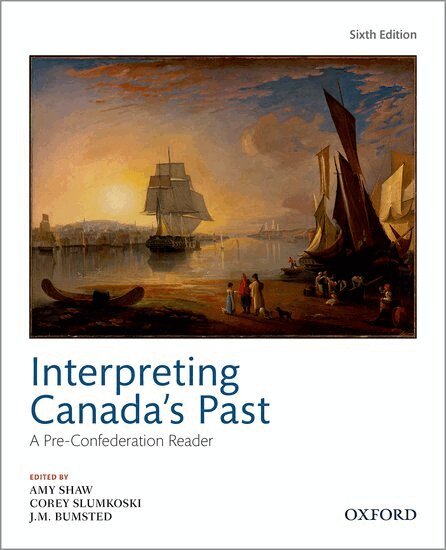
Interpreting Canada's Past
A Pre-Confederation Reader
Häftad, 2021
1324 kr
Lägg i varukorg
A carefully curated collection of primary and secondary source documents that introduces students to the approaches and methodologies historians use to interpret the past. Thought-provoking and engaging, this acclaimed pre-Confederation reader introduces students to the approaches and methodologies …
Henry Alline
1748-1784
Av J.M. Bumsted
E-bok, 1971
294 kr
Lägg i varukorg
To Canadians of this century the name of Henry Alline is almost unknown. This biography introduces him to the general reader. Through the story of his life it also recreates the early settlement of the Maritime provinces, and examines the origins of one of the most dominant and continuing themes in …
Henry Alline
1748-1784
Av J.M. Bumsted
E-bok, 1971
364 kr
Lägg i varukorg
To Canadians of this century the name of Henry Alline is almost unknown. This biography introduces him to the general reader. Through the story of his life it also recreates the early settlement of the Maritime provinces, and examines the origins of one of the most dominant and continuing themes in …
Henry Alline
1748-1784
Av J.M. Bumsted
Häftad, 1971
261 kr
Lägg i varukorg
To Canadians of this century the name of Henry Alline is almost unknown. This biography introduces him to the general reader. Through the story of his life it also recreates the early settlement of the Maritime provinces, and examines the origins of one of the most dominant and continuing themes in …