Joanna Wawrzyniak - Böcker
Visar alla böcker från författaren Joanna Wawrzyniak. Handla med fri frakt och snabb leverans.
11 produkter
11 produkter
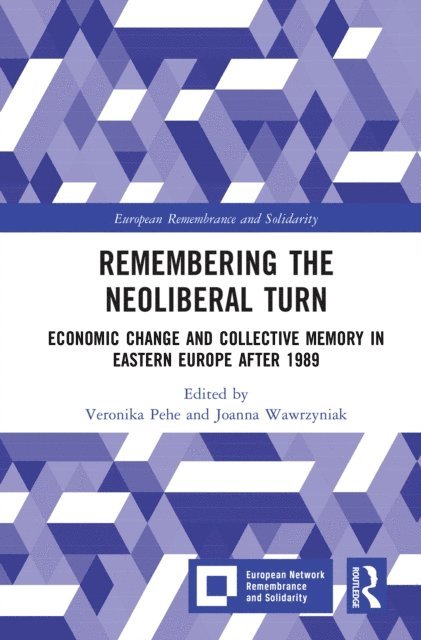
Remembering the Neoliberal Turn
Economic Change and Collective Memory in Eastern Europe after 1989
Inbunden, Engelska, 2023
2 162 kr
Skickas inom 10-15 vardagar
This book discusses how societies, groups and individuals remember and make sense of global neoliberal change in Eastern Europe. Such an investigation is all the more timely as the 1990s are increasingly looked to for answers explaining the populist and nationalist turn across the globe.The volume shows how the key processes that impacted many lives across the social spectrum in Eastern Europe, such as deindustrialization, privatization, restitution and abrupt social reorganization, are collectively remembered across society today and how memory narratives of the 1990s contribute to current identities and political climate. This volume establishes the memory of economic transformation as a research focus in its own right. It investigates different levels of memory, from the national through the local to the cultural, analysing key myths of the transformation, giving special recognition to the social space and vernacular memories of the transformation period and reflecting on how the changes of the 1990s are mediated in cultural representations.Given the book’s interdisciplinary scope that covers several fields, it will prove to be of interest to those working in memory studies, contemporary history, sociology, East European area studies and literary and film studies. It will also serve as a significant point of reference for those researching the interdisciplinary and rapidly expanding field of transformation studies and thus is an invaluable source across different fields.
Remembering the Neoliberal Turn
Economic Change and Collective Memory in Eastern Europe after 1989
Häftad, Engelska, 2025
647 kr
Skickas inom 10-15 vardagar
This book discusses how societies, groups and individuals remember and make sense of global neoliberal change in Eastern Europe. Such an investigation is all the more timely as the 1990s are increasingly looked to for answers explaining the populist and nationalist turn across the globe.The volume shows how the key processes that impacted many lives across the social spectrum in Eastern Europe, such as deindustrialization, privatization, restitution and abrupt social reorganization, are collectively remembered across society today and how memory narratives of the 1990s contribute to current identities and political climate. This volume establishes the memory of economic transformation as a research focus in its own right. It investigates different levels of memory, from the national through the local to the cultural, analysing key myths of the transformation, giving special recognition to the social space and vernacular memories of the transformation period and reflecting on how the changes of the 1990s are mediated in cultural representations.Given the book’s interdisciplinary scope that covers several fields, it will prove to be of interest to those working in memory studies, contemporary history, sociology, East European area studies and literary and film studies. It will also serve as a significant point of reference for those researching the interdisciplinary and rapidly expanding field of transformation studies and thus is an invaluable source across different fields.
979 kr
Kommande
This open access book proposes slow memory as a new framework for understanding how remembrance operates across time, urging scholars and practitioners to resist the acceleration that characterizes both contemporary scholarship and public memory cultures.The authors explore the theoretical foundations of slow memory in relation to environmental humanities and Indigenous studies, emphasizing themes of deep time, intergenerational justice, and contested memory regimes. The collection focuses on the fields of environment, (de)industrialization, welfare, politics, and conflict to examine how gradual transformations impact the present through remembrance practices at different tempos. It advocates for a deceleration of scholarly and commemorative practices to develop ethical, sustainable, and inclusive engagements with the past.By foregrounding slowness as a conceptual and methodological tool, and slow memory as a “connective concept,” this book offers a vital framework for scholars, policymakers, and practitioners seeking to rethink the temporalities of remembrance in an era of rapid transformation. The ebook editions of this book are available open access under a CC BY-NC-ND 4.0 licence on bloomsburycollections.com. This publication is based upon work from COST Action CA20105 on Slow Memory, supported by COST (European Cooperation in Science and Technology). COST is a funding agency for research and innovation networks. Our Actions help connect research initiatives across Europe and enable scientists to grow their ideas by sharing them with their peers. This boosts their research, career and innovation.
331 kr
Kommande
This open access book proposes slow memory as a new framework for understanding how remembrance operates across time, urging scholars and practitioners to resist the acceleration that characterizes both contemporary scholarship and public memory cultures.The authors explore the theoretical foundations of slow memory in relation to environmental humanities and Indigenous studies, emphasizing themes of deep time, intergenerational justice, and contested memory regimes. The collection focuses on the fields of environment, (de)industrialization, welfare, politics, and conflict to examine how gradual transformations impact the present through remembrance practices at different tempos. It advocates for a deceleration of scholarly and commemorative practices to develop ethical, sustainable, and inclusive engagements with the past.By foregrounding slowness as a conceptual and methodological tool, and slow memory as a “connective concept,” this book offers a vital framework for scholars, policymakers, and practitioners seeking to rethink the temporalities of remembrance in an era of rapid transformation. The ebook editions of this book are available open access under a CC BY-NC-ND 4.0 licence on bloomsburycollections.com. This publication is based upon work from COST Action CA20105 on Slow Memory, supported by COST (European Cooperation in Science and Technology). COST is a funding agency for research and innovation networks. Our Actions help connect research initiatives across Europe and enable scientists to grow their ideas by sharing them with their peers. This boosts their research, career and innovation.
1 928 kr
Skickas inom 3-6 vardagar
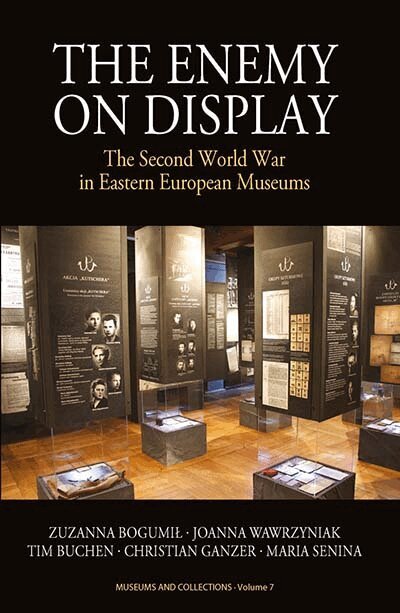
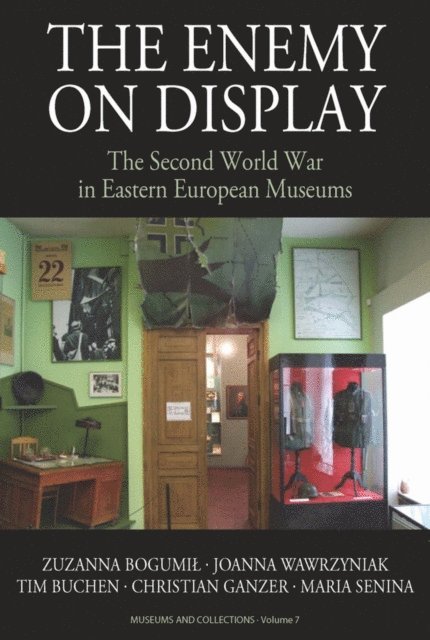
Eastern European museums represent traumatic events of World War II, such as the Siege of Leningrad, the Warsaw Uprisings, and the Bombardment of Dresden, in ways that depict the enemy in particular ways. This image results from the interweaving of historical representations, cultural stereotypes and beliefs, political discourses, and the dynamics of exhibition narratives. This book presents a useful methodology for examining museum images and provides a critical analysis of the role historical museums play in the contemporary world. As the catastrophes of World War II still exert an enormous influence on the national identities of Russians, Poles, and Germans, museum exhibits can thus play an important role in this process.
2 229 kr
Skickas inom 3-6 vardagar
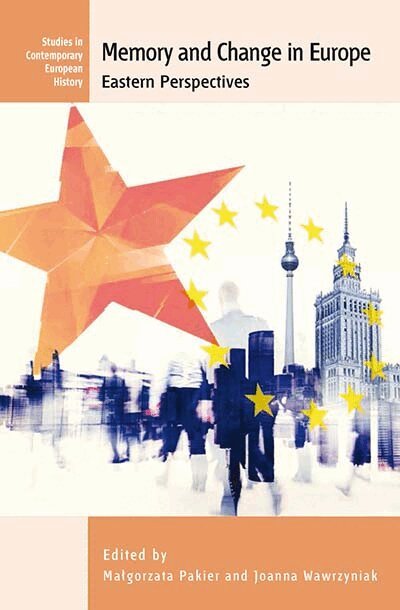
In studies of a common European past, there is a significant lack of scholarship on the former Eastern Bloc countries. While understanding the importance of shifting the focus of European memory eastward, contributors to this volume avoid the trap of Eastern European exceptionalism, an assumption that this region’s experiences are too unique to render them comparable to the rest of Europe. They offer a reflection on memory from an Eastern European historical perspective, one that can be measured against, or applied to, historical experience in other parts of Europe. In this way, the authors situate studies on memory in Eastern Europe within the broader debate on European memory.
490 kr
Skickas inom 3-6 vardagar
Eastern European museums represent traumatic events of World War II, such as the Siege of Leningrad, the Warsaw Uprisings, and the Bombardment of Dresden, in ways that depict the enemy in particular ways. This image results from the interweaving of historical representations, cultural stereotypes and beliefs, political discourses, and the dynamics of exhibition narratives. This book presents a useful methodology for examining museum images and provides a critical analysis of the role historical museums play in the contemporary world. As the catastrophes of World War II still exert an enormous influence on the national identities of Russians, Poles, and Germans, museum exhibits can thus play an important role in this process.
511 kr
Skickas inom 3-6 vardagar
In studies of a common European past, there is a significant lack of scholarship on the former Eastern Bloc countries. While understanding the importance of shifting the focus of European memory eastward, contributors to this volume avoid the trap of Eastern European exceptionalism, an assumption that this region’s experiences are too unique to render them comparable to the rest of Europe. They offer a reflection on memory from an Eastern European historical perspective, one that can be measured against, or applied to, historical experience in other parts of Europe. In this way, the authors situate studies on memory in Eastern Europe within the broader debate on European memory.
1 310 kr
Skickas inom 10-15 vardagar
“Regions of memory” are a scale of social and cultural memory that reaches above the national, yet remains narrower than the global or universal. The chapters of this volume analyze transnational constellations of memory across and between several geographical areas, exploring historical, political and cultural interactions between societies. Such a perspective enables a more diverse field of possible comparisons in memory studies, studying a variety of global memory regions in parallel. Moreover, it reveals lesser-known vectors and mechanisms of memory travel, such as across Cold War battle lines, across the Indian Ocean, or between Southeast Asia and western Europe.Chapters 1 and 6 are available open access under a Creative Commons Attribution 4.0 International License via link.springer.com.
1 310 kr
Skickas inom 10-15 vardagar
“Regions of memory” are a scale of social and cultural memory that reaches above the national, yet remains narrower than the global or universal. The chapters of this volume analyze transnational constellations of memory across and between several geographical areas, exploring historical, political and cultural interactions between societies. Such a perspective enables a more diverse field of possible comparisons in memory studies, studying a variety of global memory regions in parallel. Moreover, it reveals lesser-known vectors and mechanisms of memory travel, such as across Cold War battle lines, across the Indian Ocean, or between Southeast Asia and western Europe.Chapters 1 and 6 are available open access under a Creative Commons Attribution 4.0 International License via link.springer.com.
Del 4 - Studies in Contemporary History
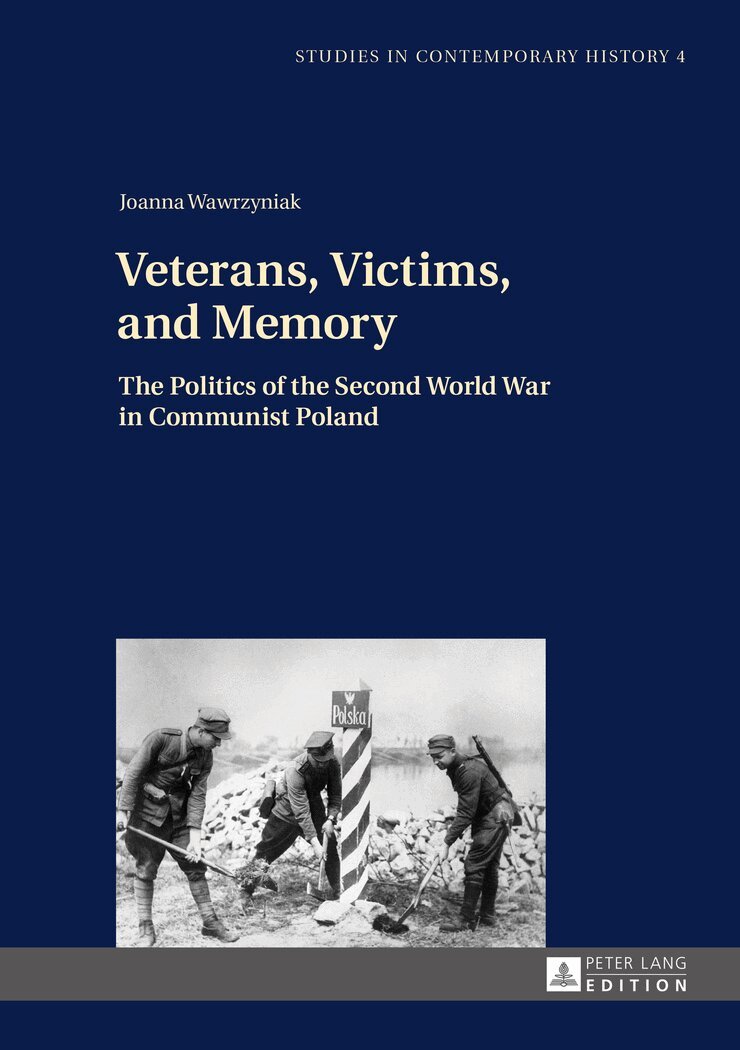
Veterans, Victims, and Memory
The Politics of the Second World War in Communist Poland
Inbunden, Engelska, 2015
719 kr
Skickas inom 5-8 vardagar
In the vast literature on how the Second World War has been remembered in Europe, research into what happened in communist Poland, a country most affected by the war, is surprisingly scarce. The long gestation of Polish narratives of heroism and sacrifice, explored in this book, might help to understand why the country still finds itself in a «mnemonic standoff» with Western Europe, which tends to favour imagining the war in a civil, post-Holocaust, human rights-oriented way. The specific focus of this book is the organized movement of war veterans and former prisoners of Nazi camps from the 1940s until the end of the 1960s, when the core narratives of war became well established.