Jock Young – författare
261 kr
Skickas
2 253 kr
Skickas inom 10-15 vardagar
639 kr
Skickas inom 10-15 vardagar
2 183 kr
Skickas inom 10-15 vardagar
835 kr
Skickas inom 10-15 vardagar
442 kr
Skickas inom 5-8 vardagar
756 kr
Skickas inom 5-8 vardagar
1 292 kr
Skickas inom 3-6 vardagar
Jock Young, one of the foremost criminologists of our time, explores exclusion on three levels: economic exclusion from the labour market; social exclusion between people in civil society; and the ever-expanding exclusionary activities of the criminal justice system.
Taking account of the massive dramatic structural and cultural changes that have beset our society and relating these to the quantum leap in crime and incivilities, Jock Young develops a major new theory based on a new citizenship and a reflexive modernity.
913 kr
Läs direkt efter köp
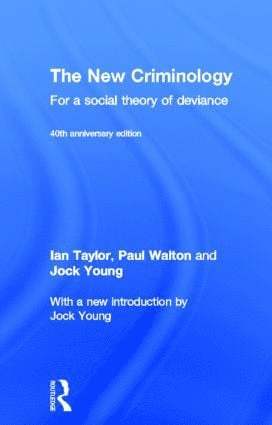
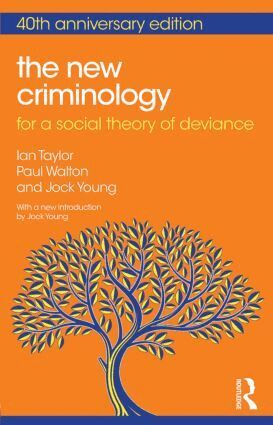
"The New Criminology was written at a particular time and place; it was a product of 1968 and its aftermath: a world turned upside down .It was a time of great changes in personal politics and a surge of politics on the left: Marxism, Anarchism, Situationism as well as radical social democratic ideas became centre stage." Jock Young, from the new introduction.Taylor, Walton and Young’s The New Criminology is one of the seminal texts in Criminology. First published in 1973, it marked a watershed moment in the development of critical criminological theory and is as relevant today as it was forty years ago. It was one of the first texts to bridge the gap between criminological and sociological theory and demonstrated the weaknesses of classical and positivist criminology. Critics at the time saw it as the first truly comprehensive critique of Anglo-American studies of crime and deviance.Reproduced unabridged, the fortieth anniversary edition includes a brand new introductory essay from Jock Young placing the book in its intellectual context and sequence and looking at the theories which built up to it and the theories that have been built upon since. It is essential reading for all serious students engaged in criminological theory and is destined to inspire future generations.
913 kr
Läs direkt efter köp
"The New Criminology was written at a particular time and place; it was a product of 1968 and its aftermath: a world turned upside down .It was a time of great changes in personal politics and a surge of politics on the left: Marxism, Anarchism, Situationism as well as radical social democratic ideas became centre stage." Jock Young, from the new introduction.Taylor, Walton and Young’s The New Criminology is one of the seminal texts in Criminology. First published in 1973, it marked a watershed moment in the development of critical criminological theory and is as relevant today as it was forty years ago. It was one of the first texts to bridge the gap between criminological and sociological theory and demonstrated the weaknesses of classical and positivist criminology. Critics at the time saw it as the first truly comprehensive critique of Anglo-American studies of crime and deviance.Reproduced unabridged, the fortieth anniversary edition includes a brand new introductory essay from Jock Young placing the book in its intellectual context and sequence and looking at the theories which built up to it and the theories that have been built upon since. It is essential reading for all serious students engaged in criminological theory and is destined to inspire future generations.
706 kr
Läs direkt efter köp
This book provides an overview of recent government initiatives in the field of crime and punishment, reviewing both the policies themselves, the perceived problems and issues they seek to address, and the broader social and political context in which this is taking place.
The underlying theme of the book is that a qualitative change has taken place in the politics of crime control in the UK since the early 1990s. Although crime has stabilised, imprisonment rates continue to climb, there is a new mood of punitiveness, and crime has become a central policy issue for the government, no longer just a technical matter of law enforcement. At the same time the politics of crime control have taken on a pronounced gender, race and age preoccupation.
This book will be essential reading for anybody seeking an understanding of why crime and criminal justice policy have risen to the top of the political agenda.
650 kr
Läs direkt efter köp
This book provides an overview of recent government initiatives in the field of crime and punishment, reviewing both the policies themselves, the perceived problems and issues they seek to address, and the broader social and political context in which this is taking place.
The underlying theme of the book is that a qualitative change has taken place in the politics of crime control in the UK since the early 1990s. Although crime has stabilised, imprisonment rates continue to climb, there is a new mood of punitiveness, and crime has become a central policy issue for the government, no longer just a technical matter of law enforcement. At the same time the politics of crime control have taken on a pronounced gender, race and age preoccupation.
This book will be essential reading for anybody seeking an understanding of why crime and criminal justice policy have risen to the top of the political agenda.
696 kr
Läs direkt efter köp
First published in 1975, this collection of essays expands upon the themes and ideas developed in the editors’ previous work, the visionary and groundbreaking text: The New Criminology.
Directed at orthodox criminology, this is a partisan work written by a group of criminologists committed to a social transformation: a transformation to a society that does not criminalize deviance. Included are American contributions, particularly from the School of Criminology at Berkeley, represented by Hermann and Julia Schwendinger and Tony Platt, together with essays by Richard Quinney and William Chambliss. From Britain, Geoff Pearson considers deviancy theory as ‘misfit sociology’ and Paul Hirst attacks deviancy theory from an Althusserian Marxist position. The editors contribute a detailed introductory essay extending the position developed in The New Criminology, and two other pieces which attempt to continue the task of translating criminology from its traditional correctionalist stance to a commitment to socialist diversity and a crime-free set of social arrangements.
696 kr
Läs direkt efter köp
First published in 1975, this collection of essays expands upon the themes and ideas developed in the editors’ previous work, the visionary and groundbreaking text: The New Criminology.
Directed at orthodox criminology, this is a partisan work written by a group of criminologists committed to a social transformation: a transformation to a society that does not criminalize deviance. Included are American contributions, particularly from the School of Criminology at Berkeley, represented by Hermann and Julia Schwendinger and Tony Platt, together with essays by Richard Quinney and William Chambliss. From Britain, Geoff Pearson considers deviancy theory as ‘misfit sociology’ and Paul Hirst attacks deviancy theory from an Althusserian Marxist position. The editors contribute a detailed introductory essay extending the position developed in The New Criminology, and two other pieces which attempt to continue the task of translating criminology from its traditional correctionalist stance to a commitment to socialist diversity and a crime-free set of social arrangements.
2 934 kr
Skickas inom 11-20 vardagar
- Professor Jeff Ferrell, Texas Christian University, USA, and University of Kent, UK
'This is precisely what readers would expect from the author of two instant classics: a book that is bound to become the third. As is his habit, Jock Young launches a frontal attack on the 'commonsense' of social studies and its tacit assumptions - as common as they are misleading. Futility of the 'inclusion vs exclusion', 'contented vs insecure', or indeed 'normal vs deviant' oppositions in the globalised and mediatized world is exposed and the subtle yet thorough interpenetration of cultures and porosity of boundaries demonstrated beyond reasonable doubt. The newly coined analytical categories, like chaos of rewards and chaos of identity, existential vertigo, bulimic society or conservative vs liberal modes of othering are bound to become an indispensable part of social scientific vernacular - and let's hope that they will, for the sanity and relevance of the social sciences' sake'
- Zygmunt Bauman, Emeritus Professor of Sociology, University of Leeds
'Jock Young is one of the great figures in the history of criminology. In this book he prises open paradoxes of identity in late modernity. We experience an emphasis on individualism in an era when shallow soil forms a foundation for self-development. Young deftly analyses shifts in conditions of work and consumption and the insecurities they engender. This is a perceptive reformulation of job, family and community in late modernity'
- Professor John Braithwaite, Australian National University
The Vertigo of Late Modernity is a seminal new work by Jock Young, author of the bestselling and highly influential book, The Exclusive Society.
In his new work Young describes the sources of late modern vertigo as twofold: insecurities of status and of economic position. He explores the notion of an underclass and its detachment from the class structure. The book engages with the ways in which modern society attempts to explain deviant behaviour - whether it be crime, terrorism or riots - in terms of motivations and desires separate and distinct from those of the 'normal'. Young critiques the process of othering whether of a liberal or conservative variety, and develops a theory of 'vertigo' to characterise a late modern world filled with inequality and division. He points toward a transformative politics which tackle problems of economic injustice and build and cherish a society of genuine diversity.
This major new work engages with some of the most important issues facing society today. The Vertigo of Late Modernity is essential reading for academics and advanced students in the areas of criminology, sociology, cultural studies, anthropology and the social sciences more broadly.
1 265 kr
Skickas inom 3-6 vardagar
- Professor Jeff Ferrell, Texas Christian University, USA, and University of Kent, UK
'This is precisely what readers would expect from the author of two instant classics: a book that is bound to become the third. As is his habit, Jock Young launches a frontal attack on the 'commonsense' of social studies and its tacit assumptions - as common as they are misleading. Futility of the 'inclusion vs exclusion', 'contented vs insecure', or indeed 'normal vs deviant' oppositions in the globalised and mediatized world is exposed and the subtle yet thorough interpenetration of cultures and porosity of boundaries demonstrated beyond reasonable doubt. The newly coined analytical categories, like chaos of rewards and chaos of identity, existential vertigo, bulimic society or conservative vs liberal modes of othering are bound to become an indispensable part of social scientific vernacular - and let's hope that they will, for the sanity and relevance of the social sciences' sake'
- Zygmunt Bauman, Emeritus Professor of Sociology, University of Leeds
'Jock Young is one of the great figures in the history of criminology. In this book he prises open paradoxes of identity in late modernity. We experience an emphasis on individualism in an era when shallow soil forms a foundation for self-development. Young deftly analyses shifts in conditions of work and consumption and the insecurities they engender. This is a perceptive reformulation of job, family and community in late modernity'
- Professor John Braithwaite, Australian National University
The Vertigo of Late Modernity is a seminal new work by Jock Young, author of the bestselling and highly influential book, The Exclusive Society.
In his new work Young describes the sources of late modern vertigo as twofold: insecurities of status and of economic position. He explores the notion of an underclass and its detachment from the class structure. The book engages with the ways in which modern society attempts to explain deviant behaviour - whether it be crime, terrorism or riots - in terms of motivations and desires separate and distinct from those of the 'normal'. Young critiques the process of othering whether of a liberal or conservative variety, and develops a theory of 'vertigo' to characterise a late modern world filled with inequality and division. He points toward a transformative politics which tackle problems of economic injustice and build and cherish a society of genuine diversity.
This major new work engages with some of the most important issues facing society today. The Vertigo of Late Modernity is essential reading for academics and advanced students in the areas of criminology, sociology, cultural studies, anthropology and the social sciences more broadly.
504 kr
Läs direkt efter köp
- Professor Jeff Ferrell, Texas Christian University, USA, and University of Kent, UK
′This is precisely what readers would expect from the author of two instant classics: a book that is bound to become the third. As is his habit, Jock Young launches a frontal attack on the ′commonsense′ of social studies and its tacit assumptions - as common as they are misleading. Futility of the ′inclusion vs exclusion′, ′contented vs insecure′, or indeed ′normal vs deviant′ oppositions in the globalised and mediatized world is exposed and the subtle yet thorough interpenetration of cultures and porosity of boundaries demonstrated beyond reasonable doubt. The newly coined analytical categories, like chaos of rewards and chaos of identity, existential vertigo, bulimic society or conservative vs liberal modes of othering are bound to become an indispensable part of social scientific vernacular - and let′s hope that they will, for the sanity and relevance of the social sciences′ sake′
- Zygmunt Bauman, Emeritus Professor of Sociology, University of Leeds
′Jock Young is one of the great figures in the history of criminology. In this book he prises open paradoxes of identity in late modernity. We experience an emphasis on individualism in an era when shallow soil forms a foundation for self-development. Young deftly analyses shifts in conditions of work and consumption and the insecurities they engender. This is a perceptive reformulation of job, family and community in late modernity′
- Professor John Braithwaite, Australian National University
The Vertigo of Late Modernity is a seminal new work by Jock Young, author of the bestselling and highly influential book, The Exclusive Society.
In his new work Young describes the sources of late modern vertigo as twofold: insecurities of status and of economic position. He explores the notion of an underclass and its detachment from the class structure. The book engages with the ways in which modern society attempts to explain deviant behaviour - whether it be crime, terrorism or riots - in terms of motivations and desires separate and distinct from those of the ′normal′. Young critiques the process of othering whether of a liberal or conservative variety, and develops a theory of ′vertigo′ to characterise a late modern world filled with inequality and division. He points toward a transformative politics which tackle problems of economic injustice and build and cherish a society of genuine diversity.
This major new work engages with some of the most important issues facing society today. The Vertigo of Late Modernity is essential reading for academics and advanced students in the areas of criminology, sociology, cultural studies, anthropology and the social sciences more broadly.
2 781 kr
Skickas inom 3-6 vardagar
Cultural Criminology: An Invitation traces the history, theory, methodology and future direction of cultural criminology.
Drawing on issues of representation, meaning and politics, this book walks you through the key areas that make up this fascinating approach to the study of crime.
The second edition has been fully revised to take account of recent developments in this fast developing field, thereby keeping you up-to-date with the issues facing cultural criminologists today. It includes:
A new chapter on war, terrorism and the state New sections on cultural criminology and the politics of gender, and green cultural criminology Two new and expanded chapters on research methodology within the field of cultural criminology Further Reading suggestions and a list of related films and documentaries at the end of each chapter, enabling you to take your studies beyond the classroom New and updated vignettes, examples, and visual illustrations throughoutBuilding on the success of the first edition, Cultural Criminology: An Invitation offers a vibrant and cutting-edge introduction to this growing field. It will encourage you to adopt a critical and contemporary approach to your studies in criminology.
First edition: 2009 Distinguished Book Award from the American Society of Criminology's Division of International Criminology
617 kr
Läs direkt efter köp
Cultural Criminology: An Invitation traces the history, theory, methodology and future direction of cultural criminology.
Drawing on issues of representation, meaning and politics, this book walks you through the key areas that make up this fascinating approach to the study of crime.
The second edition has been fully revised to take account of recent developments in this fast developing field, thereby keeping you up-to-date with the issues facing cultural criminologists today. It includes:
A new chapter on war, terrorism and the state New sections on cultural criminology and the politics of gender, and green cultural criminology Two new and expanded chapters on research methodology within the field of cultural criminology Further Reading suggestions and a list of related films and documentaries at the end of each chapter, enabling you to take your studies beyond the classroom New and updated vignettes, examples, and visual illustrations throughoutBuilding on the success of the first edition, Cultural Criminology: An Invitation offers a vibrant and cutting-edge introduction to this growing field. It will encourage you to adopt a critical and contemporary approach to your studies in criminology.
First edition: 2009 Distinguished Book Award from the American Society of Criminology′s Division of International Criminology
599 kr
Skickas inom 10-15 vardagar
2 828 kr
Skickas inom 10-15 vardagar
352 kr
Läs direkt efter köp
2 773 kr
Tillfälligt slut
Jock Young, one of the foremost criminologists of our time, explores exclusion on three levels: economic exclusion from the labour market; social exclusion between people in civil society; and the ever-expanding exclusionary activities of the criminal justice system.
Taking account of the massive dramatic structural and cultural changes that have beset our society and relating these to the quantum leap in crime and incivilities, Jock Young develops a major new theory based on a new citizenship and a reflexive modernity.