Jörg Osterloh – författare
Visar alla böcker från författaren Jörg Osterloh. Handla med fri frakt och snabb leverans.
5 produkter
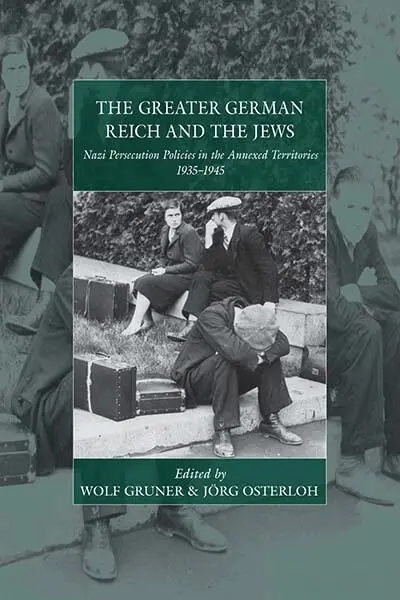
Greater German Reich and the Jews
Nazi Persecution Policies in the Annexed Territories 1935-1945
Inbunden, 2015
2186 kr
Lägg i varukorg
Between 1935 and 1940, the Nazis incorporated large portions of Europe into the German Reich. The contributors to this volume analyze the evolving anti-Jewish policies in the annexed territories and their impact on the Jewish population, as well as the attitudes and actions of non-Jews, Germans, …
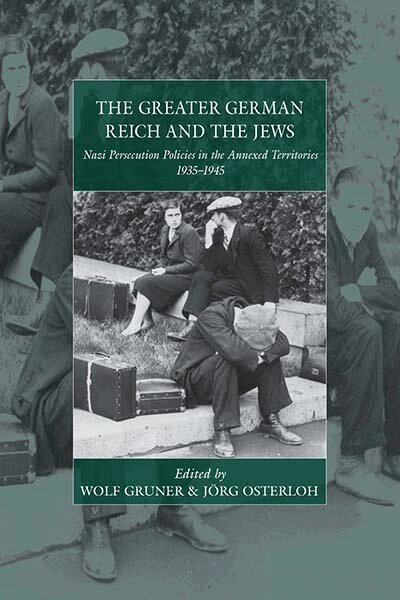
Greater German Reich and the Jews
Nazi Persecution Policies in the Annexed Territories 1935-1945
Häftad, 2017
618 kr
Lägg i varukorg
Between 1935 and 1940, the Nazis incorporated large portions of Europe into the German Reich. The contributors to this volume analyze the evolving anti-Jewish policies in the annexed territories and their impact on the Jewish population, as well as the attitudes and actions of non-Jews, Germans, …
Dresdner Bank Und Die Deutschen Juden
Av Dieter Ziegler, Maren Janetzko m. fl.
Inbunden, 2021
632 kr
Lägg i varukorg
Der Band geht detailliert darauf ein, wie sich die Dresdner Bank am Ausschluss der deutschen Juden aus dem Wirtschaftsleben beteiligte. Dabei geht es auf der einen Seite darum, wie die Bank mit ihren eigenen jüdischen Angestellten umging. Hier zeigt sich, wie die rassistische NS-Gesetzgebung zur …
Die Expansion Der Dresdner Bank in Europa
Av Harald Wixforth, Johannes Bähr m. fl.
Inbunden, 2021
632 kr
Lägg i varukorg
Die Dresdner Bank zog aus der Ausdehnung des deutschen Einflussbereiches in Europa und ihrer Regimenähe erhebliche Vorteile. Sie konnte auf ihre besonderen Beziehungen zu Reichsstellen zurückgreifen und erheblichen Einfluss auf die Neugestaltung des Kreditwesens in den einzelnen Gebieten nehmen. …
'Euthanasie'-Verbrechen im besetzten Europa
Av Jörg Osterloh, Jan Erik Schulte m. fl.
Inbunden, 2022
457 kr
Lägg i varukorg