John B. Londregan - Böcker
Visar alla böcker från författaren John B. Londregan. Handla med fri frakt och snabb leverans.
2 produkter
2 produkter
428 kr
Skickas inom 7-10 vardagar
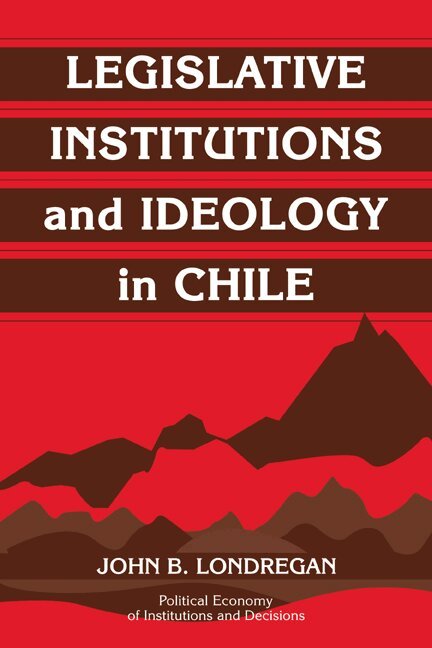
The 1980s and 1990s have seen several authoritarian governments voluntarily cede power to constitutionally elected democratic governments. John Londregan uses Chile as a case study of this phenomenon, exploring what sorts of guarantees are required for those who are ceding power and how those guarantees later work out in practice. He constructs an analytical model of a democratic transition and provides a new statistical technique for analysing legislative votes, based upon a detailed empirical analysis of Chile's legislative politics. Legislative Institutions and Ideology in Chile extends existing spatial models of policy preferences by incorporating a valence component to policy choices. The valence component enables an agenda setter, in Chile the democratically elected president, to overcome veto players' objections to reform. Londregan specifically also uses Senate committee voting records to study the impact of human rights concessions on the political debate.
784 kr
Skickas inom 7-10 vardagar
The 1980s and 1990s have seen several authoritarian governments voluntarily cede power to constitutionally elected democratic governments. John Londregan uses Chile as a case study of this phenomenon, exploring what sorts of guarantees are required for those who are ceding power and how those guarantees later work out in practice. He constructs an analytical model of a democratic transition and provides a new statistical technique for analysing legislative votes, based upon a detailed empirical analysis of Chile's legislative politics. Legislative Institutions and Ideology in Chile extends existing spatial models of policy preferences by incorporating a valence component to policy choices. The valence component enables an agenda setter, in Chile the democratically elected president, to overcome veto players' objections to reform. Londregan specifically also uses Senate committee voting records to study the impact of human rights concessions on the political debate.