John Barrell – författare
Visar alla böcker från författaren John Barrell. Handla med fri frakt och snabb leverans.
36 produkter
Spirit of Despotism
Invasions of Privacy in the 1790s
Av John Barrell
E-bok, 2006
2593 kr
Lägg i varukorg
How was the social and cultural life of Britain affected by the fear that the French Revolution would spread across the channel? In this brilliant, engagingly written, and profusely illustrated book, John Barrell, well-known for his studies of the history, literature, and art of the period, argues …
Imagining the King's Death
Figurative Treason, Fantasies of Regicide, 1793-1796
Av John Barrell
Inbunden, 2000
4412 kr
Lägg i varukorg
It is high treason in British law to 'imagine' the king's death. But after the execution of Louis XVI in 1793, everyone in Britain must have found themselves imagining that the same fate might befall George III. How easy was it to distinguish between fantasising about the death of George and …
Carnival, Hysteria, and Writing
Collected Essays and Autobiography
Av Allon White, John Barrell m. fl.
Häftad, 1993
930 kr
Lägg i varukorg
Before his death from leukemia at the age of 36, Allon White had become known as one of the most important literary and cultural critics of his generation. Carnival, Hysteria, and Writing represents a summation of the work which, as Stuart Hall explains in an extended introduction, transformed …
The Spirit of Despotism
Invasions of Privacy in the 1790s
Av John Barrell
Inbunden, 2006
3662 kr
Lägg i varukorg
How was the social and cultural life of Britain affected by the fear that the French Revolution would spread across the channel? In this brilliant, engagingly written, and profusely illustrated book, John Barrell, well-known for his studies of the history, literature, and art of the period, argues …
Infection of Thomas De Quincey
A Psychopathology of Imperialism
Av John Barrell
Inbunden, 1991
1071 kr
Lägg i varukorg
Thomas De Quincey, best known for his book Confessions of an English Opium Eater, was a journalist and propagandist of Empire, of oriental aggression, and of racial paranoia. The greater part of the fourteen volumes of his collected writings concerns the history, the colonial development, and …
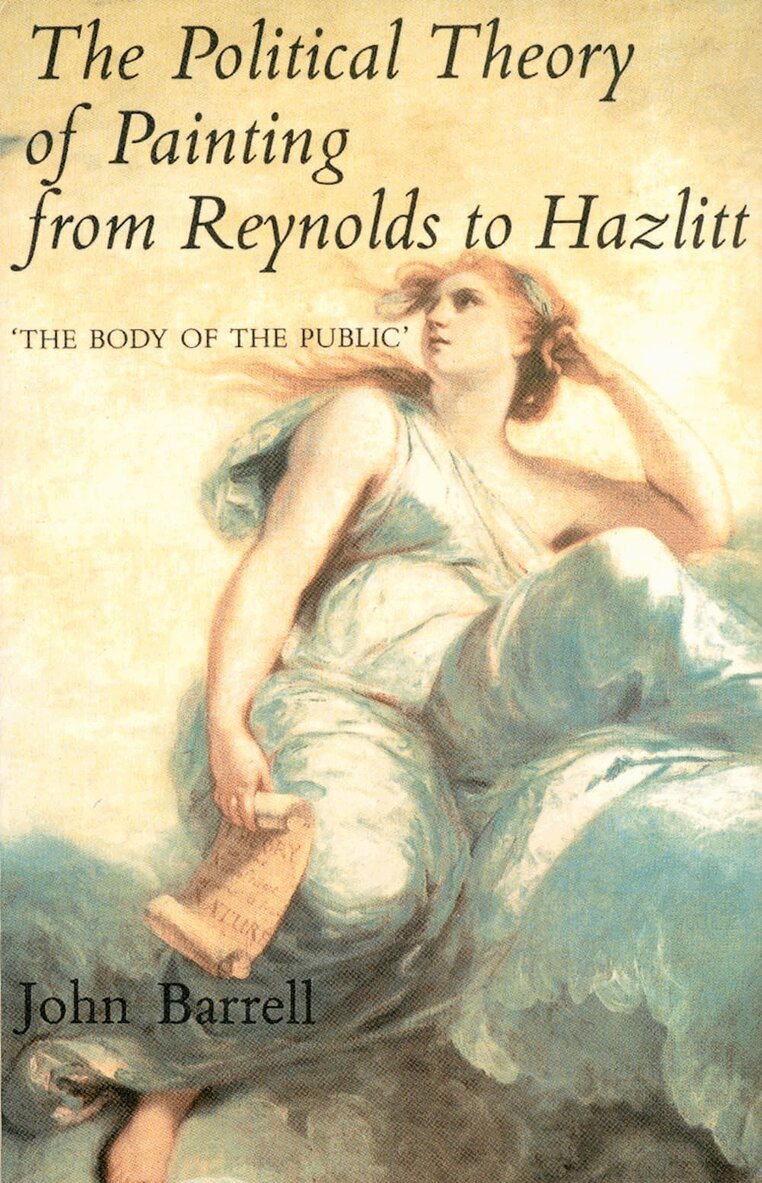
Political Theory of Painting from Reynolds to Hazlitt
"The Body of the Politic"
Av John Barrell
Häftad, 1995
619 kr
Lägg i varukorg
What is the function of painting in a commercial society? John Barrell discusses how British artists and writers of the late eighteenth and early nineteenth centuries, including Sir Joshua Reynolds, William Blake, and James Barry attempted to answer this question. His provocative and illuminating …
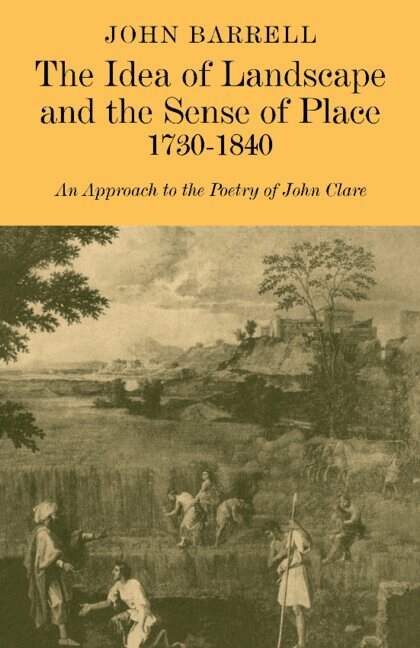
The Idea of Landscape and the Sense of Place 1730-1840
An Approach to the Poetry of John Clare
Av John Barrell
Häftad, 2011
842 kr
Lägg i varukorg
It is generally agreed that in the early eighteenth century people began to be interested in landscape as something to have a 'taste' for; that they saw landscape through the eyes of the great painters, and that later pictures, poetry and landscape gardening all reflect that taste. Dr Barrell …
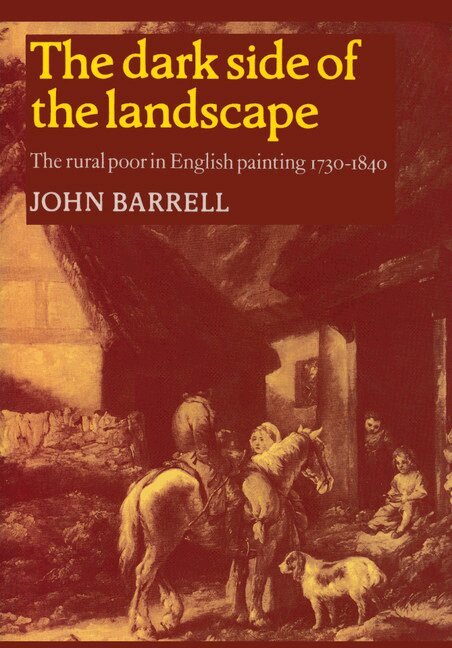
The Dark Side of the Landscape
The Rural Poor in English Painting 1730-1840
Av John Barrell
Häftad, 1983
418 kr
Lägg i varukorg
The eighteenth-century saw a radical change in the depiction of country life in English painting: feeling less constrained by the conventions of classical or theatrical pastoral, landscape painters attempted to offer a portrayal of what life was really like, or was thought to be like, in England; …
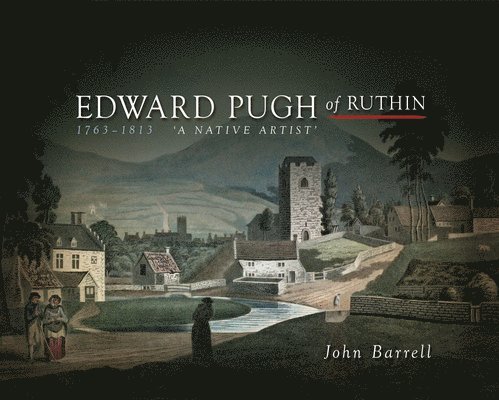
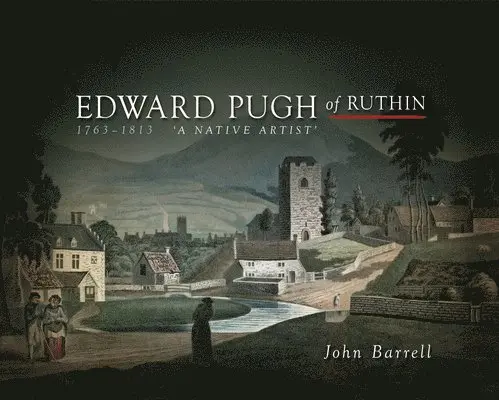
Edward Pugh of Ruthin 1763-1813
A Native Artist
Av John Barrell
Inbunden, 2013
377 kr
Lägg i varukorg
Edward Pugh (1763-1813) was a Ruthin-born, Welsh-speaking artist and writer who produced compelling landscapes images of Denbighshire in particular and, more widely of North Wales, Monmouthshire and London. He also wrote what is probably the best account of a tour in Wales ever written: it is far …
Edward Pugh of Ruthin 1763-1813
A Native Artist
Av John Barrell
Häftad, 2013
330 kr
Lägg i varukorg
Edward Pugh (1763-1813) was a Ruthin-born, Welsh-speaking artist and writer who produced compelling landscapes images of Denbighshire in particular and, more widely of North Wales, Monmouthshire and London. He also wrote what is probably the best account of a tour in Wales ever written: it is far …
Trials for Treason and Sedition, 1792-1794, Part I Vol 4
Av Jon Mee, John Barrell
E-bok, 2024
963 kr
Lägg i varukorg
The period 1792–94 witnessed the emergence of the first genuinely popular radical movement in Britain. This collection contains the key trials of London radicalism from 1792–94. It includes a general introduction, but each of the trials is introduced in its own right and supported by endnotes …
Trials for Treason and Sedition, 1792-1794, Part I Vol 2
Av Jon Mee, John Barrell
E-bok, 2024
935 kr
Lägg i varukorg
The period 1792–94 witnessed the emergence of the first genuinely popular radical movement in Britain. This collection contains the key trials of London radicalism from 1792–94. It includes a general introduction, but each of the trials is introduced in its own right and supported by endnotes …
Trials for Treason and Sedition, 1792-1794, Part II vol 8
Av Jon Mee, John Barrell
E-bok, 2024
963 kr
Lägg i varukorg
The period 1792-94 witnessed the emergence of the first genuinely popular radical movement in Britain. After the phenomenal success of Thomas Paine''s "Rights of Man", the government moved swiftly to prevent French republican ideas taking hold in Britain, beginning with the prosecution of Paine …
Trials for Treason and Sedition, 1792-1794, Part I Vol 1
Av Jon Mee, John Barrell
E-bok, 2024
1012 kr
Lägg i varukorg
The period 1792–94 witnessed the emergence of the first genuinely popular radical movement in Britain. This collection contains the key trials of London radicalism from 1792–94. It includes a general introduction, but each of the trials is introduced in its own right and supported by endnotes …
Trials for Treason and Sedition, 1792-1794, Part II vol 6
Av Jon Mee, John Barrell
E-bok, 2024
942 kr
Lägg i varukorg
The period 1792-94 witnessed the emergence of the first genuinely popular radical movement in Britain. After the phenomenal success of Thomas Paine''s "Rights of Man", the government moved swiftly to prevent French republican ideas taking hold in Britain, beginning with the prosecution of Paine …
Trials for Treason and Sedition, 1792-1794, Part I Vol 3
Av Jon Mee, John Barrell
E-bok, 2024
933 kr
Lägg i varukorg
The period 1792–94 witnessed the emergence of the first genuinely popular radical movement in Britain. This collection contains the key trials of London radicalism from 1792–94. It includes a general introduction, but each of the trials is introduced in its own right and supported by endnotes …
Trials for Treason and Sedition, 1792-1794, Part I Vol 5
Av Jon Mee, John Barrell
E-bok, 2024
942 kr
Lägg i varukorg
The period 1792–94 witnessed the emergence of the first genuinely popular radical movement in Britain. This collection contains the key trials of London radicalism from 1792–94. It includes a general introduction, but each of the trials is introduced in its own right and supported by endnotes …
Trials for Treason and Sedition, 1792-1794, Part II vol 7
Av Jon Mee, John Barrell
E-bok, 2024
942 kr
Lägg i varukorg
The period 1792-94 witnessed the emergence of the first genuinely popular radical movement in Britain. After the phenomenal success of Thomas Paine''s "Rights of Man", the government moved swiftly to prevent French republican ideas taking hold in Britain, beginning with the prosecution of Paine …
Trials for Treason and Sedition, 1792-1794, Part I Vol 1
Av Jon Mee, John Barrell
E-bok, 2024
1034 kr
Lägg i varukorg
The period 1792–94 witnessed the emergence of the first genuinely popular radical movement in Britain. This collection contains the key trials of London radicalism from 1792–94. It includes a general introduction, but each of the trials is introduced in its own right and supported by endnotes …
Trials for Treason and Sedition, 1792-1794, Part I Vol 2
Av Jon Mee, John Barrell
E-bok, 2024
942 kr
Lägg i varukorg
The period 1792–94 witnessed the emergence of the first genuinely popular radical movement in Britain. This collection contains the key trials of London radicalism from 1792–94. It includes a general introduction, but each of the trials is introduced in its own right and supported by endnotes …
English Literature in History
1730-80
Av John Barrell
E-bok, 2025
1150 kr
Lägg i varukorg
In eighteenth-century Britain, the study of history was understood first and foremost as the study of how states developed—and lost—their political coherence. But at the same time, writers, preoccupied by contemporary social change, were coming to believe that economic progress was largely …
English Literature in History
1730-80
Av John Barrell
E-bok, 2025
1175 kr
Lägg i varukorg
In eighteenth-century Britain, the study of history was understood first and foremost as the study of how states developed—and lost—their political coherence. But at the same time, writers, preoccupied by contemporary social change, were coming to believe that economic progress was largely …
English Literature in History
1730–80
Av John Barrell
Inbunden, 2025
1760 kr
Lägg i varukorg
In eighteenth-century Britain, the study of history was understood first and foremost as the study of how states developed—and lost—their political coherence. But at the same time, writers, preoccupied by contemporary social change, were coming to believe that economic progress was largely …
English Literature in History
1730–80
Av John Barrell
Häftad, 2026
547 kr
Lägg i varukorg
In eighteenth-century Britain, the study of history was understood first and foremost as the study of how states developed—and lost—their political coherence. But at the same time, writers, preoccupied by contemporary social change, were coming to believe that economic progress was largely …
Living with the Royal Academy
Artistic Ideals and Experiences in England, 1768–1848
Av Sarah Monks, John Barrell m. fl.
Häftad, 2016
897 kr
Lägg i varukorg
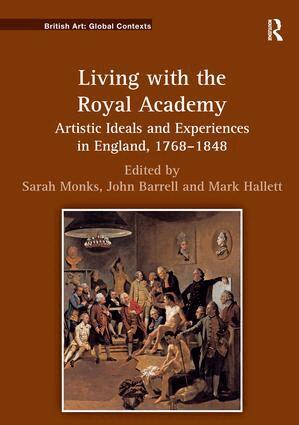
Living with the Royal Academy: Artistic Ideals and Experiences in England, 1768-1848 offers a range of case studies which consider individual artists' personal, professional and artistic relationships with the Royal Academy during the late eighteenth and early nineteenth centuries, bringing …
Trials for Treason and Sedition, 1792-1794, Part I Vol 1
Av John Barrell, Jon Mee
Inbunden, 2006
1033 kr
Lägg i varukorg
The period 1792–94 witnessed the emergence of the first genuinely popular radical movement in Britain. This collection contains the key trials of London radicalism from 1792–94. It includes a general introduction, but each of the trials is introduced in its own right and supported by endnotes and …
Trials for Treason and Sedition, 1792-1794, Part I Vol 2
Av John Barrell, Jon Mee
Inbunden, 2006
1033 kr
Lägg i varukorg
The period 1792–94 witnessed the emergence of the first genuinely popular radical movement in Britain. This collection contains the key trials of London radicalism from 1792–94. It includes a general introduction, but each of the trials is introduced in its own right and supported by endnotes and …
Trials for Treason and Sedition, 1792-1794, Part I Vol 3
Av John Barrell, Jon Mee
Inbunden, 2006
1033 kr
Lägg i varukorg
The period 1792–94 witnessed the emergence of the first genuinely popular radical movement in Britain. This collection contains the key trials of London radicalism from 1792–94. It includes a general introduction, but each of the trials is introduced in its own right and supported by endnotes and …
Trials for Treason and Sedition, 1792-1794, Part I Vol 4
Av John Barrell, Jon Mee
Inbunden, 2006
1033 kr
Lägg i varukorg
The period 1792–94 witnessed the emergence of the first genuinely popular radical movement in Britain. This collection contains the key trials of London radicalism from 1792–94. It includes a general introduction, but each of the trials is introduced in its own right and supported by endnotes and …
Trials for Treason and Sedition, 1792-1794, Part I Vol 5
Av John Barrell, Jon Mee
Inbunden, 2006
1033 kr
Lägg i varukorg
The period 1792–94 witnessed the emergence of the first genuinely popular radical movement in Britain. This collection contains the key trials of London radicalism from 1792–94. It includes a general introduction, but each of the trials is introduced in its own right and supported by endnotes and …