A system of government primary schools for Maori children created by Parliament in 1867 was regarded as a temporary measure until they learnt English and were Europeanised. But it lasted for 100 years despite criticisms of ‘ separatism'' and ‘ pampering'' of Maori.Official policies for the schools reflected European attitudes towards Maori, including the view that they were particularly suited to a practical, non-academic type of schooling leading to manual and domestic occupations. The policy of assimilation, designed to turn Maori into brown Europeans, was not modified until the 1930s when a cultural renaissance led by Apirana Ngata, combined with influences from anthropology and Britain'' s African education policies, contributed to a limited form of bi-culturalism.
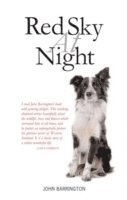
John Barrington was a shepherd to over 750 Blackface ewes who graze 2,000 acres of some of Britain’s most beautiful hills overlooking the deep dark water of Loch Katrine. The yearly round of lambing, dipping, shearing and the sales is marvelously interwoven into the story of the glen, of Rob Roy in whose house John lived, of curling when the ice is thick enough, and of sheep dog trials in the summer. Whether up on the hills or along the glen, John knows the haunts of the local wildlife: the wily hill fox, the grunting badger, the herds of red deer, and the shrews, voles and insects which scurry underfoot. He sets his seasonal clock by the passage of birds on the loch, and jealously guards over the golden eagle’s eyrie in the hills. Paul Armstrong’s sensitive illustrations are the perfect accompaniment to the evocative text.
Filled with lively anecdotes, poems and mythological stories, Barrington sets out to map the evolution and bond between man and dog; how dogs developed from the wild into the beloved companions as we know them today.
A system of government primary schools for Maori children created by Parliament in 1867 was regarded as a temporary measure until they learnt English and were Europeanised. But it lasted for 100 years despite criticisms of ‘ separatism'' and ‘ pampering'' of Maori.Official policies for the schools reflected European attitudes towards Maori, including the view that they were particularly suited to a practical, non-academic type of schooling leading to manual and domestic occupations. The policy of assimilation, designed to turn Maori into brown Europeans, was not modified until the 1930s when a cultural renaissance led by Apirana Ngata, combined with influences from anthropology and Britain'' s African education policies, contributed to a limited form of bi-culturalism.
John Barrington was a shepherd to over 750 Blackface ewes who graze 2,000 acres of some of Britain’s most beautiful hills overlooking the deep dark water of Loch Katrine. The yearly round of lambing, dipping, shearing and the sales is marvelously interwoven into the story of the glen, of Rob Roy in whose house John lived, of curling when the ice is thick enough, and of sheep dog trials in the summer. Whether up on the hills or along the glen, John knows the haunts of the local wildlife: the wily hill fox, the grunting badger, the herds of red deer, and the shrews, voles and insects which scurry underfoot. He sets his seasonal clock by the passage of birds on the loch, and jealously guards over the golden eagle’s eyrie in the hills. Paul Armstrong’s sensitive illustrations are the perfect accompaniment to the evocative text.
Filled with lively anecdotes, poems and mythological stories, Barrington sets out to map the evolution and bond between man and dog; how dogs developed from the wild into the beloved companions as we know them today.