John Beusterien - Böcker
Visar alla böcker från författaren John Beusterien. Handla med fri frakt och snabb leverans.
8 produkter
8 produkter
552 kr
Kommande
For centuries Mexican people of the plains—or los Llaneros—have inhabited and embodied the borderland region known today as the Southern Great Plains. Yet their central presence in the area is often forgotten. This diverse collection of essays brings much-needed attention to the ethnic culture and history of the Llano, the vast grassland plains encompassing the Texas Panhandle, eastern New Mexico, and corners of Colorado, Kansas, and Oklahoma.Los Llaneros covers a broad period, beginning with the Coronado entrada of 1540 and ending in the big ranch era around 1900. It is a unique colonial history, involving Nuevomexicanos, Comanches and other Indigenous peoples, the Spanish, and Anglo-Texans. The volume is interdisciplinary in its approach, embracing archeological, folkloric, literary, and cultural knowledge. Through these multiple perspectives, Los Llaneros achieves a singular goal: counteracting a long silence—and at times silencing—of Mexican people.Collectively the contributors to this volume make a compelling argument that this region's ethnic history must be recovered and reinterpreted to understand fully the cultural, environmental, and racial dynamics of the Southern Plains. A timely reconsideration of an important borderland region, Los Llaneros opens new pathways for future examination of the Llano and its diverse peoples.
241 kr
Skickas inom 7-10 vardagar
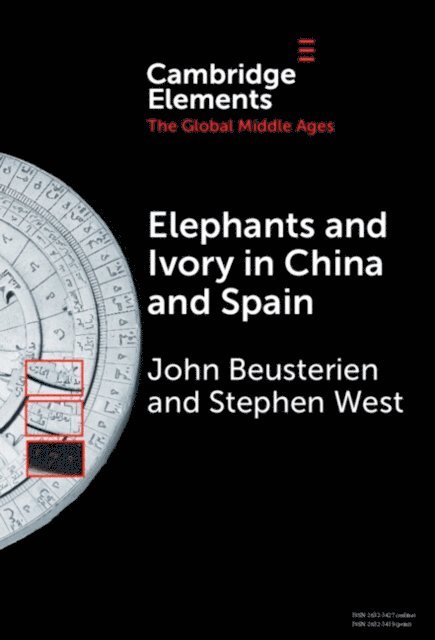
The Element provides a global history of ivory and elephants, acknowledging the individuality and dignity of the elephants that provided that ivory. Sections on China include the first translations of texts about the cultural importance of elephants and ivory in the Song Dynasty (960–1279) and an examination of an ivory stave (huban 笏板), crafted from an Asian elephant tusk (Elephas maximus), carried by officials in court and other formal rituals. Sections on Spain examine the value of ivory during the reign of King Alfonso X of Castille (1221–1284) and the Virxe Abrideira (ca. 1260–1275), an ivory Virgin and Child statuette owned by Queen Violante of Aragon (1236–1301), crafted from an African elephant tusk (Loxodonta africana). The Element concludes by offering a pedagogy from a comparative literature perspective about Sunjata (c.1226), an epic from the Mali empire in West Africa, an important source for thirteenth-century global ivory markets.
775 kr
Skickas inom 7-10 vardagar
The Element provides a global history of ivory and elephants, acknowledging the individuality and dignity of the elephants that provided that ivory. Sections on China include the first translations of texts about the cultural importance of elephants and ivory in the Song Dynasty (960–1279) and an examination of an ivory stave (huban 笏板), crafted from an Asian elephant tusk (Elephas maximus), carried by officials in court and other formal rituals. Sections on Spain examine the value of ivory during the reign of King Alfonso X of Castille (1221–1284) and the Virxe Abrideira (ca. 1260–1275), an ivory Virgin and Child statuette owned by Queen Violante of Aragon (1236–1301), crafted from an African elephant tusk (Loxodonta africana). The Element concludes by offering a pedagogy from a comparative literature perspective about Sunjata (c.1226), an epic from the Mali empire in West Africa, an important source for thirteenth-century global ivory markets.
654 kr
Skickas inom 10-15 vardagar
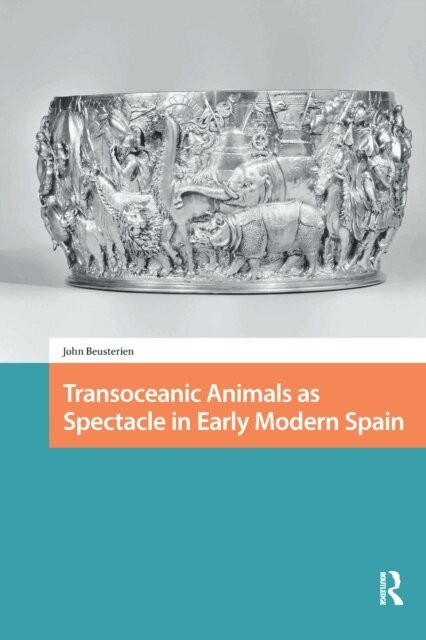
Animal spectacles are vital to a holistic appreciation of Spanish culture. In Transoceanic Animals as Spectacle in Early Modern Spain, Beusterien christens five previously unnamed animals, each of which was a protagonist in a spectacle: Abada, the rhinoceros; Hawa’i, the elephant; Fuleco, the armadillo; Jarama, the bull; and Maghreb, the lion. In presenting and analyzing their stories, Beusterien enriches our understanding of the role of animals in the development of commercial theater in Spain and in the modern bullfight. He also contributes to growing scholarly conversations on the importance of Spain in the history of science by examining how animal spectacles had profound repercussions on the emergence of the modern zoo and natural history museum. Combining scholarly content analysis and pedagogical sagacity, the book has a broad appeal for scholars of the early modern Spanish Empire, animal studies scholars, and secondary and postsecondary instructors looking for engaging exercises and information for their Spanish language, culture, and history students.
Canines in Cervantes and Velázquez
An Animal Studies Reading of Early Modern Spain
Häftad, Engelska, 2016
918 kr
Skickas inom 10-15 vardagar
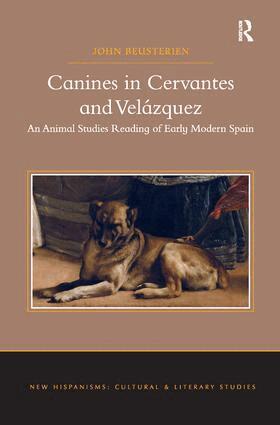
The study of the creation of canine breeds in early modern Europe, especially Spain, illustrates the different constructs against which notions of human identity were forged. This book is the first comprehensive history of early modern Spanish dogs and it evaluates how two of Spain’s most celebrated and canonical cultural figures of this period, the artist Diego Velázquez and the author Miguel de Cervantes, radically question humankind’s sixteenth-century anthropocentric self-fashioning. In general, this study illuminates how Animal Studies can offer new perspectives to understanding Hispanism, giving readers a fresh approach to the historical, literary and artistic complexity of early modern Spain.
Canines in Cervantes and Velázquez
An Animal Studies Reading of Early Modern Spain
Inbunden, Engelska, 2013
2 496 kr
Skickas inom 10-15 vardagar
The study of the creation of canine breeds in early modern Europe, especially Spain, illustrates the different constructs against which notions of human identity were forged. This book is the first comprehensive history of early modern Spanish dogs and it evaluates how two of Spain’s most celebrated and canonical cultural figures of this period, the artist Diego Velázquez and the author Miguel de Cervantes, radically question humankind’s sixteenth-century anthropocentric self-fashioning. In general, this study illuminates how Animal Studies can offer new perspectives to understanding Hispanism, giving readers a fresh approach to the historical, literary and artistic complexity of early modern Spain.
696 kr
Skickas inom 7-10 vardagar
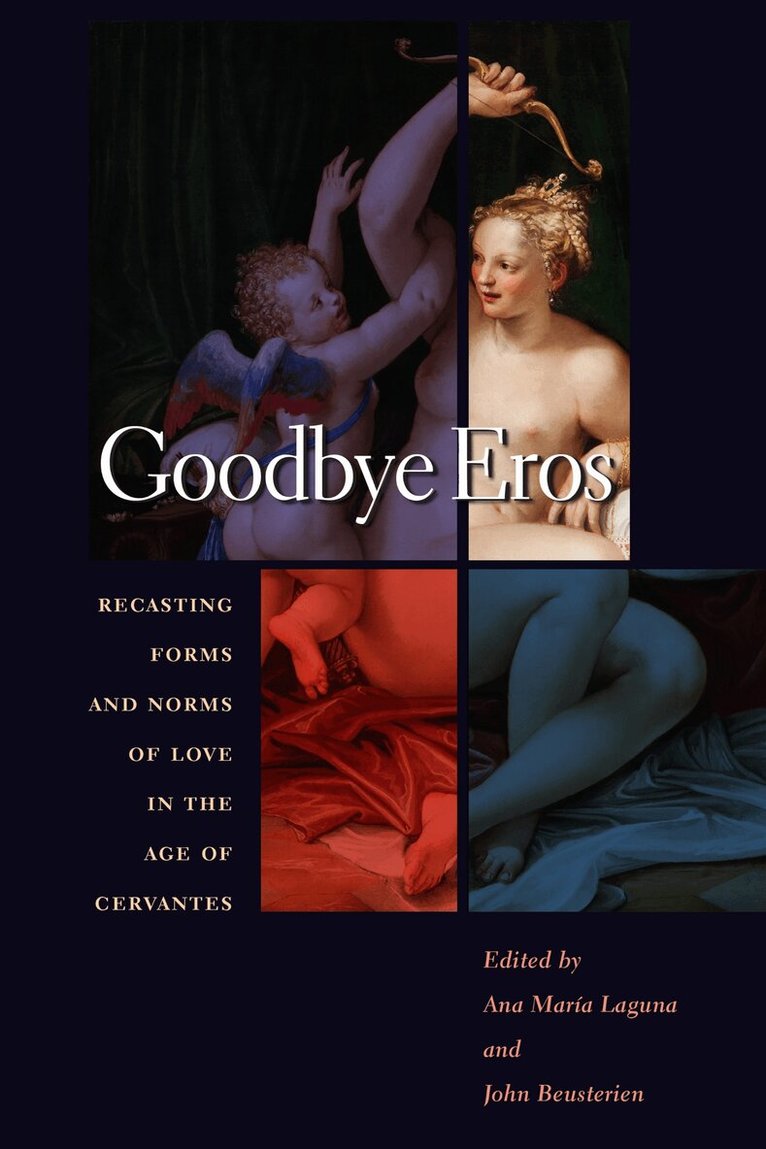
Traditional Petrarchan and Neoplatonic paradigms of love started to show clear signs of inadequacy and exhaustion in the sixteenth century. How did the Spanish Golden Age recast worn out discourses of love and make them compelling again? This volume explores how Spanish letters recognized that old love paradigms, especially the crisis of the subject, presented an extraordinary opportunity for revising traditional literary strictures. As a result, during Spain’s nascent modernity, literature took up the challenge to expand existing forms of desire and subjectivity.A range of scholars show how canonical and non-canonical Golden Age writers like Miguel de Cervantes, Diego Hurtado de Mendoza, Francisco de Quevedo, Luis de Góngora, Lope de Vega, and Francisco de la Torre y Sevil became equal agents of the sweeping ontological reconfiguration of the idea of eros that defined their culture. Such reconfiguration includes: the troubling displacement of "self" and "other" seen in sentimental genres like the pastoral or romance; the overlapping of emotions such as love and jealousy characteristic of the baroque lyric and dramatic production; and the conflation of axioms such as eros and eris prevalent in contemporaneous epic experiments.In uniting the findings of often surprising texts, the collection of essays in Goodbye Eros takes a pioneering look at how Golden Age moral, ideological, scientific, and literary discourses intersected to create fascinating re-elaborations of the trope of love.
1 817 kr
Skickas inom 10-15 vardagar
In presenting and analyzing the stories of five previously unnamed animals, Beusterien enriches our understanding of the role of animals in the development of commercial theater in Spain and in the modern bullfight.