John C. Ryan - Böcker
Visar alla böcker från författaren John C. Ryan. Handla med fri frakt och snabb leverans.
10 produkter
10 produkter
2 098 kr
Skickas inom 10-15 vardagar
In an era of climate change, deforestation, melting ice caps, poisoned environments, and species loss, many people are turning to the power of the arts and humanities for sustainable solutions to global ecological problems. Introduction to the Environmental Humanities offers a practical and accessible guide to this dynamic and interdisciplinary field.This book provides an overview of the Environmental Humanities’ evolution from the activist movements of the early and mid-twentieth century to more recent debates over climate change, sustainability, energy policy, and habitat degradation in the Anthropocene era. The text introduces readers to seminal writings, artworks, campaigns, and movements while demystifying important terms such as the Anthropocene, environmental justice, nature, ecosystem, ecology, posthuman, and non-human. Emerging theoretical areas such as critical animal and plant studies, gender and queer studies, Indigenous studies, and energy studies are also presented. Organized by discipline, the book explores the role that the arts and humanities play in the future of the planet.Including case studies, discussion questions, annotated bibliographies, and links to online resources, this book offers a comprehensive and engaging overview of the Environmental Humanities for introductory readers. For more advanced readers, it serves as a foundation for future study, projects, or professional development.
538 kr
Skickas inom 10-15 vardagar
In an era of climate change, deforestation, melting ice caps, poisoned environments, and species loss, many people are turning to the power of the arts and humanities for sustainable solutions to global ecological problems. Introduction to the Environmental Humanities offers a practical and accessible guide to this dynamic and interdisciplinary field.This book provides an overview of the Environmental Humanities’ evolution from the activist movements of the early and mid-twentieth century to more recent debates over climate change, sustainability, energy policy, and habitat degradation in the Anthropocene era. The text introduces readers to seminal writings, artworks, campaigns, and movements while demystifying important terms such as the Anthropocene, environmental justice, nature, ecosystem, ecology, posthuman, and non-human. Emerging theoretical areas such as critical animal and plant studies, gender and queer studies, Indigenous studies, and energy studies are also presented. Organized by discipline, the book explores the role that the arts and humanities play in the future of the planet.Including case studies, discussion questions, annotated bibliographies, and links to online resources, this book offers a comprehensive and engaging overview of the Environmental Humanities for introductory readers. For more advanced readers, it serves as a foundation for future study, projects, or professional development.
249 kr
Skickas
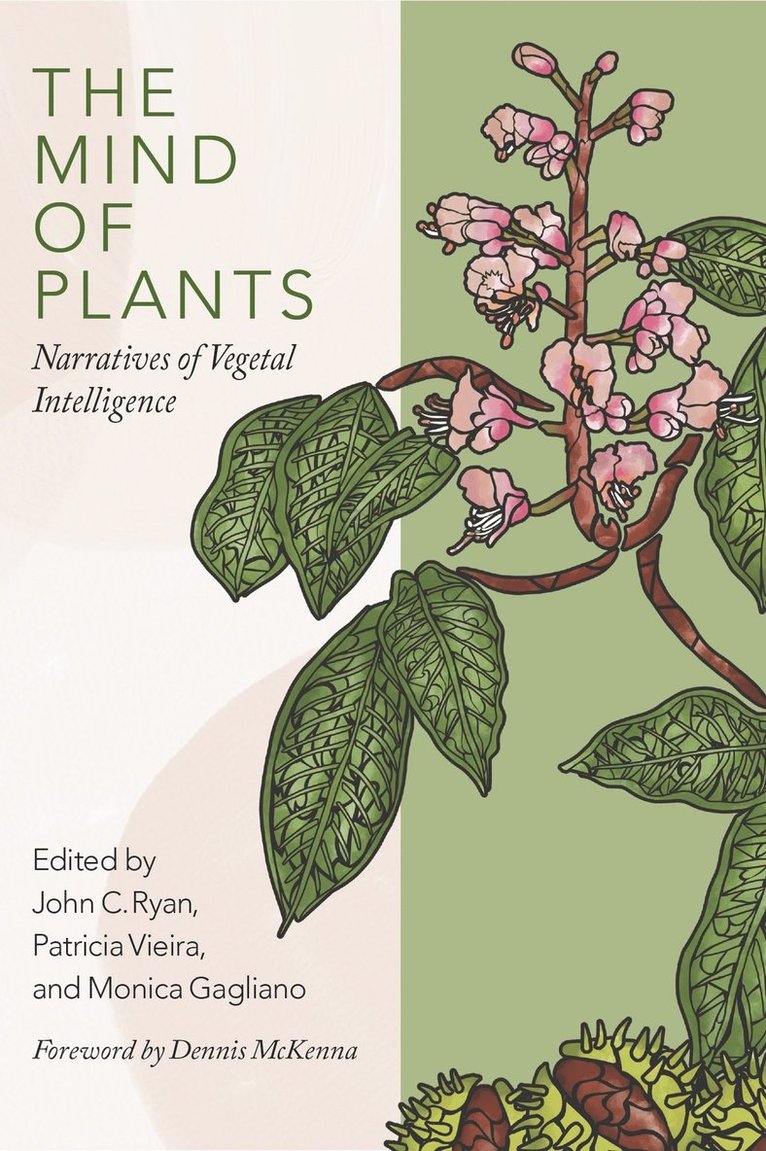
Explorations of plant consciousness and human interactions with the natural world.From apples to ayahuasca, coffee to kurrajong, passionflower to peyote, plants are conscious beings. How they interact with each other, with humanity and with the world at large has long been studied by researchers, scientists and spiritual teachers and seekers. The Mind of Plants: Narratives of Vegetal Intelligence brings together works from all these disciplines and more in a collection of essays that highlights what we know and what we intuit about botanical life.The Mind of Plants, featuring a foreword by Dennis McKenna, is a collection of short essays, narratives and poetry on plants and their interaction with humans. Contributors include Robin Wall Kimmerer, author of the New York Times’ best seller Braiding Sweetgrass, Jeremy Narby, John Kinsella, Luis Eduardo Luna, Megan Kaminski and dozens more. The book’s editors, John C. Ryan, Patrícia Vieira and Monica Gagliano – each of whom also contributed works to the collection – weave together essays, personal reflections and poems paired with intricate illustrations by José María Pout.Recent scientific research in the field of plant cognition highlights the capacity of botanical life to discern between options and learn from prior experiences or, in other words, to think. The Mind of Plants includes texts that interpret this concept broadly. As Mckenna writes in his foreword, “What the reader will find here, expressed in poetry and prose, are stories that are infused with cherished memories and inspired celebrations of unique relationships with a group of organisms that are alien and unlike us in every way, yet touch human lives in myriad ways.”
1 952 kr
Skickas inom 10-15 vardagar
Global Perspectives on Nationalism takes an interdisciplinary approach informed by recent theorisations of nationalism to examine perennial questions on the topic.The idea of nationalism centres on questions of ethnicity, culture, religion, language, and access to resources. What determines consciousness of nationalism? How is nationalism manifested, shaped, or countered through literary and cultural productions? The contributors highlight topical areas in studies of nationalism including ecology, natural resources, sustainability, globalisation, the Anthropocene, postcolonialism, indigeneity, folklore, popular culture, and queer theory. They develop innovative perspectives on nationalism through in-depth analyses of the theoretical, political, literary, linguistic, cultural, and ecological dimensions of nationalism in Argentina, Australia, Bangladesh, Bosnia and Herzegovina, China, Germany, Greece, India, Indonesia, Lebanon, Nepal, Nigeria, Poland, Scotland, Turkey, the United States, and elsewhere. This volume underscores the importance of generative dialogue between disciplines in assessing the implications of nationalism for everyday life through five thematic sections: (I) Ethnicity, Ideology, and Narration; (II) Religion, Identity, and Heritage; (III) Linguistics, Tradition, and Modernism; (IV) Music, Lyricism, and Poetics; and (V) Ecology, Environment, and Non-Human Lives.This book will be of particular value to students and researchers in philosophy, literary studies, and political theory with interests spanning ecology, ethnicity, folklore, gender, heritage, identity, linguistics, nationalism, nationhood, religion, and sexuality.
596 kr
Skickas inom 10-15 vardagar
Global Perspectives on Nationalism takes an interdisciplinary approach informed by recent theorisations of nationalism to examine perennial questions on the topic.The idea of nationalism centres on questions of ethnicity, culture, religion, language, and access to resources. What determines consciousness of nationalism? How is nationalism manifested, shaped, or countered through literary and cultural productions? The contributors highlight topical areas in studies of nationalism including ecology, natural resources, sustainability, globalisation, the Anthropocene, postcolonialism, indigeneity, folklore, popular culture, and queer theory. They develop innovative perspectives on nationalism through in-depth analyses of the theoretical, political, literary, linguistic, cultural, and ecological dimensions of nationalism in Argentina, Australia, Bangladesh, Bosnia and Herzegovina, China, Germany, Greece, India, Indonesia, Lebanon, Nepal, Nigeria, Poland, Scotland, Turkey, the United States, and elsewhere. This volume underscores the importance of generative dialogue between disciplines in assessing the implications of nationalism for everyday life through five thematic sections: (I) Ethnicity, Ideology, and Narration; (II) Religion, Identity, and Heritage; (III) Linguistics, Tradition, and Modernism; (IV) Music, Lyricism, and Poetics; and (V) Ecology, Environment, and Non-Human Lives.This book will be of particular value to students and researchers in philosophy, literary studies, and political theory with interests spanning ecology, ethnicity, folklore, gender, heritage, identity, linguistics, nationalism, nationhood, religion, and sexuality.
311 kr
Skickas inom 7-10 vardagar
The eighteenth-century naturalist Erasmus Darwin (grandfather of Charles) argued that plants are animate, living beings and attributed them sensation, movement, and a certain degree of mental activity, emphasizing the continuity between humankind and plant existence. Two centuries later, the understanding of plants as active and communicative organisms has reemerged in such diverse fields as plant neurobiology, philosophical posthumanism, and ecocriticism. The Language of Plants brings together groundbreaking essays from across the disciplines to foster a dialogue between the biological sciences and the humanities and to reconsider our relation to the vegetal world in new ethical and political terms. Viewing plants as sophisticated information-processing organisms with complex communication strategies (they can sense and respond to environmental cues and play an active role in their own survival and reproduction through chemical languages) radically transforms our notion of plants as unresponsive beings, ready to be instrumentally appropriated. By providing multifaceted understandings of plants, informed by the latest developments in evolutionary ecology, the philosophy of biology, and ecocritical theory, The Language of Plants promotes the freedom of imagination necessary for a new ecological awareness and more sustainable interactions with diverse life forms. Contributors: Joni Adamson, Arizona State U; Nancy E. Baker, Sarah Lawrence College; Karen L. F. Houle, U of Guelph; Luce Irigaray, Centre National de la Recherche Scientifique, Paris; Erin James, U of Idaho; Richard Karban, U of California at Davis; Andre9 Kessler, Cornell U; Isabel Kranz, U of Vienna; Michael Marder, U of the Basque Country (UPV-EHU); Timothy Morton, Rice U; Christian Nansen, U of California at Davis; Robert A. Raguso, Cornell U; Catriona Sandilands, York U.
266 kr
Skickas inom 5-8 vardagar
1 026 kr
Skickas inom 5-8 vardagar
Forest Family highlights the importance of the old-growth forests of Southwest Australia to art, culture, history, politics, and community identity. The volume weaves together the natural and cultural histories of Southwest eucalypt forests, spanning pre-settlement, colonial, and contemporary periods. The contributors critique a range of content including historical documents, music, novels, paintings, performances, photography, poetry, and sculpture representing ancient Australian forests. Forest Family centers on the relationship between old-growth nature and human culture through the narrative strand of the Giblett family of Western Australia and the forests in which they settled during the nineteenth century. The volume will be of interest to general readers of environmental history, as well as scholars in critical plant studies and the environmental humanities.
589 kr
Skickas inom 7-10 vardagar
This open access book offers an introduction to the field of the environmental humanities in India.
473 kr
Skickas inom 10-15 vardagar
This open access book offers an introduction to the field of the environmental humanities in India. The environmental humanities, often referred to as ‘EH’, are a multifaceted, relatively new, and swiftly evolving field of scholarship that integrates the theories and approaches of various disciplines - from anthropology, art, communications, cultural studies, philosophy and ecology to history, literature, media, music, performance, politics, sociology, theology and theater. Practitioners of this considerably integrative and widely ranging field aim to address and, in certain cases, confront today's urgent ecological and cultural challenges, namely climate change, urban sustainability, biodiversity conservation, species decline, energy policy, the exigencies of the Anthropocene, environmental activism, and Indigenous peoples' justice. Although the environmental humanities have been relatively slow to gain traction in South Asia, an increasing momentum towards transdisciplinary approaches to ecology and sustainability is palpable in India. Comprising fourteen chapters, this contributed volume is the first major publication to call attention to current work in the environmental humanities in India. The volume foregrounds particular ecohumanist theories and methodologies evolving from Indian biocultural contexts. Towards this aim, the book consists of four thematic sections: Indigenous Perspectives: Conservation, Spirituality, and Language; Theoretical Grounding: Education, Law, and Ethics; Literary Formulations: Memoir, Parable, and Storyworlds; and Popular Narratives: Myth, Travel, and Music. The volume is of interest to undergraduates, postgraduates, early career scholars, and more established researchers in the environmental humanities and the allied fields of ecopoetics, ecocriticism, ecomusicology, environmental art, cultural ecology, postcolonial studies, and South Asian studies.This is an open access book.