Patricia Vieira - Böcker
Visar alla böcker från författaren Patricia Vieira. Handla med fri frakt och snabb leverans.
12 produkter
12 produkter
1 833 kr
Skickas inom 10-15 vardagar
These original essays contributed by leading thinkers aim to revitalize utopian thinking and apply it to contemporary national and international politics. Radical political thought of the 20th century was dominated by utopia, but the failure of communism in Eastern Europe and its disavowal in China has brought on the need for a new model of utopian thought. This book thus seeks to redefine the concept of utopia and bring it to bear on today's politics. The original essays, contributed by key thinkers such as Gianni Vattimo and Jean-Luc Nancy, highlight the connection between utopian theory and practice. The book reassesses the legacy of utopia and conceptualizes alternatives to the neo-liberal, technocratic regimes prevalent in today's world. It argues that only utopia in its existential sense, grounded in the lived time and space of politics, can distance itself from mainstream ideology and not be at the service of technocratic regimes, while paying attention to the material conditions of human life."Existential Utopia" offers a new and exciting interpretation of utopia in contemporary culture and a much-needed intervention into the philosophical and political discussion of utopian thinking that is both accessible to students and comprehensive.
488 kr
Skickas inom 10-15 vardagar
These original essays contributed by leading thinkers aim to revitalize utopian thinking and apply it to contemporary national and international politics. Radical political thought of the 20th century was dominated by utopia, but the failure of communism in Eastern Europe and its disavowal in China has brought on the need for a new model of utopian thought. This book thus seeks to redefine the concept of utopia and bring it to bear on today's politics. The original essays, contributed by key thinkers such as Gianni Vattimo and Jean-Luc Nancy, highlight the connection between utopian theory and practice. The book reassesses the legacy of utopia and conceptualizes alternatives to the neo-liberal, technocratic regimes prevalent in today's world. It argues that only utopia in its existential sense, grounded in the lived time and space of politics, can distance itself from mainstream ideology and not be at the service of technocratic regimes, while paying attention to the material conditions of human life."Existential Utopia" offers a new and exciting interpretation of utopia in contemporary culture and a much-needed intervention into the philosophical and political discussion of utopian thinking that is both accessible to students and comprehensive.
642 kr
Skickas inom 7-10 vardagar
When confronting twentieth-century political oppression and violence, writers and artists in Portugal and South America have often emphasized the complex relationship between freedom and tyranny. In Seeing Politics Otherwise, Patricia Vieira uses an interdisciplinary approach to explore the interrelation of politics and representations of vision and blindness in Latin American and Iberian literature, film, and art.Vieira's discussion focuses on three literary works: Graciliano Ramos's Memoirs of Prison, Ariel Dorfman's Death and the Maiden, and José Saramago's Blindness, with supplemental analyses of sculpture and film by Ana Maria Pacheco, Bruno Barreto, and Marco Bechis. These artists use metaphors of blindness to denounce the totalizing gaze of dictatorial regimes. Rather than equating blindness with deprivation, Vieira argues that shadows, blindfolds, and blindness are necessary elements for re-imagining the political world and re-acquiring a political voice. Seeing Politics Otherwise offers a compelling analysis of vision and its forcible deprivation in the context of art and political protest.
1 808 kr
Skickas inom 10-15 vardagar
The Green Thread: Dialogues with the Vegetal World is an interdisciplinary collection of essays in the emerging field of Plant Studies. The volume is the first of its kind to bring together a dynamic body of scholarship that shares a critique of long-standing human perceptions of plants as lacking autonomy, agency, consciousness, and, intelligence.The leading metaphor of the book—“the green thread”, echoing poet Dylan Thomas’ phrase “the green fuse”—carries multiple meanings. On a more apparent level, “the green thread” is what weaves together the diverse approaches of this collection: an interest in the vegetal that goes beyond single disciplines and specialist discourses, and one that not only encourages but necessitates interdisciplinary and even interspecies dialogue. On another level, “the green thread” links creative and historical productions to the materiality of the vegetal—a reality reflecting our symbiosis with oxygen-producing beings. In short, The Green Thread refers to the conversations about plants that transcend strict disciplinary boundaries as well as to the possibility of dialogue with plants.
668 kr
Skickas inom 10-15 vardagar
The Green Thread: Dialogues with the Vegetal World is an interdisciplinary collection of essays in the emerging field of Plant Studies. The volume is the first of its kind to bring together a dynamic body of scholarship that shares a critique of long-standing human perceptions of plants as lacking autonomy, agency, consciousness, and, intelligence.The leading metaphor of the book—“the green thread”, echoing poet Dylan Thomas’ phrase “the green fuse”—carries multiple meanings. On a more apparent level, “the green thread” is what weaves together the diverse approaches of this collection: an interest in the vegetal that goes beyond single disciplines and specialist discourses, and one that not only encourages but necessitates interdisciplinary and even interspecies dialogue. On another level, “the green thread” links creative and historical productions to the materiality of the vegetal—a reality reflecting our symbiosis with oxygen-producing beings. In short, The Green Thread refers to the conversations about plants that transcend strict disciplinary boundaries as well as to the possibility of dialogue with plants.
1 391 kr
Skickas inom 10-15 vardagar
Portuguese Literature and the Environment explores the relationship between Portuguese literature and the environment from Medieval times to the present. From the centrality of nature in Medieval poetry, through the bucolic verse of the Renaissance, all the way to the Romantic and post-Romantic nostalgia for a pristine natural or rural landscape under threat in the wake of industrialization, Portuguese literature has frequently reflected on the connection between humans and the natural world. More recently, the postcolonial turn in contemporary literature has highlighted the contrast between the environment of the former colonies and that of Portugal.Contributors to the collection examine how Portuguese writers engage with the environment and have incorporated nature in their texts not only to prompt social, political or philosophical reflections on human society, but also as a way to learn from non-humans.The book is organized into three sections. The first explores the relationship between Portuguese philosophy, historiography, culture, and environmental issues. The second section discusses the link between literary texts and the environment from the Renaissance to 1900. The final section analyzes the connection between literary movements or specific authors and environmental change from 1900 to today. Scholars of literature, Latin American studies, literature, and environmental studies will find this volume especially useful.
560 kr
Skickas inom 10-15 vardagar
Portuguese Film, 1930-1960: The Staging of the New State Regime provides groundbreaking analysis of Portuguese feature films produced in the first three decades of the New State (Estado Novo), a right-wing totalitarian regime that lasted between 1933 and 1974. These films, sponsored by the National Propaganda Institute (Secretariado Nacional de Propaganda), convey a conservative image of both mainland Portugal and the country's overseas African colonies (Angola, Mozambique, Cape Verde, Guinea-Bissau and St. Thomas and Principe). The films about the mainland emphasize traditional values, the importance of obedience to authorities and a strict division of gender roles, whereby women are relegated to the domestic sphere. The Portuguese countryside, where age-old customs and a strong social hierarchy prevailed, is presented in these movies as a model for the rest of the country. The films about the colonies, in turn, underline the benefits of the Portuguese presence in Africa and portray the colonized as docile subjects to Portuguese rule. The book includes chapter summaries in the introduction, in-depth analyses of the most important Portuguese films produced between 1930 and 1960, a discussion of the main topics of Portuguese cinema from the New State, and a comprehensive bibliography that guides students who wish to read further on a specific topic. First published in Portuguese to wide acclaim, Portuguese Film, 1930-1960: The Staging of the New State Regime fills a gap in English-language scholarship on the history of the national cinema of the Iberian peninsula. Films covered include Fatima, Land of Faith (Terra de Fe), Spell of the Empire (Feitico do Imperio), and Chaimite.
309 kr
Skickas inom 7-10 vardagar
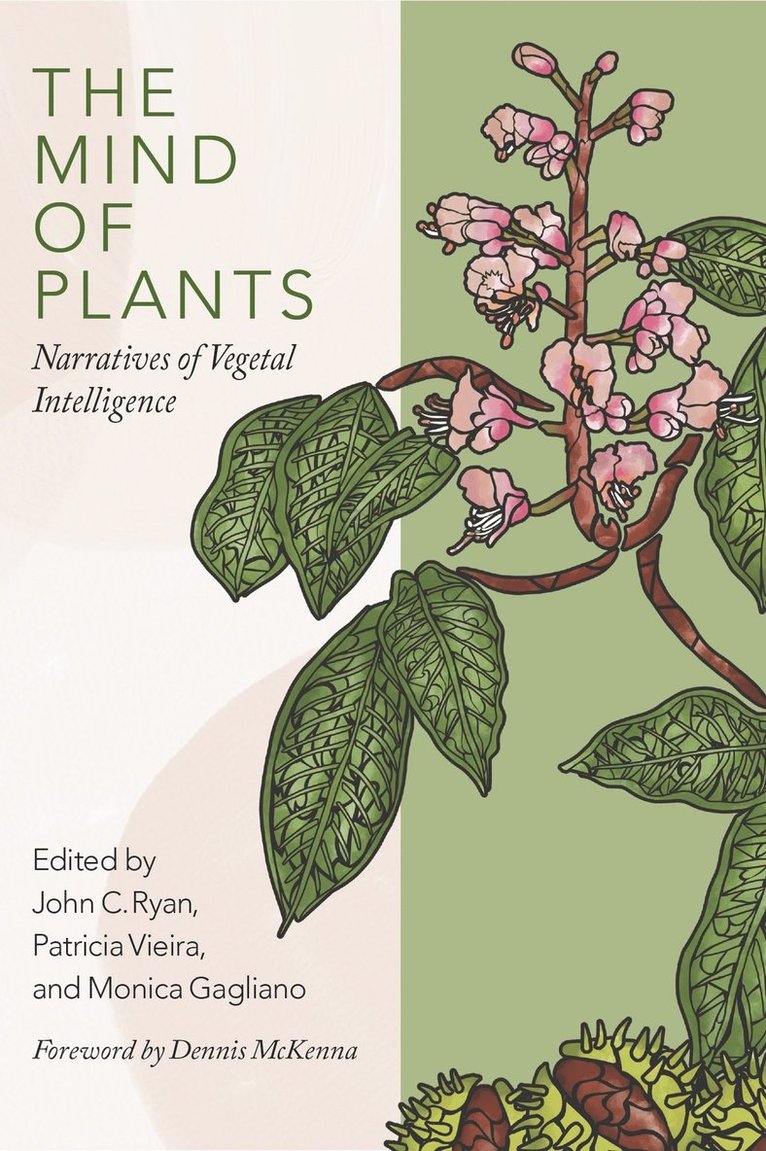
The eighteenth-century naturalist Erasmus Darwin (grandfather of Charles) argued that plants are animate, living beings and attributed them sensation, movement, and a certain degree of mental activity, emphasizing the continuity between humankind and plant existence. Two centuries later, the understanding of plants as active and communicative organisms has reemerged in such diverse fields as plant neurobiology, philosophical posthumanism, and ecocriticism. The Language of Plants brings together groundbreaking essays from across the disciplines to foster a dialogue between the biological sciences and the humanities and to reconsider our relation to the vegetal world in new ethical and political terms. Viewing plants as sophisticated information-processing organisms with complex communication strategies (they can sense and respond to environmental cues and play an active role in their own survival and reproduction through chemical languages) radically transforms our notion of plants as unresponsive beings, ready to be instrumentally appropriated. By providing multifaceted understandings of plants, informed by the latest developments in evolutionary ecology, the philosophy of biology, and ecocritical theory, The Language of Plants promotes the freedom of imagination necessary for a new ecological awareness and more sustainable interactions with diverse life forms. Contributors: Joni Adamson, Arizona State U; Nancy E. Baker, Sarah Lawrence College; Karen L. F. Houle, U of Guelph; Luce Irigaray, Centre National de la Recherche Scientifique, Paris; Erin James, U of Idaho; Richard Karban, U of California at Davis; Andre9 Kessler, Cornell U; Isabel Kranz, U of Vienna; Michael Marder, U of the Basque Country (UPV-EHU); Timothy Morton, Rice U; Christian Nansen, U of California at Davis; Robert A. Raguso, Cornell U; Catriona Sandilands, York U.
1 946 kr
Skickas inom 10-15 vardagar
Portuguese Film, 1930-1960: The Staging of the New State Regime provides groundbreaking analysis of Portuguese feature films produced in the first three decades of the New State (Estado Novo), a right-wing totalitarian regime that lasted between 1933 and 1974. These films, sponsored by the National Propaganda Institute (Secretariado Nacional de Propaganda), convey a conservative image of both mainland Portugal and the country's overseas African colonies (Angola, Mozambique, Cape Verde, Guinea-Bissau and St. Thomas and Principe). The films about the mainland emphasize traditional values, the importance of obedience to authorities and a strict division of gender roles, whereby women are relegated to the domestic sphere. The Portuguese countryside, where age-old customs and a strong social hierarchy prevailed, is presented in these movies as a model for the rest of the country. The films about the colonies, in turn, underline the benefits of the Portuguese presence in Africa and portray the colonized as docile subjects to Portuguese rule. The book includes chapter summaries in the introduction, in-depth analyses of the most important Portuguese films produced between 1930 and 1960, a discussion of the main topics of Portuguese cinema from the New State, and a comprehensive bibliography that guides students who wish to read further on a specific topic. First published in Portuguese to wide acclaim, Portuguese Film, 1930-1960: The Staging of the New State Regime fills a gap in English-language scholarship on the history of the national cinema of the Iberian peninsula. Films covered include Fatima, Land of Faith (Terra de Fe), Spell of the Empire (Feitico do Imperio), and Chaimite.
1 171 kr
Skickas inom 10-15 vardagar
Examining Brazilian artists’ engagement with the natural world from 1900 to the present The Environment in Brazilian Culture explores the centrality of the natural world in shaping Brazilian literature, cinema, and art since 1900. This collection, exceptional in its representation of material from diverse locations and cultures within Brazil, as well as in its investigation of a range of artistic mediums and genres, portrays the human connection to nature in the most biodiverse country in the world.From the forests of the Amazon to the mountains of the Serra do Mar, this volume examines Brazilian depictions of different geographical regions and the plants and animals found in each. Contributors pay particular attention to the environment’s integral place in Indigenous identity and art. They also discuss artistic references to environmental devastation, underscoring the connection between ecological degradation and contemporary socioeconomic inequality. Works discussed in these chapters include novels by Itamar Vieira Junior and Maria José Silveira, poetry by Marília Floôr Kosby, Guarani and Bororo verbal arts, Huni Kuĩ documentary films, and paintings by Candido Portinari.These wide-ranging analyses highlight the value of Brazilian cultural production to critical plant and animal studies, posthumanism, and the environmental humanities. And, in grappling with Brazil’s extractivist past, they search for alternatives to a predatory approach to the land and its inhabitants, looking for pathways to environmental justice in the Anthropocene.Contributors: Victoria Saramago Leila Lehnen Rex P. Nielson Maria Esther Maciel Valeria Meiller Benjamin Burt Juliana Luna Freire Nuno Marques Cinthya Torres Jens Andermann Malcolm K. McNee Patricia Isabel Lontro Marder Vieira Martiniano Alcantara Neto
Del 1 - Plants and Animals
Forest Sovereignty
Wildlife Sustainability and Ethics
Inbunden, Engelska, 2025
557 kr
Skickas inom 5-8 vardagar
"Forest Sovereignty is a startling new book reconsidering our relationship to nature. Tague has written a nonfiction version of Richard Powers's novel The Overstory. His careful, confident textual dismantling of the liberal-conventional account of private property gives way to something more elemental. Tague speaks for the trees." - Clayton Shoppa, Ph.D., Associate Professor of Philosophy, St. Francis College "Forest Sovereignty rereads political philosophy from Hobbes to Marx to advance an incisive theory of forest freedom recognizing the mutualistic self-governance of fungi, flora, and fauna. Passionately argued, the book issues a timely call for preserving and expanding the planet's remaining great forests while radically greening humankind's increasingly urban future." - John C. Ryan, Ph.D., Nulungu Institute, University of Notre Dame, AustraliaThe book examines plants, animals, and political philosophy in a claim for a forest state of Gaia. It argues that humans should set aside and leave to their growth vast tracts of forests, wetlands, and grasslands. Biologists surmise that immense and undisturbed interlocking networks of forests, wetlands, grasslands, seas, oceans, etc. constitute a thermodynamic system of atmospheric integrity maintaining environmental health. Modern human mechanical intrusion into nature’s realm has upset planetary homeostasis. One path to reestablishing climate fitness would not only be to preserve what remains but also to rewild additional forest, wetland, and grassland areas. There’s an ethical claim in saying forests have incalculable value because their intrinsic qualities of growth, metamorphosis, and decay are instrumental in creating and maintaining healthy ecosystems that constitute earth’s biosphere.
191 kr
Skickas inom 5-8 vardagar