John Collins Harvey – författare
Visar alla böcker från författaren John Collins Harvey. Handla med fri frakt och snabb leverans.
5 produkter
5 produkter
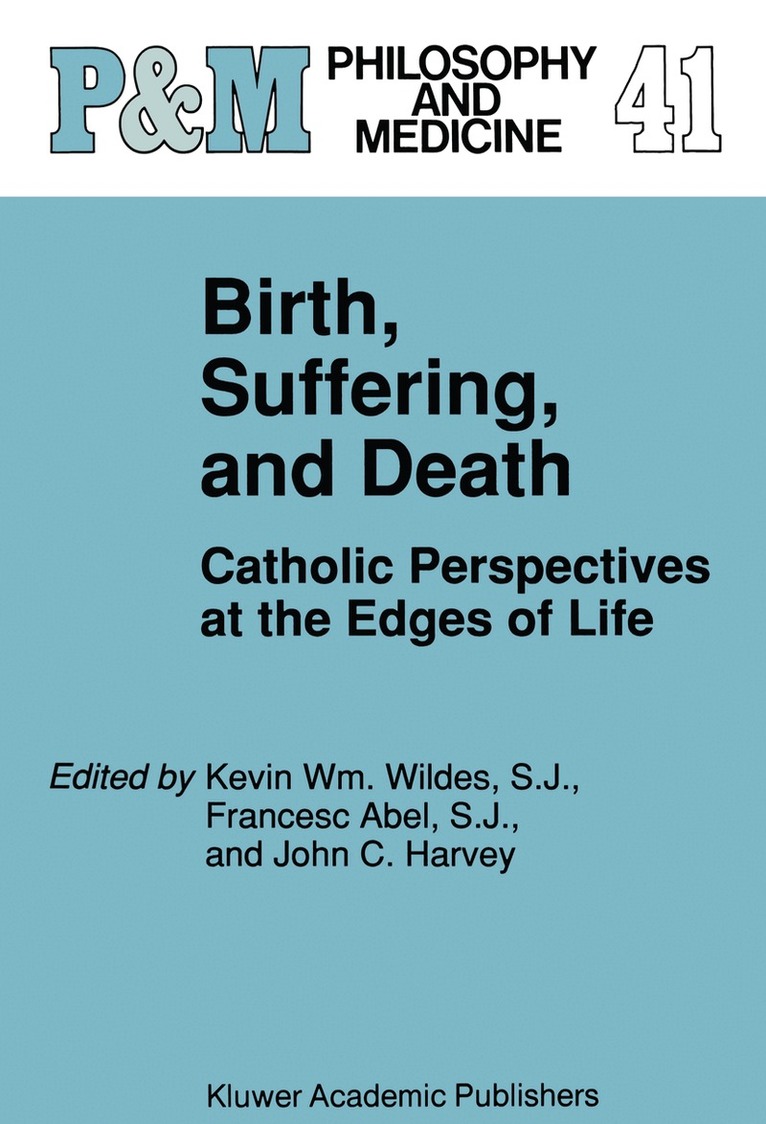
Del 41 - Philosophy and Medicine
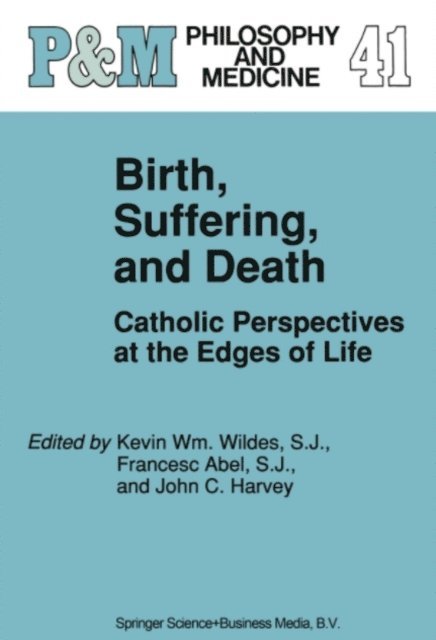
Birth, Suffering, and Death
Catholic Perspectives at the Edges of Life
Häftad, Engelska, 1994
1 619 kr
Skickas inom 10-15 vardagar
For centuries the Roman Catholic Church has been concerned with the moral implications of medical practice. Indeed, until two decades ago, Catholic moral theologians were the major source of moral guidance, scholarly reflection and teaching on a variety of medical-moral topics, particularly those bearing on human life. Many, not only those within the Catholic communion, turned to the Church for guidance as each new possibility for altering the conditions of human life posed new challenges to long held moral values. Two decades ago, the center of gravity of ethical reflection shifted sharply from theologians and Christian philosophers to more secular thinkers. A confluence of forces was responsible for this metamorphosi- an exponential rate of increase in medical technologies, expanded education of the public, the growth of participatory democracy, the entry of courts and legislation into what had previously been private matters, the trend of morality towards pluralism and individual freedom and the depreciation of church and religious doctrines generally. Most significant was the entry of professional philosophers into the debate, for the first time. It is a curious paradox that, until the mid-sixties, professional philosophers largely ignored medical ethics. Today they are the most influential shapers of public and professional opinion.
Inbunden, Engelska, 1989
1 082 kr
Skickas inom 10-15 vardagar
CATHOLIC PERSPECTIVES AND CONTEMPORARY MEDICAL MORALS A Catholic perspective on medical morals antedates the current world wide interest in medical and biomedical ethics by many centuries[5]. Discussions about the moral status of the fetus, abortion, contraception, and sterilization can be found in the writings of the Fathers and Doctors of the Church. Teachings on various aspects of medical morals were scattered throughout the penitential books of the early medieval church and later in more formal treatises when moral theology became recog nized as a distinct discipline. Still later, medical morality was incorpor ated into the many pastoral works on medicine. Finally, in the contemporary period, works that strictly focus on medical ethics are produced by Catholic moral theologians who have special interests in matters medical. Moreover, this long tradition of teaching has been put into practice in the medical moral directives governing the operation of hospitals under Catholic sponsorship. Catholic hospitals were monitored by Ethics Committees long before such committees were recommended by the New Jersey Court in the Karen Ann Quinlan case or by the President's Commission in 1983 ([8, 9]). Underlying the Catholic moral tradition was the use of the casuistic method, which since the 17th and 18th centuries was employed by Catholic moralists to study and resolve concrete clinical ethical dilem mas. The history of casuistry is of renewed interest today when the case method has become so widely used in the current revival of interest in medical ethics[ll].
E-bok
PDF, Engelska, 20121 379 kr
Läs direkt efter köp
CATHOLIC PERSPECTIVES AND CONTEMPORARY MEDICAL MORALS A Catholic perspective on medical morals antedates the current world wide interest in medical and biomedical ethics by many centuries[5]. Discussions about the moral status of the fetus, abortion, contraception, and sterilization can be found in the writings of the Fathers and Doctors of the Church. Teachings on various aspects of medical morals were scattered throughout the penitential books of the early medieval church and later in more formal treatises when moral theology became recog nized as a distinct discipline. Still later, medical morality was incorpor ated into the many pastoral works on medicine. Finally, in the contemporary period, works that strictly focus on medical ethics are produced by Catholic moral theologians who have special interests in matters medical. Moreover, this long tradition of teaching has been put into practice in the medical moral directives governing the operation of hospitals under Catholic sponsorship. Catholic hospitals were monitored by Ethics Committees long before such committees were recommended by the New Jersey Court in the Karen Ann Quinlan case or by the President''s Commission in 1983 ([8, 9]). Underlying the Catholic moral tradition was the use of the casuistic method, which since the 17th and 18th centuries was employed by Catholic moralists to study and resolve concrete clinical ethical dilem mas. The history of casuistry is of renewed interest today when the case method has become so widely used in the current revival of interest in medical ethics[ll].
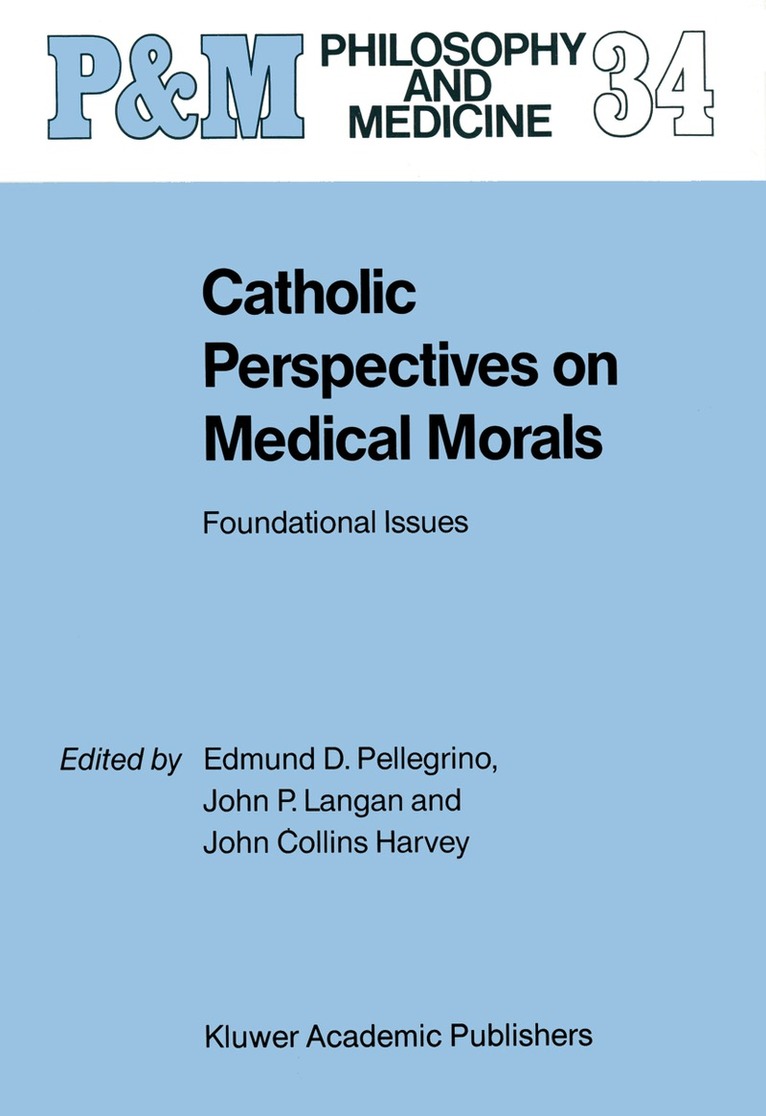
Del 34 - Philosophy and Medicine
Catholic Perspectives on Medical Morals
Foundational Issues
Häftad, Engelska, 2012
1 073 kr
Skickas inom 10-15 vardagar
CATHOLIC PERSPECTIVES AND CONTEMPORARY MEDICAL MORALS A Catholic perspective on medical morals antedates the current world wide interest in medical and biomedical ethics by many centuries[5]. Discussions about the moral status of the fetus, abortion, contraception, and sterilization can be found in the writings of the Fathers and Doctors of the Church. Teachings on various aspects of medical morals were scattered throughout the penitential books of the early medieval church and later in more formal treatises when moral theology became recog nized as a distinct discipline. Still later, medical morality was incorpor ated into the many pastoral works on medicine. Finally, in the contemporary period, works that strictly focus on medical ethics are produced by Catholic moral theologians who have special interests in matters medical. Moreover, this long tradition of teaching has been put into practice in the medical moral directives governing the operation of hospitals under Catholic sponsorship. Catholic hospitals were monitored by Ethics Committees long before such committees were recommended by the New Jersey Court in the Karen Ann Quinlan case or by the President's Commission in 1983 ([8, 9]). Underlying the Catholic moral tradition was the use of the casuistic method, which since the 17th and 18th centuries was employed by Catholic moralists to study and resolve concrete clinical ethical dilem mas. The history of casuistry is of renewed interest today when the case method has become so widely used in the current revival of interest in medical ethics[ll].
E-bok
PDF, Engelska, 20121 977 kr
Läs direkt efter köp
For centuries the Roman Catholic Church has been concerned with the moral implications of medical practice. Indeed, until two decades ago, Catholic moral theologians were the major source of moral guidance, scholarly reflection and teaching on a variety of medical-moral topics, particularly those bearing on human life. Many, not only those within the Catholic communion, turned to the Church for guidance as each new possibility for altering the conditions of human life posed new challenges to long held moral values. Two decades ago, the center of gravity of ethical reflection shifted sharply from theologians and Christian philosophers to more secular thinkers. A confluence of forces was responsible for this metamorphosi- an exponential rate of increase in medical technologies, expanded education of the public, the growth of participatory democracy, the entry of courts and legislation into what had previously been private matters, the trend of morality towards pluralism and individual freedom and the depreciation of church and religious doctrines generally. Most significant was the entry of professional philosophers into the debate, for the first time. It is a curious paradox that, until the mid-sixties, professional philosophers largely ignored medical ethics. Today they are the most influential shapers of public and professional opinion.