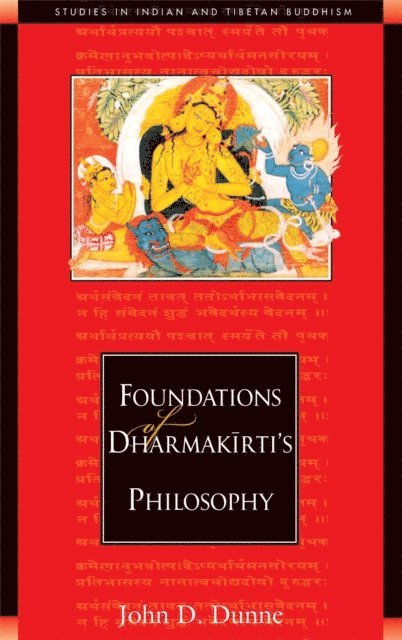
Throughout the history of Buddhism, few philosophers have attained the stature of Dharmakirti, the "Lord of Reason" who has influenced virtually every systematic Buddhist thinker since his time. Dharmakirti''s renowned works, written in India during the philosophically rich seventh century, argue that the true test of knowledge is its efficacy, and likewise that only the efficacious is knowable and real. Around this central theme is woven an intricate web of interrelated theories concerning perception, reason, language, and the justification of knowledge. Masterfully unpacking these foundations of Dharmakirti''s system, John Dunne presents the first major study of the most vexing issues in Dharmakirti''s thought within its Indian philosophical context. Lucid and carefully argued, Dunne''s work serves both as an introduction to Dharmakirti for students of Buddhism and a groundbreaking resource for scholars of Buddhist thought.
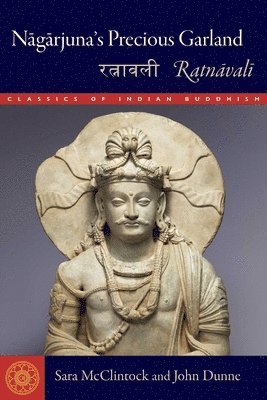
Discover the eloquence and insight of the philosopher Nagarjuna, held by tradition to be a second Buddha, in this concise instruction for a king that is considered a masterpiece of Buddhist literature.In this profound work of five hundred verses, we encounter a presentation of Buddhism that integrates both the worldly and the transcendent. The clear and sagacious advice laid out on every page serves as a road map to one’s highest goal—whether that goal is a better life, here called the Dharma of ascendance, or the ultimate one of spiritual freedom, the Dharma of the highest good. The verses, written for an unnamed ruler, touch on questions of statecraft, but their broader themes speak to us today because they tackle the difficulty of integrating one’s spiritual journey with the social and political demands of daily life. Nagarjuna was an Indian Buddhist teacher, probably of the second century CE, who was renowned for his astute articulation of the philosophy of the Middle Way (Madhyamaka). His thoroughgoing critique of all forms of essentialism became a touchstone for Mahayana Buddhism in India, Tibet, and throughout East Asia, and his importance for the development of the Mahayana tradition can scarcely be exaggerated. The translators here first rendered Nagarjuna’s letter for the Dalai Lama’s teachings on the work in Los Angeles in 1997. While that commemorative edition was translated from the Tibetan, the present volume prioritizes the surviving Sanskrit verses along with the only known Indian commentary, by the eleventh-century scholar Ajitamitra. This is the first complete translation in English of the Precious Garland that takes the Indian text and commentary as its primary authorities. In addition, the translators provide rigorous working editions of the Sanskrit and Tibetan verses they translate. This elegant and precise rendering of Nagarjuna’s work is certain to become the touchstone translation of this celebrated Buddhist text.
Throughout the history of Buddhism, few philosophers have attained the stature of Dharmakirti, the "Lord of Reason" who has influenced virtually every systematic Buddhist thinker since his time. Dharmakirti''s renowned works, written in India during the philosophically rich seventh century, argue that the true test of knowledge is its efficacy, and likewise that only the efficacious is knowable and real. Around this central theme is woven an intricate web of interrelated theories concerning perception, reason, language, and the justification of knowledge. Masterfully unpacking these foundations of Dharmakirti''s system, John Dunne presents the first major study of the most vexing issues in Dharmakirti''s thought within its Indian philosophical context. Lucid and carefully argued, Dunne''s work serves both as an introduction to Dharmakirti for students of Buddhism and a groundbreaking resource for scholars of Buddhist thought.
Discover the eloquence and insight of the philosopher Nagarjuna, held by tradition to be a second Buddha, in this concise instruction for a king that is considered a masterpiece of Buddhist literature.In this profound work of five hundred verses, we encounter a presentation of Buddhism that integrates both the worldly and the transcendent. The clear and sagacious advice laid out on every page serves as a road map to one’s highest goal—whether that goal is a better life, here called the Dharma of ascendance, or the ultimate one of spiritual freedom, the Dharma of the highest good. The verses, written for an unnamed ruler, touch on questions of statecraft, but their broader themes speak to us today because they tackle the difficulty of integrating one’s spiritual journey with the social and political demands of daily life. Nagarjuna was an Indian Buddhist teacher, probably of the second century CE, who was renowned for his astute articulation of the philosophy of the Middle Way (Madhyamaka). His thoroughgoing critique of all forms of essentialism became a touchstone for Mahayana Buddhism in India, Tibet, and throughout East Asia, and his importance for the development of the Mahayana tradition can scarcely be exaggerated. The translators here first rendered Nagarjuna’s letter for the Dalai Lama’s teachings on the work in Los Angeles in 1997. While that commemorative edition was translated from the Tibetan, the present volume prioritizes the surviving Sanskrit verses along with the only known Indian commentary, by the eleventh-century scholar Ajitamitra. This is the first complete translation in English of the Precious Garland that takes the Indian text and commentary as its primary authorities. In addition, the translators provide rigorous working editions of the Sanskrit and Tibetan verses they translate. This elegant and precise rendering of Nagarjuna’s work is certain to become the touchstone translation of this celebrated Buddhist text.