John H. Kagel - Böcker
Visar alla böcker från författaren John H. Kagel. Handla med fri frakt och snabb leverans.
7 produkter
7 produkter
577 kr
Skickas inom 7-10 vardagar
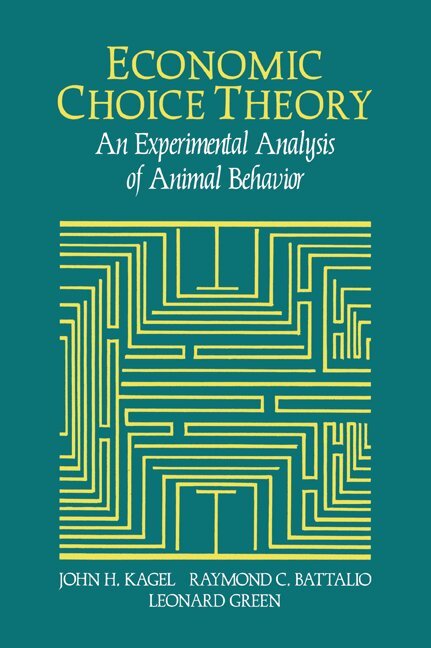
This book details the results of the authors' research using laboratory animals to investigate individual choice theory in economics-consumer-demand and labour supply behaviour and choice under uncertainty. The use of laboratory animals provides the opportunity to conduct controlled experiments involving precise and demanding tests of economic theory with rewards and punishments of real consequence. Economic models are compared to psychological and biological choice models along with the results of experiments testing between these competing explanations. Results of animal experiments are used to address questions of social policy importance.
1 417 kr
Skickas inom 7-10 vardagar
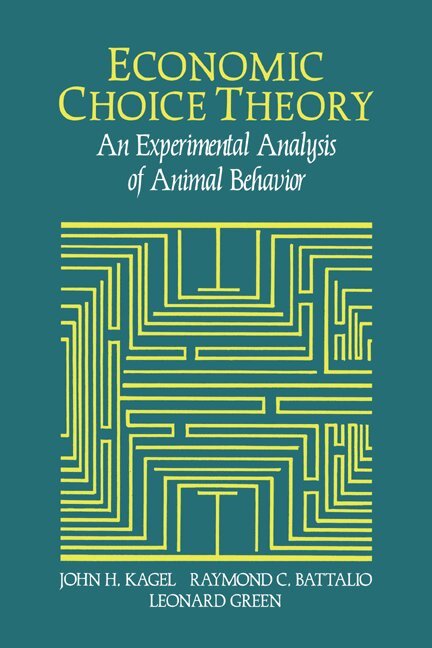
This book details the results of the authors' research using laboratory animals to investigate individual choice theory in economics-consumer-demand and labour supply behaviour and choice under uncertainty. The use of laboratory animals provides the opportunity to conduct controlled experiments involving precise and demanding tests of economic theory with rewards and punishments of real consequence. Economic models are compared to psychological and biological choice models along with the results of experiments testing between these competing explanations. Results of animal experiments are used to address questions of social policy importance.
1 328 kr
Skickas inom 7-10 vardagar
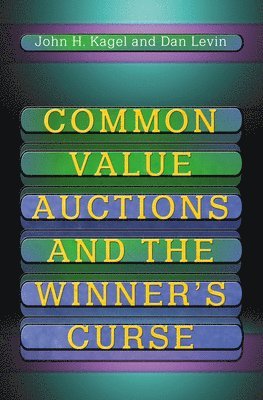
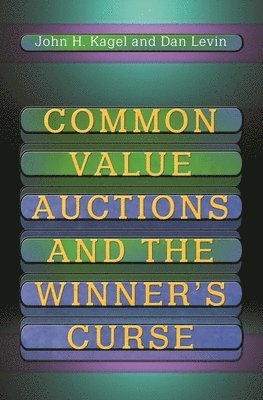
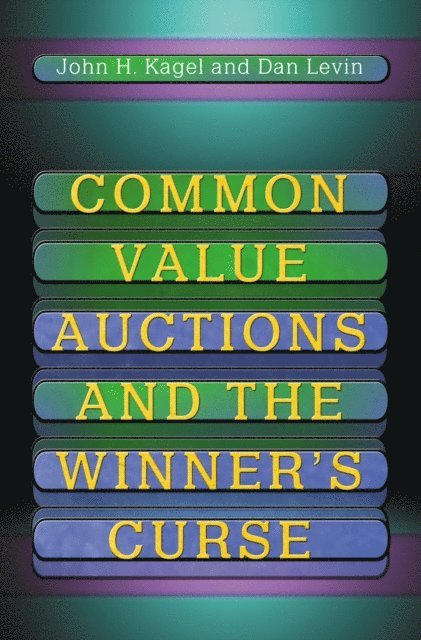
Few forms of market exchange intrigue economists as do auctions, whose theoretical and practical implications are enormous. John Kagel and Dan Levin, complementing their own distinguished research with papers written with other specialists, provide a new focus on common value auctions and the "winner's curse." In such auctions the value of each item is about the same to all bidders, but different bidders have different information about the underlying value. Virtually all auctions have a common value element; among the burgeoning modern-day examples are those organized by Internet companies such as eBay. Winners end up cursing when they realize that they won because their estimates were overly optimistic, which led them to bid too much and lose money as a result. The authors first unveil a fresh survey of experimental data on the winner's curse. Melding theory with the econometric analysis of field data, they assess the design of government auctions, such as the spectrum rights (air wave) auctions that continue to be conducted around the world.The remaining chapters gauge the impact on sellers' revenue of the type of auction used and of inside information, show how bidders learn to avoid the winner's curse, and present comparisons of sophisticated bidders with college sophomores, the usual guinea pigs used in laboratory experiments. Appendixes refine theoretical arguments and, in some cases, present entirely new data. This book is an invaluable, impeccably up-to-date resource on how auctions work--and how to make them work.
1 117 kr
Skickas inom 7-10 vardagar
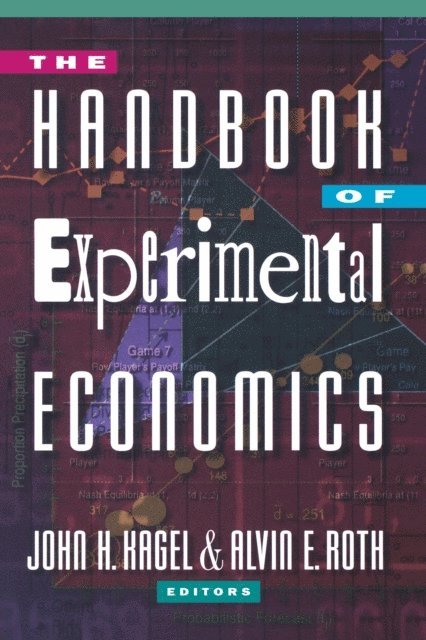
This book, which comprises eight chapters, presents a comprehensive critical survey of the results and methods of laboratory experiments in economics. The first chapter provides an introduction to experimental economics as a whole, with the remaining chapters providing surveys by leading practitioners in areas of economics that have seen a concentration of experiments: public goods, coordination problems, bargaining, industrial organization, asset markets, auctions, and individual decision making. The work aims both to help specialists set an agenda for future research and to provide nonspecialists with a critical review of work completed to date. Its focus is on elucidating the role of experimental studies as a progressive research tool so that wherever possible, emphasis is on series of experiments that build on one another. The contributors to the volume--Colin Camerer, Charles A. Holt, John H. Kagel, John O. Ledyard, Jack Ochs, Alvin E.Roth, and Shyam Sunder--adopt a particular methodological point of view: the way to learn how to design and conduct experiments is to consider how good experiments grow organically out of the issues and hypotheses they are designed to investigate.
761 kr
Skickas inom 7-10 vardagar
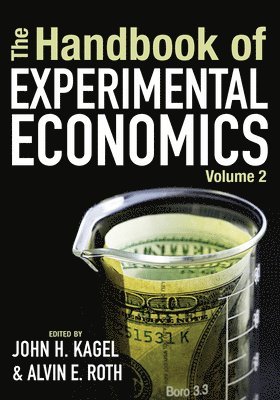
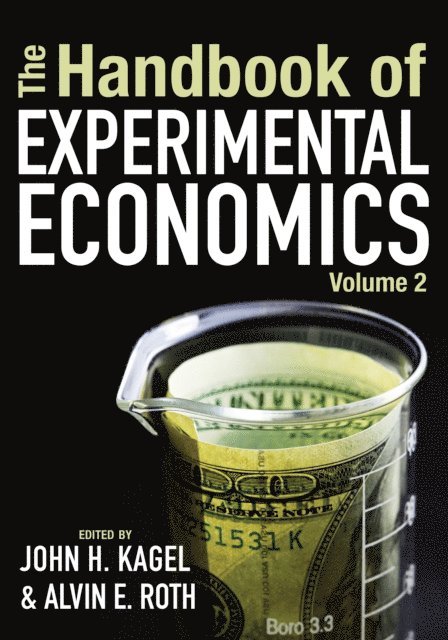
When The Handbook of Experimental Economics first came out in 1995, the notion of economists conducting lab experiments to generate data was relatively new. Since then, the field has exploded. This second volume of the Handbook covers some of the most exciting new growth areas in experimental economics, presents the latest results and experimental methods, and identifies promising new directions for future research. Featuring contributions by leading practitioners, the Handbook describes experiments in macroeconomics, charitable giving, neuroeconomics, other-regarding preferences, market design, political economy, subject population effects, gender effects, auctions, and learning and the economics of small decisions. Contributors focus on key developments and report on experiments, highlighting the dialogue between experimenters and theorists. While most of the experiments consist of laboratory studies, the book also includes several chapters that report extensively on field experiments related to the subject area studied.* Covers exciting new growth areas in experimental economics* Features contributions by leading experts* Describes experiments in macroeconomics, charitable giving, neuroeconomics, market design, political economy, gender effects, auctions, and more* Highlights the dialogue by experimenters with theorists and each other* Includes several chapters covering field experiments related to the subject area studied
558 kr
Skickas inom 7-10 vardagar
An indispensable survey of new developments and results in experimental economicsWhen The Handbook of Experimental Economics first came out in 1995, the notion of economists conducting lab experiments to generate data was relatively new. Since then, the field has exploded. This second volume of the Handbook covers some of the most exciting new growth areas in experimental economics, presents the latest results and experimental methods, and identifies promising new directions for future research.Featuring contributions by leading practitioners, the Handbook describes experiments in macroeconomics, charitable giving, neuroeconomics, other-regarding preferences, market design, political economy, subject population effects, gender effects, auctions, and learning and the economics of small decisions. Contributors focus on key developments and report on experiments, highlighting the dialogue between experimenters and theorists. While most of the experiments consist of laboratory studies, the book also includes several chapters that report extensively on field experiments related to the subject area studied.Covers exciting new growth areas in experimental economicsFeatures contributions by leading expertsDescribes experiments in macroeconomics, charitable giving, neuroeconomics, market design, political economy, gender effects, auctions, and moreHighlights the dialogue by experimenters with theorists and each otherIncludes several chapters covering field experiments related to the subject area studied
615 kr
Skickas inom 7-10 vardagar
An invaluable account of how auctions work—and how to make them workFew forms of market exchange intrigue economists as do auctions, whose theoretical and practical implications are enormous. John Kagel and Dan Levin, complementing their own distinguished research with papers written with other specialists, provide a new focus on common value auctions and the "winner's curse." In such auctions the value of each item is about the same to all bidders, but different bidders have different information about the underlying value. Virtually all auctions have a common value element; among the burgeoning modern-day examples are those organized by Internet companies such as eBay. Winners end up cursing when they realize that they won because their estimates were overly optimistic, which led them to bid too much and lose money as a result.The authors first unveil a fresh survey of experimental data on the winner's curse. Melding theory with the econometric analysis of field data, they assess the design of government auctions, such as the spectrum rights (air wave) auctions that continue to be conducted around the world. The remaining chapters gauge the impact on sellers' revenue of the type of auction used and of inside information, show how bidders learn to avoid the winner's curse, and present comparisons of sophisticated bidders with college sophomores, the usual guinea pigs used in laboratory experiments. Appendixes refine theoretical arguments and, in some cases, present entirely new data. This book is an invaluable, impeccably up-to-date resource on how auctions work--and how to make them work.