John Lackie – författare
Visar alla böcker från författaren John Lackie. Handla med fri frakt och snabb leverans.
3 produkter
3 produkter
E-bok
Engelska, 2010155 kr
Läs direkt efter köp
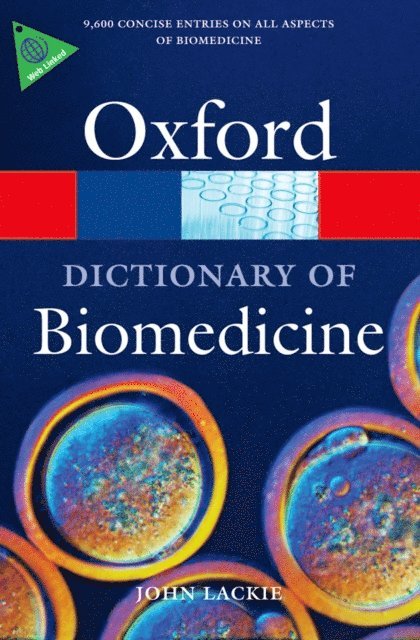
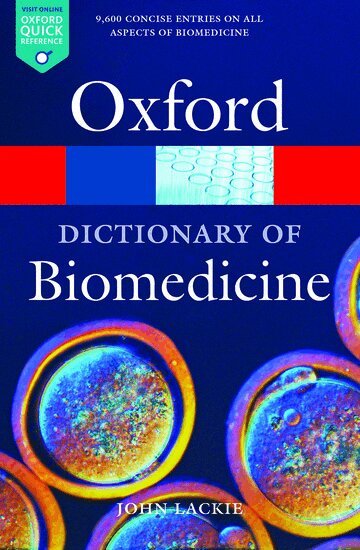
A Dictionary of Biomedicine includes 10,000 A-Z entries on all areas of biomedicine. Entries are authoritative and wide-ranging, covering terms from the related areas of anatomy, genetics, molecular bioscience, pathology, pharmacology, and clinical medicine. Biomedicine - the study of molecular bioscience relating to disease - is playing an increasingly important role in medical application, diagnosis, and treatment. As molecular bioscience provides greater insights and techniques than ever before into the practice of modern medicine, there is an increasing need for an affordable dictionary covering the specialist language used within this evolving field. This dictionary, written by an expert in the field, fills this need by offering clear, concise definitions of even the most complex biomedical terms. Many entries feature recommended web links which are accessed and kept up to date via the Dictionary of Biomedicine companion webpage, and supplementary material includes the Greek Alphabet, SI Units and single letter codes for Amino Acids. Fully cross-referenced, it also features useful navigational entries for types of diseases and disorders - for example renal disorders - that list all related entries in the dictionary so the reader can find them quickly. Aimed primarily at molecular bioscientists, clinicians, and students of biomedical courses, the dictionary will also be an invaluable resource for patients and journalists wishing to find out more about a particular disease.
E-bok
Engelska, 2019110 kr
Läs direkt efter köp
This second edition of A Dictionary of Biomedicine fills the need to define the specialist language used within an evolving field by offering clear, concise definitions of even the most complex biomedical terms. It includes more than 10,000 A-Z entries on all areas of biomedicine, focusing on areas that have developed since the first edition, such as genomics and biomedical science. Entries are authoritative and wide-ranging, covering terms from the related areas of anatomy, genetics, molecular bioscience, pathology, pharmacology, and clinical medicine.Supplementary material includes appendices on the Greek Alphabet, SI Units and single letter codes for Amino Acids. Fully cross-referenced, the dictionary also features useful navigational entries for types of diseases and disorders--for example renal disorders--that list all related entries in the dictionary so the reader can find them quickly.Aimed primarily at molecular bioscientists, clinicians, and students of biomedical courses, the dictionary is also a useful resource for patients and journalists wishing to research a particular disease.
Häftad, Engelska, 2010
202 kr
Skickas
A Dictionary of Biomedicine includes 10,000 A-Z entries on all areas of biomedicine. Entries are authoritative and wide-ranging, covering terms from the related areas of anatomy, genetics, molecular bioscience, pathology, pharmacology, and clinical medicine. Biomedicine - the study of molecular bioscience relating to disease - is playing an increasingly important role in medical application, diagnosis, and treatment. As molecular bioscience provides greater insights and techniques than ever before into the practice of modern medicine, there is an increasing need for an affordable dictionary covering the specialist language used within this evolving field. This dictionary, written by an expert in the field, fills this need by offering clear, concise definitions of even the most complex biomedical terms. Many entries feature recommended web links which are accessed and kept up to date via the Dictionary of Biomedicine companion webpage, and supplementary material includes the Greek Alphabet, SI Units and single letter codes for Amino Acids. Fully cross-referenced, it also features useful navigational entries for types of diseases and disorders - for example renal disorders - that list all related entries in the dictionary so the reader can find them quickly. Aimed primarily at molecular bioscientists, clinicians, and students of biomedical courses, the dictionary will also be an invaluable resource for patients and journalists wishing to find out more about a particular disease.