John Newson - Böcker
Visar alla böcker från författaren John Newson. Handla med fri frakt och snabb leverans.
14 produkter
14 produkter
736 kr
Skickas inom 10-15 vardagar
Although psychologists by training, John and Elizabeth Newson have more aptly been described as pioneers in social ecology; they work from the conviction that the causes and the consequences of child-rearing attitudes can fruitfully be investigated only in the framework of the total social environment in which they occur. This book continues their analysis of child rearing in an English urban setting.
676 kr
Skickas inom 10-15 vardagar
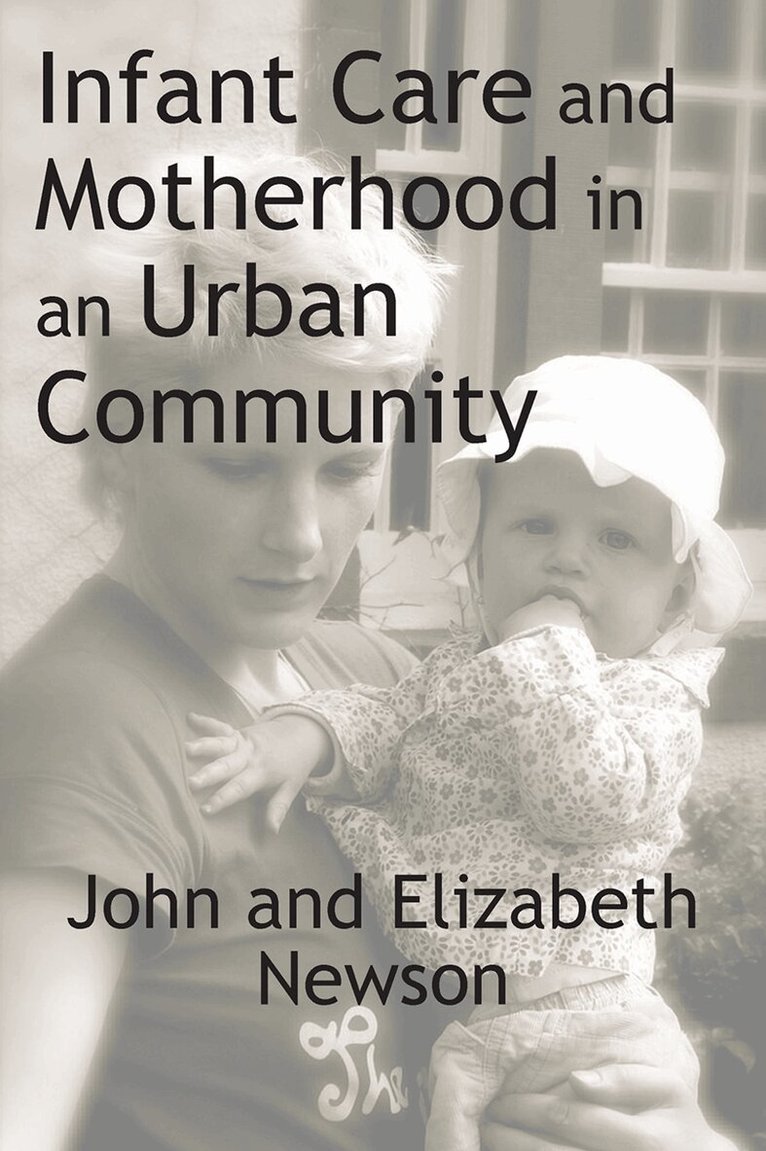
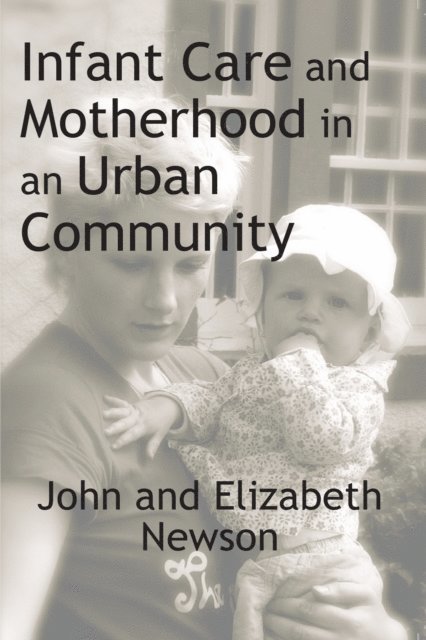
Infant Care and Motherhood in an Urban Community investigates the behavior and attitudes of 709 mothers towards their year-old babies. John and Elizabeth Newson, impatient with the voluminous and contradictory literature telling parents how their children should be brought up, decided to find out how they were being brought up. Infant Care in an Urban Community is focused on sources of advice that influence parents, how they feel about their children, and how they react to situations in handling young babies.Infant handling today is still a subject on which many different specialists use the full weight of their professional authority to back up their private prejudices concerning what is good and what is bad in the care of young children. In the face of the conflict which results, intelligent parents are rapidly forced to the conclusion that the experts know little more about the matter than they do themselves. The truth is that in the present state of knowledge there is not a sufficient body of well-substantiated evidence about the facts and consequences of child rearing on which to base sound practical advice to parents. This is where this book comes in. It shows that much of the advice offered is often out of touch with the practical needs, circumstances, and beliefs of the ordinary mother.Few theories of child rearing have been subjected to the inconvenience of being reconciled with the empirical evidence. This is the first study which has obtained information of this sort from a large and representative sample of mothers, and which has investigated the behavior of both mother and baby aehere and now' rather than relying on fond maternal memories. A special feature is the use of tape-recorded interviews which has allowed extensive quotation of their mothers' own opinions.
3 185 kr
Skickas inom 10-15 vardagar
John and Elizabeth Newson investigate the upbringing of seven hundred Nottingham children as they reach the age of four. Parents are interviewed in their homes with a realistic yet human approach and the minimum of technical jargon, and the open-ended questions allow them to produce 'a detailed and descriptive study of how parents do in fact treat their children and - equally important - how children treat their parents.'No one can fail to be impressed by the concern and perceptiveness shown by mothers of all classes, different though their approach may be to the common problems of the parent - child relationship.This book was first published in 1968.
2 109 kr
Skickas inom 10-15 vardagar
This volume looks at the social and intellectual forces which the child encounters in class-room and playground from the parent’s point of view. School and home are seen as the separate yet overlapping worlds of childhood – for some children more uncompromisingly separated than for others. In the social development of the child, school functions as a link between the kinds of demands (and immunities) which are characteristic of family life, and those which the child will discover in the wider society of adulthood. The authors provide a meeting-point for developmental psychology, sociology and education, to the illumination of all three. There is a concern with the daily life of ‘ordinary’children in ‘ordinary’ families. School reluctance – rather than the more clinical school phobia or truancy – is delicately probed. The back-up that parents provide at home, directly or indirectly, is objectively evaluated, yet with empathy for parents’ and teachers’ anxieties about their roles.
710 kr
Skickas inom 10-15 vardagar
This volume looks at the social and intellectual forces which the child encounters in class-room and playground from the parent’s point of view. School and home are seen as the separate yet overlapping worlds of childhood – for some children more uncompromisingly separated than for others. In the social development of the child, school functions as a link between the kinds of demands (and immunities) which are characteristic of family life, and those which the child will discover in the wider society of adulthood. The authors provide a meeting-point for developmental psychology, sociology and education, to the illumination of all three. There is a concern with the daily life of ‘ordinary’children in ‘ordinary’ families. School reluctance – rather than the more clinical school phobia or truancy – is delicately probed. The back-up that parents provide at home, directly or indirectly, is objectively evaluated, yet with empathy for parents’ and teachers’ anxieties about their roles.
662 kr
Skickas inom 10-15 vardagar
John and Elizabeth Newson investigate the upbringing of seven hundred Nottingham children as they reach the age of four. Parents are interviewed in their homes with a realistic yet human approach and the minimum of technical jargon, and the open-ended questions allow them to produce 'a detailed and descriptive study of how parents do in fact treat their children and - equally important - how children treat their parents.'No one can fail to be impressed by the concern and perceptiveness shown by mothers of all classes, different though their approach may be to the common problems of the parent - child relationship.This book was first published in 1968.
2 044 kr
Skickas inom 10-15 vardagar
John and Elizabeth Newson’s long-term investigation of child up-bringing attracted intense interest from its earliest beginnings: ‘pathbreaking’ and ‘seminal’ were adjectives that greeted their first report. The study is now established as one of the major projects of the seventies.This third volume of the series catches some seven hundred Nottingham children at a critical stage of their development: in transition from infant to junior school, they are moving out of the protective family orbit and into the wider social world of street, playground and classroom, where cultural pressures make themselves felt in ever more demanding ways.Like the Newson’s earlier books, this study has a strong ecological flavour in the sense that what children do, what parents do, and how they feel about what they do, are all set firmly into the broader context of life as it is lived in contemporary urban society. This is no laboratory investigation. Yet a sensitive and subtle methodology has allowed the Newsons to present an impressive structure of hard factual data, while putting flesh on the statistical bones by constant reference to the mothers’ own thoughts and reactions, faithfully recorded in their own vivid words.The result is a rich descriptive picture of seven-year-olds and their family life: their play, friendships, quarrels; their duties and privileges; their fears, fantasies and jokes. Inevitably, much of the book explores the dynamics of conflict between mother and child, and takes a long hard look at the domestic power-game as it is expressed in both words and punishment. At the same time, the loving and caring side of the relationship is closely and delicately examined with a rare empathy for both parent and child. In short, this is a study in depth and in breadth of how parents and children bring each other up.Teachers, doctors, nurses and social workers, as well as parents welcomed the Newsons’ earlier reports. Once again, no professional worker in the field of childhood or parenthood can afford to be without the insights offered by this volume, which is also a rich source of enjoyment for any observer, professional or amateur, of the family in society today. Today it can be enjoyed in its historical context.
484 kr
Skickas inom 10-15 vardagar
John and Elizabeth Newson’s long-term investigation of child up-bringing attracted intense interest from its earliest beginnings: ‘pathbreaking’ and ‘seminal’ were adjectives that greeted their first report. The study is now established as one of the major projects of the seventies.This third volume of the series catches some seven hundred Nottingham children at a critical stage of their development: in transition from infant to junior school, they are moving out of the protective family orbit and into the wider social world of street, playground and classroom, where cultural pressures make themselves felt in ever more demanding ways.Like the Newson’s earlier books, this study has a strong ecological flavour in the sense that what children do, what parents do, and how they feel about what they do, are all set firmly into the broader context of life as it is lived in contemporary urban society. This is no laboratory investigation. Yet a sensitive and subtle methodology has allowed the Newsons to present an impressive structure of hard factual data, while putting flesh on the statistical bones by constant reference to the mothers’ own thoughts and reactions, faithfully recorded in their own vivid words.The result is a rich descriptive picture of seven-year-olds and their family life: their play, friendships, quarrels; their duties and privileges; their fears, fantasies and jokes. Inevitably, much of the book explores the dynamics of conflict between mother and child, and takes a long hard look at the domestic power-game as it is expressed in both words and punishment. At the same time, the loving and caring side of the relationship is closely and delicately examined with a rare empathy for both parent and child. In short, this is a study in depth and in breadth of how parents and children bring each other up.Teachers, doctors, nurses and social workers, as well as parents welcomed the Newsons’ earlier reports. Once again, no professional worker in the field of childhood or parenthood can afford to be without the insights offered by this volume, which is also a rich source of enjoyment for any observer, professional or amateur, of the family in society today. Today it can be enjoyed in its historical context.
1 847 kr
Skickas inom 10-15 vardagar
John and Elizabeth Newson were well known for their studies of child rearing, which have combined a rigorous research methodology with sympathetic insights into family life and a lively approach to scientific reporting. ‘Path-breaking’, ‘brilliant’, ‘seminal’, ‘outstanding’, ‘fascinating’, ‘enthralling’ and ‘enchanting’ are some of the adjectives used by critics to describe their previous books. They now turn their attention to toys, the ‘pegs on which children hang their play’, a study for which they are uniquely qualified. Not only had they long experience in normal child development: they had been actively involved for many years in research and training in remedial play for disabled children, their research unit was a major influence in the phenomenal development of the toy libraries self-help movement, they designed for and advised the toy industry, and they had their own family-run specialist toyshop. With this background, it is not surprising that their book on toys and playthings is both informative and entertaining on many different fronts. Richly observant, it follows the child’s development in play from using the mother or father as the ‘first and best toy’, through the exploratory and manipulative sequences, to the use of toys in ritual, symbolic or contemplative ways. Against this detailed understanding of ‘ordinary’ children’s growth points in play, the Newsons and their collaborators examine the special needs of disabled children, with a firm emphasis on how parents can help. What is more, in providing an intensely practical guide for the parents and teachers of the disabled child, they draw out comparative insights which are enlightening and absorbing for those whose children do not have such urgent problems.Once again the Newsons share with the reader the viewpoints and preoccupations of research workers in the field. There is indeed a continual sense of ‘work in progress’, and nowhere more than in the chapter on using toys for developmental assessment, where the reader is given a hot line to a laboratory (i.e. playroom) notes used in their own research unit at the time in a welcome move away from the rigid test-bound assessment of ‘special’ children. The book is enriched by the authors’ sharp awareness that the history of playthings has a far longer perspective than the history of child psychology. They are not basically interested in educational toys as such, but in all the objects, made or found, on which the child hones his skill, his reasoning powers, his imagination, his emotions or his sense of humour. Fairground baubles, joke toys and poppy-head dolls are as much a part of this book as bricks, sorting boxes and teddy bears. In the Newsons’ own words: ‘We hope that people who simply like toys as objects will find something in this book to interest them; we suspect, indeed, that liking toys will be what all readers, whatever their reason for opening the book, have in common’.
484 kr
Skickas inom 10-15 vardagar
John and Elizabeth Newson were well known for their studies of child rearing, which have combined a rigorous research methodology with sympathetic insights into family life and a lively approach to scientific reporting. ‘Path-breaking’, ‘brilliant’, ‘seminal’, ‘outstanding’, ‘fascinating’, ‘enthralling’ and ‘enchanting’ are some of the adjectives used by critics to describe their previous books. They now turn their attention to toys, the ‘pegs on which children hang their play’, a study for which they are uniquely qualified. Not only had they long experience in normal child development: they had been actively involved for many years in research and training in remedial play for disabled children, their research unit was a major influence in the phenomenal development of the toy libraries self-help movement, they designed for and advised the toy industry, and they had their own family-run specialist toyshop. With this background, it is not surprising that their book on toys and playthings is both informative and entertaining on many different fronts. Richly observant, it follows the child’s development in play from using the mother or father as the ‘first and best toy’, through the exploratory and manipulative sequences, to the use of toys in ritual, symbolic or contemplative ways. Against this detailed understanding of ‘ordinary’ children’s growth points in play, the Newsons and their collaborators examine the special needs of disabled children, with a firm emphasis on how parents can help. What is more, in providing an intensely practical guide for the parents and teachers of the disabled child, they draw out comparative insights which are enlightening and absorbing for those whose children do not have such urgent problems.Once again the Newsons share with the reader the viewpoints and preoccupations of research workers in the field. There is indeed a continual sense of ‘work in progress’, and nowhere more than in the chapter on using toys for developmental assessment, where the reader is given a hot line to a laboratory (i.e. playroom) notes used in their own research unit at the time in a welcome move away from the rigid test-bound assessment of ‘special’ children. The book is enriched by the authors’ sharp awareness that the history of playthings has a far longer perspective than the history of child psychology. They are not basically interested in educational toys as such, but in all the objects, made or found, on which the child hones his skill, his reasoning powers, his imagination, his emotions or his sense of humour. Fairground baubles, joke toys and poppy-head dolls are as much a part of this book as bricks, sorting boxes and teddy bears. In the Newsons’ own words: ‘We hope that people who simply like toys as objects will find something in this book to interest them; we suspect, indeed, that liking toys will be what all readers, whatever their reason for opening the book, have in common’.
2 088 kr
Skickas inom 10-15 vardagar
Although psychologists by training, John and Elizabeth Newson have more aptly been described as pioneers in social ecology; they work from the conviction that the causes and the consequences of child-rearing attitudes can fruitfully be investigated only in the framework of the total social environment in which they occur. This book continues their analysis of child rearing in an English urban setting.
2 103 kr
Skickas inom 10-15 vardagar
Infant Care and Motherhood in an Urban Community investigates the behavior and attitudes of 709 mothers towards their year-old babies. John and Elizabeth Newson, impatient with the voluminous and contradictory literature telling parents how their children should be brought up, decided to find out how they were being brought up. Infant Care in an Urban Community is focused on sources of advice that influence parents, how they feel about their children, and how they react to situations in handling young babies.Infant handling today is still a subject on which many different specialists use the full weight of their professional authority to back up their private prejudices concerning what is good and what is bad in the care of young children. In the face of the conflict which results, intelligent parents are rapidly forced to the conclusion that the experts know little more about the matter than they do themselves. The truth is that in the present state of knowledge there is not a sufficient body of well-substantiated evidence about the facts and consequences of child rearing on which to base sound practical advice to parents. This is where this book comes in. It shows that much of the advice offered is often out of touch with the practical needs, circumstances, and beliefs of the ordinary mother.Few theories of child rearing have been subjected to the inconvenience of being reconciled with the empirical evidence. This is the first study which has obtained information of this sort from a large and representative sample of mothers, and which has investigated the behavior of both mother and baby aehere and now' rather than relying on fond maternal memories. A special feature is the use of tape-recorded interviews which has allowed extensive quotation of their mothers' own opinions.
2 374 kr
Skickas inom 10-15 vardagar
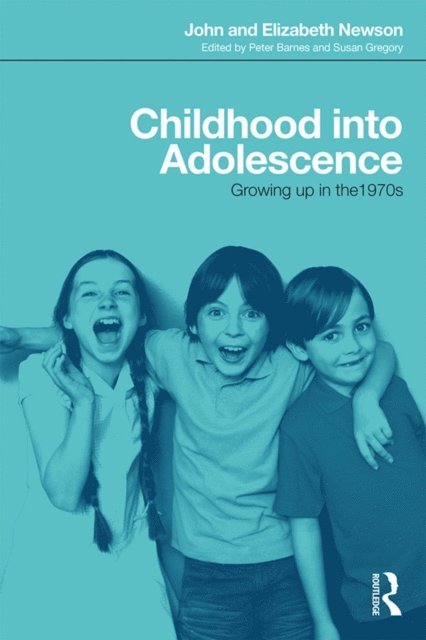
This book is about the lives of 11-year-old children growing up in a Midlands city in the late ‘60s and early ‘70s. Based on interviews with their parents, it describes family life at the time, as well as the experiences, hopes and concerns of the children as they themselves become adolescents. The book reflects upon the changes that occur for children in the transitional period between childhood and adolescence. It looks at the friendship patterns of eleven-year-olds, their special interests and activities and how they spend their leisure time as well as describing the children’s worries and concerns as perceived by their parents. It also considers family life and parental issues in the context of children’s growing independence and their developing sexual maturity.Originally written in the 1980’s but recently discovered and published now for the first time, this is the fifth book in the series of long-term investigations of child up-bringing, by John and Elizabeth Newson, distinguished child psychologists at the University of Nottingham. Their research began in the late 1950s when the cohort of children was a year old; their mothers were subsequently interviewed at intervals as the children grew up. This fifth volume draws links between the material from interviews with parents when their sons and daughters were seven, eleven, sixteen and nineteen years, and also invites comparison with the lives of children growing up now. The final chapter reviews the book series and the Newsons’ research programme.This exceptional book will be of interest to psychologists and other academics interested in child development, as well as professionals involved in work with children and adolescents such as teachers, doctors, nurses and social workers. It also has great historical significance with its potential for comparisons between the lives of children and adolescents now with those growing up some 50 years ago.
738 kr
Skickas inom 10-15 vardagar
This book is about the lives of 11-year-old children growing up in a Midlands city in the late ‘60s and early ‘70s. Based on interviews with their parents, it describes family life at the time, as well as the experiences, hopes and concerns of the children as they themselves become adolescents. The book reflects upon the changes that occur for children in the transitional period between childhood and adolescence. It looks at the friendship patterns of eleven-year-olds, their special interests and activities and how they spend their leisure time as well as describing the children’s worries and concerns as perceived by their parents. It also considers family life and parental issues in the context of children’s growing independence and their developing sexual maturity.Originally written in the 1980’s but recently discovered and published now for the first time, this is the fifth book in the series of long-term investigations of child up-bringing, by John and Elizabeth Newson, distinguished child psychologists at the University of Nottingham. Their research began in the late 1950s when the cohort of children was a year old; their mothers were subsequently interviewed at intervals as the children grew up. This fifth volume draws links between the material from interviews with parents when their sons and daughters were seven, eleven, sixteen and nineteen years, and also invites comparison with the lives of children growing up now. The final chapter reviews the book series and the Newsons’ research programme.This exceptional book will be of interest to psychologists and other academics interested in child development, as well as professionals involved in work with children and adolescents such as teachers, doctors, nurses and social workers. It also has great historical significance with its potential for comparisons between the lives of children and adolescents now with those growing up some 50 years ago.