518 kr
Skickas inom 5-8 vardagar
518 kr
Skickas inom 5-8 vardagar
400 kr
Skickas inom 5-8 vardagar
429 kr
Skickas inom 5-8 vardagar
273 kr
Skickas inom 5-8 vardagar
210 kr
Skickas inom 5-8 vardagar
335 kr
Skickas inom 5-8 vardagar
581 kr
Skickas inom 5-8 vardagar
493 kr
Läs direkt efter köp
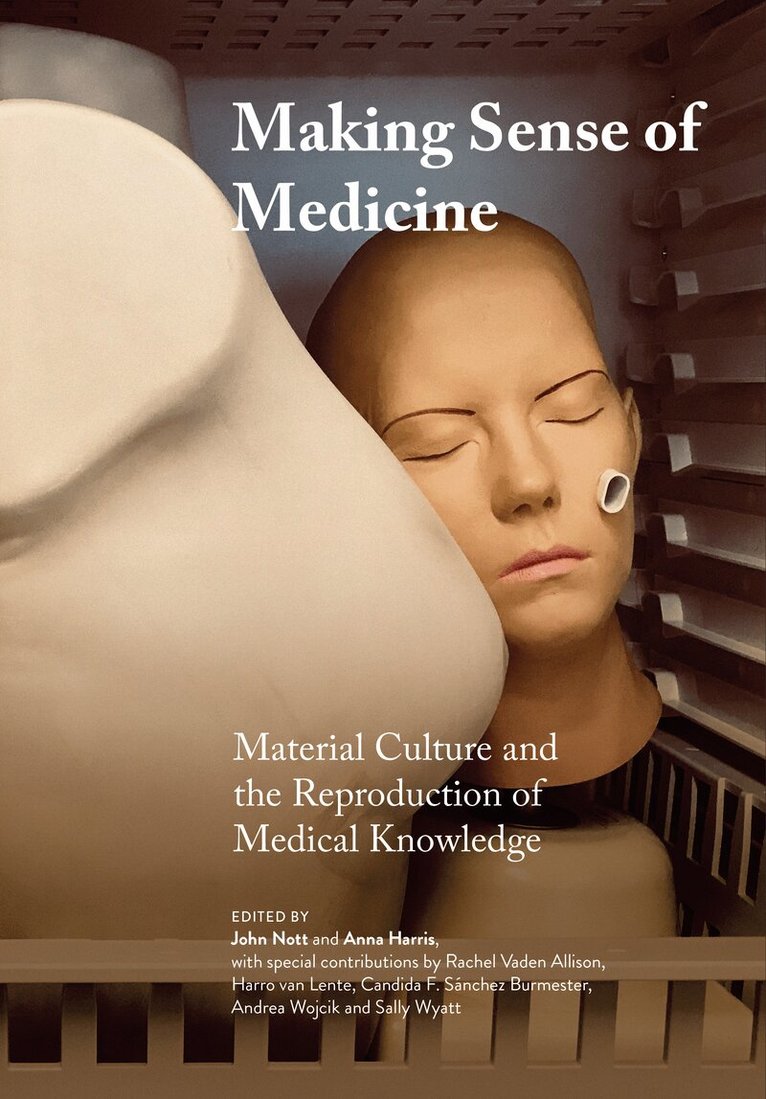
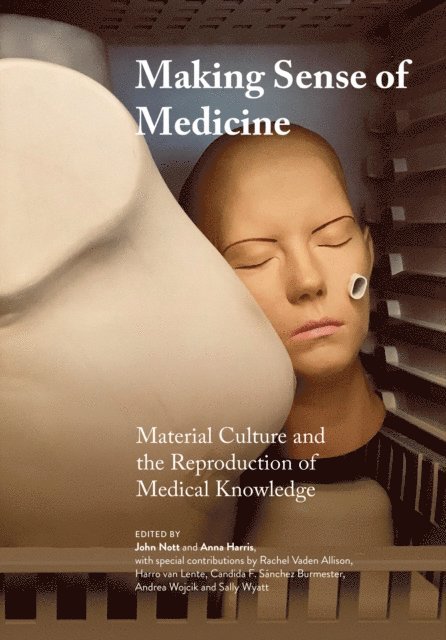
Medical knowledge manifests in materials, and materials are integral to the reproduction of medical knowledge. From the novice student to the expert practitioner, those who study and work in and around medicine rely on material guidance in their everyday practice and as they seek to further their craft.
Students, just as experts, pore over textbooks, photographs and films. They put up and copy down chalkboard illustrations, manipulate plastic models and inspect organic specimens fixed in formalin. They pass through grand university libraries and try not to contaminate anything in cramped surgical theatres. Students, just as experts, learn within an expansive material culture of medicine, they learn from explicitly educative materials, from the workaday tools used for diagnosis and in treatment, they learn in everyday spaces and as part of sprawling infrastructures. While the specific constellation of material varies across time and space, many materials have remained constant, key actors in the spread of medical practices and in the steady, global expansion of biomedical frameworks of health and disease. This collection focuses on the materials, objects, tools and technologies which facilitate the reproduction of medical knowledge and often reify understandings of medical science.
The training of doctors is changing rapidly in response to technological development as well to the evolving needs and expectations of patients. Medical schools are beginning to respond to these challenges through curricula redesign and the purchase or endorsement of new teaching aids, simulations and pedagogies. Often, this means that medical schools are embracing the digital at the expense of older teaching materials. Medical education is at a critical juncture and there is momentum to radically rethink its approaches.
This collection offers a reflection on these challenges by presenting an innovative and expansive overview of the role of materiality in the training of doctors and in the social reproduction of medicine in general. Experimental in form, and with ethnographic, museological and historical cases, and traces from around the world, this edited volume is the first to fully explore the matter of medical education in the modern world. Supported by the European Research Council under the European Union’s Horizon 2020 research and innovation programme.
An academic text, it will be most relevant to academics and graduate students in the fields of health and material culture, but will also have a wider readership with those working on medical education and knowledge and medical history
493 kr
Läs direkt efter köp
Medical knowledge manifests in materials, and materials are integral to the reproduction of medical knowledge. From the novice student to the expert practitioner, those who study and work in and around medicine rely on material guidance in their everyday practice and as they seek to further their craft.
Students, just as experts, pore over textbooks, photographs and films. They put up and copy down chalkboard illustrations, manipulate plastic models and inspect organic specimens fixed in formalin. They pass through grand university libraries and try not to contaminate anything in cramped surgical theatres. Students, just as experts, learn within an expansive material culture of medicine, they learn from explicitly educative materials, from the workaday tools used for diagnosis and in treatment, they learn in everyday spaces and as part of sprawling infrastructures. While the specific constellation of material varies across time and space, many materials have remained constant, key actors in the spread of medical practices and in the steady, global expansion of biomedical frameworks of health and disease. This collection focuses on the materials, objects, tools and technologies which facilitate the reproduction of medical knowledge and often reify understandings of medical science.
The training of doctors is changing rapidly in response to technological development as well to the evolving needs and expectations of patients. Medical schools are beginning to respond to these challenges through curricula redesign and the purchase or endorsement of new teaching aids, simulations and pedagogies. Often, this means that medical schools are embracing the digital at the expense of older teaching materials. Medical education is at a critical juncture and there is momentum to radically rethink its approaches.
This collection offers a reflection on these challenges by presenting an innovative and expansive overview of the role of materiality in the training of doctors and in the social reproduction of medicine in general. Experimental in form, and with ethnographic, museological and historical cases, and traces from around the world, this edited volume is the first to fully explore the matter of medical education in the modern world. Supported by the European Research Council under the European Union’s Horizon 2020 research and innovation programme.
An academic text, it will be most relevant to academics and graduate students in the fields of health and material culture, but will also have a wider readership with those working on medical education and knowledge and medical history
1 144 kr
Tillfälligt slut
Ghana?s twentieth century was one of dramatic political, economic, and environmental change. Sparked initially by the impositions of colonial rule, these transformations had significant, if rarely uniform, repercussions for the determinants of good and bad nutrition. All across this new and uneven polity, food production, domestic reproduction, gender relations, and food cultures underwent radical and rapid change. This volatile national history was matched only by the scientific instability of nutritional medicine during these same years.
Moving between the dry Northern savannah, the mineral-rich and food-secure Southern rainforest, and the youthful, ever-expanding cities, Between Feast and Famine is a comparative history of nutrition in Ghana since the end of the nineteenth century. At the heart of this story is an analysis of how an uneven capitalist transformation variously affected the lives of women and children. It traces the change from sporadic periods of hunger in the nineteenth and early twentieth centuries, through epidemics of childhood malnutrition during the twentieth century, and into emergent epidemics of diet-related non-communicable disease in the twenty-first century. Employing a novel, critical approach to historical epidemiology, John Nott argues that detailing the co-production of science and its subjects in the past is essential for understanding and improving health in the present.
Praise for Between Feast and Famine 'This is a tour de force. Ghana was an important site for the development of nutritional science in the colonial period, as well as a site for its application. It is therefore central to the history of a global nutritional science. Not only has John Nott pieced together a complex history of that changing science and its application in Ghana in the twentieth century, he has also provided a carefully constructed analysis of what was actually happening in terms of food supply, health and nutrition in Ghana in this period. Few other works manage to do both these things.' Megan Vaughan, Professor of African History and Health, Institute of Advanced Studies, UCL
518 kr
Skickas inom 5-8 vardagar
400 kr
Skickas inom 5-8 vardagar
429 kr
Skickas inom 5-8 vardagar
273 kr
Skickas inom 5-8 vardagar
210 kr
Skickas inom 5-8 vardagar
335 kr
Skickas inom 5-8 vardagar
581 kr
Skickas inom 5-8 vardagar
493 kr
Läs direkt efter köp
Medical knowledge manifests in materials, and materials are integral to the reproduction of medical knowledge. From the novice student to the expert practitioner, those who study and work in and around medicine rely on material guidance in their everyday practice and as they seek to further their craft.
Students, just as experts, pore over textbooks, photographs and films. They put up and copy down chalkboard illustrations, manipulate plastic models and inspect organic specimens fixed in formalin. They pass through grand university libraries and try not to contaminate anything in cramped surgical theatres. Students, just as experts, learn within an expansive material culture of medicine, they learn from explicitly educative materials, from the workaday tools used for diagnosis and in treatment, they learn in everyday spaces and as part of sprawling infrastructures. While the specific constellation of material varies across time and space, many materials have remained constant, key actors in the spread of medical practices and in the steady, global expansion of biomedical frameworks of health and disease. This collection focuses on the materials, objects, tools and technologies which facilitate the reproduction of medical knowledge and often reify understandings of medical science.
The training of doctors is changing rapidly in response to technological development as well to the evolving needs and expectations of patients. Medical schools are beginning to respond to these challenges through curricula redesign and the purchase or endorsement of new teaching aids, simulations and pedagogies. Often, this means that medical schools are embracing the digital at the expense of older teaching materials. Medical education is at a critical juncture and there is momentum to radically rethink its approaches.
This collection offers a reflection on these challenges by presenting an innovative and expansive overview of the role of materiality in the training of doctors and in the social reproduction of medicine in general. Experimental in form, and with ethnographic, museological and historical cases, and traces from around the world, this edited volume is the first to fully explore the matter of medical education in the modern world. Supported by the European Research Council under the European Union’s Horizon 2020 research and innovation programme.
An academic text, it will be most relevant to academics and graduate students in the fields of health and material culture, but will also have a wider readership with those working on medical education and knowledge and medical history
493 kr
Läs direkt efter köp
Medical knowledge manifests in materials, and materials are integral to the reproduction of medical knowledge. From the novice student to the expert practitioner, those who study and work in and around medicine rely on material guidance in their everyday practice and as they seek to further their craft.
Students, just as experts, pore over textbooks, photographs and films. They put up and copy down chalkboard illustrations, manipulate plastic models and inspect organic specimens fixed in formalin. They pass through grand university libraries and try not to contaminate anything in cramped surgical theatres. Students, just as experts, learn within an expansive material culture of medicine, they learn from explicitly educative materials, from the workaday tools used for diagnosis and in treatment, they learn in everyday spaces and as part of sprawling infrastructures. While the specific constellation of material varies across time and space, many materials have remained constant, key actors in the spread of medical practices and in the steady, global expansion of biomedical frameworks of health and disease. This collection focuses on the materials, objects, tools and technologies which facilitate the reproduction of medical knowledge and often reify understandings of medical science.
The training of doctors is changing rapidly in response to technological development as well to the evolving needs and expectations of patients. Medical schools are beginning to respond to these challenges through curricula redesign and the purchase or endorsement of new teaching aids, simulations and pedagogies. Often, this means that medical schools are embracing the digital at the expense of older teaching materials. Medical education is at a critical juncture and there is momentum to radically rethink its approaches.
This collection offers a reflection on these challenges by presenting an innovative and expansive overview of the role of materiality in the training of doctors and in the social reproduction of medicine in general. Experimental in form, and with ethnographic, museological and historical cases, and traces from around the world, this edited volume is the first to fully explore the matter of medical education in the modern world. Supported by the European Research Council under the European Union’s Horizon 2020 research and innovation programme.
An academic text, it will be most relevant to academics and graduate students in the fields of health and material culture, but will also have a wider readership with those working on medical education and knowledge and medical history
1 144 kr
Tillfälligt slut
Ghana?s twentieth century was one of dramatic political, economic, and environmental change. Sparked initially by the impositions of colonial rule, these transformations had significant, if rarely uniform, repercussions for the determinants of good and bad nutrition. All across this new and uneven polity, food production, domestic reproduction, gender relations, and food cultures underwent radical and rapid change. This volatile national history was matched only by the scientific instability of nutritional medicine during these same years.
Moving between the dry Northern savannah, the mineral-rich and food-secure Southern rainforest, and the youthful, ever-expanding cities, Between Feast and Famine is a comparative history of nutrition in Ghana since the end of the nineteenth century. At the heart of this story is an analysis of how an uneven capitalist transformation variously affected the lives of women and children. It traces the change from sporadic periods of hunger in the nineteenth and early twentieth centuries, through epidemics of childhood malnutrition during the twentieth century, and into emergent epidemics of diet-related non-communicable disease in the twenty-first century. Employing a novel, critical approach to historical epidemiology, John Nott argues that detailing the co-production of science and its subjects in the past is essential for understanding and improving health in the present.
Praise for Between Feast and Famine 'This is a tour de force. Ghana was an important site for the development of nutritional science in the colonial period, as well as a site for its application. It is therefore central to the history of a global nutritional science. Not only has John Nott pieced together a complex history of that changing science and its application in Ghana in the twentieth century, he has also provided a carefully constructed analysis of what was actually happening in terms of food supply, health and nutrition in Ghana in this period. Few other works manage to do both these things.' Megan Vaughan, Professor of African History and Health, Institute of Advanced Studies, UCL