John Polt – författare
Visar alla böcker från författaren John Polt. Handla med fri frakt och snabb leverans.
4 produkter
4 produkter
E-bok
PDF, Engelska, 2003146 kr
Läs direkt efter köp
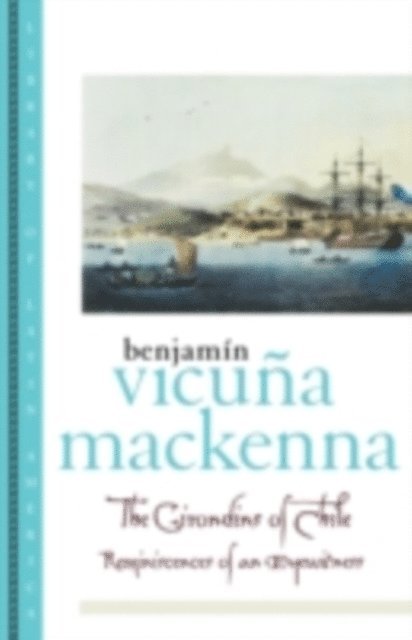
The Girondins of Chile tells of the strong influence that the European revolutions of 1848 had in Chile, and how they motivated a young Santiago society with high cultural aspirations but little political knowledge or direction. Benjamin Vicu?a Mackenna, a Chilean writer and historian who lived during those days in Santiago, relates the events of the time, events in which he was a participant. He pays special attention to how the 1848 revolutions influenced a group of young liberals he called "Chilean Girondins." When news of the fall of Philippe d''Orl?ans and the installation of the Second Republic arrived, there was an explosion of jubilation in Santiago. Now there were no barriers to ideas, "much less to the generous ideas proclaimed by the sincere people of France." But when a proletarian revolution took place in France in June, Chilean public opinion became virulently anti-revolutionary. Except, of course, among the liberal youth, the Chilean Girondins, who were headed towards revolution--and sooner than anyone thought. When revolution came in 1851, Vicu?a Mackenna found himself sentenced to death for taking part in the uprising. After escaping and spending some years in exile, he was able to return in 1855. He remained active in politics, yet his account of what happened in the 1851-52 revolution was not published until 1876.
E-bok
PDF, Engelska, 1999243 kr
Läs direkt efter köp
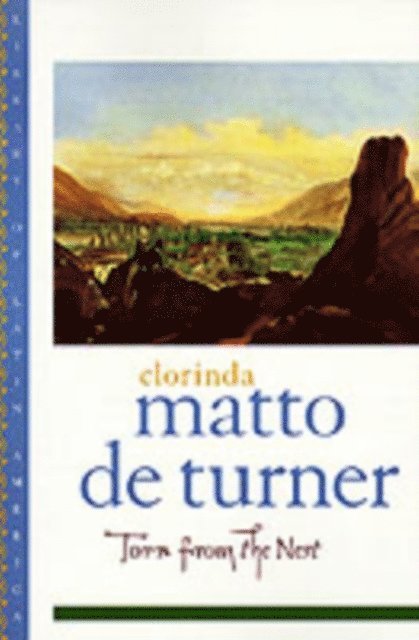
Clorinda Matto de Turner was the first Peruvian novelist to command an international reputation and the first to dramatize the exploitation of indigenous Latin American people. She believed the task of the novel was to be the photograph that captures the vices and virtues of a people, censuring the former with the appropriate moral lesson and paying its homage of admiration to the latter. In this tragic tale, Clorinda Matto de Turner explores the relationship between the landed gentry and the indigenous peoples of the Andean mountain communities. While unfolding as a love story rife with secrets and dashed hopes, Torn from the Nest in fact reveals a deep and destructive class disparity, and criticizes the Catholic clergy for blatant corruption. When Lucia and Don Fernando Marin settle in the small hamlet of Killac, the young couple become advocates for the local Indians who are being exploited and oppressed by their priest and governor and by the gentry allied with these two. Considered meddling outsiders, the couple meet violent resistance from the village leaders, who orchestrate an assault on their house and pursue devious and unfair schemes to keep the Indians subjugated. As a romance blossoms between the a member of the gentry and the peasant girl that Lucia and Don Fernando have adopted, a dreadful secret prevents their marriage and brings to a climax the novel''s exposure of degradation: they share the same father--a parish priest. Torn from the Nest was first published in Peru in 1889 amidst much enthusiasm and outrage. This fresh translation--the first since 1904--preserves one of Peru''s most distinctive and compelling voices.
E-bok
Engelska, 2003146 kr
Läs direkt efter köp
The Girondins of Chile tells of the strong influence that the European revolutions of 1848 had in Chile, and how they motivated a young Santiago society with high cultural aspirations but little political knowledge or direction. Benjamin Vicu?a Mackenna, a Chilean writer and historian who lived during those days in Santiago, relates the events of the time, events in which he was a participant. He pays special attention to how the 1848 revolutions influenced a group of young liberals he called "Chilean Girondins." When news of the fall of Philippe d''Orl?ans and the installation of the Second Republic arrived, there was an explosion of jubilation in Santiago. Now there were no barriers to ideas, "much less to the generous ideas proclaimed by the sincere people of France." But when a proletarian revolution took place in France in June, Chilean public opinion became virulently anti-revolutionary. Except, of course, among the liberal youth, the Chilean Girondins, who were headed towards revolution--and sooner than anyone thought. When revolution came in 1851, Vicu?a Mackenna found himself sentenced to death for taking part in the uprising. After escaping and spending some years in exile, he was able to return in 1855. He remained active in politics, yet his account of what happened in the 1851-52 revolution was not published until 1876.
E-bok
Engelska, 1999264 kr
Läs direkt efter köp
Clorinda Matto de Turner was the first Peruvian novelist to command an international reputation and the first to dramatize the exploitation of indigenous Latin American people. She believed the task of the novel was to be the photograph that captures the vices and virtues of a people, censuring the former with the appropriate moral lesson and paying its homage of admiration to the latter. In this tragic tale, Clorinda Matto de Turner explores the relationship between the landed gentry and the indigenous peoples of the Andean mountain communities. While unfolding as a love story rife with secrets and dashed hopes, Torn from the Nest in fact reveals a deep and destructive class disparity, and criticizes the Catholic clergy for blatant corruption. When Lucia and Don Fernando Marin settle in the small hamlet of Killac, the young couple become advocates for the local Indians who are being exploited and oppressed by their priest and governor and by the gentry allied with these two. Considered meddling outsiders, the couple meet violent resistance from the village leaders, who orchestrate an assault on their house and pursue devious and unfair schemes to keep the Indians subjugated. As a romance blossoms between the a member of the gentry and the peasant girl that Lucia and Don Fernando have adopted, a dreadful secret prevents their marriage and brings to a climax the novel''s exposure of degradation: they share the same father--a parish priest. Torn from the Nest was first published in Peru in 1889 amidst much enthusiasm and outrage. This fresh translation--the first since 1904--preserves one of Peru''s most distinctive and compelling voices.