John W. Maxwell - Böcker
Visar alla böcker från författaren John W. Maxwell. Handla med fri frakt och snabb leverans.
5 produkter
5 produkter
534 kr
Skickas inom 7-10 vardagar
This is the first book to provide a hard-headed economic view of the voluntary approaches to environmental issues, especially toxic chemicals, waste disposal and global warming, that have become prominent in recent years. Corporate environmental initiatives are seen as a tool for influencing the behaviour of environmental activists, legislators, and regulators, though they may have ancillary benefits such as attracting 'green' consumers or reducing costs. Equally, government voluntary programs are seen as a way to achieve modest environmental results when political resistance to mandatory policies is high. Rigorous analysis is illustrated with numerous case studies drawn from the US, Europe, and Japan, while technical details are relegated to appendices, and each chapter highlights implications for corporate strategy and public policy. Although rooted in economic theory, this book will appeal to business strategists and policy practitioners, as well as scholars and researchers.
1 324 kr
Skickas inom 7-10 vardagar
This is the first book to provide a hard-headed economic view of the voluntary approaches to environmental issues, especially toxic chemicals, waste disposal and global warming, that have become prominent in recent years. Corporate environmental initiatives are seen as a tool for influencing the behaviour of environmental activists, legislators, and regulators, though they may have ancillary benefits such as attracting 'green' consumers or reducing costs. Equally, government voluntary programs are seen as a way to achieve modest environmental results when political resistance to mandatory policies is high. Rigorous analysis is illustrated with numerous case studies drawn from the US, Europe, and Japan, while technical details are relegated to appendices, and each chapter highlights implications for corporate strategy and public policy. Although rooted in economic theory, this book will appeal to business strategists and policy practitioners, as well as scholars and researchers.
1 096 kr
Skickas inom 10-15 vardagar
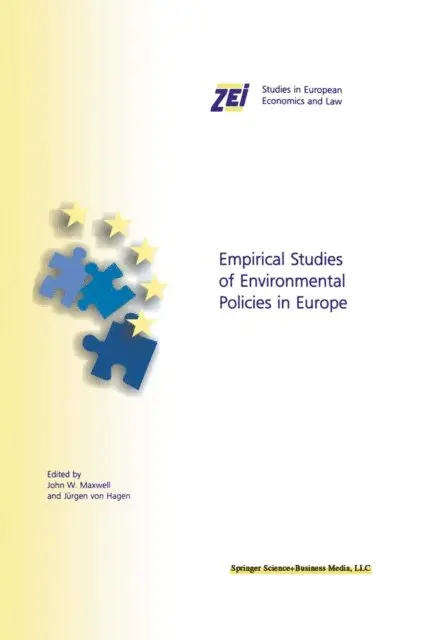
The visible encroachment of industrial development on the environment, and its unintended consequences, has increased public demand for better environmental management and policy. As policy makers struggle to meet these demands, empirical analysis of the effects of environmental policies is crucial for guiding the development, implementation and evaluation of alternative government interventions and regulatory approaches. Such analysis is scarce, however. The need for empirical studies is particularly large in Europe, where environmental policy debates are still mainly theoretical and tend to reflect different ideological positions more than informed assessments of alternative policies. This study presents contributions on empirical environmental policy evaluation. The individual chapters, written by authors from Europe and the US, contain quantitative studies of proposed and implemented environmental policies, at both the micro- and macroeconomic levels.The policy issues studied in this volume include the "double dividend-hypothesis" of carbon taxation, the political economy of environmental policy development, the voluntary environmental efforts of corporations, the enforcement of environmental regulations, the development of environmental policies in transition economies and the implementation of environmental policies in the face of transboundary pollution.
1 064 kr
Skickas inom 10-15 vardagar
John W. Maxwell and Jiirgen von Hagen Kelley School of Business, Indiana University; ZEI, University of Bonn, Indiana University, and CEPR Prior to the 1970's, economic studies of the natural environment were chiefly concerned with the optimal extraction of natural resources such as oil, coal, and timber. This focus reflected the commonly held belief that the natural environmental was sufficient to sustain the world's population in relative comfort (at least in developed nations) and was "there for the taking". By the late 1960's, however, the spectacular levels of economic growth that had taken place since the Second World War began to exact a visible toll on the natural environment. This visibility prompted growing concern for the environment among activists, government officials, academics and the pUblic. This concern has followed a general upward, though cyclic, trend to the present day. Remarkable events during this trend include the issuing of the Brundtland report, and the world environmental summits help in Rio and Kyoto. Concern for the natural environment has impacted the discipline of economics, resulting in the birth of the field of environmental economics that has recently eclipsed in popularity its parent field of natural resource economics.
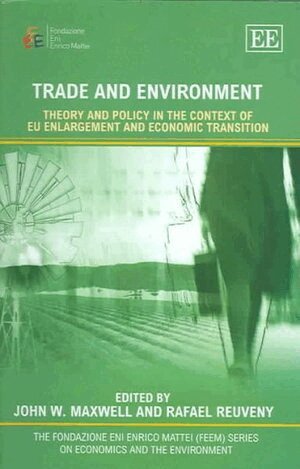
Trade and Environment
Theory and Policy in the Context of EU Enlargement and Economic Transition
Inbunden, Engelska, 2005
2 171 kr
Skickas inom 7-10 vardagar
The debate about how best to manage the interplay between trade, industrialization and the impacts of both on the global environment continues to rage, particularly in the context of the introduction and ratification of the Kyoto Protocol. This book deals with a number of important issues surrounding the debate about trade and the environment, but places particular emphasis on the process of EU enlargement.The first two chapters, by prominent American scholars, present the case for and against the Kyoto Protocol. The authors go on to review the broader trade-environment debate by undertaking a critical analysis of the interplay between current WTO and EU economic policies and how they conflict with policies aimed at environmental protection. The third part focuses on EU accession economies and discusses how EU policies can best strike a balance between environmental improvements and economic development in those countries. Finally the book reviews the impact of economic transition on environmental policies in Russia and Central and Eastern Europe. This book will be of great interest to scholars interested in the trade-environment debate and will be a valuable resource for international environmental policymakers.