Jon Lukomnik - Böcker
Visar alla böcker från författaren Jon Lukomnik. Handla med fri frakt och snabb leverans.
6 produkter
6 produkter
1 152 kr
Skickas inom 3-6 vardagar
2 160 kr
Skickas inom 10-15 vardagar
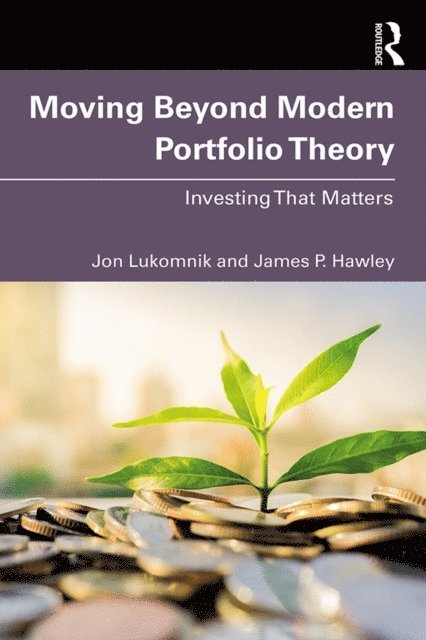
Moving Beyond Modern Portfolio Theory: Investing That Matters tells the story of how Modern Portfolio Theory (MPT) revolutionized the investing world and the real economy, but is now showing its age. MPT has no mechanism to understand its impacts on the environmental, social and financial systems, nor any tools for investors to mitigate the havoc that systemic risks can wreck on their portfolios. It’s time for MPT to evolve.The authors propose a new imperative to improve finance’s ability to fulfil its twin main purposes: providing adequate returns to individuals and directing capital to where it is needed in the economy. They show how some of the largest investors in the world focus not on picking stocks, but on mitigating systemic risks, such as climate change and a lack of gender diversity, so as to improve the risk/return of the market as a whole, despite current theory saying that should be impossible. "Moving beyond MPT" recognizes the complex relations between investing and the systems on which capital markets rely, "Investing that matters" embraces MPT’s focus on diversification and risk adjusted return, but understands them in the context of the real economy and the total return needs of investors. Whether an investor, an MBA student, a Finance Professor or a sustainability professional, Moving Beyond Modern Portfolio Theory: Investing That Matters is thought-provoking and relevant. Its bold critique shows how the real world already is moving beyond investing orthodoxy.
568 kr
Skickas inom 10-15 vardagar
Moving Beyond Modern Portfolio Theory: Investing That Matters tells the story of how Modern Portfolio Theory (MPT) revolutionized the investing world and the real economy, but is now showing its age. MPT has no mechanism to understand its impacts on the environmental, social and financial systems, nor any tools for investors to mitigate the havoc that systemic risks can wreck on their portfolios. It’s time for MPT to evolve.The authors propose a new imperative to improve finance’s ability to fulfil its twin main purposes: providing adequate returns to individuals and directing capital to where it is needed in the economy. They show how some of the largest investors in the world focus not on picking stocks, but on mitigating systemic risks, such as climate change and a lack of gender diversity, so as to improve the risk/return of the market as a whole, despite current theory saying that should be impossible. "Moving beyond MPT" recognizes the complex relations between investing and the systems on which capital markets rely, "Investing that matters" embraces MPT’s focus on diversification and risk adjusted return, but understands them in the context of the real economy and the total return needs of investors. Whether an investor, an MBA student, a Finance Professor or a sustainability professional, Moving Beyond Modern Portfolio Theory: Investing That Matters is thought-provoking and relevant. Its bold critique shows how the real world already is moving beyond investing orthodoxy.
279 kr
Tillfälligt slut
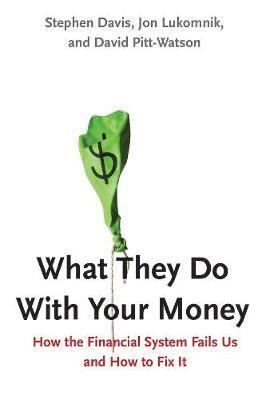
Thanks to the rise of mutual funds and retirement plans, the actual owners of the world's corporate giants are no longer a few wealthy families. Rather, they're the huge majority of working people who have their pensions and life savings invested in shares of today's largest companies. These grassroots owners have ideas about value that differ from those of tycoons or Wall Street traders. And corporate directors and executives are coming under increasing pressure to respond. The New Capitalists provides examples--from GE to Disney to British Petroleum--of enterprises whose shareholders have recently wielded their control in ways unimaginable just several years ago. Authors Stephen Davis, Jon Lukomnik and David Pitt-Watson describe how civil ownership will profoundly alter our world--including forcing the rise of a new species of corporation. It has already begun demolishing old rules and habits, laying the groundwork for a new "constitution of commerce." The authors spell out conventional thinking destined for extinction--and fresh strategies companies must implement to survive in the emerging "civil economy."They also outline how investors, advisors, activists, and policy makers can make their voices heard.
Handbook of System-level Investing
How Experts Worth Trillions of Dollars are Rethinking Investing
Häftad, Engelska, 2026
226 kr
Skickas inom 5-8 vardagar
289 kr
Skickas inom 7-10 vardagar
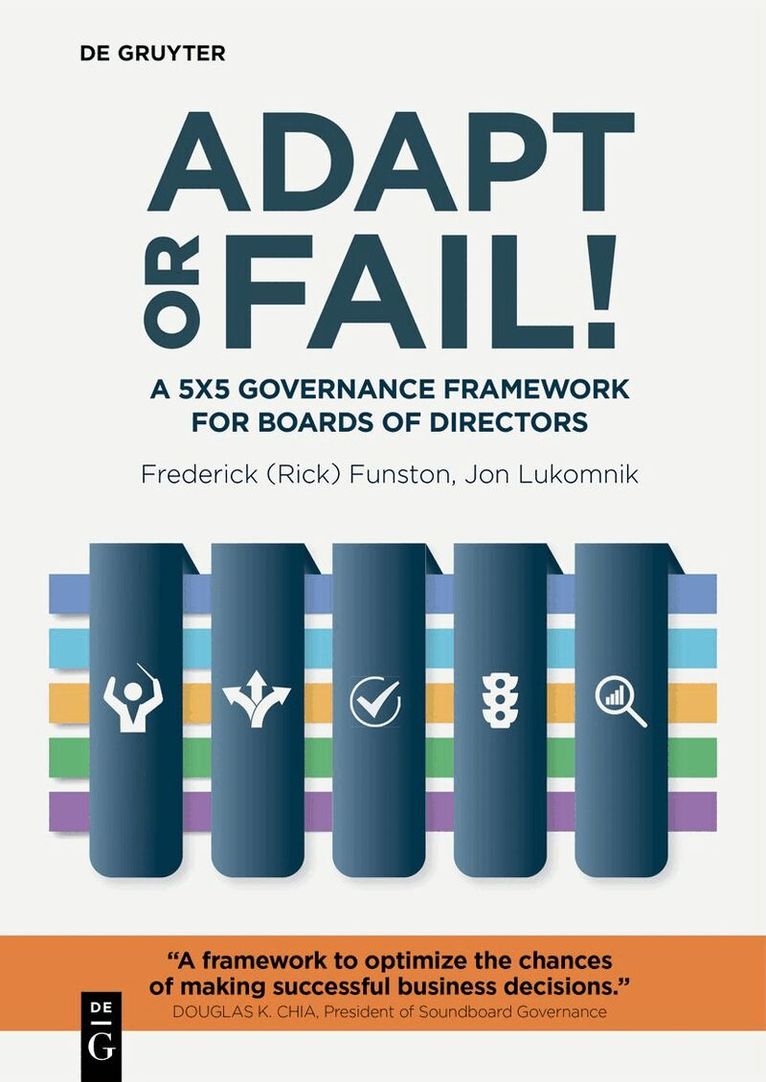
Conventional approaches to board governance have been unable to keep pace with the momentum of change, as well as the uncertainty and asymmetric competition that characterizes the 21st century. Adapt or Fail! A 5x5 Governance Framework for Boards of Directors provides practical ways boards can lead and accelerate adaptation, even in the face of extreme uncertainty and inevitable adversity. It pulls back the curtain on governance successes and failures. It highlights the critical questions every board should ask and the lessons worth learning if organizations are to successfully adapt. The book describes the five essential powers common to all boards and explores how to use them. Whether for profit or not, large or small, public or private, all boards must conduct the business of the board itself; set direction and policy; approve key decisions and then prudently delegate; oversee the execution of direction within policy; and verify before trusting. Written by two governance experts who have lived and breathed these issues, the book shows how boards can embed a systematic and disciplined process of continuous adaptation by detecting signals (external/internal); interpreting those signals; responding through experimentation and innovation; judging the effectiveness of the response; and then adapting as necessary. This is an indispensable resource for board members and trustees in both for-profit and non-profit organizations.