Jonathan Doak - Böcker
Visar alla böcker från författaren Jonathan Doak. Handla med fri frakt och snabb leverans.
5 produkter
5 produkter
Urban Crime Prevention, Surveillance, and Restorative Justice
Effects of Social Technologies
Inbunden, Engelska, 2017
2 711 kr
Skickas inom 10-15 vardagar
Crime prevention, surveillance, and restorative justice have transformed the response to crime in recent years. Each has had a significant impact on policy, introducing new concepts and reassessing traditional aims and priorities. While such efforts attract a great deal of criminological interest, they tend to be discussed within separate and discrete literatures, rather than as part of a cohesive and concerted effort. Urban Crime Prevention, Surveillance, and Restorative Justice: Effects of Social Technologies examines these emerging trends which are increasingly being contemplated by police, courts, and corrections agencies, and explores how these three concepts are changing national and international policies concerning crime. Going beyond the conventional methods for crime reduction The book addresses these topics within a larger framework of social technology, defined as coordinated action derived from an organized field of knowledge to achieve a particular result. It focuses on efforts aimed at reducing and responding to crime without reliance on the conventional criminal justice practices of police and prisons. The contributors discuss diffusion of knowledge about crime though media and criminological research, surveillance technologies and their effect on crime, and finally, the concept of restorative justice, with an emphasis on juvenile justice and its relationship to social regulations in general.Comprising the contributions of numerous experts in the field of criminology, the book asks "What is the interaction between knowledge, planning, and social repercussions?" The answer to this question forms a valuable basis from which to evaluate proposals for social improvements related to crime.
Urban Crime Prevention, Surveillance, and Restorative Justice
Effects of Social Technologies
Häftad, Engelska, 2009
1 697 kr
Skickas inom 10-15 vardagar
Crime prevention, surveillance, and restorative justice have transformed the response to crime in recent years. Each has had a significant impact on policy, introducing new concepts and reassessing traditional aims and priorities. While such efforts attract a great deal of criminological interest, they tend to be discussed within separate and discrete literatures, rather than as part of a cohesive and concerted effort. Urban Crime Prevention, Surveillance, and Restorative Justice: Effects of Social Technologies examines these emerging trends which are increasingly being contemplated by police, courts, and corrections agencies, and explores how these three concepts are changing national and international policies concerning crime.Going beyond the conventional methods for crime reductionThe book addresses these topics within a larger framework of social technology, defined as coordinated action derived from an organized field of knowledge to achieve a particular result. It focuses on efforts aimed at reducing and responding to crime without reliance on the conventional criminal justice practices of police and prisons. The contributors discuss diffusion of knowledge about crime though media and criminological research, surveillance technologies and their effect on crime, and finally, the concept of restorative justice, with an emphasis on juvenile justice and its relationship to social regulations in general.Comprising the contributions of numerous experts in the field of criminology, the book asks "What is the interaction between knowledge, planning, and social repercussions?" The answer to this question forms a valuable basis from which to evaluate proposals for social improvements related to crime.
991 kr
Skickas
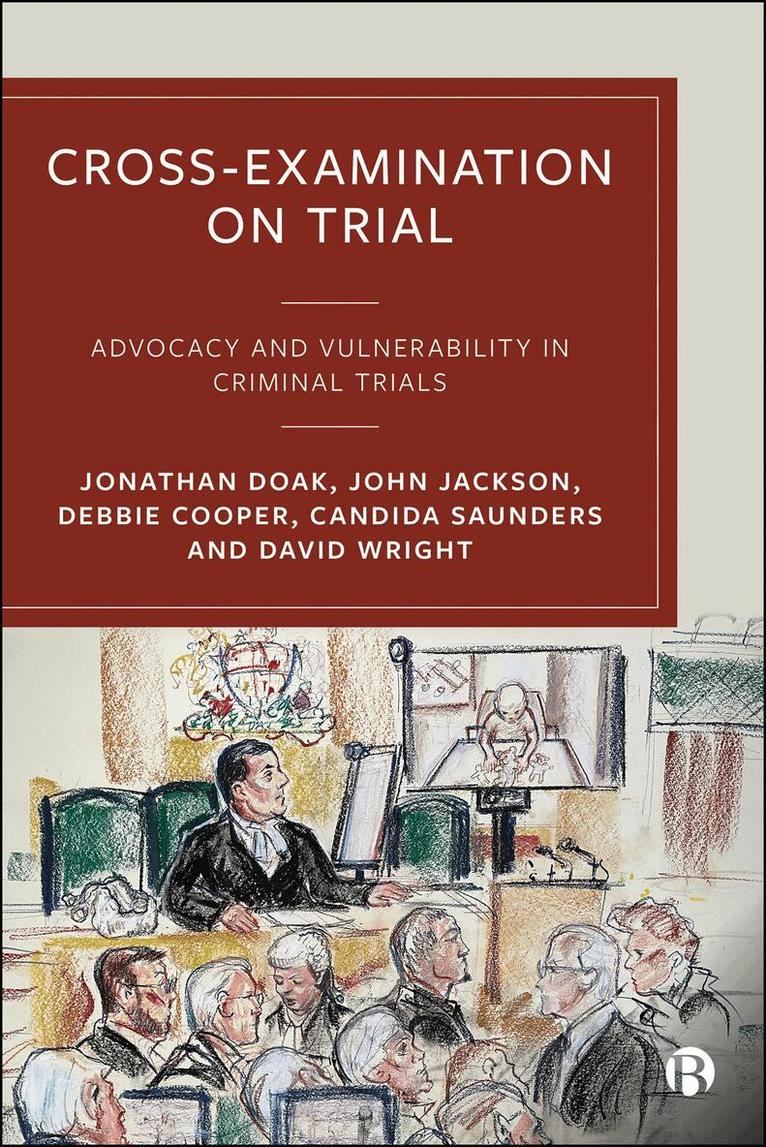
Amid growing public concern about the negative effect cross-examination has on vulnerable witnesses, this book examines the effect of recent reforms to the practice across the different jurisdictions of the UK and Ireland. Drawing on observations and transcripts of trials and interviews with judges, advocates and intermediaries, the book provides an evaluation of cross-examination in trials involving vulnerable witnesses and the extent to which reforms are producing meaningful change. The book’s analysis sheds new light on the significance of cross-examination in criminal trials and provides evidence-based solutions for further changes to enable vulnerable witnesses to give their best evidence to the court.
Victims' Rights, Human Rights and Criminal Justice
Reconceiving the Role of Third Parties
Häftad, Engelska, 2008
805 kr
Skickas inom 10-15 vardagar
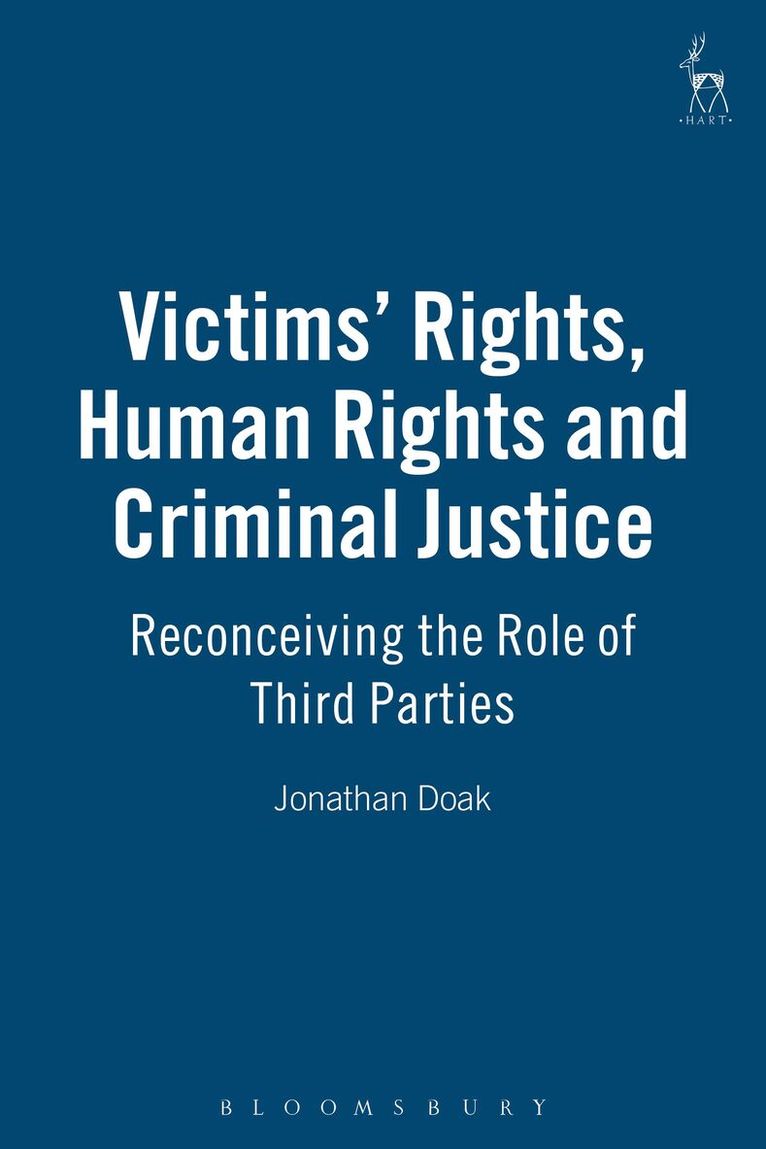
In recent times, the idea of 'victims' rights' has come to feature prominently in political, criminological and legal discourse, as well as being subject to regular media comment. The concept nevertheless remains inherently elusive, and there is still considerable ambiguity as to the origin and substance of such rights. This monograph deconstructs the nature and scope of the rights of victims of crime against the backdrop of an emerging international consensus on how victims ought to be treated and the role they ought to play. The essence of such rights is ascertained not only by surveying the plethora of international standards which deal specifically with crime victims, but also by considering the potential cross-applicability of standards relating to victims of abuse of power, with whom they have much in common. In this book Jonathan Doak considers the parameters of a number of key rights which international standards suggest victims ought to be entitled to.He then proceeds to ask whether victims are able to rely upon such rights within a domestic criminal justice system characterised by structures, processes and values which are inherently exclusionary, adversarial and punitive in nature.
Reimagining Restorative Justice
Agency and Accountability in the Criminal Process
Häftad, Engelska, 2017
400 kr
Skickas inom 10-15 vardagar
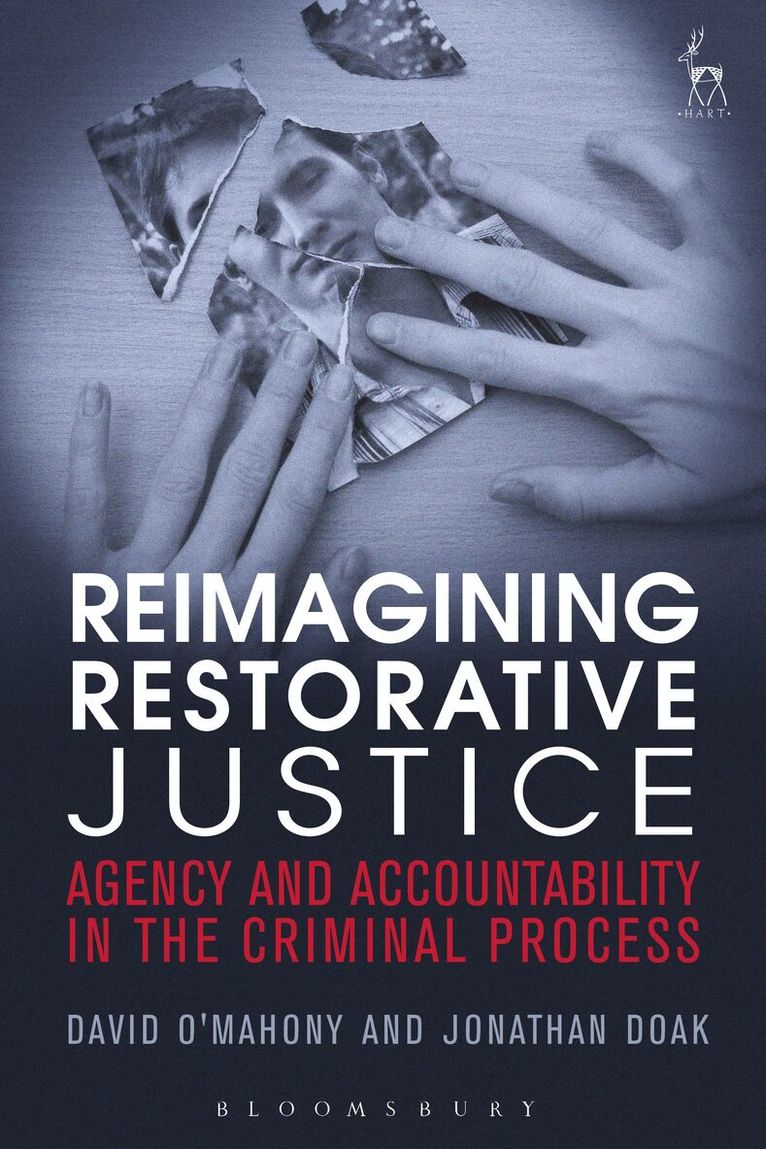
"Restorative justice theory has largely failed to keep pace with the rapid expansion of restorative practices worldwide – indeed, it is remarkable how much support RJ has when so few advocates can even define what it is. As such, this insightful and comprehensive new contribution from two of the top scholars on the frontlines of restorative justice research is hugely welcome."Professor Shadd Maruna, Centre for Criminology and Criminal Justice, University of Manchester"Reimagining Restorative Justice is a reflective and balanced reconsideration of restorative justice. It deftly sweeps across the large literature on the subject, putting it in perspective, seeing anew through its wide-angle lens. Empowerment and accountability provide a fertile framework for this richly reimagined justice." Professor John Braithwaite, Australian National University"David O’Mahony and Jonathan Doak have made a significant contribution to the confusing and over-complicated field of restorative justice theory. They do so through their use of empowerment theory to bring conceptual and operational clarity to the concepts of agency and accountability in restorative processes and outcomes. As a result they develop a convincing argument for face to face dialogue between victim and perpetrator within the core of the criminal justice system. Their emphasis upon ethical and skilful practice is a welcome riposte to the rapid spread of ‘restorative justice lite’ driven by managerialism and the need to cut costs."Tim Chapman, Lecturer at the University of Ulster."O’Mahony and Doak convincingly argue that rapid developments in the practice of restorative interventions have outstripped restorative justice theory. They provide both an outstandingly helpful review of the literature and a fresh theoretical approach based on empowerment theory. Everyone seriously interested in restorative justice will want to reflect carefully on the authors’ conclusions."Anthony Bottoms, Emeritus Wolfson Professor of Criminology at the University of Cambridge. In recent years, restorative-based interventions have expanded rapidly and are increasingly viewed as a legitimate, and even superior means of delivering justice. The result of this swift but piecemeal development has been that restorative justice practice has outpaced the development of restorative justice theory. This book takes up this challenge by ‘reimagining’ a new framework for the operation of restorative justice within criminal justice. In essence, it is contended that the core empowering values of ‘agency’ and ‘accountability’ provide a lens for reimagining how restorative justice works and the normative goals it ought to encompass.