Jonathan Falconer - Böcker
Visar alla böcker från författaren Jonathan Falconer. Handla med fri frakt och snabb leverans.
9 produkter
9 produkter
108 kr
Skickas inom 10-15 vardagar
RAF Bomber Command and its crews were probably unique in the history of warfare. During the Second World War each RAF bomber crew member was a volunteer, and in the case of the Command's elite Pathfinder Force, many were volunteers within a volunteer force. Discover what it was like to fly with an RAF heavy bomber crew on a typical night raid over Germany. Learn about the different kinds of specialist flying kit available. How did a squadron's choice of aircraft - Stirling, Halifax, Lancaster or Mosquito - affect one's chances of survival? What were the odds when a lone bomber crew battled it out with a marauding German night fighter aircraft, or with deadly flak and searchlights? And what would happen to an airman if his nerve cracked under the pressure? Whatever your viewpoint on the morality of the bomber offensive, the bravery of the men who flew by day and night with Bomber Command is an undisputed fact.
68 kr
Tillfälligt slut
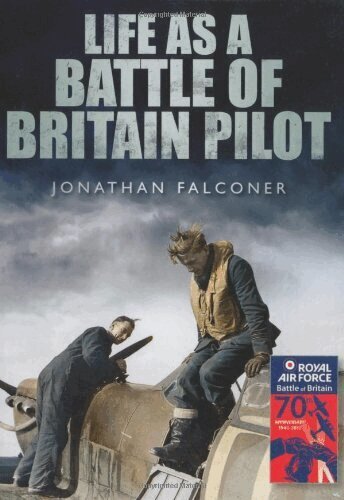
What was life like as an RAF Battle of Britain pilot? What was it like to fly a fighter? Who were the men that flew Spitfires and Hurricanes? How did they spend a typical day? Which was the better machine - Spitfire or Messerschmitt? What unique challenges did a lone RAF pilot face at 30,000 feet? Read this book and then ask yourself: would I have been up to the job?
74 kr
Skickas inom 11-20 vardagar
Southern England. Late summer 1940. The nation is fighting for its very survival and the Luftwaffe's aerial offensive is unrelenting. All that lies between invasion and salvation for Britain is the 'thin blue line' of RAF Fighter Command and its pilots.This newly illustrated anniversary edition of Life as a Battle of Britain Pilot reveals what it was like to fly a fighter plane in the Battle of Britain. Who were the Spitfire and Hurricane pilots of 1940? How did they spend a typical day? And when pitched together in combat at 30,000 feet, which was the better machine - Spitfire or Me109?Read Life as a Battle of Britain Pilot and then ask yourself: would I have been up to the job?
198 kr
Skickas inom 10-15 vardagar
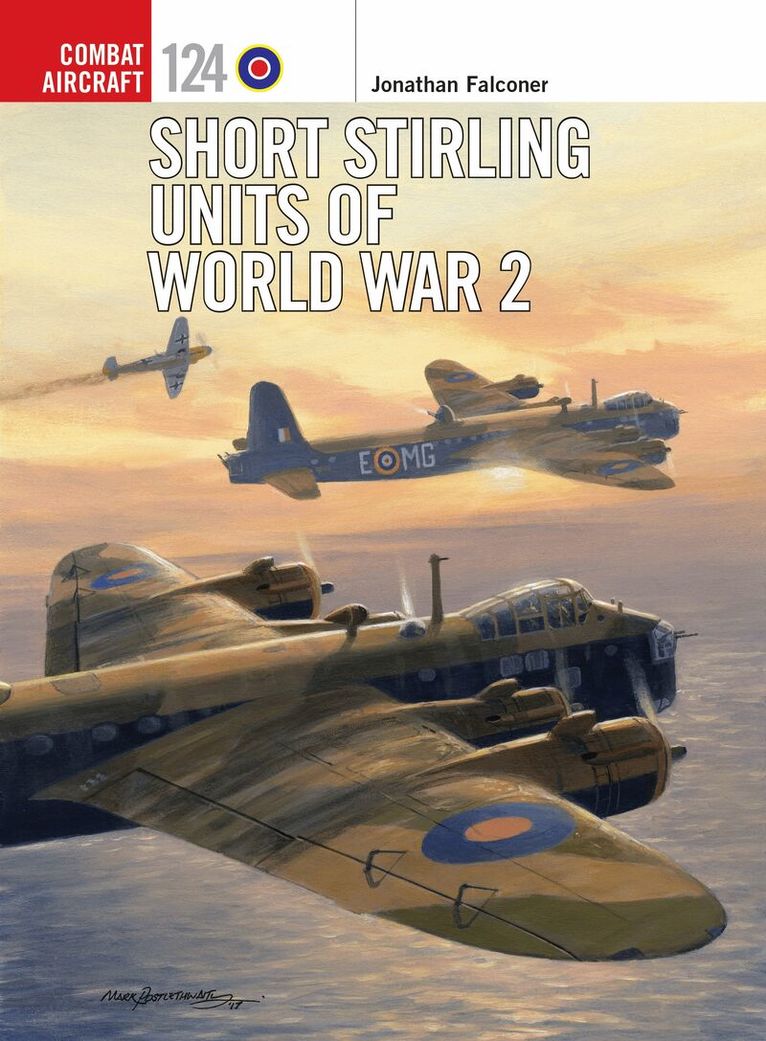
Of the RAF’s trio of four-engined heavy bombers in World War 2, the mighty Short Stirling was the first to enter service in August 1940. From its first raid in February 1941, the Stirling was at the forefront of the British night bombing offensive against Germany before unacceptably high losses forced its relegation to second-line duties later in the war.In its modified form as the Mark IV the Stirling fulfilled vital roles with the RAF as a paratroop transport and glider tug on D-Day, at Arnhem and on the Rhine crossing as well as flying countless Special Duties operations over Occupied Europe and Norway. Its last gasp was in 1948-49 when a handful of Mk Vs were acquired by the Royal Egyptian Air Force to bomb Israel in the First Arab–Israeli War.Containing numerous first-hand combat accounts from the crews that flew the bomber and detailed profile artwork, Short Stirling Units of World War 2 uncovers the history of one of the RAF's greatest World War 2 bombers.
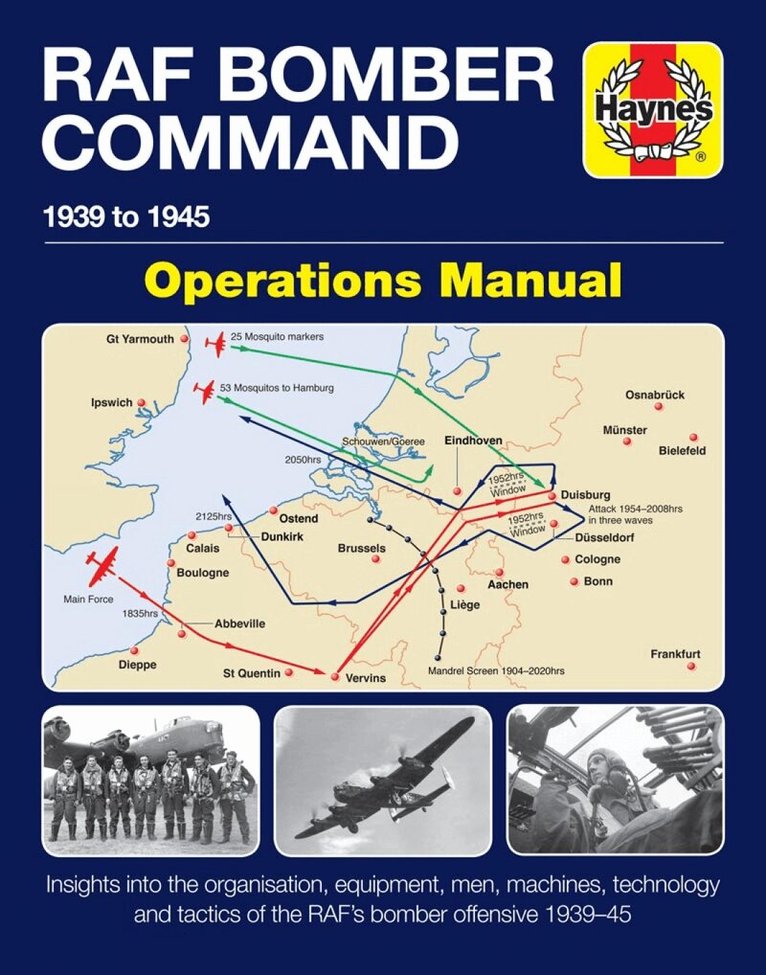
RAF Bomber Command Operations Manual
Insights into the organisation, equipment, men, machines, technology and tactics of the RAF's bomber offensive 1939 -1945
Inbunden, Engelska, 2018
350 kr
Skickas inom 7-10 vardagar
Insights into the organisation, equipment, men, machines, technology and tactics of the RAF's bomber offensive 1939 - 1945, Night and day in the Second World War RAF Bomber Command pounded away at the infrastructure of Germany to bring the Reich to its knees., Author Jonathan Falconer describes the Command's complex organisation and the science, technology and engineering behind every raid: how were bomber airfields built? How were bomber crews trained? What aircraft did they fly and what weapons did they use? How was the Command organised? Who decided what to bomb? How was a raid planned, executed, and its effectiveness analysed? How were the 47,000 'missing' aircrew traced? How were damaged bombers repaired?, Author: Jonathan Falconer is the author of more than 35 books and has published widely on the history of the RAF and Bomber Command including the Haynes de Havilland Mosquito Manual (with Brian Rivas), Short Stirling Manual, Handley Page Halifax Manual and RAF 100: The Royal Air Force in 100 Technical Innovations. He lives in Wiltshire.
297 kr
Skickas inom 7-10 vardagar
The landing of Allied forces on the shores of Normandy on 6 June 1944 was the greatest amphibious invasion in history. Technology and innovation played crucial parts in the D-Day drama – from tank-carrying gliders, swimming tanks and the Mulberry harbours, to radio and radar aids that ensured landing craft arrived on the right beaches and combat aircraft overhead were controlled., This manual describes the development, construction and use of a wide range of innovative machines, structures and systems, explaining their uses on D-Day and after, and revealing how they contributed to the success of 'Overlord'., To mark the 75th anniversary of D-Day on 6 June 2019, this new edition of the Haynes D-Day Operations Manual features an additional chapter describing how beach obstacles were neutralised and destroyed, and how the beachhead was organised to manage the rapid build-up of men and materiel before the breakout inland., Foreword by Major General Stewart Watson CBE, Sherman DD tank commander with 13th/18th Royal Hussars on D-Day., Author: Jonathan Falconer is the author of more than 35 books on aspects of aviation and military history. He was commissioning editor of the 14-volume 'Battle Zone Normandy' series in 2004 for Sutton Publishing. He is now a senior commissioning editor with Haynes. He lives in Wiltshire.
258 kr
Skickas
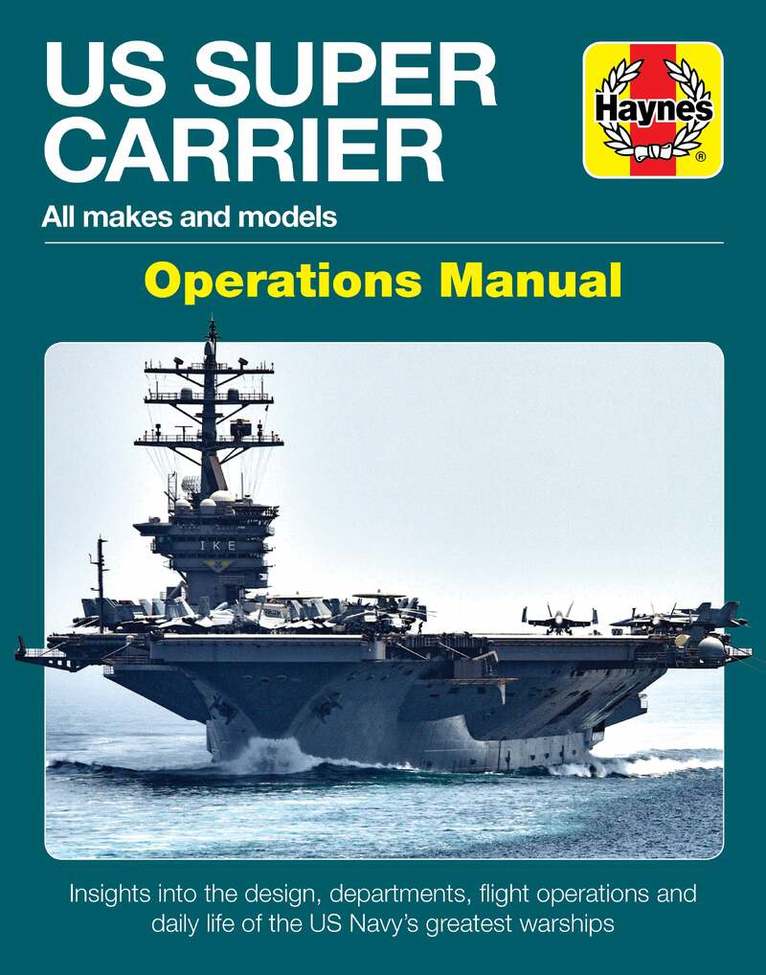
Author Chris McNab and photographer Patrick Bunce go above and below deck to discover how a supercarrier is built, examining its structure, systems, departments, flight deck and hangar deck. With the full cooperation of the US Navy, they join the USS Dwight D. Eisenhower (CVN-69) to discover how a supercarrier operates, looking at flight operations, logistics and life onboard. Commissioned in 1977, this awesome carrier has a complement of more than 6,000 crew and an embarked air wing of anything up to 90 aircraft, together capable of delivering more than 150 combat sorties per day.|Few manmade objects in the modern world represent power projection as emphatically as the supercarriers of the US Navy. Emerging in the aftermath of the Second World War in the Forrestal and Enterprise classes, the supercarrier concept has become most potently embodied in the great Nimitz-class vessels, ten of which have been commissioned since 1975. It is these warships, plus the now emerging supercarriers of the Gerald R. Ford class, that form the lethal heart of the US Navy’s Carrier Strike Groups (CSGs), previously known as Carrier Battle Groups (CBGs).Author Chris McNab and photographer Patrick Bunce go above and below deck to discover how a supercarrier is built, examining its structure, systems, departments, flight deck and hangar deck. With the full cooperation of the US Navy, they join the USS Dwight D. Eisenhower (CVN-69) to discover how a supercarrier operates, looking at flight operations, logistics and life onboard. Commissioned in 1977, this awesome carrier has a complement of more than 6,000 crew and an embarked air wing of anything up to 90 aircraft, together capable of delivering more than 150 combat sorties per day.Illustrated with more than 250 photographs, many taken specially for this manual aboard the Dwight D. Eisenhower by internationally respected photographer Patrick Bunce, the Haynes Supercarrier Manual offers an unrivalled look at the greatest warships afloat in the 21st century.|• Published with full cooperation of the US Navy.• Features super carrier USS Dwight D. Eisenhower.• Insights into how a US super carrier operates and the working lives of its crew.• Fully illustrated with specially commissioned photography.|The Haynes Super Carrier Manual offers unrivalled insights into understanding how a modern US nuclear-powered aircraft carrier is operated. Published with the cooperation of the US Navy, authors Chris McNab and Patrick Bunce take readers inside a super carrier to reveal how and why they are at the heart of global American military force.|The Haynes Super Carrier Manual offers unrivalled insights into understanding how a modern US nuclear-powered aircraft carrier is operated.|Chris McNab is an author and editor specialising in military history and military technology. He has published more than 40 books, including several for Haynes. He lives and works in South Wales.Patrick Bunce is a US-based photographer who has contributed to a wide range of military book and magazine publications.|IntroductionChapter 1History of the supercarrierChapter 2Structure, major systems and departmentsChapter 3Flight deck, hangar deck and key flight personnelChapter 4Flight operationsChapter 5Major electronic and defensive systemsChapter 6Carrier logisticsChapter 7 Daily life and operationsBibliography and further reading
266 kr
Skickas
The British and Commonwealth Soldier 1939-45, British soldiers, with their old-fashioned helmets, spring-powered PIAT anti-tank guns and veneration of heroic defeats, may have lost the propaganda war, but their record speaks for itself: they may have started badly in France in 1940 and the Far East in 1941, but they were victorious in the North African desert, in Europe and in India and Burma where the 'Forgotten Army' first held the Japanese and then inflicted at Imphal and Kohima the greatest loss to the Japanese on land. They held back the might of the Panzers in Normandy in 1944, chased the Germans back into Holland and came within a whisker at Arnhem of circumventing the Siegfried Line, and won battle after battle against a fanatical defence on their way to final victory., This book doesn't cover the progress of the Second World War, but looks in detail at the weapons, uniform, accoutrements, equipment and tactics of the Second World War British infantryman, following the themes of the Haynes Great War British Tommy and German Infantryman Manuals., Author: Simon Forty was educated at Sedbergh School and London University's School of Slavonic and East European Studies. He has been involved in publishing for over three decades and specializes in military history having contributed to a large number of books. He was also general editor of World War I: A Visual Encyclopedia. Simon lives in Devon with his wife and two children.
357 kr
Skickas