Jonathan K. Hodge - Böcker
Visar alla böcker från författaren Jonathan K. Hodge. Handla med fri frakt och snabb leverans.
3 produkter
3 produkter
1 437 kr
Skickas inom 10-15 vardagar
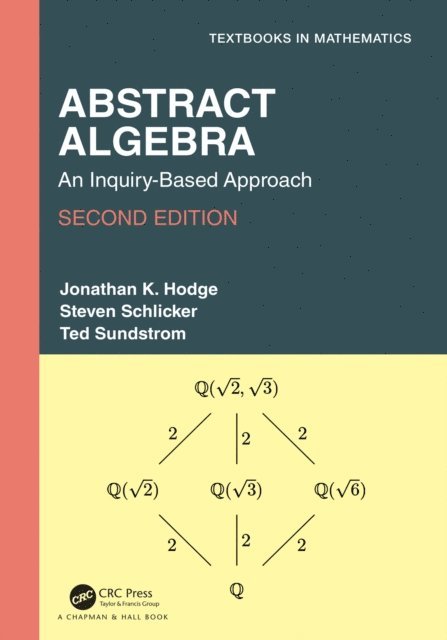
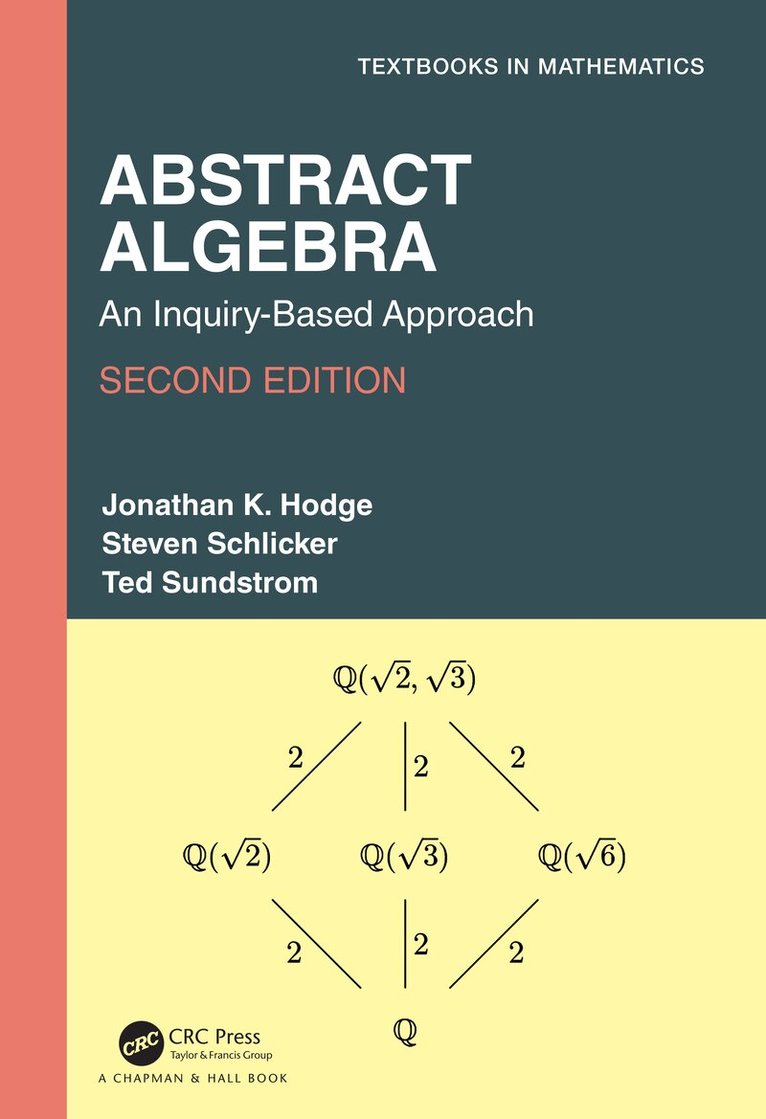
Abstract Algebra: An Inquiry-Based Approach, Second Edition not only teaches abstract algebra, but also provides a deeper understanding of what mathematics is, how it is done, and how mathematicians think.The second edition of this unique, flexible approach builds on the success of the first edition. The authors offer an emphasis on active learning, helping students learn algebra by gradually building both their intuition and their ability to write coherent proofs in context.The goals for this text include:Allowing the flexibility to begin the course with either groups or ringsIntroducing the ideas behind definitions and theorems to help students develop intuitionHelping students understand how mathematics is done. Students will experiment through examples, make conjectures, and then refine or prove their conjecturesAssisting students in developing their abilities to effectively communicate mathematical ideasActively involving students in realizing each of these goals through in-class and out-of-class activities, common in-class intellectual experiences, and challenging problem setsChanges in the Second EditionStreamlining of introductory material with a quicker transition to the material on rings and groupsNew investigations on extensions of fields and Galois theoryNew exercises added and some sections reworked for clarityMore online Special Topics investigations and additional Appendices, including new appendices on other methods of proof and complex roots of unityEncouraging students to do mathematics and be more than passive learners, this text shows students the way mathematics is developed is often different than how it is presented; definitions, theorems, and proofs do not simply appear fully formed; mathematical ideas are highly interconnected; and in abstract algebra, there is a considerable amount of intuition to be found.
2 054 kr
Tillfälligt slut
To learn and understand mathematics, students must engage in the process of doing mathematics. Emphasizing active learning, Abstract Algebra: An Inquiry-Based Approach not only teaches abstract algebra but also provides a deeper understanding of what mathematics is, how it is done, and how mathematicians think. The book can be used in both rings-first and groups-first abstract algebra courses. Numerous activities, examples, and exercises illustrate the definitions, theorems, and concepts. Through this engaging learning process, students discover new ideas and develop the necessary communication skills and rigor to understand and apply concepts from abstract algebra. In addition to the activities and exercises, each chapter includes a short discussion of the connections among topics in ring theory and group theory. These discussions help students see the relationships between the two main types of algebraic objects studied throughout the text.Encouraging students to do mathematics and be more than passive learners, this text shows students that the way mathematics is developed is often different than how it is presented; that definitions, theorems, and proofs do not simply appear fully formed in the minds of mathematicians; that mathematical ideas are highly interconnected; and that even in a field like abstract algebra, there is a considerable amount of intuition to be found.
747 kr
Skickas inom 7-10 vardagar
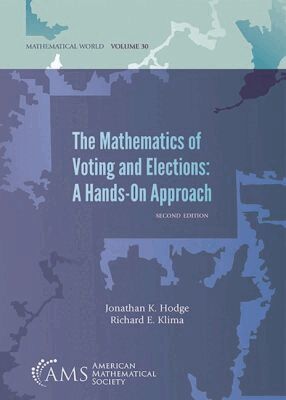
The Mathematics of Voting and Elections: A Hands-On Approach, Second Edition, is an inquiry-based approach to the mathematics of politics and social choice. The aim of the book is to give readers who might not normally choose to engage with mathematics recreationally the chance to discover some interesting mathematical ideas from within a familiar context, and to see the applicability of mathematics to real-world situations. Through this process, readers should improve their critical thinking and problem solving skills, as well as broaden their views of what mathematics really is and how it can be used in unexpected ways. The book was written specifically for non-mathematical audiences and requires virtually no mathematical prerequisites beyond basic arithmetic. At the same time, the questions included are designed to challenge both mathematical and non-mathematical audiences alike. More than giving the right answers, this book asks the right questions.The book is fun to read, with examples that are not just thought-provoking, but also entertaining. It is written in a style that is casual without being condescending. But the discovery-based approach of the book also forces readers to play an active role in their learning, which should lead to a sense of ownership of the main ideas in the book. And while the book provides answers to some of the important questions in the field of mathematical voting theory, it also leads readers to discover new questions and ways to approach them.In addition to make small improvements in all the chapters, this second edition contains several new chapters. Of particular interest might be Chapter 12 which covers a host of topics related to gerrymandering.