Jonathan Liljeblad – författare
706 kr
Skickas inom 10-15 vardagar
297 kr
Skickas inom 10-15 vardagar
2 137 kr
Skickas inom 10-15 vardagar
735 kr
Skickas inom 10-15 vardagar
341 kr
Läs direkt efter köp
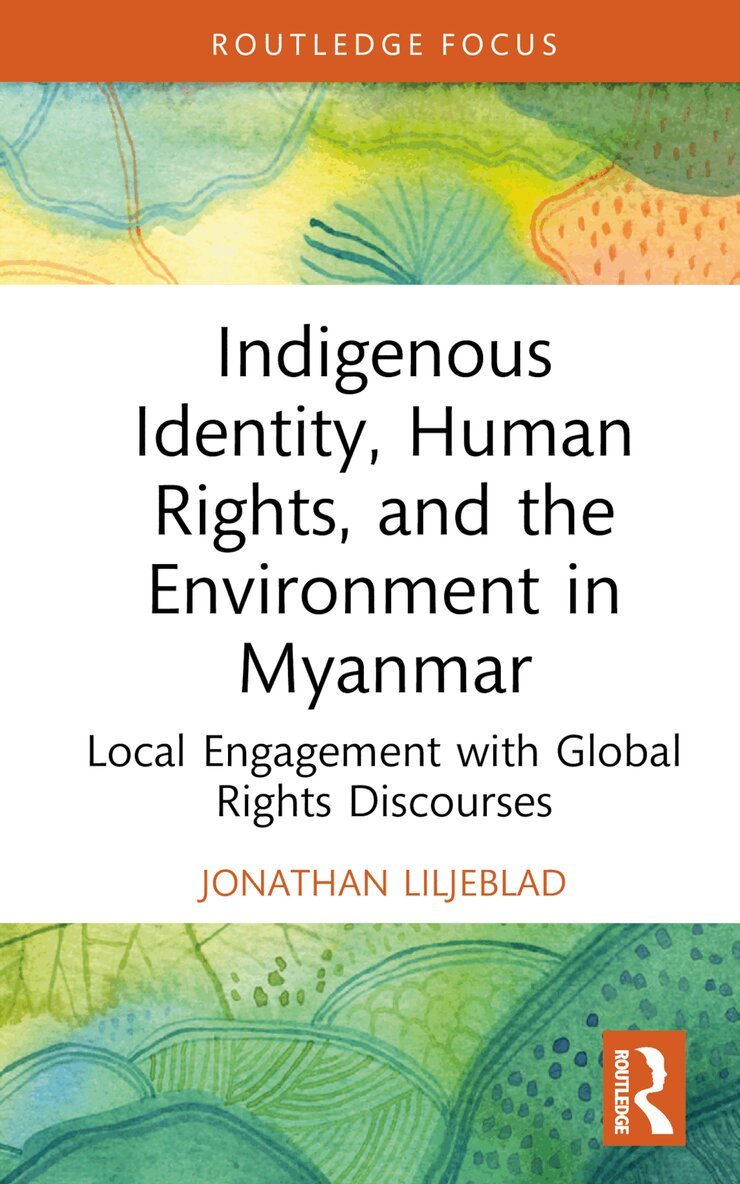
This book draws on the experiences of the indigenous movement in Myanmar to explore how the local construction of indigenous identities connects communities to global mechanisms for addressing human rights and environmental issues.
Various communities in Myanmar have increasingly adapted international discourses of indigenous identity as a vehicle to access international legal mechanisms to address their human rights and environmental grievances against the Myanmar state. Such exercise of global discourses overlays historical endemic struggles of diverse peoples involving intersectional issues of self- determination, cultural survival, and control over natural resources. This book draws implications for the intersectionality of local and global theoretical discourses of indigeneity, human rights, and environment. It uses such implications to identify attendant issues for the aspirations of international human rights and environmental efforts and the practice of their associated international legal mechanisms. This book informs readers of the agency and capabilities of communities in underdeveloped countries to engage different global mechanisms to address local grievances against their states. Readers will develop a more critical understanding of the issues posed by the local construction of indigeneity for the ideals and practice of international efforts regarding human rights and the environment.
This book will be of great interest to students and scholars of indigenous studies, human rights, international law, Asian studies, development studies, and the environment.
341 kr
Läs direkt efter köp
This book draws on the experiences of the indigenous movement in Myanmar to explore how the local construction of indigenous identities connects communities to global mechanisms for addressing human rights and environmental issues.
Various communities in Myanmar have increasingly adapted international discourses of indigenous identity as a vehicle to access international legal mechanisms to address their human rights and environmental grievances against the Myanmar state. Such exercise of global discourses overlays historical endemic struggles of diverse peoples involving intersectional issues of self- determination, cultural survival, and control over natural resources. This book draws implications for the intersectionality of local and global theoretical discourses of indigeneity, human rights, and environment. It uses such implications to identify attendant issues for the aspirations of international human rights and environmental efforts and the practice of their associated international legal mechanisms. This book informs readers of the agency and capabilities of communities in underdeveloped countries to engage different global mechanisms to address local grievances against their states. Readers will develop a more critical understanding of the issues posed by the local construction of indigeneity for the ideals and practice of international efforts regarding human rights and the environment.
This book will be of great interest to students and scholars of indigenous studies, human rights, international law, Asian studies, development studies, and the environment.
393 kr
Kommande
1 305 kr
Kommande
685 kr
Skickas inom 10-15 vardagar
2 359 kr
Skickas inom 10-15 vardagar
795 kr
Läs direkt efter köp
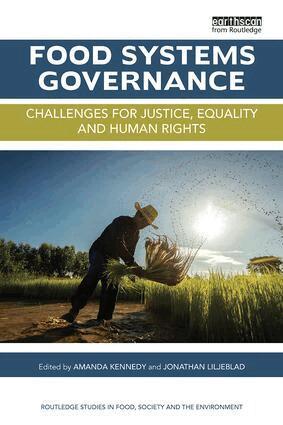
Sustainability and food production represent a major challenge to society, with both consumption and supply sides posing practical and ethical dilemmas. This book shows that food governance issues can occur in many ways and at many points along the food chain. The risks and impacts, particularly with the increasing globalisation of food systems, are often distributed in unequal ways.
It is the role of law to form the pivot around which these issues are addressed in society in the form of food governance mechanisms. The chapters in this book address a range of issues in food governance revolving around questions of justice, fairness, equality and human rights. They identify different issues regarding inequality in access and control over food governance. Some address generic governance and institutional issues across a range of international contexts, while others present case studies, including from Argentina, China, India, Indonesia, Thailand, UK and West Africa. The book offers directions for reform of the law and legal institutions to mitigate the dangers of inequality and promote greater fairness in food governance.
795 kr
Läs direkt efter köp
Sustainability and food production represent a major challenge to society, with both consumption and supply sides posing practical and ethical dilemmas. This book shows that food governance issues can occur in many ways and at many points along the food chain. The risks and impacts, particularly with the increasing globalisation of food systems, are often distributed in unequal ways.
It is the role of law to form the pivot around which these issues are addressed in society in the form of food governance mechanisms. The chapters in this book address a range of issues in food governance revolving around questions of justice, fairness, equality and human rights. They identify different issues regarding inequality in access and control over food governance. Some address generic governance and institutional issues across a range of international contexts, while others present case studies, including from Argentina, China, India, Indonesia, Thailand, UK and West Africa. The book offers directions for reform of the law and legal institutions to mitigate the dangers of inequality and promote greater fairness in food governance.
860 kr
Läs direkt efter köp
Much previous literature on sacred natural sites has been written from a non-indigenous perspective. In contrast, this book facilitates a greater self-expression of indigenous perspectives regarding treatment of the sacred and its protection and governance in the face of threats from various forms of natural resource exploitation and development.
It provides indigenous custodians the opportunity to explain how they view and treat the sacred through a written account that is available to a global audience. It thus illuminates similarities and differences of both definitions, interpretations and governance approaches regarding sacred natural phenomena and their conservation. The volume presents an international range of case studies, from the recent controversy of pipeline construction at Standing Rock, a sacred site for the Sioux people spanning North and South Dakota, to others located in Australia, Canada, East Timor, Hawaii, India, Mexico, Myanmar, Nigeria and the Philippines.
Each chapter includes an analytical introduction and conclusion written by the editors to identify common themes, unique insights and key messages. The book is therefore a valuable teaching resource for students of indigenous studies, anthropology, religion, heritage, human rights and law, nature conservation and environmental protection. It will also be of great interest to professionals and NGOs concerned with nature and heritage conservation.
860 kr
Läs direkt efter köp
Much previous literature on sacred natural sites has been written from a non-indigenous perspective. In contrast, this book facilitates a greater self-expression of indigenous perspectives regarding treatment of the sacred and its protection and governance in the face of threats from various forms of natural resource exploitation and development.
It provides indigenous custodians the opportunity to explain how they view and treat the sacred through a written account that is available to a global audience. It thus illuminates similarities and differences of both definitions, interpretations and governance approaches regarding sacred natural phenomena and their conservation. The volume presents an international range of case studies, from the recent controversy of pipeline construction at Standing Rock, a sacred site for the Sioux people spanning North and South Dakota, to others located in Australia, Canada, East Timor, Hawaii, India, Mexico, Myanmar, Nigeria and the Philippines.
Each chapter includes an analytical introduction and conclusion written by the editors to identify common themes, unique insights and key messages. The book is therefore a valuable teaching resource for students of indigenous studies, anthropology, religion, heritage, human rights and law, nature conservation and environmental protection. It will also be of great interest to professionals and NGOs concerned with nature and heritage conservation.
434 kr
Skickas inom 3-6 vardagar
102 kr
Läs direkt efter köp
367 kr
Skickas inom 5-8 vardagar
480 kr
Skickas inom 10-15 vardagar