Jonathan P. Keating – författare
Visar alla böcker från författaren Jonathan P. Keating. Handla med fri frakt och snabb leverans.
4 produkter
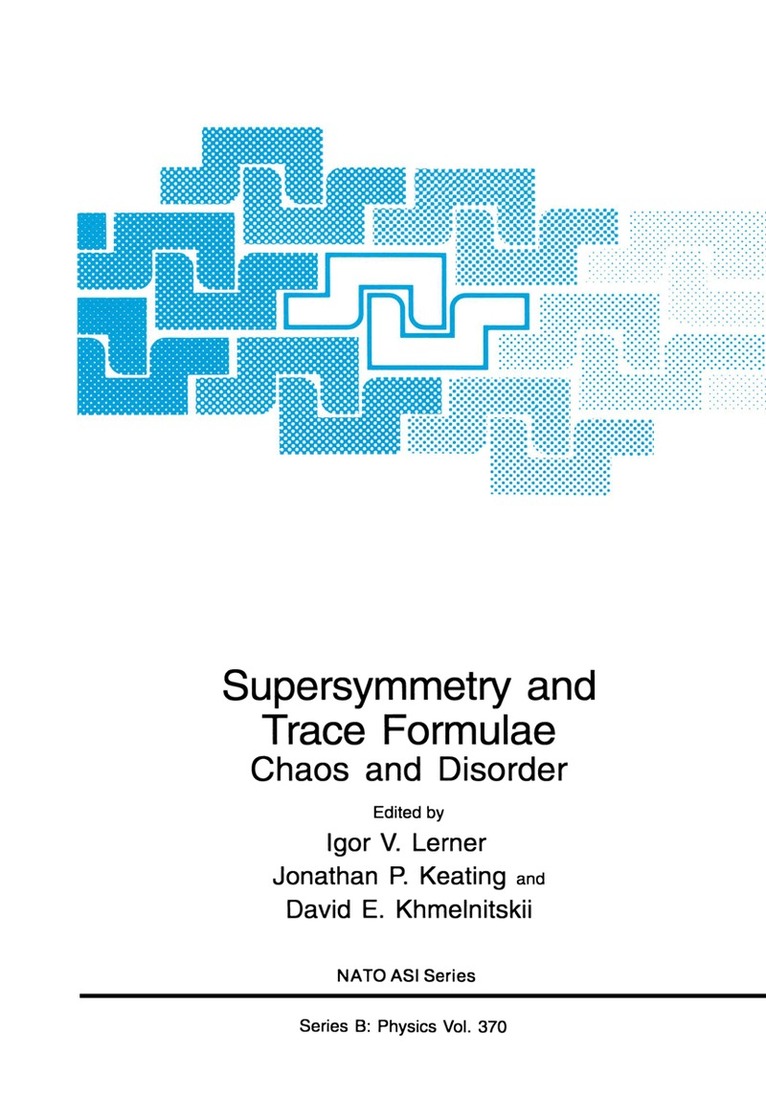
Supersymmetry and Trace Formulae
Chaos and Disorder
Av Igor V. Lerner, Jonathan P. Keating m. fl.
Inbunden, 1999
1641 kr
Lägg i varukorg
The motion of a particle in a random potential in two or more dimensions is chaotic, and the trajectories in deterministically chaotic systems are effectively random. It is therefore no surprise that there are links between the quantum properties of disordered systems and those of simple chaotic …
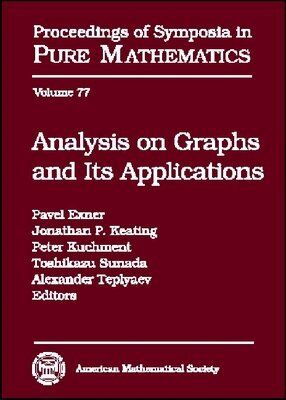
Analysis on Graphs and Its Applications
Av Jonathan P. Keating, Pavel Exner m. fl.
Inbunden, 2008
1783 kr
Lägg i varukorg
This book addresses a new interdisciplinary area emerging on the border between various areas of mathematics, physics, chemistry, nanotechnology, and computer science. The focus here is on problems and techniques related to graphs, quantum graphs, and fractals that parallel those from differential …
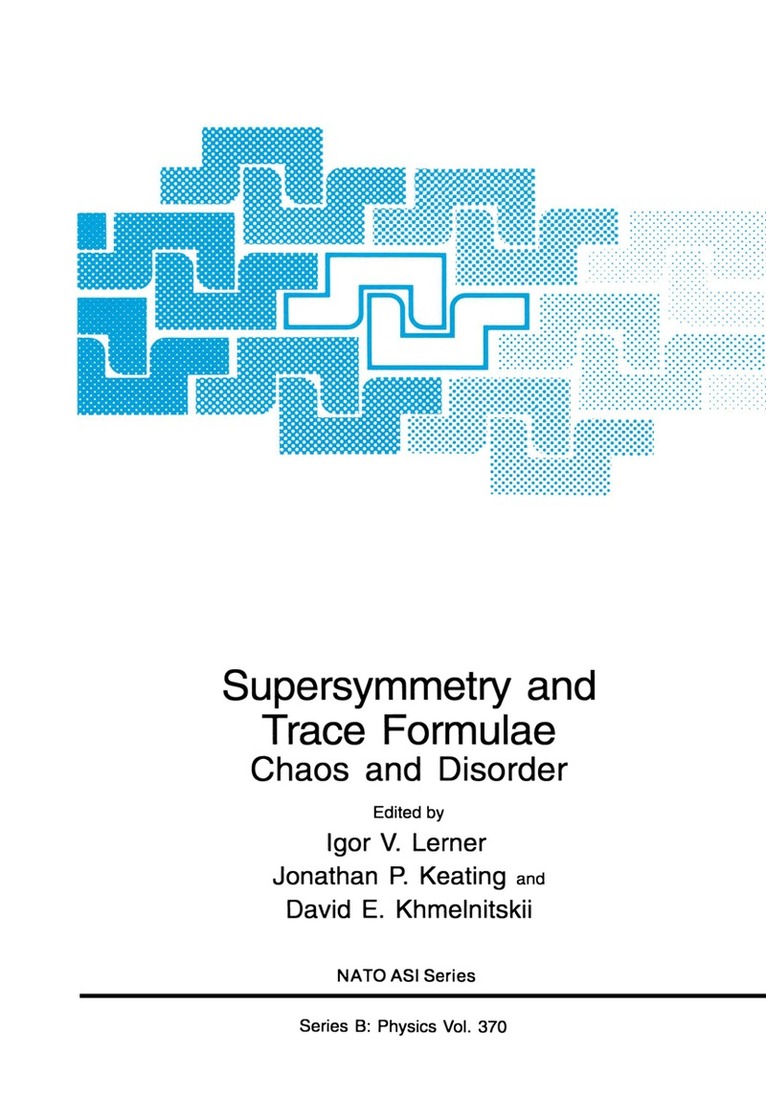
Supersymmetry and Trace Formulae
Chaos and Disorder
Av Igor V. Lerner, Jonathan P. Keating m. fl.
Häftad, 2012
1641 kr
Lägg i varukorg
The motion of a particle in a random potential in two or more dimensions is chaotic, and the trajectories in deterministically chaotic systems are effectively random. It is therefore no surprise that there are links between the quantum properties of disordered systems and those of simple chaotic …
Supersymmetry and Trace Formulae
Chaos and Disorder
Av David E. Khmelnitskii, Jonathan P. Keating m. fl.
E-bok, 2012
2111 kr
Lägg i varukorg
The motion of a particle in a random potential in two or more dimensions is chaotic, and the trajectories in deterministically chaotic systems are effectively random. It is therefore no surprise that there are links between the quantum properties of disordered systems and those of simple chaotic …