Jonathan R. Lyon - Böcker
Visar alla böcker från författaren Jonathan R. Lyon. Handla med fri frakt och snabb leverans.
6 produkter
6 produkter
1 235 kr
Skickas inom 5-8 vardagar
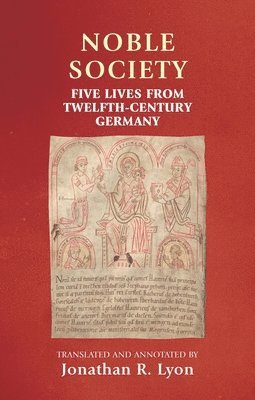
This book provides scholars and students alike with a set of texts that can deepen their understanding of the culture and society of the twelfth-century German kingdom. The sources translated here bring to life the activities of five noblemen and noblewomen from Rome to the Baltic coast and from the Rhine River to the Alpine valleys of Austria. To read these five sources together is to appreciate how interconnected political, military, economic, religious and spiritual interests could be for some of the leading members of medieval German society-and for the authors who wrote about them. Whether fighting for the emperor in Italy, bringing Christianity to pagans in what is today northern Poland, or founding, reforming and governing monastic communities in the heartland of the German kingdom, the subjects of these texts call attention to some of the many ways that noble life shaped the world of central medieval Europe.
354 kr
Skickas inom 5-8 vardagar
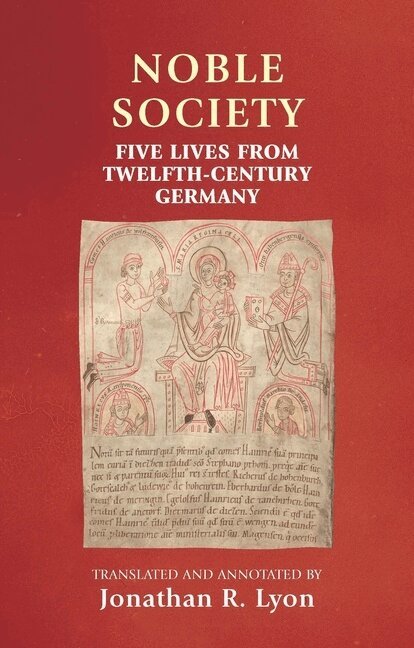
This book provides scholars and students alike with a set of texts that can deepen their understanding of the culture and society of the twelfth-century German kingdom. The sources translated here bring to life the activities of five noblemen and noblewomen from Rome to the Baltic coast and from the Rhine River to the Alpine valleys of Austria. To read these five sources together is to appreciate how interconnected political, military, economic, religious and spiritual interests could be for some of the leading members of medieval German society-and for the authors who wrote about them. Whether fighting for the emperor in Italy, bringing Christianity to pagans in what is today northern Poland, or founding, reforming and governing monastic communities in the heartland of the German kingdom, the subjects of these texts call attention to some of the many ways that noble life shaped the world of central medieval Europe.
934 kr
Skickas inom 10-15 vardagar
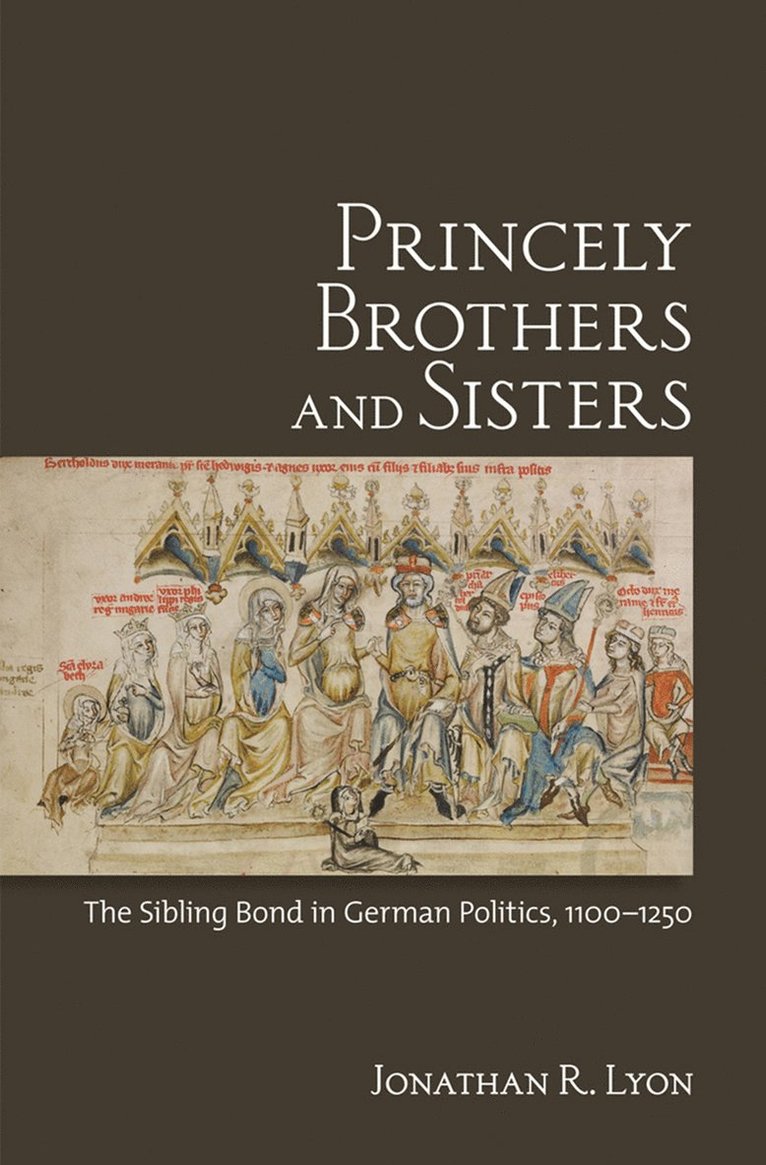
In Princely Brothers and Sisters, Jonathan R. Lyon takes a fresh look at sibling networks and the role they played in shaping the practice of politics in the Middle Ages. Focusing on nine of the most prominent aristocratic families in the German kingdom during the Staufen period (1138–1250), Lyon finds that noblemen—and to a lesser extent, noblewomen—relied on the cooperation and support of their siblings as they sought to maintain or expand their power and influence within a competitive political environment. Consequently, sibling relationships proved crucial at key moments in shaping the political and territorial interests of many lords of the kingdom. Family historians have largely overlooked brothers and sisters in the political life of medieval societies. As Lyon points out, however, siblings are the contemporaries whose lives normally overlap the longest. More so than parents and children, husbands and wives, or lords and vassals, brothers and sisters have the potential to develop relationships that span entire lifetimes. The longevity of some sibling bonds therefore created opportunities for noble brothers and sisters to collaborate in especially potent ways. As Lyon shows, cohesive networks of brothers and sisters proved remarkably effective at counterbalancing the authority of the Staufen kings and emperors. Well written and impeccably researched, Princely Brothers and Sisters is an important book not only for medieval German historians but also for the field of family history.
331 kr
Skickas inom 7-10 vardagar
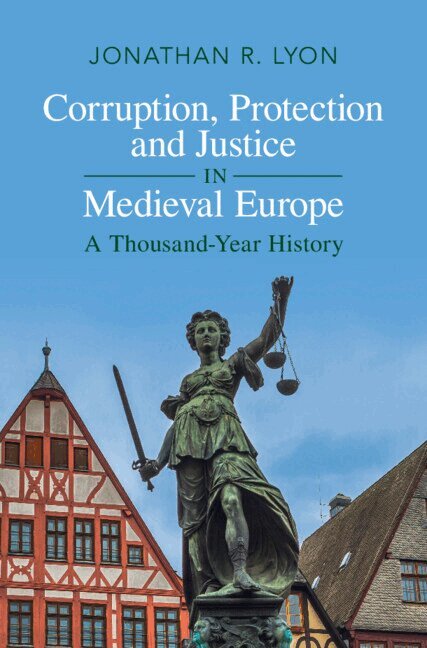
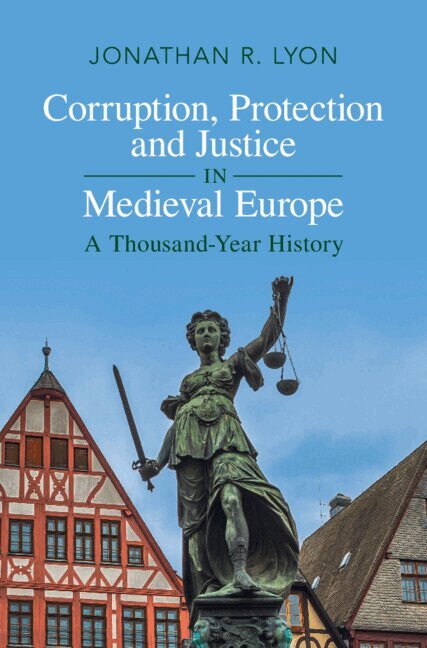
What was an "advocate" (Latin: advocatus; German: Vogt) in the Middle Ages? What responsibilities came with the position and how did they change over time? With this groundbreaking study, Jonathan R. Lyon challenges the standard narrative of a "medieval" Europe of feudalism and lordship being replaced by a "modern" Europe of government, bureaucracy and the state. By focusing on the position of advocate, he argues for continuity in corrupt practices of justice and protection between 750 and 1800. This book traces the development of the role of church advocate from the Carolingian period onward and explains why this position became associated with the violent abuse of power on churches' estates. When other types of advocates became common in and around Germany after 1250, including territorial and urban advocates, they were not officeholders in developing bureaucracies. Instead, they used similar practices to church advocates to profit illicitly from their positions, which calls into question scholarly arguments about the decline of violent lordship and the rise of governmental accountability in European history.
Corruption, Protection and Justice in Medieval Europe
A Thousand-Year History
Inbunden, Engelska, 2022
409 kr
Skickas inom 7-10 vardagar
What was an "advocate" (Latin: advocatus; German: Vogt) in the Middle Ages? What responsibilities came with the position and how did they change over time? With this groundbreaking study, Jonathan R. Lyon challenges the standard narrative of a "medieval" Europe of feudalism and lordship being replaced by a "modern" Europe of government, bureaucracy and the state. By focusing on the position of advocate, he argues for continuity in corrupt practices of justice and protection between 750 and 1800. This book traces the development of the role of church advocate from the Carolingian period onward and explains why this position became associated with the violent abuse of power on churches' estates. When other types of advocates became common in and around Germany after 1250, including territorial and urban advocates, they were not officeholders in developing bureaucracies. Instead, they used similar practices to church advocates to profit illicitly from their positions, which calls into question scholarly arguments about the decline of violent lordship and the rise of governmental accountability in European history.
1 302 kr
Skickas inom 5-8 vardagar
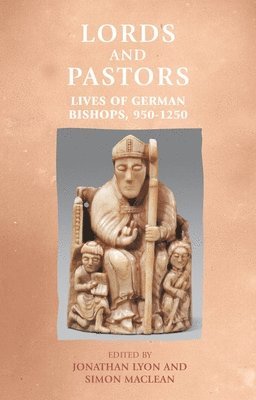
This book presents biographies of six bishops from the medieval German empire, translated into English for the first time. The bishop was a ubiquitous figure across medieval Europe, providing leadership to the community of Christians within dioceses and linking day-to-day life to centres of political power and ecclesiastical authority. They were particularly prominent in the kingdom of Germany, where the most powerful churchmen led armies and advised kings. The texts collected here, originating in the tenth to thirteenth centuries, offer readers a lively entrée to medieval social, religious and political conditions, as well as fascinating biographical details and information about law, architecture, warfare and government. They have been chosen to illustrate changes in the role of bishop over time; and the individuality, in character and activity, of each figure.