Jonathan Strom - Böcker
Visar alla böcker från författaren Jonathan Strom. Handla med fri frakt och snabb leverans.
5 produkter
5 produkter
Del 3 - Pietist, Moravian, and Anabaptist Studies
German Pietism and the Problem of Conversion
Inbunden, Engelska, 2017
1 029 kr
Skickas inom 7-10 vardagar
August Hermann Francke described his conversion to Pietism in gripping terms that included intense spiritual struggle, weeping, falling to his knees, and a decisive moment in which his doubt suddenly disappeared and he was “overwhelmed as with a stream of joy.” His account came to exemplify Pietist conversion in the historical imagination around Pietism and religious awakening. Jonathan Strom’s new interpretation challenges the paradigmatic nature of Francke’s narrative and seeks to uncover the more varied, complex, and problematic character that conversion experiences posed for Pietists in the seventeenth and eighteenth centuries.Grounded in archival research, German Pietism and the Problem of Conversion traces the way that accounts of conversion developed and were disseminated among Pietists. Strom examines members’ relationship to the pious stories of the “last hours,” the growth of conversion narratives in popular Pietist periodicals, controversies over the Busskampf model of conversion, the Dargun revival movement, and the popular, if gruesome, genre of execution conversion narratives. Interrogating a wide variety of sources and examining nuance in the language used to define conversion throughout history, Strom explains how these experiences were received and why many Pietists had an uneasy relationship to conversions and the practice of narrating them.A learned, insightful work by one of the world’s leading scholars of Pietism, this volume sheds new light on Pietist conversion and the development of piety and modern evangelical narratives of religious experience.
Del 3 - Pietist, Moravian, and Anabaptist Studies
German Pietism and the Problem of Conversion
Häftad, Engelska, 2018
554 kr
Skickas inom 5-8 vardagar
August Hermann Francke described his conversion to Pietism in gripping terms that included intense spiritual struggle, weeping, falling to his knees, and a decisive moment in which his doubt suddenly disappeared and he was “overwhelmed as with a stream of joy.” His account came to exemplify Pietist conversion in the historical imagination around Pietism and religious awakening. Jonathan Strom’s new interpretation challenges the paradigmatic nature of Francke’s narrative and seeks to uncover the more varied, complex, and problematic character that conversion experiences posed for Pietists in the seventeenth and eighteenth centuries.Grounded in archival research, German Pietism and the Problem of Conversion traces the way that accounts of conversion developed and were disseminated among Pietists. Strom examines members’ relationship to the pious stories of the “last hours,” the growth of conversion narratives in popular Pietist periodicals, controversies over the Busskampf model of conversion, the Dargun revival movement, and the popular, if gruesome, genre of execution conversion narratives. Interrogating a wide variety of sources and examining nuance in the language used to define conversion throughout history, Strom explains how these experiences were received and why many Pietists had an uneasy relationship to conversions and the practice of narrating them.A learned, insightful work by one of the world’s leading scholars of Pietism, this volume sheds new light on Pietist conversion and the development of piety and modern evangelical narratives of religious experience.
2 317 kr
Skickas inom 10-15 vardagar
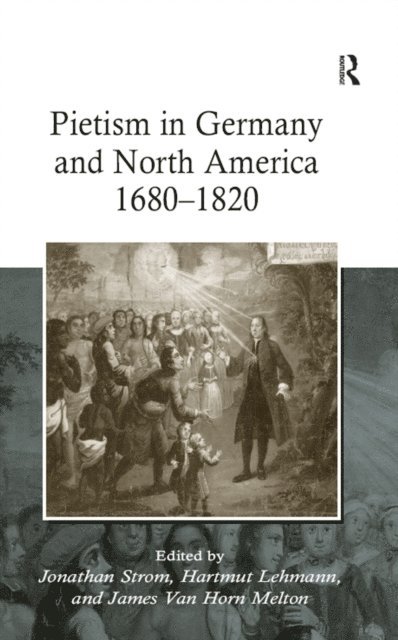
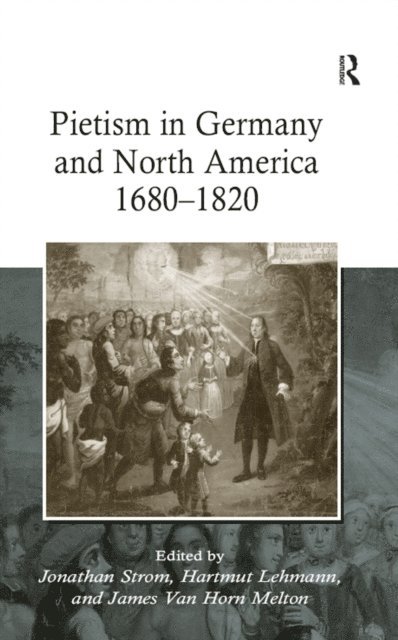
This collection explores different approaches to contextualizing and conceptualizing the history of Pietism, particularly Pietistic groups who migrated from central Europe to the British colonies in North America during the long eighteenth century. Emerging in German speaking lands during the seventeenth century, Pietism was closely related to Puritanism, sharing similar evangelical and heterogeneous characteristics. Dissatisfied with the established Lutheran and Reformed Churches, Pietists sought to revivify Christianity through godly living, biblical devotion, millennialism and the establishment of new forms of religious association. As Pietism represents a diverse set of impulses rather than a centrally organized movement, there were inevitably fundamental differences amongst Pietist groups, and these differences - and conflicts - were carried with those that emigrated to the New World. The importance of Pietism in shaping Protestant society and culture in Europe and North America has long been recognized, but as a topic of scholarly inquiry, it has until now received little interdisciplinary attention. Offering essays by leading scholars from a range of fields, this volume provides an interdisciplinary overview of the subject. Beginning with discussions about the definition of Pietism, the collection next looks at the social, political and cultural dimensions of Pietism in German-speaking Europe. This is then followed by a section investigating the attempts by German Pietists to establish new, religiously-based communities in North America. The collection concludes with discussions on new directions in Pietist research. Together these essays help situate Pietism in the broader Atlantic context, making an important contribution to understanding religious life in Europe and colonial North America during the eighteenth century.
713 kr
Skickas inom 10-15 vardagar
This collection explores different approaches to contextualizing and conceptualizing the history of Pietism, particularly Pietistic groups who migrated from central Europe to the British colonies in North America during the long eighteenth century. Emerging in German speaking lands during the seventeenth century, Pietism was closely related to Puritanism, sharing similar evangelical and heterogeneous characteristics. Dissatisfied with the established Lutheran and Reformed Churches, Pietists sought to revivify Christianity through godly living, biblical devotion, millennialism and the establishment of new forms of religious association. As Pietism represents a diverse set of impulses rather than a centrally organized movement, there were inevitably fundamental differences amongst Pietist groups, and these differences - and conflicts - were carried with those that emigrated to the New World. The importance of Pietism in shaping Protestant society and culture in Europe and North America has long been recognized, but as a topic of scholarly inquiry, it has until now received little interdisciplinary attention. Offering essays by leading scholars from a range of fields, this volume provides an interdisciplinary overview of the subject. Beginning with discussions about the definition of Pietism, the collection next looks at the social, political and cultural dimensions of Pietism in German-speaking Europe. This is then followed by a section investigating the attempts by German Pietists to establish new, religiously-based communities in North America. The collection concludes with discussions on new directions in Pietist research. Together these essays help situate Pietism in the broader Atlantic context, making an important contribution to understanding religious life in Europe and colonial North America during the eighteenth century.
Del 111 - Beiträge zur historischen Theologie
Orthodoxy and Reform: The Clergy in Seventeenth Century Rostock
Inbunden, Engelska, 1999
1 965 kr
Skickas inom 5-8 vardagar
Mehr als hundert Jahre nach der Einführung der Reformation machte sich der Klerus in Rostock daran, das geistige und sittliche Leben der Stadt zu reformieren und aus der Stadt ein neues Zion zu machen. Von den Ergebnissen der lutherischen Reformation enttäuscht, betrafen ihre Reformbemühungen weniger die Konfessionsreinheit als die Ausübung der christlichen Frömmigkeit. Jonathan Strom untersucht die Folgen der Reformation, den sozialen und wirtschaftlichen Status des Klerus, den Berufsweg eines typischen Pfarrers und die theologische Grundlage des Pfarramts. Er stellt die praktischen Reformen dar, die der Klerus in Rostock nach dem Dreißigjährigen Krieg anstrebte und analysiert die theologischen Vorschläge der vier Hauptreformatoren in Rostock: Joachim Schröder, Johannes Quistorp des Jüngeren, Theophil Großgebauer und Heinrich Müller.