Jonathan Wild – författare
Visar alla böcker från författaren Jonathan Wild. Handla med fri frakt och snabb leverans.
7 produkter
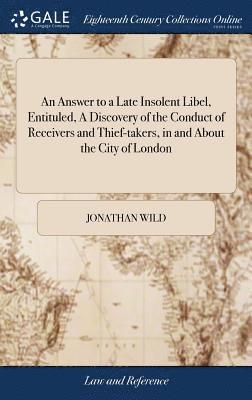
Answer to a Late Insolent Libel, Entituled, A Discovery of the Conduct of Receivers and Thief-takers, in and About the City of London
Written by C---s H---n Wherein is Prov'd in Many Particular Instances,
Inbunden, 2018
308 kr
Lägg i varukorg
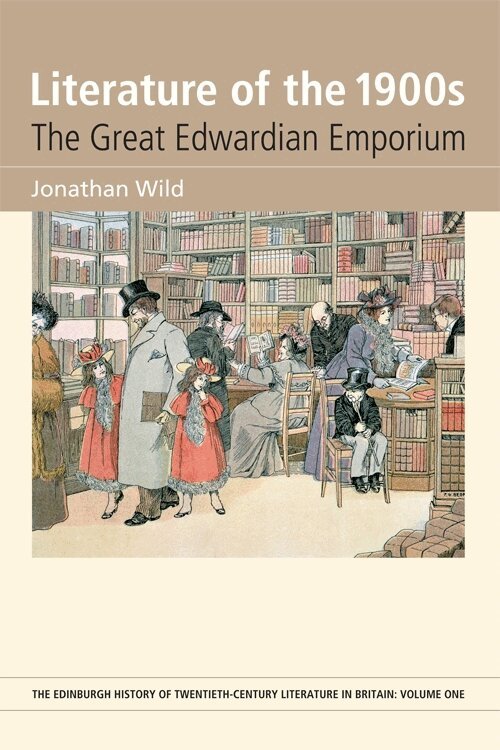
Literature of the 1900s
The Great Edwardian Emporium
Av Jonathan Wild, Jonathan Wild
Häftad, 2018
404 kr
Lägg i varukorg
Challenges conventional views of the Edwardian period as either a hangover of Victorianism or a bystander to literary modernismIn this ground-breaking study, Jonathan Wild investigates the literary history of the Edwardian decade. This period, long overlooked by critics, is revealed as a vibrant …
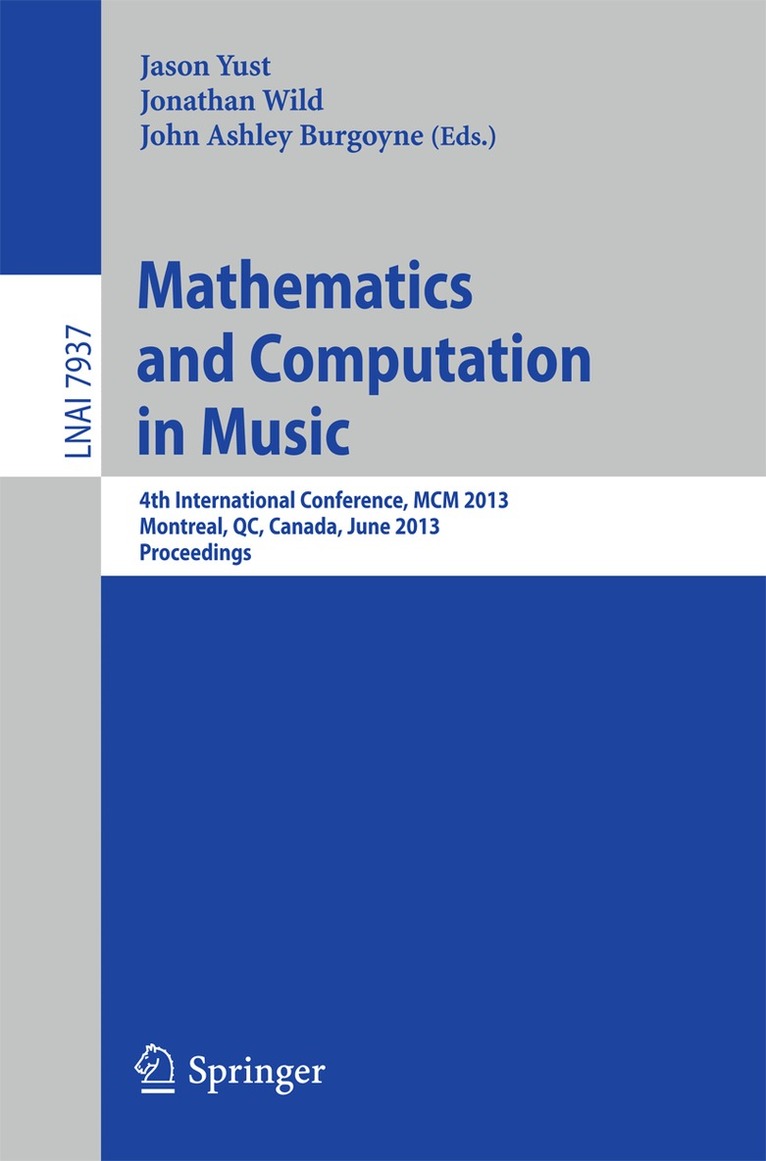
Mathematics and Computation in Music
4th International Conference, MCM 2013, Montreal, Canada, June 12-14, 2013, Proceedings
Av Jason Yust, Jonathan Wild m. fl.
Häftad, 2013
508 kr
Lägg i varukorg
This book constitutes the thoroughly refereed proceedings of the Fourth International Conference on Mathematics and Computation in Music, MCM 2013, held in Montreal, Canada, in June 2013. The 18 papers presented were carefully reviewed and selected from numerous submissions. They are promoting the …
Mathematics and Computation in Music
4th International Conference, MCM 2013, Montreal, Canada, June 12-14, 2013, Proceedings
Av John Ashley Burgoyne, Jonathan Wild m. fl.
E-bok, 2013
638 kr
Lägg i varukorg
This book constitutes the thoroughly refereed proceedings of the Fourth International Conference on Mathematics and Computation in Music, MCM 2013, held in Montreal, Canada, in June 2013. The 18 papers presented were carefully reviewed and selected from numerous submissions. They are promoting the …
Collected Letters of Thomas and Jane Welsh Carlyle: January–October 1859
Av Brent E. Kinser, Ian Campbell m. fl.
Inbunden, 2007
393 kr
Tillfälligt slut
The Collected Letters of Thomas and Jane Welsh Carlyle offer a window onto the lives of two of the Victorian world’s most accomplished, perceptive, and unusual inhabitants. Scottish writer and historian Thomas Carlyle and his wife, Jane Welsh Carlyle, attracted to them a circle of foreign exiles, …