Jonge Bob de Jonge – författare
Visar alla böcker från författaren Jonge Bob de Jonge. Handla med fri frakt och snabb leverans.
2 produkter
2 produkter
E-bok
PDF, Engelska, 20111 384 kr
Läs direkt efter köp
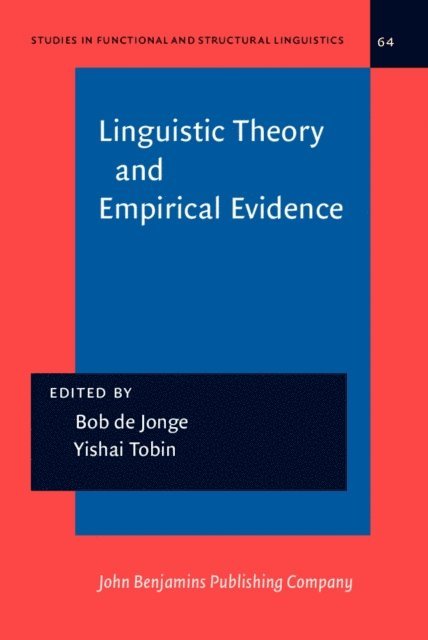
This volume further elaborates the empirical tradition of Columbia School (CS) Linguistics by offering diverse empirical analyses for a wide variety of languages. These studies open a much needed debate advocating the necessity of the independent validation of linguistic hypotheses. This research exemplifies how such a validation should be conducted by determining which forms underlie the analyses and extracting those observations that are considered to be objective. The volume consists of two parts: a section on synchronic and diachronic grammatical problems and a section on Phonology as Human Behavior (PHB), the Columbia School version of phonology, applied to evolutionary, developmental and clinical issues and the phonotactics of the selected lexicon of a literary text. It provides a wealth of useful empirical data and in-depth and sophisticated qualitative and quantitative analyses of a broad range of languages from diverse families: French, Spanish, Afrikaans, Dutch, English, Polish, Russian, Japanese, and Hebrew.
E-bok
PDF, Engelska, 20101 305 kr
Läs direkt efter köp
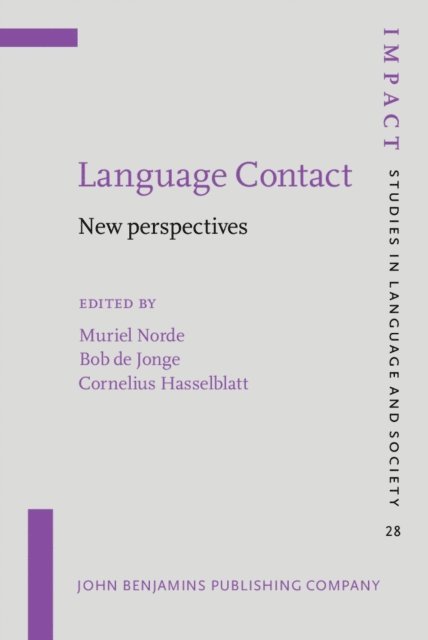
The study of languages in contact is an ever-relevant topic in linguistics, especially at present times when increasing globalization leads to a number of new contact situations. This volume features ten papers on various aspects of language contact by leading specialists in the field. In these papers, contact-induced change in a wide variety of languages is approached from various perspectives, reflecting the current state of affairs in language contact studies. The first main theme in the volume is related to the linguistic effects of migration, both in the present and in the past, and both in the standard language spoken by ethnic minorities, and in immigrant languages that are influenced by the standard. The second theme concerns border areas, a traditional treasure trove for the study of contact phenomena. The third theme is about contact effects without physical contact, as well as the role played by translators in this process.