Jorg Negendank - Böcker
Visar alla böcker från författaren Jorg Negendank. Handla med fri frakt och snabb leverans.
6 produkter
6 produkter
Climate in Historical Times
Towards a Synthesis of Holocene Proxy Data and Climate Models
Inbunden, Engelska, 2004
2 101 kr
Skickas inom 10-15 vardagar
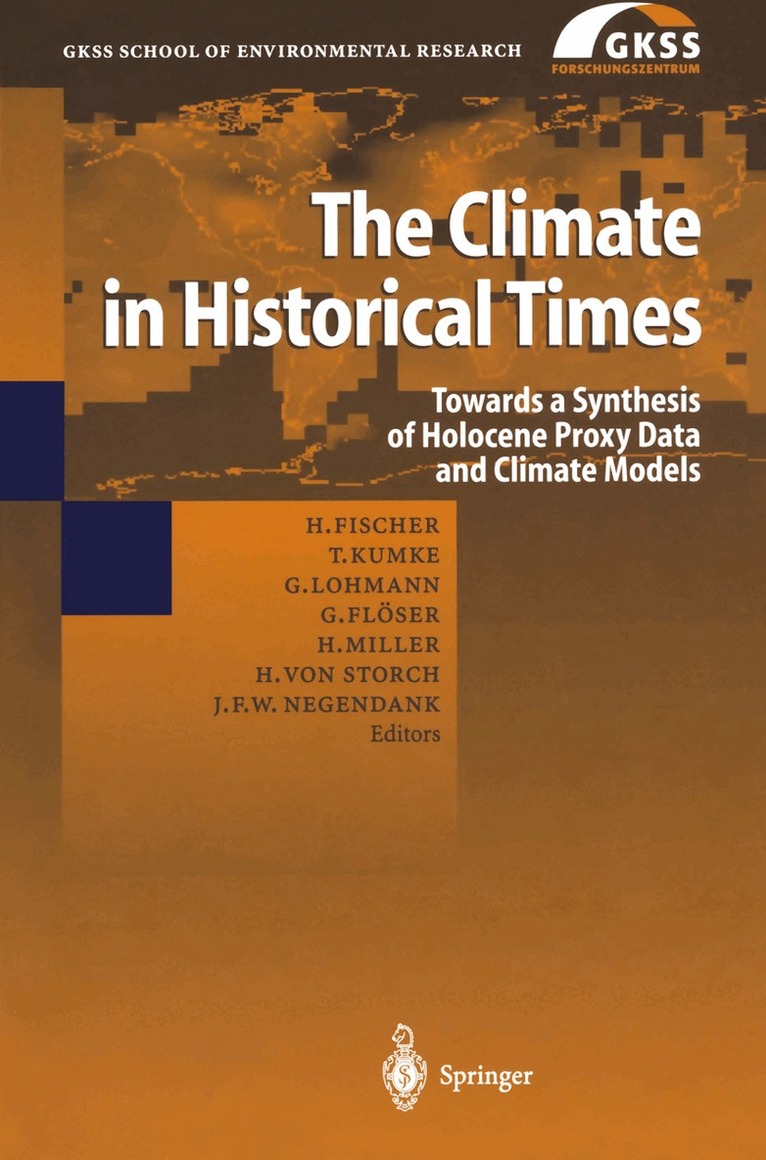
An Introduction to the KIHZ Project The description of the climate system and the quantification of its natural variability and dynamics is essential to assess an ongoing anthropogenic cli mate change and to validate climate and biogeochemical models to allow for reliable projections into the future. Because the spatio-temporal coverage of direct meteorological observations is rather limited, high-resolution and ab solutely dated climate archives represent the only key to a quantification of seasonal to millenial climate variations in the past. Furthermore, climate mod els provide insights into the major processes and causes relevant for climate variability on these time scales. Both approaches represent one side of the same medal, however melting both sides down to one combined effort is often hampered by obstacles defined by the different nature of the approaches. For instance, General Circulation Models (GCMs) per se deal with spatially resolved data representing real climate variables in the model world (such as temperature or precipitation) with each model run reflecting one possible realization of climate history under given boundary conditions. In contrast, the records of natural climate archives are influenced by climate variations as they took place in reality, however, are often representative of local climate conditions only. Moreover, the climate information deduced from natural archives is in nearly all cases based on climate proxies, whose relationship to real climate variables, the so called transfer function, has to be established beforehand.
1 064 kr
Skickas inom 10-15 vardagar
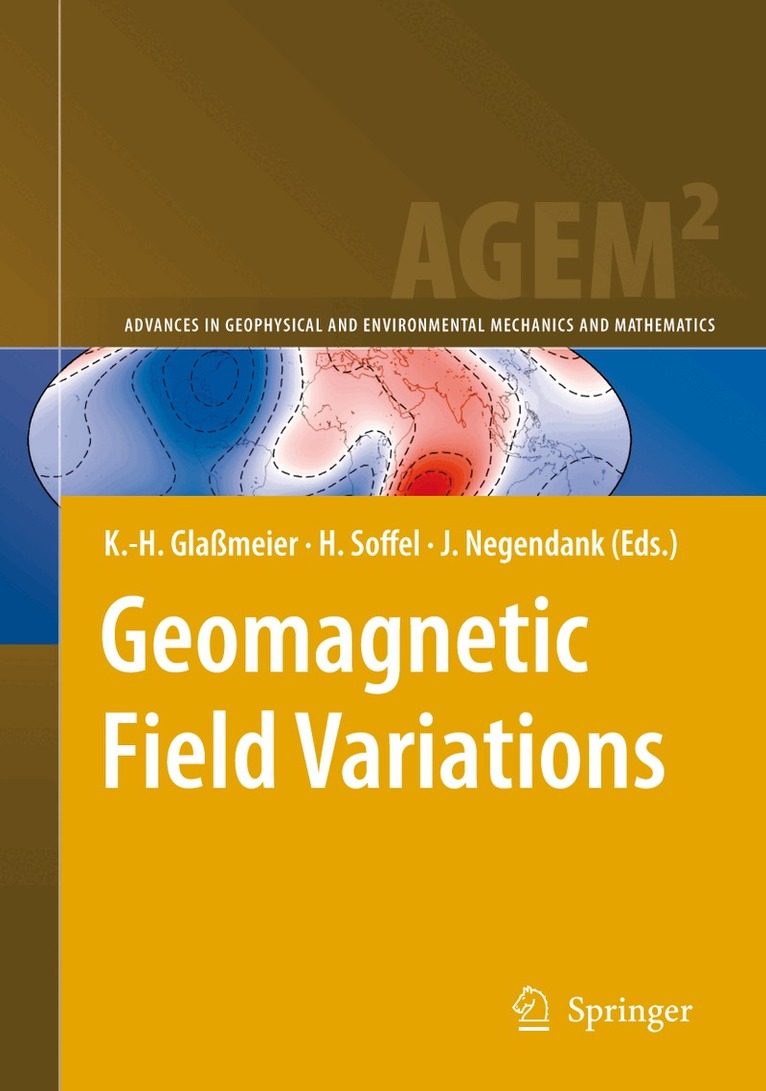
Earth’s magnetic field is currently changing dramatically. Is the observed decrease of the dipole moment indicating a future polarity transition? What would be the effects of such a drastic change on system Earth? Can any positive or negative effects on our biosphere or even humans be expected?This book gives a first overview about the geomagnetic field in general and serves as an introduction into geomagnetism. As the topic of the book covers a wide range of scientific disciplines, the first chapter summarises basic principles of geomagnetism and related fields including a historic overview, instruments and measurements, paleomagnetic fields, basics of dynamo theory, etc. The contributed chapters review major results of international activities aiming at understanding the causes and effects of geomagnetic field variations in view of the questions above.
Climate in Historical Times
Towards a Synthesis of Holocene Proxy Data and Climate Models
Häftad, Engelska, 2011
2 101 kr
Skickas inom 10-15 vardagar
An Introduction to the KIHZ Project The description of the climate system and the quantification of its natural variability and dynamics is essential to assess an ongoing anthropogenic cli mate change and to validate climate and biogeochemical models to allow for reliable projections into the future. Because the spatio-temporal coverage of direct meteorological observations is rather limited, high-resolution and ab solutely dated climate archives represent the only key to a quantification of seasonal to millenial climate variations in the past. Furthermore, climate mod els provide insights into the major processes and causes relevant for climate variability on these time scales. Both approaches represent one side of the same medal, however melting both sides down to one combined effort is often hampered by obstacles defined by the different nature of the approaches. For instance, General Circulation Models (GCMs) per se deal with spatially resolved data representing real climate variables in the model world (such as temperature or precipitation) with each model run reflecting one possible realization of climate history under given boundary conditions. In contrast, the records of natural climate archives are influenced by climate variations as they took place in reality, however, are often representative of local climate conditions only. Moreover, the climate information deduced from natural archives is in nearly all cases based on climate proxies, whose relationship to real climate variables, the so called transfer function, has to be established beforehand.
1 064 kr
Skickas inom 10-15 vardagar
Earth’s magnetic field is currently changing dramatically. Is the observed decrease of the dipole moment indicating a future polarity transition? What would be the effects of such a drastic change on system Earth? Can any positive or negative effects on our biosphere or even humans be expected?This book gives a first overview about the geomagnetic field in general and serves as an introduction into geomagnetism. As the topic of the book covers a wide range of scientific disciplines, the first chapter summarises basic principles of geomagnetism and related fields including a historic overview, instruments and measurements, paleomagnetic fields, basics of dynamo theory, etc. The contributed chapters review major results of international activities aiming at understanding the causes and effects of geomagnetic field variations in view of the questions above.
1 064 kr
Skickas inom 10-15 vardagar
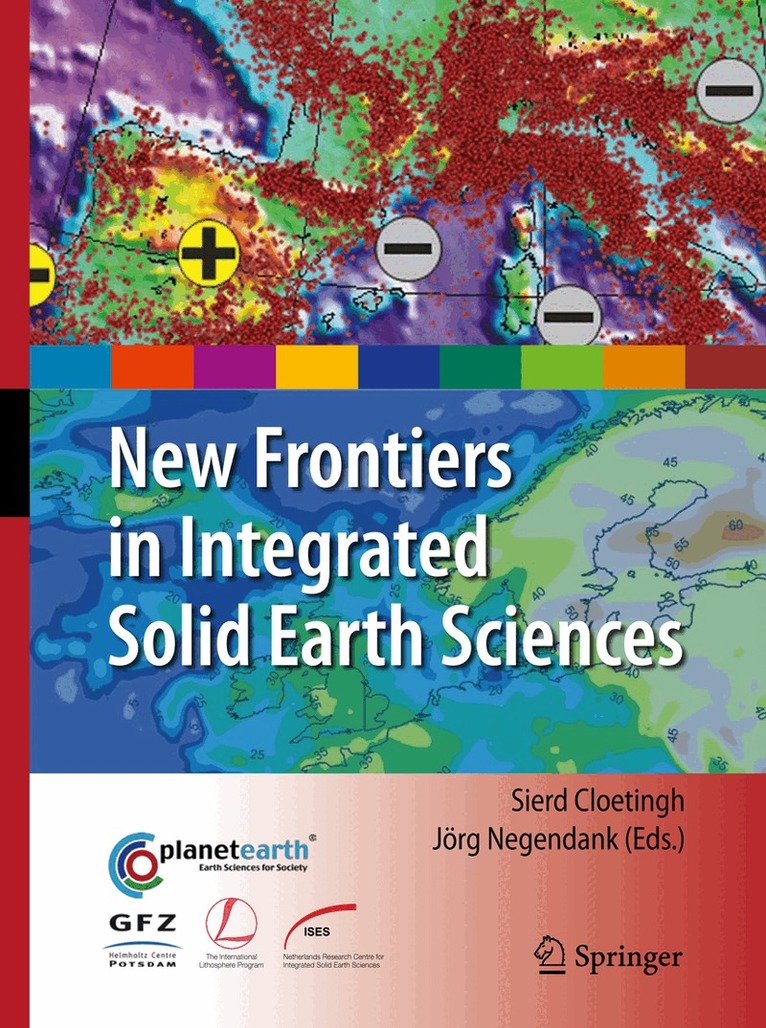
Man’s intensifying use of the Earth’s habitat has led to an urgent need for scientifically advanced ‘geo-prediction systems’ that accurately locate subsurface resources and forecast the timing and magnitude of earthquakes, volcanic eruptions and land subsidence.As advances in the earth sciences lead to process-oriented ways of modeling the complex processes in the solid Earth, the papers in this volume provide a survey of some recent developments at the leading edge of this highly technical discipline. The chapters cover current research in predicting the future behavior of geologic systems as well as the mapping of geologic patterns that exist now in the subsurface as frozen evidence of the past. Both techniques are highly relevant to humanity’s need for resources such as water, and will also help us control environmental degradation.The book also discusses advances made in seismological methods to obtain information on the 3D structure of the mantle and the lithosphere, and in the quantitative understanding of lithospheric scale processes. It covers recent breakthroughs in 3D seismic imaging that have enhanced the spatial resolution of these structural processes, and the move towards 4D imaging that measures these processes over time.The new frontier in modern Earth sciences described in this book has major implications for oceanographic and atmospheric sciences and our understanding of climate variability. It brings readers right up to date with the research in this vital field.
1 064 kr
Skickas inom 10-15 vardagar
Man’s intensifying use of the Earth’s habitat has led to an urgent need for scientifically advanced ‘geo-prediction systems’ that accurately locate subsurface resources and forecast the timing and magnitude of earthquakes, volcanic eruptions and land subsidence.As advances in the earth sciences lead to process-oriented ways of modeling the complex processes in the solid Earth, the papers in this volume provide a survey of some recent developments at the leading edge of this highly technical discipline. The chapters cover current research in predicting the future behavior of geologic systems as well as the mapping of geologic patterns that exist now in the subsurface as frozen evidence of the past. Both techniques are highly relevant to humanity’s need for resources such as water, and will also help us control environmental degradation.The book also discusses advances made in seismological methods to obtain information on the 3D structure of the mantle and the lithosphere, and in the quantitative understanding of lithospheric scale processes. It covers recent breakthroughs in 3D seismic imaging that have enhanced the spatial resolution of these structural processes, and the move towards 4D imaging that measures these processes over time.The new frontier in modern Earth sciences described in this book has major implications for oceanographic and atmospheric sciences and our understanding of climate variability. It brings readers right up to date with the research in this vital field.