Jorge Leon Casero – författare
Visar alla böcker från författaren Jorge Leon Casero. Handla med fri frakt och snabb leverans.
8 produkter
8 produkter
E-bok
PDF, Engelska, 20203 512 kr
Läs direkt efter köp
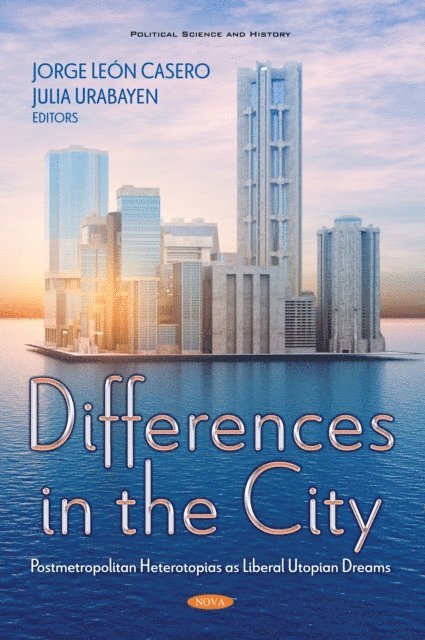
Although it is one of the most vague and ambiguous concepts proposed by Foucault, the term “heterotopia” has been, and continues to be, one of the most widely used in technical as well as in human and social disciplines. Coinciding with the rise of postmodernism and the supposed crisis of the great unitary stories of the West, the great heterogeneity of urban and spatial phenomena and typologies referred to in the Foucauldian notion was further expanded, with the explicit intention of using it as part of the new urban ideology that neoliberal theorists of architecture and urbanism were beginning to implement under the leitmotif of the city by fragments. In this way, neoliberal urban ideology appropriated the concept of heterotopia, making it pass for libertarian and endowing it with the ability to exert political resistance to economic and urban planning by public administrations. This is why the concept of heterotopia has been used simultaneously and repeatedly as a tool to praise the beatitudes of neoliberal urbanism as well as to defend its emancipatory character by social movements and activists In this sense, the emancipatory potential that heterotopias could have had in the disciplinary arrangement of space has ended up transforming into a magic formula with which to transform the impositions of the neoliberal (de)arrangement of the territory into a hymn to freedom of movement, to a socio-cultural diversity without class conflict. The aim of this collective and interdisciplinary reflection is to prove that heterotopias are spaces that cannot be considered a priori as directly emancipatory but apart from an effective political project. As we live in a postmetropolitan word, we should ask: Are these post-metropolitan heterotopias capable of shaping themselves as the new nerve centers of anti-capitalist resistance or are they only capable of subverting the disciplinary power of public administrations already brought to crisis-point decades ago by neoliberal capitalism? Can they function as the spatial tools of an antagonistic politics for the common or, on the contrary, is their operation intrinsically neoliberal? This book brings together various analyses and investigations that maintain conflicting positions on the emancipatory or ideological-alienating character of heterotopias with the dual objective of avoiding their Western-centric bias and preserving any possible trait of emancipatory potential that may be rearticulated from an epistemological diversity viewpoint. With these objectives in mind, we have organized the twenty-two articles that make up this book into five major thematic sections, coinciding with some of the main topics around which socio-spatial debates dedicated to heterotopias have taken place in the last twenty-five years: the postmetropolis, public space, the right to the city, gender relations and their symbolic condition. Although these five categories should not be understood as unrelated compartments —but quite the opposite— we have chosen to use this classification as an analytical tool to illuminate some of the focal points around which to exercise effective critique of one of the most frustratingly incomplete, inconsistent [and] incoherent concepts of socio-spatial theory.
Inbunden, Engelska, 2024
1 554 kr
Skickas inom 10-15 vardagar
This book advocates for the necessity of recovering the value of utopias as political projects that open new channels of action. The criticism of modern political utopias is based on the supposed impossibility of creating for the future because there is no longer a future (apocalyptic ideology). However, this edited collection seeks to show that the post-apocalyptic world in which we live entails a renewed freedom of design for the radical reorganization of institutions. Post-apocalyptic cultures are not obligated to follow the capitalist, anthropocentric, correlationist and sovereign modes of the old political project of emancipation—the Western enlightenment—that has started to collapse. With this in mind, this book is divided into four sections dedicated to the main themes from which to rethink the projects of political emancipation that are possible nowadays: technopolitics; posthumanist biopolitics; non-western politicsl and the crossover between arts and politics.
E-bok
Engelska, 20241 879 kr
Läs direkt efter köp
This book advocates for the necessity of recovering the value of utopias as political projects that open new channels of action. The criticism of modern political utopias is based on the supposed impossibility of creating for the future because there is no longer a future (apocalyptic ideology). However, this edited collection seeks to show that the post-apocalyptic world in which we live entails a renewed freedom of design for the radical reorganization of institutions. Post-apocalyptic cultures are not obligated to follow the capitalist, anthropocentric, correlationist and sovereign modes of the old political project of emancipation—the Western enlightenment—that has started to collapse. With this in mind, this book is divided into four sections dedicated to the main themes from which to rethink the projects of political emancipation that are possible nowadays: technopolitics; posthumanist biopolitics; non-western politicsl and the crossover between arts and politics.
Häftad, Engelska, 2025
1 554 kr
Skickas inom 10-15 vardagar
This book advocates for the necessity of recovering the value of utopias as political projects that open new channels of action. The criticism of modern political utopias is based on the supposed impossibility of creating for the future because there is no longer a future (apocalyptic ideology). However, this edited collection seeks to show that the post-apocalyptic world in which we live entails a renewed freedom of design for the radical reorganization of institutions. Post-apocalyptic cultures are not obligated to follow the capitalist, anthropocentric, correlationist and sovereign modes of the old political project of emancipation—the Western enlightenment—that has started to collapse. With this in mind, this book is divided into four sections dedicated to the main themes from which to rethink the projects of political emancipation that are possible nowadays: technopolitics; posthumanist biopolitics; non-western politicsl and the crossover between arts and politics.
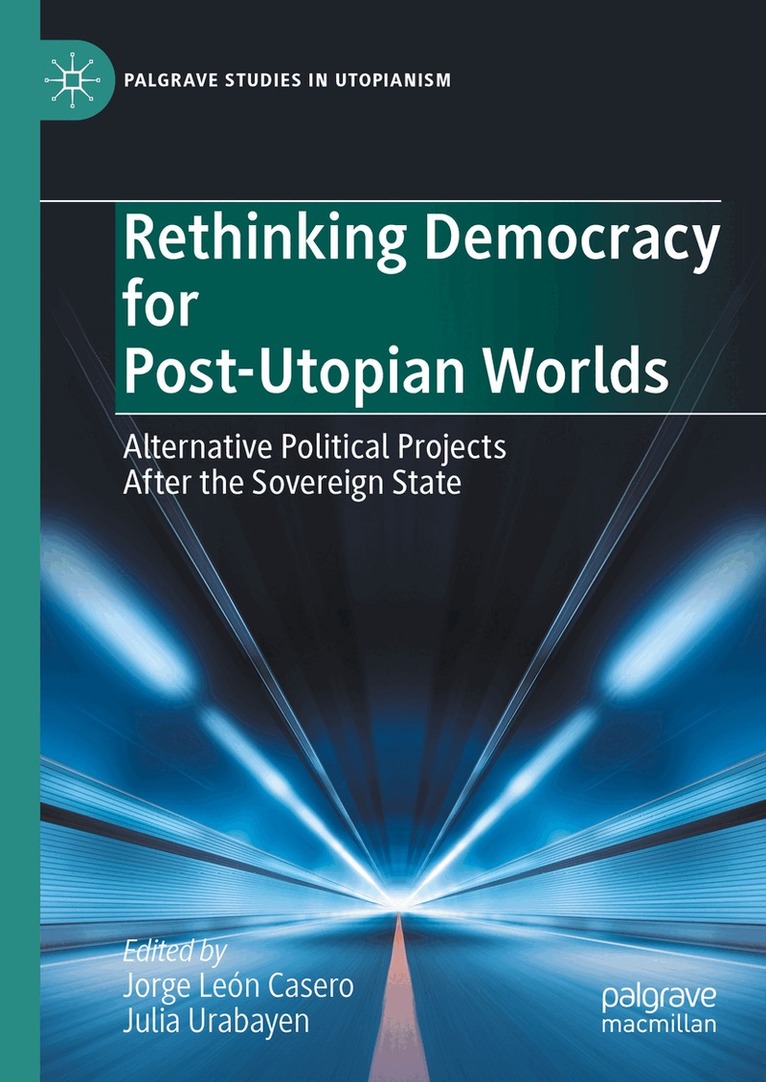
Rethinking Democracy for Post-Utopian Worlds
Alternative Political Projects After the Sovereign State
Inbunden, Engelska, 2024
1 554 kr
Skickas inom 10-15 vardagar
This book is both a conceptualization and detailed analysis of the current crisis in which modern utopian categories of political institutions find themselves, as well as a reflection and clarification of the new dangers and opportunities facing post-utopian politics in-the-making. Met with those who believe that no more utopian political projects are possible, the post-utopian movement maintains a non-fantastic or illusory character of being able to apply new great discourses and radically democratic historical narratives, while respecting both the autonomy and emancipation of individuals as plurality and the socio-cultural differences of communities. With this purpose in mind, the book is divided into five thematically differentiated sections: the new utopian categories beyond modern epistemes; the possibility of liberal utopian democracies without neoliberalism; the opportunities of socialist empowerments and insurgencies; the necessity of thinking in the space between two ages; andthe urgency to create eco-political post-utopias.
Rethinking Democracy for Post-Utopian Worlds
Alternative Political Projects After the Sovereign State
E-bok
Engelska, 20241 947 kr
Läs direkt efter köp
This book is both a conceptualization and detailed analysis of the current crisis in which modern utopian categories of political institutions find themselves, as well as a reflection and clarification of the new dangers and opportunities facing post-utopian politics in-the-making. Met with those who believe that no more utopian political projects are possible, the post-utopian movement maintains a non-fantastic or illusory character of being able to apply new great discourses and radically democratic historical narratives, while respecting both the autonomy and emancipation of individuals as plurality and the socio-cultural differences of communities. With this purpose in mind, the book is divided into five thematically differentiated sections: the new utopian categories beyond modern epistemes; the possibility of liberal utopian democracies without neoliberalism; the opportunities of socialist empowerments and insurgencies; the necessity of thinking in the space between two ages; andthe urgency to create eco-political post-utopias.
Rethinking Democracy for Post-Utopian Worlds
Alternative Political Projects After the Sovereign State
Häftad, Engelska, 2025
1 554 kr
Skickas inom 10-15 vardagar
This book is both a conceptualization and detailed analysis of the current crisis in which modern utopian categories of political institutions find themselves, as well as a reflection and clarification of the new dangers and opportunities facing post-utopian politics in-the-making. Met with those who believe that no more utopian political projects are possible, the post-utopian movement maintains a non-fantastic or illusory character of being able to apply new great discourses and radically democratic historical narratives, while respecting both the autonomy and emancipation of individuals as plurality and the socio-cultural differences of communities. With this purpose in mind, the book is divided into five thematically differentiated sections: the new utopian categories beyond modern epistemes; the possibility of liberal utopian democracies without neoliberalism; the opportunities of socialist empowerments and insurgencies; the necessity of thinking in the space between two ages; andthe urgency to create eco-political post-utopias.
E-bok
PDF, Engelska, 20221 451 kr
Läs direkt efter köp
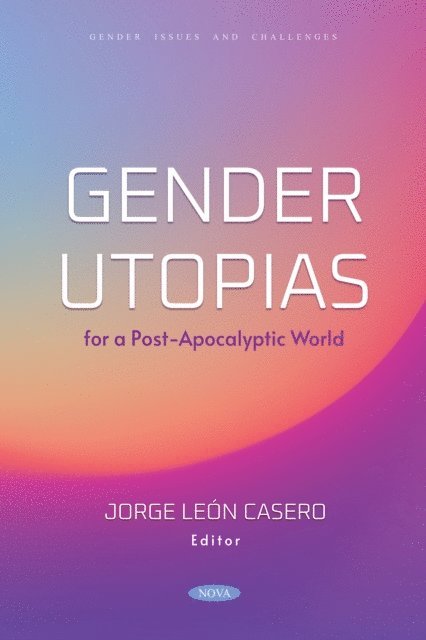
Since its inception in the 15th century, the modern humanist project developed in the West has always been linked to the utopian writings and imaginaries that have determined the characteristics of the supposed ideal society to be created. The fundamental issue is that all these projects have always emphasized the social hierarchy (class), heteropatriarchy (gender), territorial organization (colonialism and race) and the technical domain of nature (environment), regardless of whether private property of the means of production was defended or criticized. The current prevailing discourse, on the other hand, maintains a completely anti-utopian attitude from two fronts that are divergent in their starting points but convergent in their ultimate consequences. The first, with a greater presence in the environmental and technological field, is characterized by a dogmatic and uncompromising application of the principle of responsibility defined by Hans Jonas. The second, with greater application in socio-economic areas, renews the already old postulate of the “end of history” through an accelerationist-apocalyptic interpretation that identifies the current techno-capitalism with the hopeless collapse of human civilization. This book is based on the consideration that both fronts derive from a unilateral and reductionist notion of utopia, limited to the political-administrative character of public institutions, conceived under the public-private binarism of class defined during the 19th century: liberalism-capitalism vs socialism-communism. Given this position, the contributions collected in this book broaden the sociopolitical consideration of the utopian from an intersectional point of view (gender, race, class, species), identifying (the socio-symbolic organization of) sexuality as the key element from which to propose new utopian projects beyond the (human) binary of gender. With this background in mind, the seven chapters that make up this book have been divided into two non-antagonistic and non-exclusive sections. In the first, Gender Utopias in and against the Modern Project, three historical reflections are found that analyze and rescue some of the first utopian projects with a gender character conceived from a gnosological horizon and with the concepts of modern political theory in an attempt to expand, and make them work against, their heteropatriarchal-colonialist character, or at least evidence, denounce and criticize their insufficiency.