Julia Urabayen – författare
Visar alla böcker från författaren Julia Urabayen. Handla med fri frakt och snabb leverans.
7 produkter
7 produkter
E-bok
PDF, Engelska, 20191 503 kr
Läs direkt efter köp
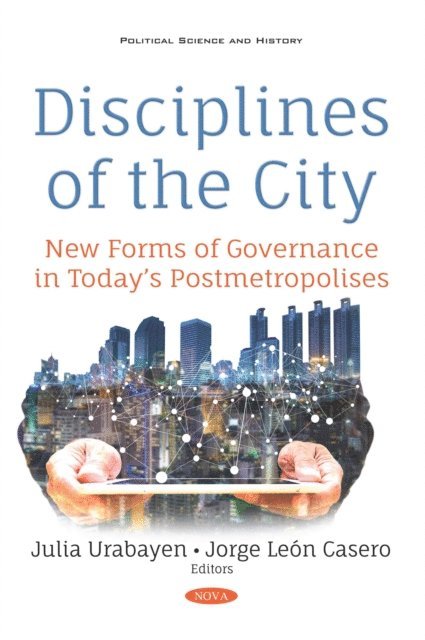
During the past two decades, cities have become nerve centers for the production of value. Connected in real time by means of a vast infrastructure network, their productive dynamic has surpassed the organizational and management capabilities of territorially limited States, which are dependent on the international financial flow of capital moving across them. Given that cities are truly the biopolitical factories of the 21st century, the job functions of an urban planner are now identified with those of a highly placed manager in charge of a company’s R+D+i, and the mode of governance applied to these is different from that used during previous, historic stages. From different viewpoints (Philosophy, Law, Architecture, and Engineering), this book offers an analysis of the main changes which have taken place in the way cities function. Among other issues, it looks at the management styles applied by public administrations to public spaces (David Thunder; Jorge León, Enrique Cano, and José María Castejón), and the new manner in which social (Julia Urabayen) and legal – public (Adriana Ruiz and Alejandro Gómez) and private (Felipe Schwember) – segregation is generated. It also looks at the new sociopolitical uses that city inhabitants have given to common spaces beyond the dichotomy of private and public space (Jonas Holst; Carlos Cámara). In other words, the chapters included in this book are not an historical approach to the city, but a theoretical reflection on the disciplines that define our post-metropolitan cities. The aim of the book is to understand how cities and the disciplines that are used to make them work function nowadays: governance, politics, and technology. The cities of the 21st century are no longer places where people can live freely (as Weber stated in The City), but spaces divided in at least two different areas: those who have access to ICT and those who do not have that technology, those who live in healthy and safe boroughs, and those who live in poor and unhealthy areas. This book ponders those problems and tries to show how the disciplinarians of the city deal with them.
Inbunden, Engelska, 2024
1 554 kr
Skickas inom 10-15 vardagar
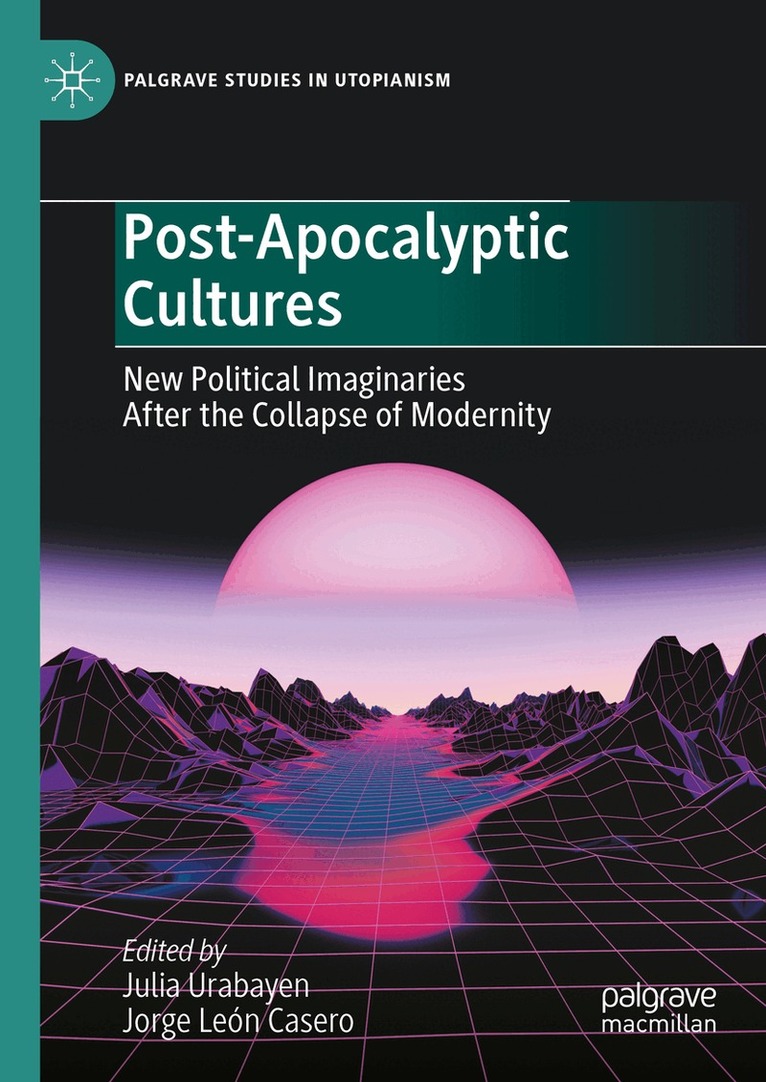
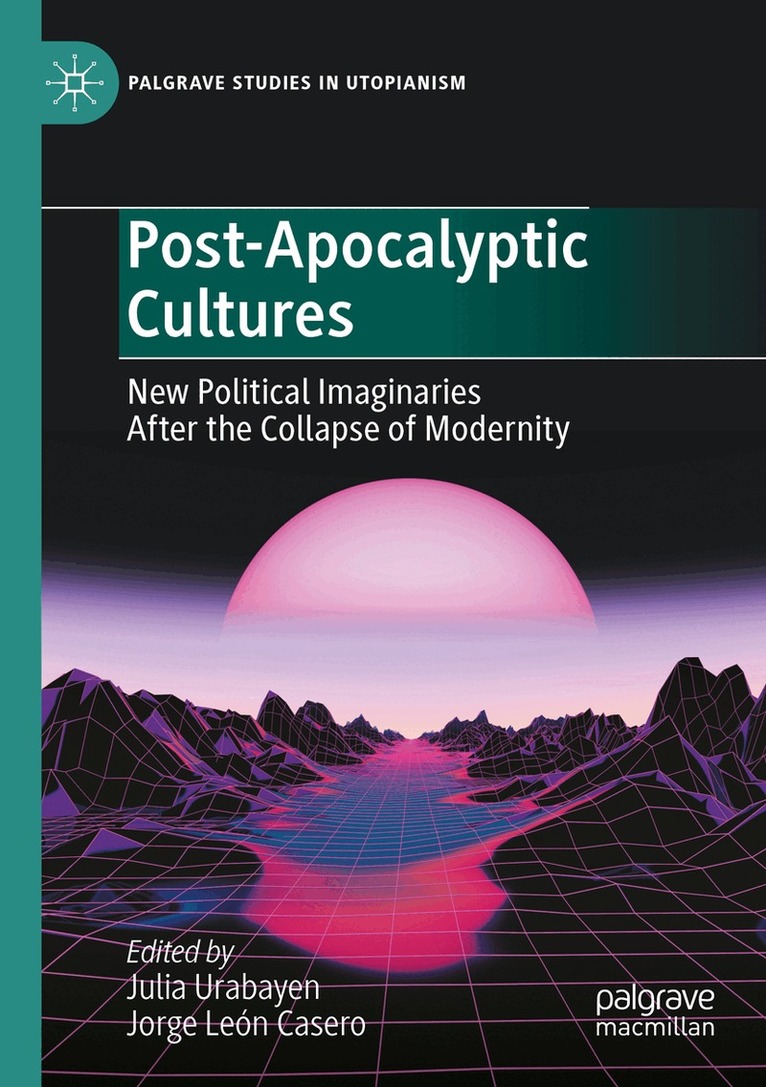
This book advocates for the necessity of recovering the value of utopias as political projects that open new channels of action. The criticism of modern political utopias is based on the supposed impossibility of creating for the future because there is no longer a future (apocalyptic ideology). However, this edited collection seeks to show that the post-apocalyptic world in which we live entails a renewed freedom of design for the radical reorganization of institutions. Post-apocalyptic cultures are not obligated to follow the capitalist, anthropocentric, correlationist and sovereign modes of the old political project of emancipation—the Western enlightenment—that has started to collapse. With this in mind, this book is divided into four sections dedicated to the main themes from which to rethink the projects of political emancipation that are possible nowadays: technopolitics; posthumanist biopolitics; non-western politicsl and the crossover between arts and politics.
E-bok
Engelska, 20241 879 kr
Läs direkt efter köp
This book advocates for the necessity of recovering the value of utopias as political projects that open new channels of action. The criticism of modern political utopias is based on the supposed impossibility of creating for the future because there is no longer a future (apocalyptic ideology). However, this edited collection seeks to show that the post-apocalyptic world in which we live entails a renewed freedom of design for the radical reorganization of institutions. Post-apocalyptic cultures are not obligated to follow the capitalist, anthropocentric, correlationist and sovereign modes of the old political project of emancipation—the Western enlightenment—that has started to collapse. With this in mind, this book is divided into four sections dedicated to the main themes from which to rethink the projects of political emancipation that are possible nowadays: technopolitics; posthumanist biopolitics; non-western politicsl and the crossover between arts and politics.
Häftad, Engelska, 2025
1 554 kr
Skickas inom 10-15 vardagar
This book advocates for the necessity of recovering the value of utopias as political projects that open new channels of action. The criticism of modern political utopias is based on the supposed impossibility of creating for the future because there is no longer a future (apocalyptic ideology). However, this edited collection seeks to show that the post-apocalyptic world in which we live entails a renewed freedom of design for the radical reorganization of institutions. Post-apocalyptic cultures are not obligated to follow the capitalist, anthropocentric, correlationist and sovereign modes of the old political project of emancipation—the Western enlightenment—that has started to collapse. With this in mind, this book is divided into four sections dedicated to the main themes from which to rethink the projects of political emancipation that are possible nowadays: technopolitics; posthumanist biopolitics; non-western politicsl and the crossover between arts and politics.
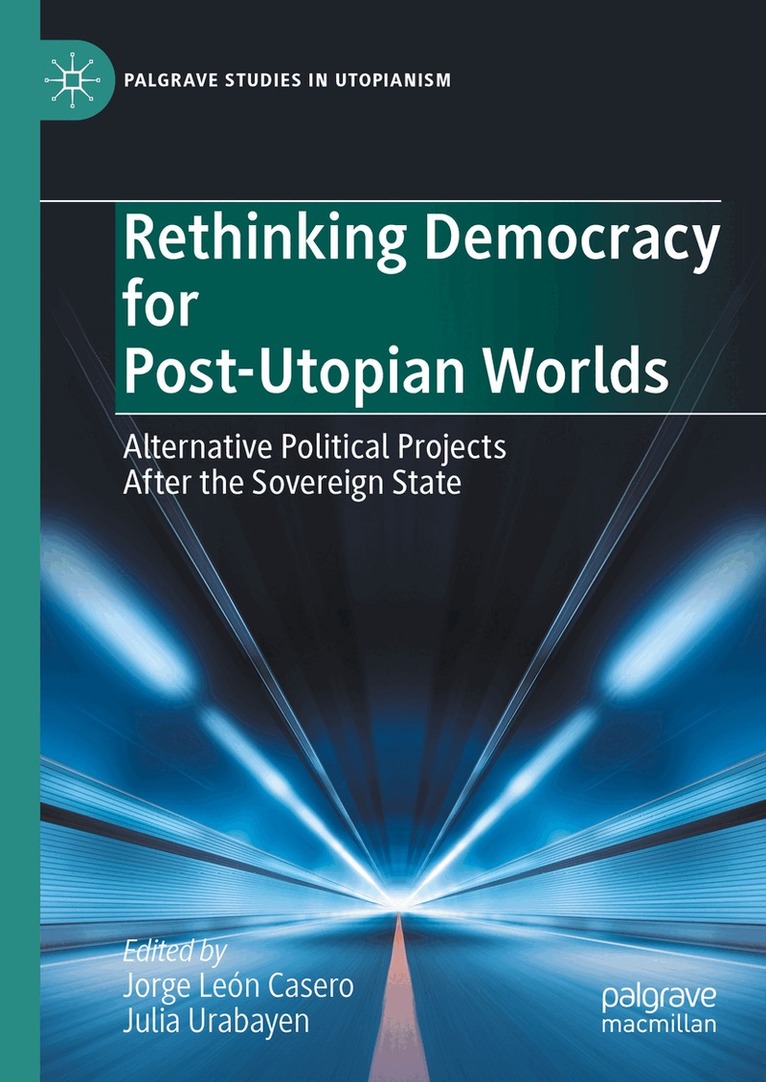
Rethinking Democracy for Post-Utopian Worlds
Alternative Political Projects After the Sovereign State
Inbunden, Engelska, 2024
1 554 kr
Skickas inom 10-15 vardagar
This book is both a conceptualization and detailed analysis of the current crisis in which modern utopian categories of political institutions find themselves, as well as a reflection and clarification of the new dangers and opportunities facing post-utopian politics in-the-making. Met with those who believe that no more utopian political projects are possible, the post-utopian movement maintains a non-fantastic or illusory character of being able to apply new great discourses and radically democratic historical narratives, while respecting both the autonomy and emancipation of individuals as plurality and the socio-cultural differences of communities. With this purpose in mind, the book is divided into five thematically differentiated sections: the new utopian categories beyond modern epistemes; the possibility of liberal utopian democracies without neoliberalism; the opportunities of socialist empowerments and insurgencies; the necessity of thinking in the space between two ages; andthe urgency to create eco-political post-utopias.
Rethinking Democracy for Post-Utopian Worlds
Alternative Political Projects After the Sovereign State
E-bok
Engelska, 20241 947 kr
Läs direkt efter köp
This book is both a conceptualization and detailed analysis of the current crisis in which modern utopian categories of political institutions find themselves, as well as a reflection and clarification of the new dangers and opportunities facing post-utopian politics in-the-making. Met with those who believe that no more utopian political projects are possible, the post-utopian movement maintains a non-fantastic or illusory character of being able to apply new great discourses and radically democratic historical narratives, while respecting both the autonomy and emancipation of individuals as plurality and the socio-cultural differences of communities. With this purpose in mind, the book is divided into five thematically differentiated sections: the new utopian categories beyond modern epistemes; the possibility of liberal utopian democracies without neoliberalism; the opportunities of socialist empowerments and insurgencies; the necessity of thinking in the space between two ages; andthe urgency to create eco-political post-utopias.
Rethinking Democracy for Post-Utopian Worlds
Alternative Political Projects After the Sovereign State
Häftad, Engelska, 2025
1 554 kr
Skickas inom 10-15 vardagar
This book is both a conceptualization and detailed analysis of the current crisis in which modern utopian categories of political institutions find themselves, as well as a reflection and clarification of the new dangers and opportunities facing post-utopian politics in-the-making. Met with those who believe that no more utopian political projects are possible, the post-utopian movement maintains a non-fantastic or illusory character of being able to apply new great discourses and radically democratic historical narratives, while respecting both the autonomy and emancipation of individuals as plurality and the socio-cultural differences of communities. With this purpose in mind, the book is divided into five thematically differentiated sections: the new utopian categories beyond modern epistemes; the possibility of liberal utopian democracies without neoliberalism; the opportunities of socialist empowerments and insurgencies; the necessity of thinking in the space between two ages; andthe urgency to create eco-political post-utopias.