Jos de Bruijn - Böcker
Visar alla böcker från författaren Jos de Bruijn. Handla med fri frakt och snabb leverans.
5 produkter
5 produkter
Information Integration with Ontologies
Experiences from an Industrial Showcase
Inbunden, Engelska, 2005
1 321 kr
Tillfälligt slut
Disparate information, spread over various sources, in various formats, and with inconsistent semantics is a major obstacle for enterprises to use this information at its full potential. Information Grids should allow for the effective access, extraction and linking of dispersed information. Currently Europe’s coporations spend over 10 Billion € to deal with these problems. This book will demonstrate the applicability of grid technologies to industry. To this end, it gives a detailed insight on how ontology technology can be used to manage dispersed information assets more efficiently. The book is based on experiences from the COG (Corporate Ontology Grid) project, carried out jointly by three leading industrial players and the Digital Enterprise Research Institute Austria. Through comparisons of this project with alternative technologies and projects, it provides hands-on experience and best practice examples to act as a reference guide for their development.Information Integration with Ontologies: Ontology based Information Integration in an Industrial Setting is ideal for technical experts and computer researchers in the IT-area looking to achieve integration of heterogeneous information and apply ontology technologies and techniques in practice. It will also be of great benefit to technical decision makers seeking information about ontology technologies and the scientific audience, interested in achievements towards the application of ontologies in an industrial setting.
552 kr
Skickas inom 10-15 vardagar
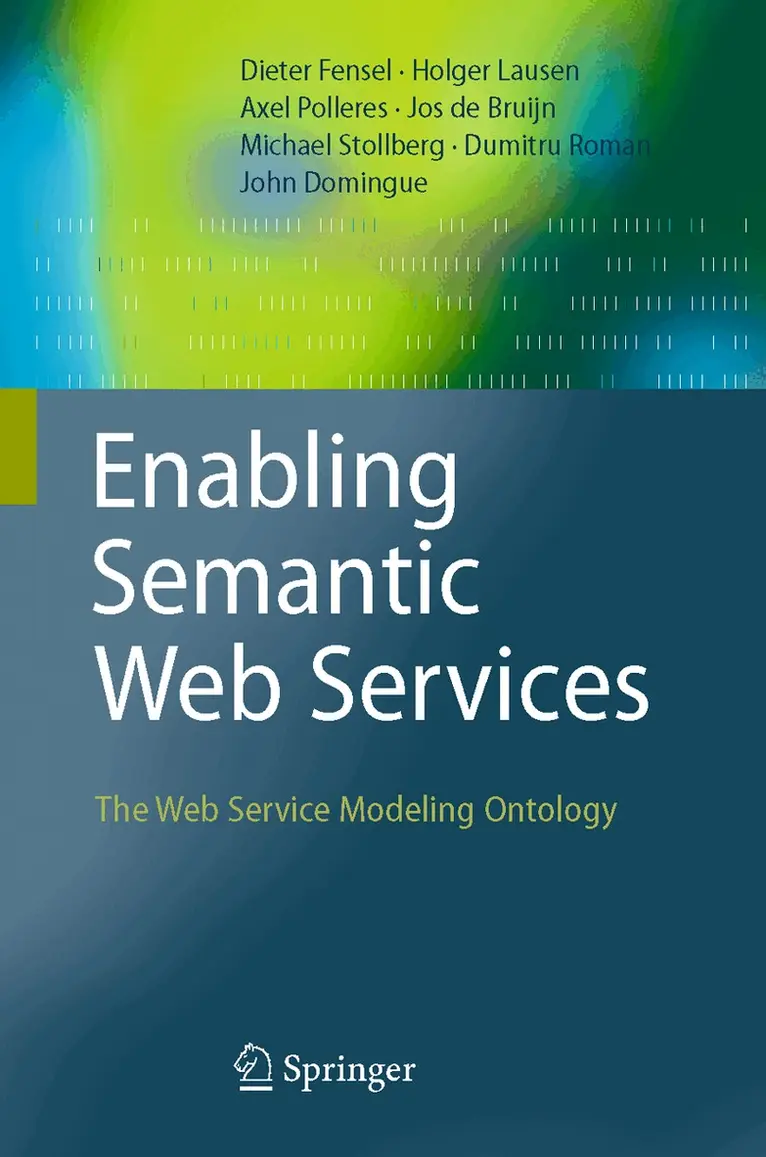
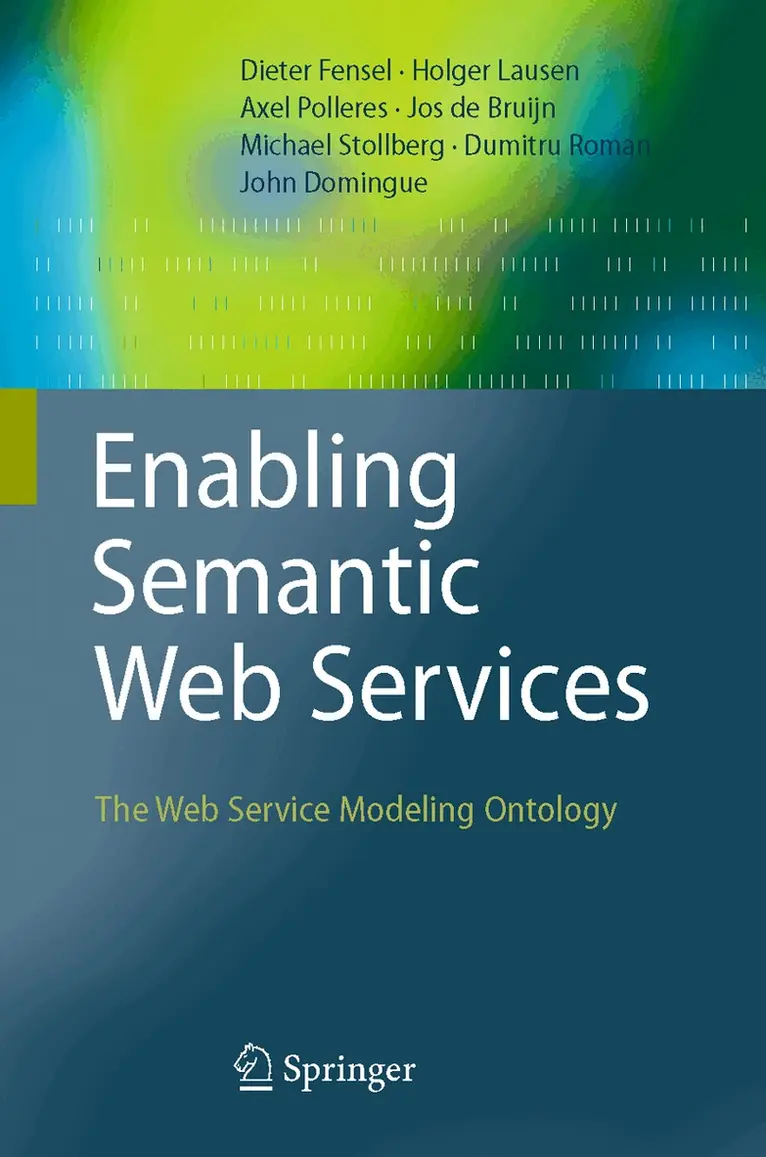
Service-oriented computing has become one of the predominant factors in current IT research and development. Web services seem to be the middleware solution of the future for highly interoperable distributed software solutions. In parallel, research on the Semantic Web provides the results required to exploit distributed machine-processable data. To combine these two research lines into industrial-strength applications, a number of research projects have been set up by organizations like W3C and the EU. Dieter Fensel and his coauthors deliver a profound introduction into one of the most promising approaches – the Web Service Modeling Ontology (WSMO). After a brief presentation of the underlying basic technologies and standards of the World Wide Web, the Semantic Web, and Web Services, they detail all the elements of WSMO from basic concepts to possible applications in e-commerce, e-government and e-banking, and they also describe its relation to other approaches like OWL-S or WSDL-S.While many of the related technologies and standards are still under development, this book already offers both a broad conceptual introduction and lots of pointers to future application scenarios for researchers in academia and industry as well as for developers of distributed Web applications.
552 kr
Skickas inom 10-15 vardagar
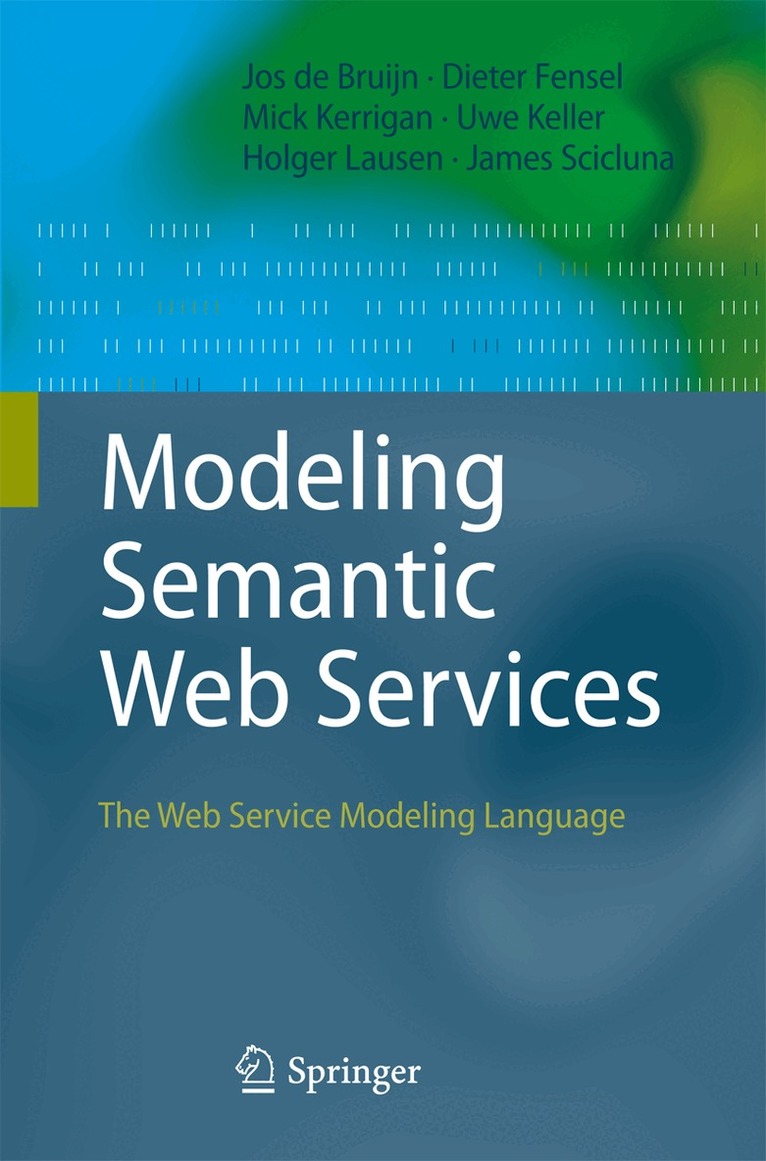
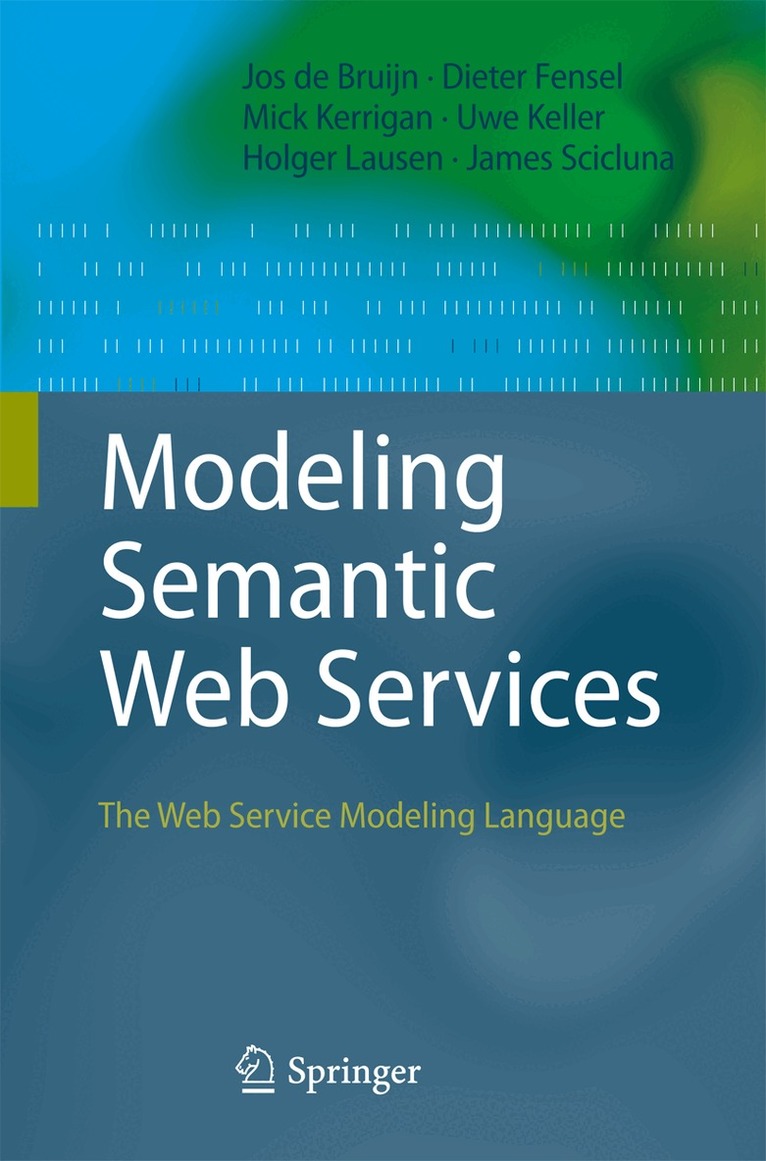
Semantic Web services promise to automate tasks such as discovery, mediation, selection, composition, and invocation of services, enabling fully flexible automated e-business. Their usage, however, still requires a significant amount of human intervention due to the lack of support for a machine-processable description. In this book, Jos de Bruijn and his coauthors lay the foundations for understanding the requirements that shape the description of the various aspects related to Semantic Web services, such as the static background knowledge in the form of ontologies, the functional description of the service, and the behavioral description of the service. They introduce the Web Service Modeling Language (WSML), which provides means for describing the functionality and behavior of Web services, as well as the underlying business knowledge, in the form of ontologies, with a conceptual grounding in the Web Service Modeling Ontology.Academic and industrial researchers as well as professionals will find a comprehensive overview of the concepts and challenges in the area of Semantic Web services, the Web Services Modeling Language and its relation to the Web Services Modeling Ontology, and an in-depth treatment of both enabling technologies and theoretical foundations.
552 kr
Skickas inom 10-15 vardagar
Service-oriented computing has become one of the predominant factors in current IT research and development. Web services seem to be the middleware solution of the future for highly interoperable distributed software solutions. In parallel, research on the Semantic Web provides the results required to exploit distributed machine-processable data. To combine these two research lines into industrial-strength applications, a number of research projects have been set up by organizations like W3C and the EU. Dieter Fensel and his coauthors deliver a profound introduction into one of the most promising approaches – the Web Service Modeling Ontology (WSMO). After a brief presentation of the underlying basic technologies and standards of the World Wide Web, the Semantic Web, and Web Services, they detail all the elements of WSMO from basic concepts to possible applications in e-commerce, e-government and e-banking, and they also describe its relation to other approaches like OWL-S or WSDL-S.While many of the related technologies and standards are still under development, this book already offers both a broad conceptual introduction and lots of pointers to future application scenarios for researchers in academia and industry as well as for developers of distributed Web applications.
552 kr
Skickas inom 10-15 vardagar
Semantic Web services promise to automate tasks such as discovery, mediation, selection, composition, and invocation of services, enabling fully flexible automated e-business. Their usage, however, still requires a significant amount of human intervention due to the lack of support for a machine-processable description. In this book, Jos de Bruijn and his coauthors lay the foundations for understanding the requirements that shape the description of the various aspects related to Semantic Web services, such as the static background knowledge in the form of ontologies, the functional description of the service, and the behavioral description of the service. They introduce the Web Service Modeling Language (WSML), which provides means for describing the functionality and behavior of Web services, as well as the underlying business knowledge, in the form of ontologies, with a conceptual grounding in the Web Service Modeling Ontology.Academic and industrial researchers as well as professionals will find a comprehensive overview of the concepts and challenges in the area of Semantic Web services, the Web Services Modeling Language and its relation to the Web Services Modeling Ontology, and an in-depth treatment of both enabling technologies and theoretical foundations.