Jos T.A. Verhoeven - Böcker
Visar alla böcker från författaren Jos T.A. Verhoeven. Handla med fri frakt och snabb leverans.
5 produkter
5 produkter
Fens and Bogs in the Netherlands: Vegetation, History, Nutrient Dynamics and Conservation
Inbunden, Engelska, 1992
3 149 kr
Skickas inom 10-15 vardagar
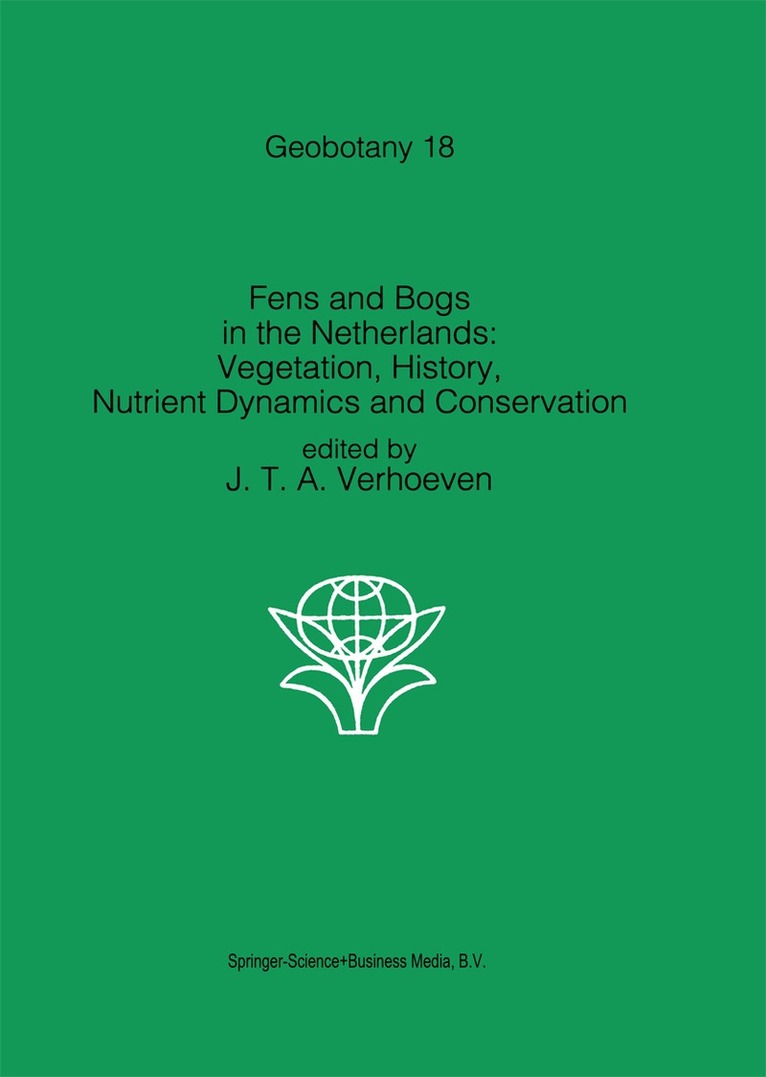
Peatlands are fascinating ecosystems. They are Boudewijn Beltman, Jon den Held, Harm Piek, inhabited by a wealth of especially adapted plant Drs. Niek van Heijst, Drs. Hermien van Sloch- species, such as peat mosses, insectivorous teren and Dr. Taeke Stol, who participated in plants, and nitrogen-fixing shrubs. They also the early stages of the process. The help of Drs. have a 'memory' often going back thousands of G. J. Baayens in the correction of chapter 5 is years, recorded in the layers of plant remains gratefully acknowledged. accumulated underneath the present plant cover. Chapters 6 and 7 have been supported by the Many peatlands are relatively low-productive foundation 'Oecologia Trajectina', Utrecht, by and species-rich, and show vegetational gradients supplying grants made available by the 'Prins related to water chemistry. Bernhard Fonds', Amsterdam and the 'Beij- Peatlands have long been recognized for many erinck-Popping Fonds', Amsterdam. I am indeb- values.The most conspicuous values appreciated ted to Marjolein Smithuizen and Dick Smit of for the Dutch mires were probably the great the Illustration division of the faculty of Biology, potential of the large nutrient stores in peat soils University of Utrecht, for the large number of for agricultural purposes, and the high calorific drawings they produced for the book. Gerrie value of peat when used as a fuel. These values Bransen helped with the printing of the final have led to large-scale exploitation and destruc- versions of the various chapters.
2 121 kr
Skickas inom 10-15 vardagar
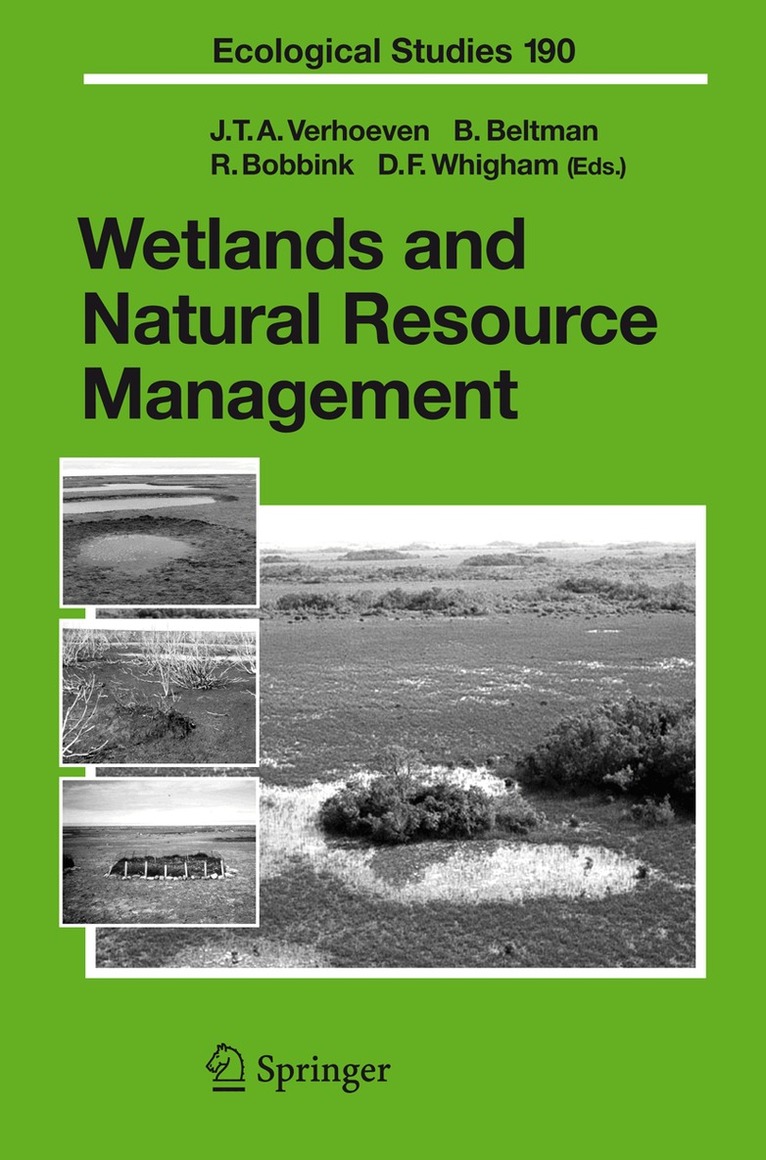
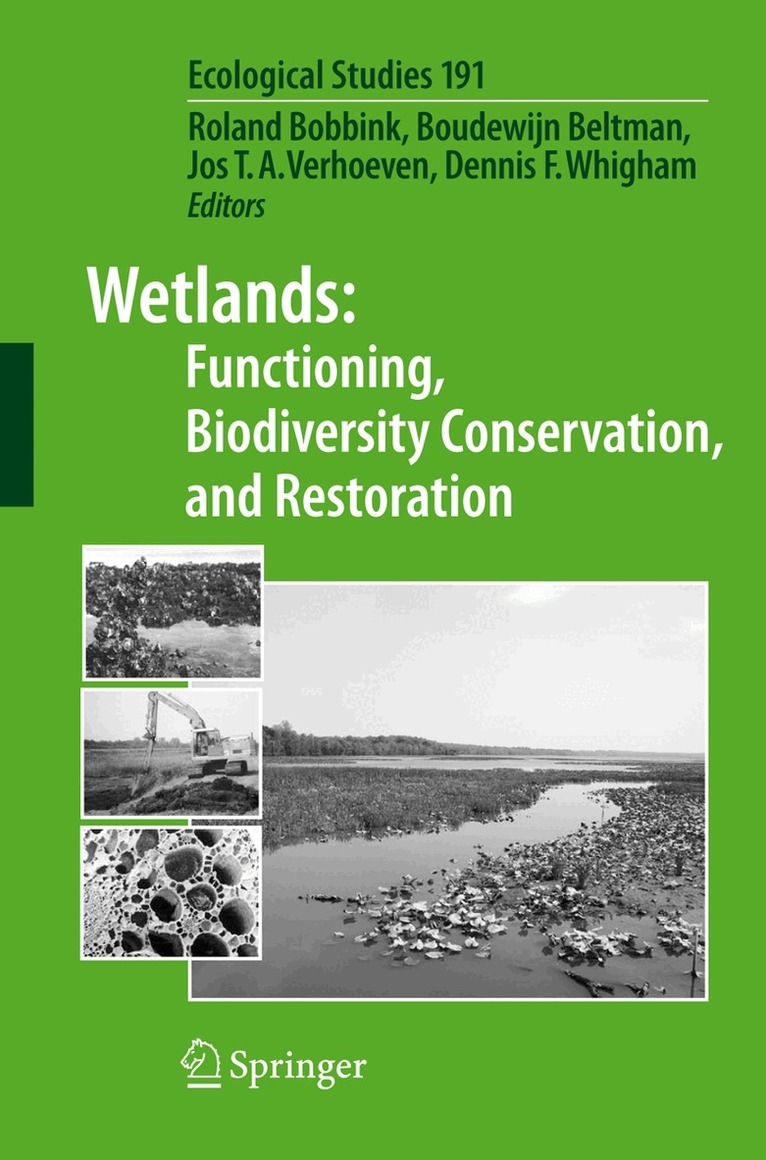
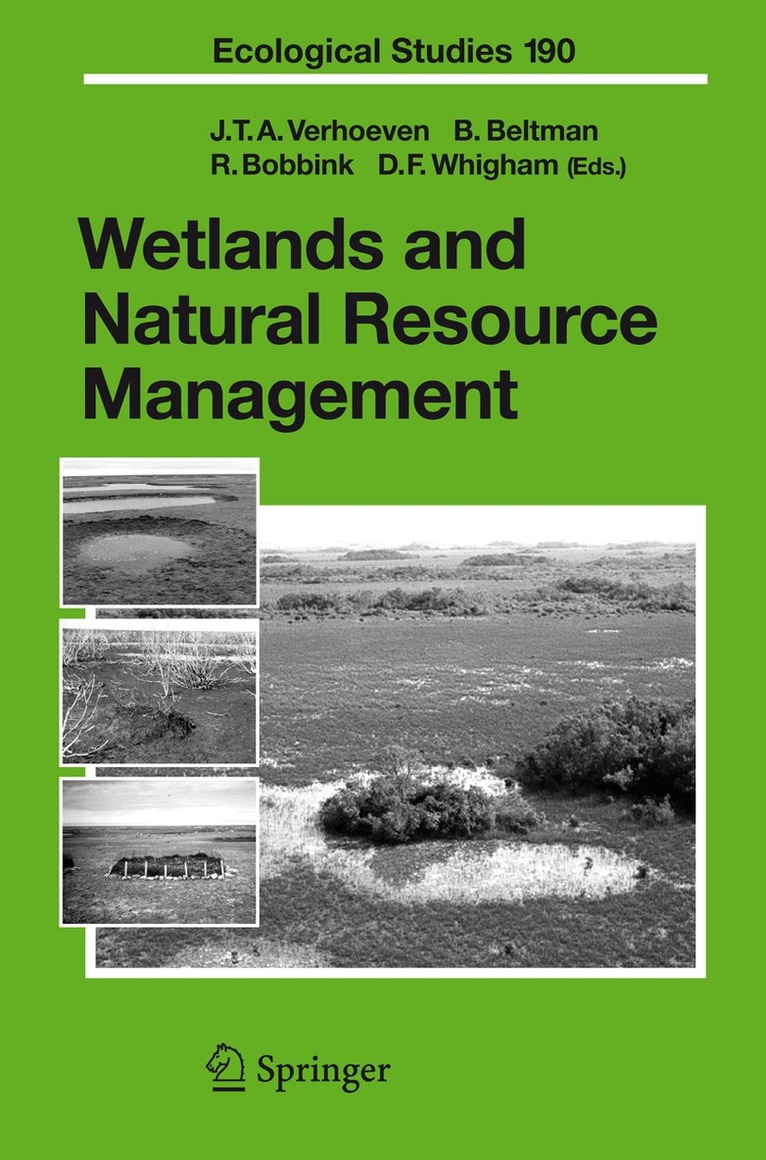
The two volumes on “Wetlands as a Natural Resource” in the book series Ecological th Studies (Volumes 190,191) are based on the highlights of the 7 INTECOL International Wetland Conference in Utrecht,25–30 July 2004. This conference brought together about 900 participants from 61 countries,who discussed a very broad range of science-,poli- and management-oriented issues related to wetland ecology and hydrology, wetland conservation and creation, the impact of global change and wetlands as a resource in terms of food,flood protection and water quality enhancement. The participants were from different sectors of society,i. e. ,science and technology (scientists 45%; PhD s- dents 20%),natural resource management (20%) and policy (15%). There were 38 s- posia with invited speakers centered around the nine conference themes. We have given the organizers of these symposia the opportunity to produce one chapter for these books with the integrated content of their symposium. This has resulted in 25 chapters, of which 13 are included in Volume 190 under the heading “Wetlands and Natural Resource Management”and 12 in Volume 191 under the heading “Wetlands: Functi- ing,Biodiversity Conservation and Restoration”. With these books,we had the aim to summarize the most important recent scientific results in wetland science,their applications in wetland and water resource management and their implications for the development of global,national and regional policies in the perspective of the ever-progressing deterioration of natural wetlands and the major impacts that future climate change will have.
1 593 kr
Skickas inom 10-15 vardagar
The two volumes on “Wetlands as a Natural Resource” in the book series Ecological th Studies (Volumes 190,191) are based on the highlights of the 7 INTECOL International Wetland Conference in Utrecht,25–30 July 2004. This conference brought together about 900 participants from 61 countries,who discussed a very broad range of science-,poli- and management-oriented issues related to wetland ecology and hydrology, wetland conservation and creation, the impact of global change and wetlands as a resource in terms of food,flood protection and water quality enhancement. The participants were from different sectors of society,i. e. ,science and technology (scientists 45%; PhD s- dents 20%),natural resource management (20%) and policy (15%). There were 38 s- posia with invited speakers centered around the nine conference themes. We have given the organizers of these symposia the opportunity to produce one chapter for these books with the integrated content of their symposium. This has resulted in 25 chapters, of which 13 are included in Volume 190 under the heading “Wetlands and Natural Resource Management”and 12 in Volume 191 under the heading “Wetlands: Functi- ing,Biodiversity Conservation,and Restoration”. With these books,we had the aim to summarize the most important recent scientific results in wetland science,their applications in wetland and water resource management and their implications for the development of global,national and regional policies in the perspective of the ever-progressing deterioration of natural wetlands and the major impacts that future climate change will have.
2 121 kr
Skickas inom 10-15 vardagar
The two volumes on “Wetlands as a Natural Resource” in the book series Ecological th Studies (Volumes 190,191) are based on the highlights of the 7 INTECOL International Wetland Conference in Utrecht,25–30 July 2004. This conference brought together about 900 participants from 61 countries,who discussed a very broad range of science-,poli- and management-oriented issues related to wetland ecology and hydrology, wetland conservation and creation, the impact of global change and wetlands as a resource in terms of food,flood protection and water quality enhancement. The participants were from different sectors of society,i. e. ,science and technology (scientists 45%; PhD s- dents 20%),natural resource management (20%) and policy (15%). There were 38 s- posia with invited speakers centered around the nine conference themes. We have given the organizers of these symposia the opportunity to produce one chapter for these books with the integrated content of their symposium. This has resulted in 25 chapters, of which 13 are included in Volume 190 under the heading “Wetlands and Natural Resource Management”and 12 in Volume 191 under the heading “Wetlands: Functi- ing,Biodiversity Conservation and Restoration”. With these books,we had the aim to summarize the most important recent scientific results in wetland science,their applications in wetland and water resource management and their implications for the development of global,national and regional policies in the perspective of the ever-progressing deterioration of natural wetlands and the major impacts that future climate change will have.
Fens and Bogs in the Netherlands: Vegetation, History, Nutrient Dynamics and Conservation
Häftad, Engelska, 2010
3 178 kr
Skickas inom 10-15 vardagar
Peatlands are fascinating ecosystems. They are Boudewijn Beltman, Jon den Held, Harm Piek, inhabited by a wealth of especially adapted plant Drs. Niek van Heijst, Drs. Hermien van Sloch- species, such as peat mosses, insectivorous teren and Dr. Taeke Stol, who participated in plants, and nitrogen-fixing shrubs. They also the early stages of the process. The help of Drs. have a 'memory' often going back thousands of G. J. Baayens in the correction of chapter 5 is years, recorded in the layers of plant remains gratefully acknowledged. accumulated underneath the present plant cover. Chapters 6 and 7 have been supported by the Many peatlands are relatively low-productive foundation 'Oecologia Trajectina', Utrecht, by and species-rich, and show vegetational gradients supplying grants made available by the 'Prins related to water chemistry. Bernhard Fonds', Amsterdam and the 'Beij- Peatlands have long been recognized for many erinck-Popping Fonds', Amsterdam. I am indeb- values.The most conspicuous values appreciated ted to Marjolein Smithuizen and Dick Smit of for the Dutch mires were probably the great the Illustration division of the faculty of Biology, potential of the large nutrient stores in peat soils University of Utrecht, for the large number of for agricultural purposes, and the high calorific drawings they produced for the book. Gerrie value of peat when used as a fuel. These values Bransen helped with the printing of the final have led to large-scale exploitation and destruc- versions of the various chapters.