Joseph F. Graham - Böcker
Visar alla böcker från författaren Joseph F. Graham. Handla med fri frakt och snabb leverans.
2 produkter
2 produkter
Del 4 - Literature, Culture, Theory
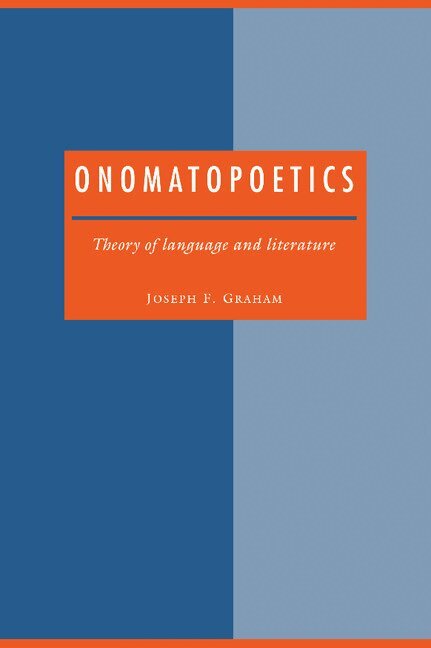
Onomatopoetics
Theory of Language and Literature
Inbunden, Engelska, 1992
1 371 kr
Skickas inom 7-10 vardagar
The relationship of words to the things they represent and to the mind which forms them has long been the subject of linguistic enquiry. Joseph Graham's challenging book, first published in 1992, takes this debate into the field of literary theory, making a searching enquiry into the nature of literary representation. It reviews the arguments of Plato's Cratylus on how words signify things, and of Chomsky's theory of the innate 'natural' status of language (contrasted with Saussure's notion of its essential arbitrariness). In the process, Graham explores the issues of meaning and intentionality in representation, and examines plausible theories of how the mind represents the world. He transcends the controversies amongst literary theorists, arguing that the solution lies not in epistemology or philosophy, but in psychology and the study of how literature teaches and why humans learn best by example.
Del 4 - Literature, Culture, Theory
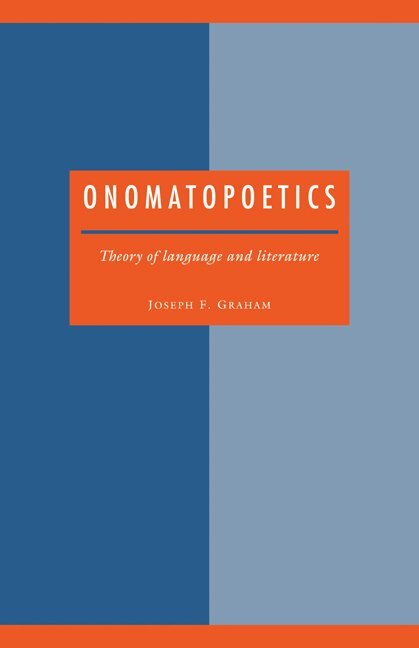
Onomatopoetics
Theory of Language and Literature
Häftad, Engelska, 2010
477 kr
Skickas inom 7-10 vardagar
The relationship of words to the things they represent and to the mind which forms them has long been the subject of linguistic enquiry. Joseph Graham's challenging book, first published in 1992, takes this debate into the field of literary theory, making a searching enquiry into the nature of literary representation. It reviews the arguments of Plato's Cratylus on how words signify things, and of Chomsky's theory of the innate 'natural' status of language (contrasted with Saussure's notion of its essential arbitrariness). In the process, Graham explores the issues of meaning and intentionality in representation, and examines plausible theories of how the mind represents the world. He transcends the controversies amongst literary theorists, arguing that the solution lies not in epistemology or philosophy, but in psychology and the study of how literature teaches and why humans learn best by example.