Joseph Rouse - Böcker
Visar alla böcker från författaren Joseph Rouse. Handla med fri frakt och snabb leverans.
8 produkter
8 produkter
307 kr
Skickas inom 7-10 vardagar
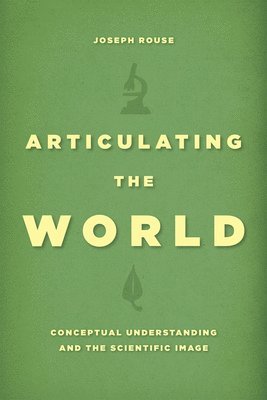
Naturalism as a guiding philosophy for modern science both disavows any appeal to the supernatural or anything else transcendent to nature, and repudiates any philosophical or religious authority over the workings and conclusions of the sciences. A longstanding paradox within naturalism, however, has been the status of scientific knowledge itself, which seems, at first glance, to be something that transcends and is therefore impossible to conceptualize within scientific naturalism itself. In Articulating the World, Joseph Rouse argues that the most pressing challenge for advocates of naturalism today is precisely this: to understand how to make sense of a scientific conception of nature as itself part of nature, scientifically understood. Drawing upon recent developments in evolutionary biology and the philosophy of science, Rouse defends naturalism in response to this challenge by revising both how we understand our scientific conception of the world and how we situate ourselves within it.
789 kr
Skickas inom 7-10 vardagar
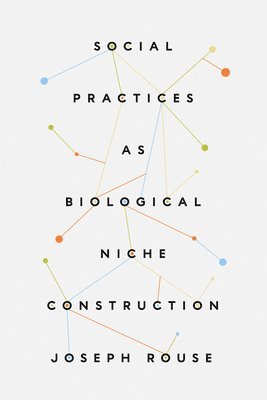
A broad, synthetic philosophy of nature focused on human sociality. In this book, Joseph Rouse takes his innovative work to the next level by articulating an integrated philosophy of society as part of nature. He shows how and why we ought to unite our biological conception of human beings as animals with our sociocultural and psychological conceptions of human beings as persons and acculturated agents. Rouse’s philosophy engages with biological understandings of human bodies and their environments as well as the diverse practices and institutions through which people live and engage with one another. Familiar conceptual separations of natural, social, and mental “worlds” did not arise by happenstance, he argues, but often for principled reasons that have left those divisions deeply entrenched in contemporary intellectual life. Those reasons are eroding in light of new developments across the disciplines, but that erosion has not been sufficient to produce more adequately integrated conceptual alternatives until now. Social Practices and Biological Niche Construction shows how the characteristic plasticity, plurality, and critical contestation of human ways of life can best be understood as evolved and evolving relations among human organisms and their distinctive biological environments. It also highlights the constitutive interdependence of those ways of life with many other organisms, from microbial populations to certain plants and animals, and explores the consequences of this in-depth, noting, for instance, how the integration of the natural and social also provides new insights on central issues in social theory, such as the body, language, normativity, and power.
244 kr
Skickas inom 7-10 vardagar
A broad, synthetic philosophy of nature focused on human sociality. In this book, Joseph Rouse takes his innovative work to the next level by articulating an integrated philosophy of society as part of nature. He shows how and why we ought to unite our biological conception of human beings as animals with our sociocultural and psychological conceptions of human beings as persons and acculturated agents. Rouse’s philosophy engages with biological understandings of human bodies and their environments as well as the diverse practices and institutions through which people live and engage with one another. Familiar conceptual separations of natural, social, and mental “worlds” did not arise by happenstance, he argues, but often for principled reasons that have left those divisions deeply entrenched in contemporary intellectual life. Those reasons are eroding in light of new developments across the disciplines, but that erosion has not been sufficient to produce more adequately integrated conceptual alternatives until now. Social Practices and Biological Niche Construction shows how the characteristic plasticity, plurality, and critical contestation of human ways of life can best be understood as evolved and evolving relations among human organisms and their distinctive biological environments. It also highlights the constitutive interdependence of those ways of life with many other organisms, from microbial populations to certain plants and animals, and explores the consequences of this in-depth, noting, for instance, how the integration of the natural and social also provides new insights on central issues in social theory, such as the body, language, normativity, and power.
569 kr
Skickas inom 10-15 vardagar
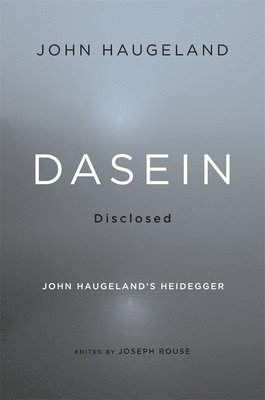
The author of discipline-defining studies of human cognition and artificial intelligence, John Haugeland was a charismatic, highly original voice in the contemporary forum of Anglo-American analytic philosophy. At his death in 2010, he left behind an unfinished manuscript, more than a decade in the making, intended as a summation of his life-long engagement with one of the twentieth century’s most influential philosophical tracts, Heidegger’s Being and Time (1927). Dasein Disclosed brings together in a single volume the writings of a man widely acknowledged as one of Heidegger’s preeminent and most provocative interpreters.A labyrinth of notoriously difficult ideas and terminology, Being and Time has inspired copious commentary. Not content merely to explain, Haugeland aspired to a sweeping reevaluation of Heidegger’s magnum opus and its conception of human life as Dasein—a reevaluation focused on Heidegger’s effort to reawaken philosophically dormant questions of what it means “to be.” Interpreting Dasein unconventionally as “the living of a living way of life,” Haugeland put involvement in a shared world, rather than individual persons or their experience, at the heart of Heidegger’s phenomenology of understanding and truth. Individuality, Haugeland insists, emerges in the call to take responsibility for a collective way of being in the world. He traces this thought to Heidegger’s radical conclusion that one does not truly understand philosophical concepts unless that understanding changes how one lives.As illuminating as it is iconoclastic, Dasein Disclosed is not just Haugeland’s Heidegger—it is a major contribution to philosophy in its own right.
677 kr
Skickas inom 10-15 vardagar
This lucidly written book examines the social and political significance of the natural sciences through a detailed and original account of science as an interpretive social practice.
1 525 kr
Skickas inom 10-15 vardagar
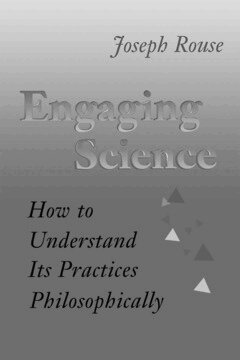
Summarizing this century's major debates over realism and the rationality of scientific knowledge, Joseph Rouse believes that these disputes oversimplify the political and cultural significance of the sciences. He provides an alternative understanding of science that focuses on practices rather than knowledge.Rouse first outlines the shared assumptions by ostensibly opposed interpretive stances toward science: scientific realism, social constructivism, empiricism, and postempiricist historical rationalism. He then advances cultural studies as an alternative approach, one that understands the sciences as ongoing patterns of situated activity whose material setting is part of practice. Cultural studies of science, theauthor suggests, take seriously their own participation in and engagement with the culture of science, rejecting the purported detachment of earlier philosophical or sociological standpoints. Rather, such studies offer specific, critical discussions of how and why science matters, and to whom, and how opportunites for meaningful understanding and action are transformed by scientific practices.
356 kr
Skickas
Summarizing this century's major debates over realism and the rationality of scientific knowledge, Joseph Rouse believes that these disputes oversimplify the political and cultural significance of the sciences. He provides an alternative understanding of science that focuses on practices rather than knowledge.Rouse first outlines the shared assumptions by ostensibly opposed interpretive stances toward science: scientific realism, social constructivism, empiricism, and postempiricist historical rationalism. He then advances cultural studies as an alternative approach, one that understands the sciences as ongoing patterns of situated activity whose material setting is part of practice. Cultural studies of science, theauthor suggests, take seriously their own participation in and engagement with the culture of science, rejecting the purported detachment of earlier philosophical or sociological standpoints. Rather, such studies offer specific, critical discussions of how and why science matters, and to whom, and how opportunites for meaningful understanding and action are transformed by scientific practices.
382 kr
Skickas inom 10-15 vardagar
This lucidly written book examines the social and political significance of the natural sciences through a detailed and original account of science as an interpretive social practice.