Joseph S. Nye – författare
Visar alla böcker från författaren Joseph S. Nye. Handla med fri frakt och snabb leverans.
18 produkter
18 produkter
Inbunden, Engelska, 2020
262 kr
Skickas
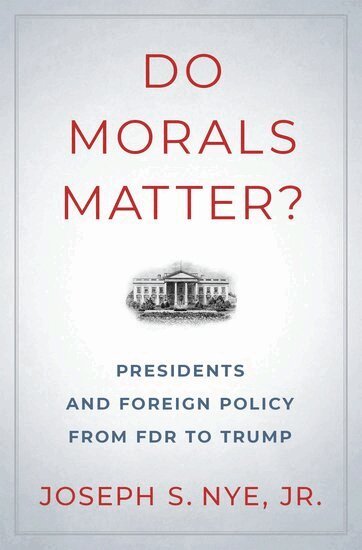
Americans constantly make moral judgments about presidents and foreign policy. Unfortunately, many of these assessments are poorly thought through. A president is either praised for the moral clarity of his statements or judged solely on the results of their actions. In Do Morals Matter?, Joseph S. Nye, Jr., one of the world's leading scholars of international relations, provides a concise yet penetrating analysis of the role of ethics in US foreign policy during the American era after 1945. Nye works through each presidency from FDR to Trump and scores their foreign policy on three ethical dimensions of their intentions, the means they used, and the consequences of their decisions. Alongside this, he also evaluates their leadership qualities, elaborating on which approaches work and which ones do not. Regardless of a president's policy preference, Nye shows that each one was not fully constrained by the structure of the system and actually had choices. He further notes the important ethical consequences of non-actions, such as Truman's willingness to accept stalemate in Korea rather than use nuclear weapons. Since we so often apply moral reasoning to foreign policy, Nye suggests how to do it better. Most importantly, presidents need to factor in both the political context and the availability of resources when deciding how to implement an ethical policyespecially in a future international system that presents not only great power competition from China and Russia, but a host of transnational threats: the illegal drug trade, infectious diseases, terrorism, cybercrime, and climate change.
Häftad, Engelska, 1988
161 kr
Skickas inom 5-8 vardagar
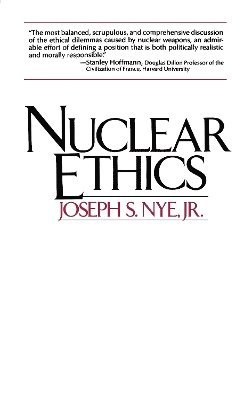
Joseph S. Nye presents an analysis of issues of nuclear ethics and a coherent positional between the black and white extremes of nuclear advocacy and nuclear abolition.Nuclear Ethics argues that the strategy of deterrence must remain conditional. Outlining a just-defense doctrine for the nuclear age, Nye provides a sensitive moral compass for policy choices and offers a sense of hope for the future. “Not only an excellent treatise on moral philosophy addressed to the complex issues of nuclear war, but also an important introduction to these very issues.” – The New York Times Book Review
Häftad, Engelska, 2003
236 kr
Skickas inom 5-8 vardagar
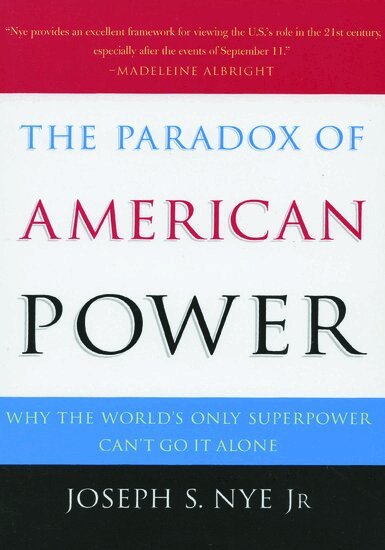
Not since the Roman Empire has any nation had as much economic, cultural, and military power as the United States does today. Yet, as has become all too evident through the terrorist attacks of September 11th and the impending threat of the acquisition of nuclear weapons by Iraq, that power is not enough to solve global problems--like terrorism, environmental degradation, and the proliferation of weapons of mass destruction--without involving other nations. Here Joseph S. Nye, Jr. focuses on the rise of these and other new challenges and explains clearly why America must adopt a more cooperative engagement with the rest of the world.
Häftad, Engelska, 2022
332 kr
Skickas inom 3-6 vardagar
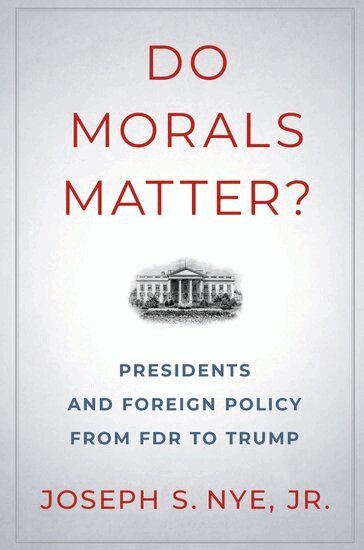
A concise yet penetrating analysis of how modern American presidents have--and have not--incorporated ethics into their foreign policy.Americans constantly make moral judgments about presidents and foreign policy. Unfortunately, many of these assessments are poorly thought through. In Do Morals Matter?, Joseph S. Nye, Jr. provides a concise yet penetrating analysis of the role of ethics in US foreign policy since Franklin Delano Roosevelt's presidency onward. Nye works through each presidency from FDR to Trump and scores their foreign policy on three ethical dimensions: their intentions, the means they used, and the consequences of their decisions. He also evaluates their leadership qualities, elaborating on which approaches work and which ones do not. Regardless of a president's policy preference, Nye shows that each one was not fully constrained by the structure of the system and actually had choices. Since we so often apply moral reasoning to foreign policy, Nye suggests how to do it better. Most importantly, he shows that presidents need to factor in both the political context and the availability of resources when deciding how to implement an ethical policy-especially in a future international system that presents not only great power competition from China and Russia, but a host of additional transnational threats.
Inbunden, Engelska, 2013
238 kr
Skickas inom 5-8 vardagar
This book examines the foreign policy decisions of the presidents who presided over the most critical phases of America's rise to world primacy in the twentieth century, and assesses the effectiveness and ethics of their choices. Joseph Nye, who was ranked as one of Foreign Policy magazine's 100 Top Global Thinkers, reveals how some presidents tried with varying success to forge a new international order while others sought to manage America's existing position. The book shows how transformational presidents like Wilson and Reagan changed how America sees the world, but argues that transactional presidents like Eisenhower and the elder Bush were sometimes more effective and ethical. It also draws important lessons for today's uncertain world, in which presidential decision making is more critical than ever.
Häftad, Engelska, 2014
205 kr
Skickas inom 5-8 vardagar
This book examines the foreign policy decisions of the presidents who presided over the most critical phases of America's rise to world primacy in the twentieth century, and assesses the effectiveness and ethics of their choices. Joseph Nye, who was ranked as one of Foreign Policy magazine's 100 Top Global Thinkers, reveals how some presidents tried with varying success to forge a new international order while others sought to manage America's existing position. The book shows how transformational presidents like Wilson and Reagan changed how America sees the world, but argues that transactional presidents like Eisenhower and the elder Bush were sometimes more effective and ethical. It also draws important lessons for today's uncertain world, in which presidential decision making is more critical than ever.
Häftad, Engelska, 2001
311 kr
Skickas inom 10-15 vardagar
A Brookings Institution Press and Visions of Governance for the 21st Century publicationChanging markets are challenging governance. The growing scale, reach, complexity, and popular legitimacy of market institutions and market players are re-opening old questions about the role of the public sector and redefining what it means to govern well. This volumethe latest publication from the Visions of Governance in the 21st Century program at the Kennedy School of Governmentexplores the way evolving markets alter the pursuit of cherished public goals.John D. Donahue and Joseph S. Nye, Jr. frame the inquiry with an essay on governing well in an age of ascendant markets. Other contributors (all from Harvard's Kennedy School unless otherwise indicated) address specific areas of market governance in individual chapters: Joseph P. Newhouse on the medical marketplace, Jose Gomez-Ibañez and John R. Meyer on transportation, William Hogan on electric power, Paul E. Peterson on K12 education, L. Jean Camp on information networks, Akash Deep and Guido Schaefer (Vienna University of Economics & Business Administration) on federal deposit insurance, Frederick Schauer on ""the marketplace of ideas,"" Anna Greenberg on the ""marketization"" of politics, David M. Hart on the politics of high-tech industry, Viktor Mayer-Schönberger on information law, John D. Donahue and Richard J. Zeckhauser on the challenges posed by fast-changing markets, and Mark Moore on the spread of market ideology.
Häftad, Engelska, 2002
283 kr
Skickas inom 10-15 vardagar
Advances in information technology are transforming democratic governance. Power over information has become decentralized, fostering new types of community and different roles for government. This volumedeveloped by the Visions of Governance in the 21st Century program at the Kennedy School of Governmentexplores the ways in which the information revolution is changing our institutions of governance. Contributors examine the impact of technology on our basic institutions and processes of governance, including representation, community, politics, bureaucracy, and sovereignty. Their essays illuminate many of the promises and challenges of twenty-first century government. The contributors (all from Harvard unless otherwise indicated) include Joseph S. Nye Jr., Arthur Isak Applbaum, Dennis Thompson, William A. Galston (University of Maryland), L. Jean Camp, Pippa Norris, Anna Greenberg, Elaine Ciulla Kamarck, David C. King, Jane Fountain, Jerry Mechling, and Robert O. Keohane (Duke University).
Häftad, Engelska, 2002
311 kr
Skickas inom 10-15 vardagar
A Brookings Institution Press and Visions of Governance for the 21st Century publicationThe latest in a series exploring twenty-first-century governance, this new volume examines the use of market means to pursue public goals. Market-based governance includes both the delegation of traditionally governmental functions to private players, and the importation into government of market-style management approaches and mechanisms of accountability.The contributors (all from Harvard University) assess market-based governance from four perspectives:The demand side deals with new, revised, or newly important forms of interaction between government and the market where the public sector is the customer. Chapters in this section include Steve Kelman on federal procurement reform, Karen Eggleston and Richard Zeckhauser on contracting for health care, and Peter Frumkin.The supply side section deals with unsettled questions about government's role as a provider (rather than a purchaser) within the market system. Contributors include Georges de Menil, Frederick Schauer and Virginia Wise.A third section explores experiments with market-based arrangements for orchestrating accountability outside government by altering the incentives that operate inside market institutions. Chapters include Robert Stavins on market-based environmental policy, Archon Fung on social markets, and Cary Coglianese and David Lazer.The final section examines both the upside and the downside of the market-based approach to improving governance. Contributors include Elaine Kamarck, John D. Donahue, Mark Moore, and Robert Behn.An introduction by John D. Donahue frames market-based governance as an effort to engineer into public work some of the intensive accountability that characterizes markets without surrendering the extensive accountability of conventional government. A preface by Joseph S. Nye Jr. sets the book in the context of a larger inquiry into the future of governance.
Häftad, Engelska, 2000
312 kr
Skickas inom 10-15 vardagar
Far from being another short-lived buzzword, ""globalization"" refers to real changes. These changes have profound impacts on culture, economics, security, the environmentand hence on the fundamental challenges of governance. This book asks three fundamental questions: How are patterns of globalization currently evolving? How do these patterns affect governance? And how might globalism itself be governed? The first section maps the trajectory of globalization in several dimensionseconomic, cultural, environmental, and political. For example, Graham Allison speculates about the impact on national and international security, and William C. Clark develops and evaluates the concepts of ""environmental globalization."" The second section examines the impact of globalization on governance within individual nations (including China, struggling countries in the developing world, and the industrialized democracies) and includes Elaine Kamarck's assessment of global trends in public-sector reform. The third section discusses efforts to improvise new approaches to governance, including the role of non-governmental institutions, the global dimensions of information policy, and Dani Rodrik's speculation on global economic governance.
E-bok
PDF, Engelska, 2000321 kr
Läs direkt efter köp
Far from being another short-lived buzzword, ""globalization"" refers to real changes. These changes have profound impacts on culture, economics, security, the environmentand hence on the fundamental challenges of governance. This book asks three fundamental questions: How are patterns of globalization currently evolving? How do these patterns affect governance? And how might globalism itself be governed? The first section maps the trajectory of globalization in several dimensionseconomic, cultural, environmental, and political. For example, Graham Allison speculates about the impact on national and international security, and William C. Clark develops and evaluates the concepts of ""environmental globalization."" The second section examines the impact of globalization on governance within individual nations (including China, struggling countries in the developing world, and the industrialized democracies) and includes Elaine Kamarck's assessment of global trends in public-sector reform. The third section discusses efforts to improvise new approaches to governance, including the role of non-governmental institutions, the global dimensions of information policy, and Dani Rodrik's speculation on global economic governance.
E-bok
PDF, Engelska, 2004333 kr
Läs direkt efter köp
A Brookings Institution Press and Visions of Governance for the 21st Century publicationChanging markets are challenging governance. The growing scale, reach, complexity, and popular legitimacy of market institutions and market players are re-opening old questions about the role of the public sector and redefining what it means to govern well. This volumethe latest publication from the Visions of Governance in the 21st Century program at the Kennedy School of Governmentexplores the way evolving markets alter the pursuit of cherished public goals.John D. Donahue and Joseph S. Nye, Jr. frame the inquiry with an essay on governing well in an age of ascendant markets. Other contributors (all from Harvard's Kennedy School unless otherwise indicated) address specific areas of market governance in individual chapters: Joseph P. Newhouse on the medical marketplace, Jose Gomez-Ibañez and John R. Meyer on transportation, William Hogan on electric power, Paul E. Peterson on K12 education, L. Jean Camp on information networks, Akash Deep and Guido Schaefer (Vienna University of Economics & Business Administration) on federal deposit insurance, Frederick Schauer on ""the marketplace of ideas,"" Anna Greenberg on the ""marketization"" of politics, David M. Hart on the politics of high-tech industry, Viktor Mayer-Schönberger on information law, John D. Donahue and Richard J. Zeckhauser on the challenges posed by fast-changing markets, and Mark Moore on the spread of market ideology.
E-bok
PDF, Engelska, 2004292 kr
Läs direkt efter köp
Advances in information technology are transforming democratic governance. Power over information has become decentralized, fostering new types of community and different roles for government. This volumedeveloped by the Visions of Governance in the 21st Century program at the Kennedy School of Governmentexplores the ways in which the information revolution is changing our institutions of governance. Contributors examine the impact of technology on our basic institutions and processes of governance, including representation, community, politics, bureaucracy, and sovereignty. Their essays illuminate many of the promises and challenges of twenty-first century government. The contributors (all from Harvard unless otherwise indicated) include Joseph S. Nye Jr., Arthur Isak Applbaum, Dennis Thompson, William A. Galston (University of Maryland), L. Jean Camp, Pippa Norris, Anna Greenberg, Elaine Ciulla Kamarck, David C. King, Jane Fountain, Jerry Mechling, and Robert O. Keohane (Duke University).
E-bok
PDF, Engelska, 2004333 kr
Läs direkt efter köp
A Brookings Institution Press and Visions of Governance for the 21st Century publicationThe latest in a series exploring twenty-first-century governance, this new volume examines the use of market means to pursue public goals. Market-based governance includes both the delegation of traditionally governmental functions to private players, and the importation into government of market-style management approaches and mechanisms of accountability.The contributors (all from Harvard University) assess market-based governance from four perspectives:The demand side deals with new, revised, or newly important forms of interaction between government and the market where the public sector is the customer. Chapters in this section include Steve Kelman on federal procurement reform, Karen Eggleston and Richard Zeckhauser on contracting for health care, and Peter Frumkin.The supply side section deals with unsettled questions about government's role as a provider (rather than a purchaser) within the market system. Contributors include Georges de Menil, Frederick Schauer and Virginia Wise.A third section explores experiments with market-based arrangements for orchestrating accountability outside government by altering the incentives that operate inside market institutions. Chapters include Robert Stavins on market-based environmental policy, Archon Fung on social markets, and Cary Coglianese and David Lazer.The final section examines both the upside and the downside of the market-based approach to improving governance. Contributors include Elaine Kamarck, John D. Donahue, Mark Moore, and Robert Behn.An introduction by John D. Donahue frames market-based governance as an effort to engineer into public work some of the intensive accountability that characterizes markets without surrendering the extensive accountability of conventional government. A preface by Joseph S. Nye Jr. sets the book in the context of a larger inquiry into the future of governance.
Häftad, Engelska, 2015
308 kr
Skickas inom 5-8 vardagar
Inbunden, Engelska, 2023
543 kr
Skickas inom 10-15 vardagar
This open access book consists of essays selected from Joseph S. Nye, Jr.’s last three decades of writing and illustrate a variety of perspectives on the nature of power, the role of the United States in the world and US-China relations. Through this collection, it is hoped that readers will gain a better understanding of today’s global environment and find that while great power competition may be inevitable in a world as centers of power shift, cooperating to address transnational challenges can be a positive sum game.The contents of this book are divided into four main parts. Part One discusses the origins and political progress of the concept of “Soft Power”. Part Two explores soft power in the American experience, its sources and interaction with US foreign policy, as well as its ebb and flow in the age of Obama, Trump and Biden. Part Three examines the rise of and the opportunities and difficulties for Chinese soft power, focusing on China’s investment in soft power andhow this demonstrates its commitment to a peaceful rise. However, it also addresses the question of how can China get “smart” on how it uses soft power. Part Four provides a bird’s-eye view of power shifts in the 21st century and the interactions between the US as an established power and China as a rising power, while also reassuring readers that Thucydidean fears are unnecessary and a Cold War is avoidable. Both countries have to realize that some forms of power must be exercised with others, not over others, the development of soft power need not be a zero-sum game. Ultimately, the US-China relationship is a “cooperative rivalry” where a successful strategy of “smart competition” is necessary and cooperation on transnational challenges like climate change, pandemics, cyberterrorism and nuclear proliferation, will serve to benefit not only China and the US, but the world as a whole.
Engelska, 2023
648 kr
Skickas inom 5-8 vardagar
Häftad, Engelska, 2023
436 kr
Skickas inom 10-15 vardagar
This open access book consists of essays selected from Joseph S. Nye, Jr.’s last three decades of writing and illustrate a variety of perspectives on the nature of power, the role of the United States in the world and US-China relations. Through this collection, it is hoped that readers will gain a better understanding of today’s global environment and find that while great power competition may be inevitable in a world as centers of power shift, cooperating to address transnational challenges can be a positive sum game.The contents of this book are divided into four main parts. Part One discusses the origins and political progress of the concept of “Soft Power”. Part Two explores soft power in the American experience, its sources and interaction with US foreign policy, as well as its ebb and flow in the age of Obama, Trump and Biden. Part Three examines the rise of and the opportunities and difficulties for Chinese soft power, focusing on China’s investment in soft power andhow this demonstrates its commitment to a peaceful rise. However, it also addresses the question of how can China get “smart” on how it uses soft power. Part Four provides a bird’s-eye view of power shifts in the 21st century and the interactions between the US as an established power and China as a rising power, while also reassuring readers that Thucydidean fears are unnecessary and a Cold War is avoidable. Both countries have to realize that some forms of power must be exercised with others, not over others, the development of soft power need not be a zero-sum game. Ultimately, the US-China relationship is a “cooperative rivalry” where a successful strategy of “smart competition” is necessary and cooperation on transnational challenges like climate change, pandemics, cyberterrorism and nuclear proliferation, will serve to benefit not only China and the US, but the world as a whole.