Joshua M. Roose – författare
673 kr
Läs direkt efter köp
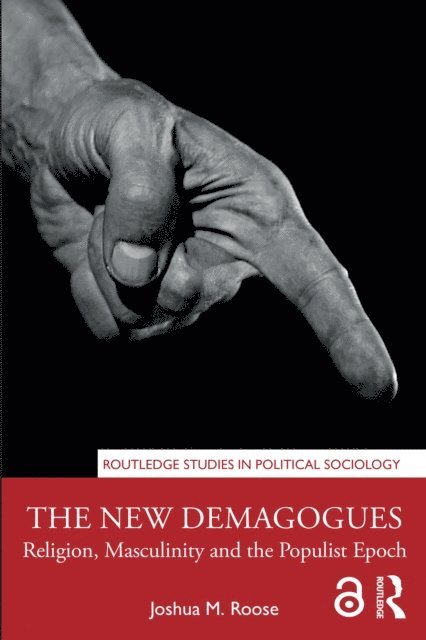
Chapter 4 of this book is freely available as a downloadable Open Access PDF under a Creative Commons Attribution-Non Commercial-No Derivatives 4.0 license available at http://www.taylorfrancis.com/books/e/9780429431197
Focused on the emergence of US President Donald Trump, the United Kingdom’s departure from the European Union, and the recruitment of Islamic State foreign fighters from Western Muslim communities, this book explores the ways in which the decay and corruption of key social institutions has created a vacuum of intellectual and moral guidance for working people and deprived them of hope and an upward social mobility long considered central to the social contract of Western liberal democracy. Examining the exploitation of this vacuum of leadership and opportunity by new demagogues, the author considers two important yet overlooked dimensions of this new populism: the mobilization of both religion and masculinity. By understanding religion as a dynamic social force that can be mobilized for purposes of social solidarity and by appreciating the sociological arguments that hyper-masculinity is caused by social injury, Roose considers how these key social factors have been particularly important in contributing to the emergence of the new demagogues and their followers. Roose identifies the challenges that this poses for Western liberal democracy and argues that states must look beyond identity politics and exclusively rights-based claims and, instead, consider classical conceptions of citizenship.
673 kr
Läs direkt efter köp
Chapter 4 of this book is freely available as a downloadable Open Access PDF under a Creative Commons Attribution-Non Commercial-No Derivatives 4.0 license available at http://www.taylorfrancis.com/books/e/9780429431197
Focused on the emergence of US President Donald Trump, the United Kingdom’s departure from the European Union, and the recruitment of Islamic State foreign fighters from Western Muslim communities, this book explores the ways in which the decay and corruption of key social institutions has created a vacuum of intellectual and moral guidance for working people and deprived them of hope and an upward social mobility long considered central to the social contract of Western liberal democracy. Examining the exploitation of this vacuum of leadership and opportunity by new demagogues, the author considers two important yet overlooked dimensions of this new populism: the mobilization of both religion and masculinity. By understanding religion as a dynamic social force that can be mobilized for purposes of social solidarity and by appreciating the sociological arguments that hyper-masculinity is caused by social injury, Roose considers how these key social factors have been particularly important in contributing to the emergence of the new demagogues and their followers. Roose identifies the challenges that this poses for Western liberal democracy and argues that states must look beyond identity politics and exclusively rights-based claims and, instead, consider classical conceptions of citizenship.
673 kr
Läs direkt efter köp
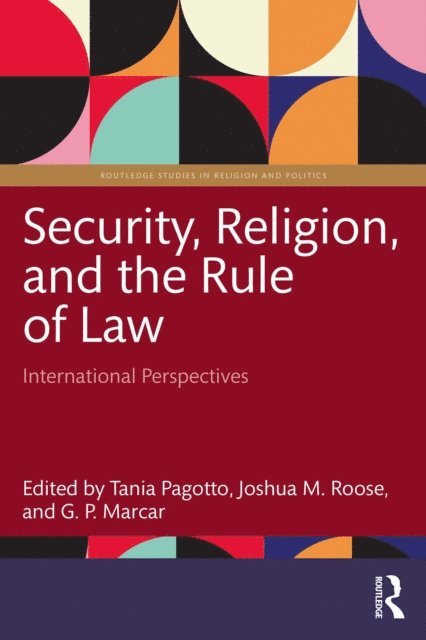
Security, Religion, and the Rule of Law argues that true, substantive, and sustainable national security is only possible through respect for the rule of law, human rights, and religious freedom.
Despite the emphasis on national security and the war on terror that has preoccupied governments for over two decades, nations – and the world – seem to be more divided than ever, with a concomitant impact of increasing the risk of terrorism and religious and political violence. The national security paradigm, previously reserved primarily for foreign threats, has been turned increasingly inwards, focusing on a state’s own citizens as potential threats. This is often along religious lines, threatening fundamental human freedoms. This book provides a series of critical engagements on some of the most pressing issues at the interface of religion and security today, including proposing a deeper engagement with theology when dealing with freedom of religious belief, exploring a better understanding between domestic peace and international relations, abiding by the rule of law while countering terrorism, and developing a broader understanding of identities and of the nature of citizenship. It provides the resources to further reflect upon and address these topics, as well as stimulate further discussions on religion and security matters across a range of different disciplines. Wide-ranging case studies consider Australia, China, Europe, the Kurdish people, Nigeria, Russia, Ukraine, the United Nations, and the United States.
This book will appeal to students and scholars across a range of disciplines, including international relations, law, philosophy, political science, religious studies, security studies, and theology. It will also appeal to human rights lawyers, judges, NGO researchers, governmental agency specialists, and policy makers.
Chapter 5 of this book is freely available as a downloadable Open Access PDF at http://www.taylorfrancis.com under a Creative Commons Attribution-Non Commercial-No Derivatives (CC-BY-NC-ND) 4.0 license.
673 kr
Läs direkt efter köp
Security, Religion, and the Rule of Law argues that true, substantive, and sustainable national security is only possible through respect for the rule of law, human rights, and religious freedom.
Despite the emphasis on national security and the war on terror that has preoccupied governments for over two decades, nations – and the world – seem to be more divided than ever, with a concomitant impact of increasing the risk of terrorism and religious and political violence. The national security paradigm, previously reserved primarily for foreign threats, has been turned increasingly inwards, focusing on a state’s own citizens as potential threats. This is often along religious lines, threatening fundamental human freedoms. This book provides a series of critical engagements on some of the most pressing issues at the interface of religion and security today, including proposing a deeper engagement with theology when dealing with freedom of religious belief, exploring a better understanding between domestic peace and international relations, abiding by the rule of law while countering terrorism, and developing a broader understanding of identities and of the nature of citizenship. It provides the resources to further reflect upon and address these topics, as well as stimulate further discussions on religion and security matters across a range of different disciplines. Wide-ranging case studies consider Australia, China, Europe, the Kurdish people, Nigeria, Russia, Ukraine, the United Nations, and the United States.
This book will appeal to students and scholars across a range of disciplines, including international relations, law, philosophy, political science, religious studies, security studies, and theology. It will also appeal to human rights lawyers, judges, NGO researchers, governmental agency specialists, and policy makers.
Chapter 5 of this book is freely available as a downloadable Open Access PDF at http://www.taylorfrancis.com under a Creative Commons Attribution-Non Commercial-No Derivatives (CC-BY-NC-ND) 4.0 license.
599 kr
Skickas inom 10-15 vardagar
2 193 kr
Skickas inom 10-15 vardagar
1 190 kr
Skickas inom 10-15 vardagar
1 575 kr
Läs direkt efter köp
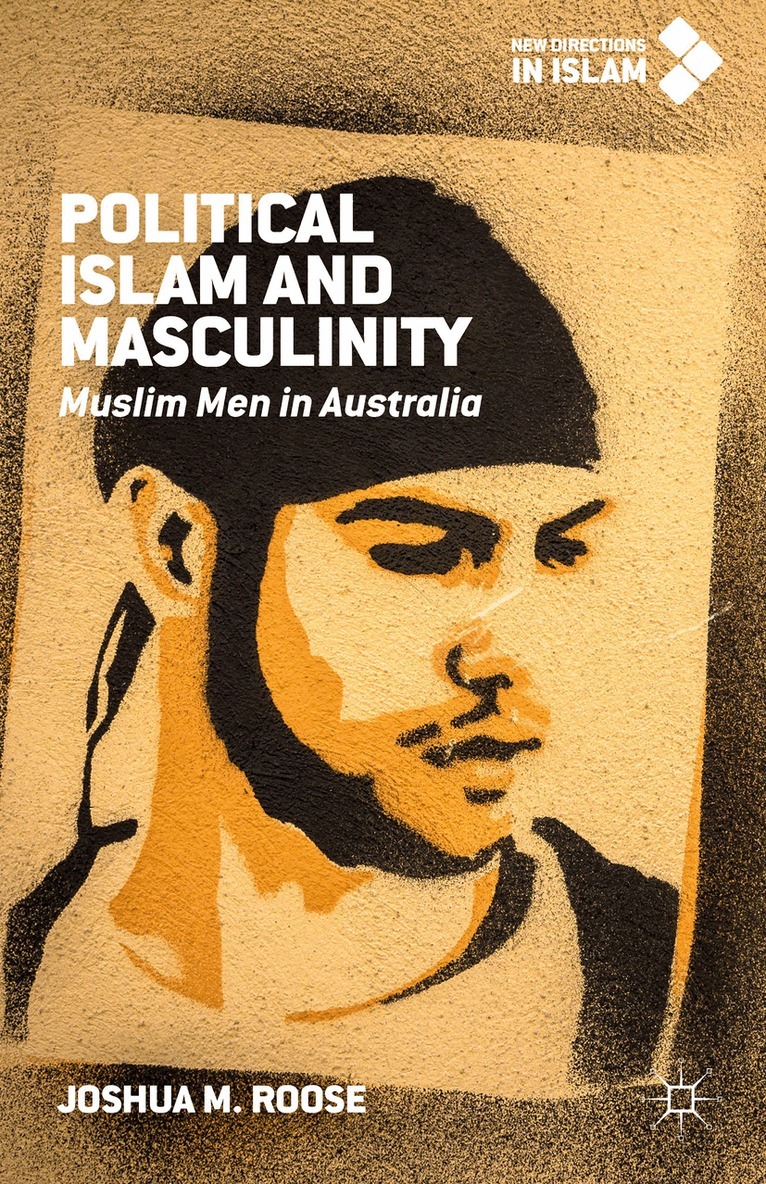
The question of Muslim identity–and, more specifically, Muslim masculinities, political loyalty, and action–has become the central pivot for the debate on the place of Islam in the West, state polices on multiculturalism, and even foreign policy towards the Middle East. Young, western-born Muslim men are central figures in these questions, yet their lives and identities remain poorly understood. Political Islam and Masculinity: Muslim Men in Australia reveals important and timely insights into why young Muslim men, often from very similar social backgrounds, are pursuing such dramatically different political paths in the name of Islam. Based on an unprecedented depth of engagement and quality of sources, this book examines the key social influences behind exceptional examples of political action by young Australian Muslim men who have extended their reach into the international realm, from the streets of Jakarta to the battlefields of Syria and Iraq.
2 193 kr
Skickas inom 10-15 vardagar
599 kr
Skickas inom 10-15 vardagar
523 kr
Skickas inom 5-8 vardagar
791 kr
Läs direkt efter köp
This book explores men''s attraction to violent extremist movements and terrorism.
Drawing on multi-method, interdisciplinary research, this book explores the centrality of masculinity to violent extremist recruitment narratives across the religious and political spectrum. Chapters examine the intersection of masculinity and violent extremism across a spectrum of movements including: the far right, Islamist organizations, male supremacist groups, and the far left. The book identifies key sites and points at which the construction of masculinity intersects with, stands in contrast to and challenges extremist representations of masculinity. It offers an insight into where the potential appeal of extremist narratives can be challenged most effectively and identifies areas for both policy making and future research.