Jozef T. Haponiuk – författare
1 839 kr
Skickas inom 10-15 vardagar
Polyurethane Polymers: Blends and Interpenetrating Networks deals with almost all aspects of blends and IPNs formed by polyurethane, including the thermal, mechanical, morphological, and viscoelastic properties of each blend presented in the book. In addition, major applications related to these blends and IPNs are mentioned.
Provides an elaborate coverage of the chemistry of polyurethane, including its synthesis and properties Includes available characterization techniques Relates types of polyurethanes to their potential properties Discusses blends options1 739 kr
Skickas inom 10-15 vardagar
Polyurethane Polymers: Composites and Nanocomposites concentrates on the composites and nanocomposites of polyurethane based materials. Polyurethane composites are a very important class of materials widely used in the biomedical and industrial field that offer numerous potential applications in many areas. This book discusses current research and identifies future research needs in the area.
Provides an elaborate coverage of the chemistry of polyurethane, its synthesis, and properties Includes available characterization techniques Relates types of polyurethanes to their potential properties Discusses composites, nanocomposites options, and PU recycling2 225 kr
Läs direkt efter köp
2 225 kr
Läs direkt efter köp
2 437 kr
Skickas inom 10-15 vardagar
3 349 kr
Läs direkt efter köp
2 499 kr
Skickas inom 10-15 vardagar
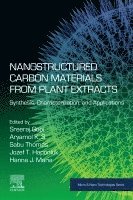
Nanostructured Carbon Materials from Plant Extracts: Synthesis, Characterization, and Applications guides the reader through the preparation and utilization of carbon nanomaterials based on various biomass sources, including fruits, vegetables, leaves, pulp and other plant extracts. The book covers the fundamentals of nanostructured carbon materials and synthesis methods from a range of plant sources. Other chapters focus on characterization, analysis, simulation and modeling in order to prepare plant extract based carbon nanomaterials with the required properties. Final sections highlight key application areas, presenting methods and approaches to prepare these materials for specific uses. This book will be of interest to researchers and advanced students across nanomaterials, polymer science, composite science, sustainable materials, chemistry, chemical engineering, and materials science, as well as industrial scientists, engineers, and R&D professionals with an interest in sustainable carbon nanomaterials.
Explains the synthesis of carbon nanomaterials from fruit extracts, vegetables, leaves and other plant sourcesCovers functionalization, characterization, properties, simulation and modeling, and lifecycle in detailExplores a range of applications, including biomedicine, electronics, energy, the environment, and more3 165 kr
Läs direkt efter köp
2 535 kr
Kommande
1 009 kr
Läs direkt efter köp
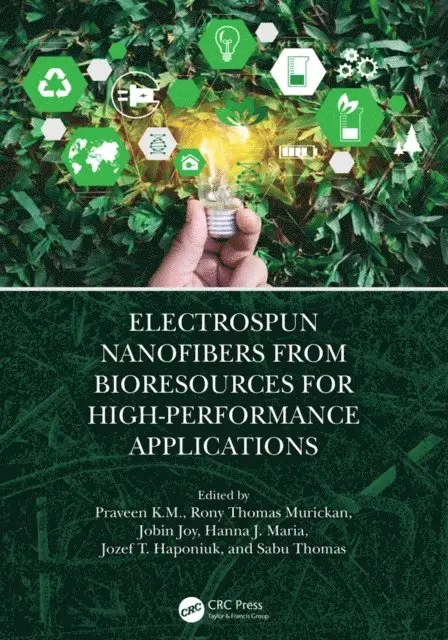
Nanofibers are possible solutions for a wide spectrum of research and commercial applications and utilizing inexpensive bio-renewable and agro waste materials to produce nanofibers can lower manufacturing cost via electrospinning. This book explains synthesis of green, biodegradable, and environmentally friendly nanofibers from bioresources, their mechanical and morphological characteristics along with their applications across varied areas. It gives an elaborate idea on conductive polymers for tissue engineering application as well.
Features:
Provides insight about electrospun nanofibers from green, biodegradable and environmentally friendly bio resources.
Reviews surface characterization of electrospun fibers.
Covers diversified applications such as cancer treatment, COVID-19 solutions, food packaging applications, textile materials, and flexible electronic devices.
Describes the combined use of 3D printing and electrospinning for tissue engineering scaffolds.
Includes Melt electrospinning technique and its advantages over Solution electrospinning
This book aims at Researchers and Graduate Students in Material Science and Engineering, Environmental Engineering, Chemical Engineering, Electrical Engineering, Mechanical Engineering, and Biomedical Engineering.
974 kr
Läs direkt efter köp
Nanofibers are possible solutions for a wide spectrum of research and commercial applications and utilizing inexpensive bio-renewable and agro waste materials to produce nanofibers can lower manufacturing cost via electrospinning. This book explains synthesis of green, biodegradable, and environmentally friendly nanofibers from bioresources, their mechanical and morphological characteristics along with their applications across varied areas. It gives an elaborate idea on conductive polymers for tissue engineering application as well.
Features:
Provides insight about electrospun nanofibers from green, biodegradable and environmentally friendly bio resources.
Reviews surface characterization of electrospun fibers.
Covers diversified applications such as cancer treatment, COVID-19 solutions, food packaging applications, textile materials, and flexible electronic devices.
Describes the combined use of 3D printing and electrospinning for tissue engineering scaffolds.
Includes Melt electrospinning technique and its advantages over Solution electrospinning
This book aims at Researchers and Graduate Students in Material Science and Engineering, Environmental Engineering, Chemical Engineering, Electrical Engineering, Mechanical Engineering, and Biomedical Engineering.
2 420 kr
Skickas inom 10-15 vardagar
891 kr
Skickas inom 10-15 vardagar
1 957 kr
Skickas inom 10-15 vardagar
1 171 kr
Skickas inom 10-15 vardagar
1 845 kr
Skickas inom 10-15 vardagar
2 132 kr
Skickas inom 10-15 vardagar
2 637 kr
Skickas inom 5-8 vardagar
2 358 kr
Läs direkt efter köp
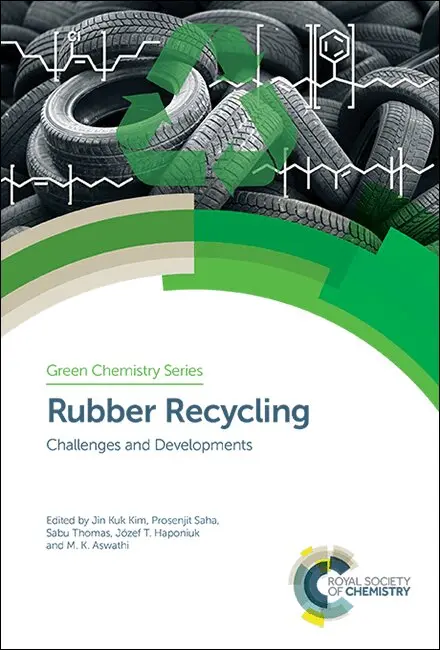
Rubber is used in a vast number of products, from tyres on vehicles to disposable surgical gloves. Increasingly both manufacturers and legislators are realising that recycling is essential for environmental sustainability and can improve the cost of manufacture. The volume of rubber waste produced globally makes it difficult to manage as accumulated waste rubber, especially in the form of tyres, can pose a significant fire risk. Recycling rubber not only prevents this problem but can produce new materials with desirable properties that virgin rubbers lack.
This book presents an up-to-date overview of the fundamental and applied aspects of renewability and recyclability of rubber materials, emphasising existing recycling technologies with significant potential for future applications along with a detailed outline of new technology based processing of rubber to reuse and recycle. This book will be of interest to researchers in both academia and industry as well as postgraduate students working in polymer chemistry, materials processing, materials science and engineering.
2 358 kr
Läs direkt efter köp
Rubber is used in a vast number of products, from tyres on vehicles to disposable surgical gloves. Increasingly both manufacturers and legislators are realising that recycling is essential for environmental sustainability and can improve the cost of manufacture. The volume of rubber waste produced globally makes it difficult to manage as accumulated waste rubber, especially in the form of tyres, can pose a significant fire risk. Recycling rubber not only prevents this problem but can produce new materials with desirable properties that virgin rubbers lack.
This book presents an up-to-date overview of the fundamental and applied aspects of renewability and recyclability of rubber materials, emphasising existing recycling technologies with significant potential for future applications along with a detailed outline of new technology based processing of rubber to reuse and recycle. This book will be of interest to researchers in both academia and industry as well as postgraduate students working in polymer chemistry, materials processing, materials science and engineering.
3 260 kr
Skickas inom 5-8 vardagar
2 242 kr
Läs direkt efter köp
2 242 kr
Läs direkt efter köp