Prosenjit Saha – författare
2 286 kr
Skickas inom 5-8 vardagar
2 697 kr
Läs direkt efter köp
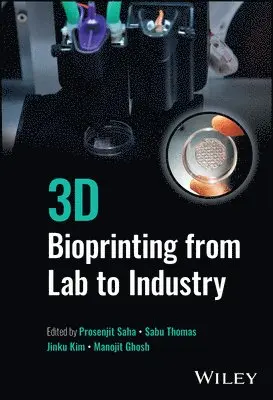
A complete overview of bioprinting, from fundamentals and essential topics to recent advances and future applications
Additive manufacturing, also known as 3D printing, is one of the most transformative technological processes to emerge in recent decades. Its layer-by-layer construction method can create objects to remarkably precise specifications with minimal waste or energy consumption. Bioprinting, a related process that employs cells and biomaterials instead of man-made substances or industrial materials, has a range of biomedical and chemical uses that make it an exciting and fast-growing area of research.
3D Bioprinting from Lab to Industry offers a cutting-edge overview of this topic, its recent advances, and its future applications. Taking an interdisciplinary approach to a flourishing research field, this book exceeds all existing treatments of the subject in its scope and comprehensiveness. Moving from fundamental principles of the technology to its immense future potential, this is a must-own volume for scientists looking to incorporate this process into their research or product development.
3D Bioprinting from Lab to Industry readers will also find:
Treatment of printing parameters, surface topography requirements, and much more Detailed discussion of topics including 5D printing in the medical field, dynamic tuning, the multi-material extrusion approach, and many others A complete account of the bioprinting process, from lab requirements to commercialization3D Bioprinting from Lab to Industry is ideal for researchers—graduate and post-doctoral scholars—in the areas of materials science, biomedical engineering, chemical engineering, biotechnology, and biochemistry.
2 673 kr
Läs direkt efter köp
A complete overview of bioprinting, from fundamentals and essential topics to recent advances and future applications
Additive manufacturing, also known as 3D printing, is one of the most transformative technological processes to emerge in recent decades. Its layer-by-layer construction method can create objects to remarkably precise specifications with minimal waste or energy consumption. Bioprinting, a related process that employs cells and biomaterials instead of man-made substances or industrial materials, has a range of biomedical and chemical uses that make it an exciting and fast-growing area of research.
3D Bioprinting from Lab to Industry offers a cutting-edge overview of this topic, its recent advances, and its future applications. Taking an interdisciplinary approach to a flourishing research field, this book exceeds all existing treatments of the subject in its scope and comprehensiveness. Moving from fundamental principles of the technology to its immense future potential, this is a must-own volume for scientists looking to incorporate this process into their research or product development.
3D Bioprinting from Lab to Industry readers will also find:
Treatment of printing parameters, surface topography requirements, and much more Detailed discussion of topics including 5D printing in the medical field, dynamic tuning, the multi-material extrusion approach, and many others A complete account of the bioprinting process, from lab requirements to commercialization3D Bioprinting from Lab to Industry is ideal for researchers—graduate and post-doctoral scholars—in the areas of materials science, biomedical engineering, chemical engineering, biotechnology, and biochemistry.
2 545 kr
Skickas inom 5-8 vardagar
2 275 kr
Läs direkt efter köp
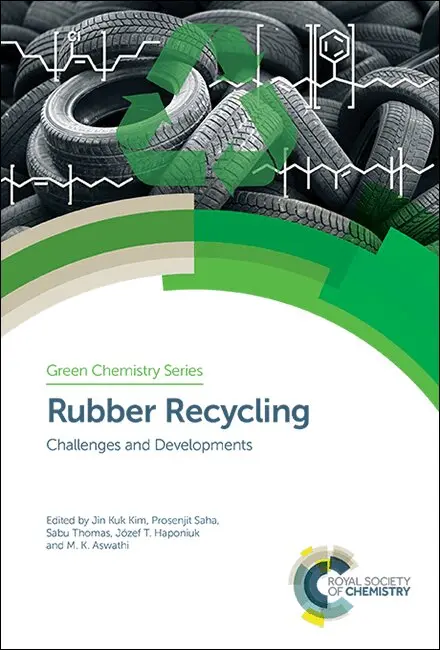
Rubber is used in a vast number of products, from tyres on vehicles to disposable surgical gloves. Increasingly both manufacturers and legislators are realising that recycling is essential for environmental sustainability and can improve the cost of manufacture. The volume of rubber waste produced globally makes it difficult to manage as accumulated waste rubber, especially in the form of tyres, can pose a significant fire risk. Recycling rubber not only prevents this problem but can produce new materials with desirable properties that virgin rubbers lack.
This book presents an up-to-date overview of the fundamental and applied aspects of renewability and recyclability of rubber materials, emphasising existing recycling technologies with significant potential for future applications along with a detailed outline of new technology based processing of rubber to reuse and recycle. This book will be of interest to researchers in both academia and industry as well as postgraduate students working in polymer chemistry, materials processing, materials science and engineering.
2 275 kr
Läs direkt efter köp
Rubber is used in a vast number of products, from tyres on vehicles to disposable surgical gloves. Increasingly both manufacturers and legislators are realising that recycling is essential for environmental sustainability and can improve the cost of manufacture. The volume of rubber waste produced globally makes it difficult to manage as accumulated waste rubber, especially in the form of tyres, can pose a significant fire risk. Recycling rubber not only prevents this problem but can produce new materials with desirable properties that virgin rubbers lack.
This book presents an up-to-date overview of the fundamental and applied aspects of renewability and recyclability of rubber materials, emphasising existing recycling technologies with significant potential for future applications along with a detailed outline of new technology based processing of rubber to reuse and recycle. This book will be of interest to researchers in both academia and industry as well as postgraduate students working in polymer chemistry, materials processing, materials science and engineering.
568 kr
Skickas inom 3-6 vardagar
Multicomponent Polymeric Materials
1 925 kr
Skickas inom 10-15 vardagar
2 435 kr
Läs direkt efter köp
Multicomponent Polymeric Materials
1 925 kr
Skickas inom 10-15 vardagar