J.P. Phillips – författare
Visar alla böcker från författaren . Handla med fri frakt och snabb leverans.
5 produkter
5 produkter
E-bok
Engelska, 2010120 kr
Läs direkt efter köp
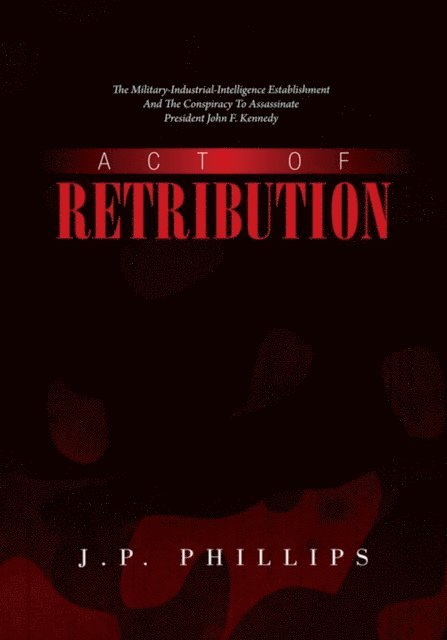
My quest for an answer to the riddle of President Kennedys assassination first began in April 1967 following a talk given by Warren Commission critic and best-selling author, Mark Lane at Michigan State University where I was a graduate student. My search has lasted well over twenty years. Gathering every scrap of information I could find on the assassination, I have arrived at what I believe is the most credible thesis to date. As a result of meticulous research, I am able to identify probable suspects in what I have come to believe was a far-reaching conspiracy which involved not only renegade elements from the CIA and organized crime figures, but one which extended to the highest echelons of the U. S. government. By pulling together existing knowledge of the assassination, while introducing new evidence, my book focuses primarily on six main principals (persons of interest), their motives and their activities in relation to the assassination and the links that connect them:1.LEE HARVEY OSWALD: Accused by the Warren CommissionIn 1964 of being the sole assassin of President Kennedy.2.JACK RUBY: Dallas night-club owner who, two days followingthe Presidents assassination, shot and killed Oswald.3.CARLOS MARCELLO: Reputed crime boss of the New Orleans-Dallas Mafia during the time of the assassination.4.GENERAL CHARLES PEARE CABELL: Deputy Director of theCIA from 1953 to 1962 when he was dismissed by President Kennedyalong with other high-ranking intelligence officials for the failure ofthe Bay of Pigs invasion.5.EARLE CABELL: Younger brother of General Charles P. Cabell whowas Mayor of Dallas the day President Kennedy was assassinated.6.FRED KORTH: Fort Worth businessman and banker who was Secretary of the Navy from 1962 to October 1963 when he was forced by President Kennedy to resign for his involvement in the TFX controversy. As to the motives of those individuals involved in the Presidents murder, I believe that the assassination was planned and carried out with a dual purpose in mind: 1.as an act of vengeance by those ex-high government officialswho were dismissed by the President either for alleged wrongdoing as in the case of Fred Korth, or for incompetence as in General Cabells case. 2.to prevent the Presidents domestic and foreign policies-particularly in reference to his stand on the Vietnam conflict- from being implemented. Viewed in this light, the assassination of President Kennedy was an act of retribution by a group of mean-spirited, vengeance-seeking individuals who acted in the misguided belief that by assassinating this president they were furthering the national interest. Notwithstanding his immense popularity with the American people, President Kennedy was perceived by his killers to be a clear and present danger to the country and to its interests at home and abroad for several reasonsfor his stand on civil rights and racial equality; for his attempt to closely regulate the oil and gas industry; for his desire to normalize relations with Cuba; for his desire to ease tensions between the superpowers through a reduction in armaments; for his crackdown on organized crime; for his stated intention to withdraw U.S. forces from Vietnam. Removing him from office by political murder, therefore, excused his killers in their own eyes from any wrongdoing, for by killing this President, they were convinced that they were acting in the national interest against the seemingly dangerous policies of a chief executive who, if allowed to finish his presidency, would lead the nation to ruin. A wise mind will never censure anyone for having employed any extraordinary means for {preserving} a kingdom. Believing, like Machiavelli, that they were acting to preserve and maint
E-bok
PDF, Engelska, 2013807 kr
Läs direkt efter köp
The advent of biotechnology has the potential to develop a variety of novel or better quality products for the treatment of a large number of diseases in livestock. In addition, as we understand more about the reproductive physiology of animals, the potential exists to dramatically increase the productivity of animals through better therapeutics and diagnostics for the control of many infectious diseases. Productivity can also be increased through animal breeding strategies including gene transfer, micromanipulation of embryos and gamete sex selection. As well as being a valuable reference to current knowledge in these areas, this first supplement to Comprehensive Biotechnology also looks at societal concerns over the use of antibiotics and chemical residues in meat and milk products, which are forcing biotechnologists to investigate more natural means of controlling infection by stimulating the animal''s own immune system to combat infection. The identification of a variety of cytokines which are involved in regulating immune responses provides opportunities to use the animal''s natural defence mechanisms to combat many infections or increase the animal''s resistance to such infections. These approaches should provide tools for eventual elimination of specific diseases from counties, regions or whole continents.
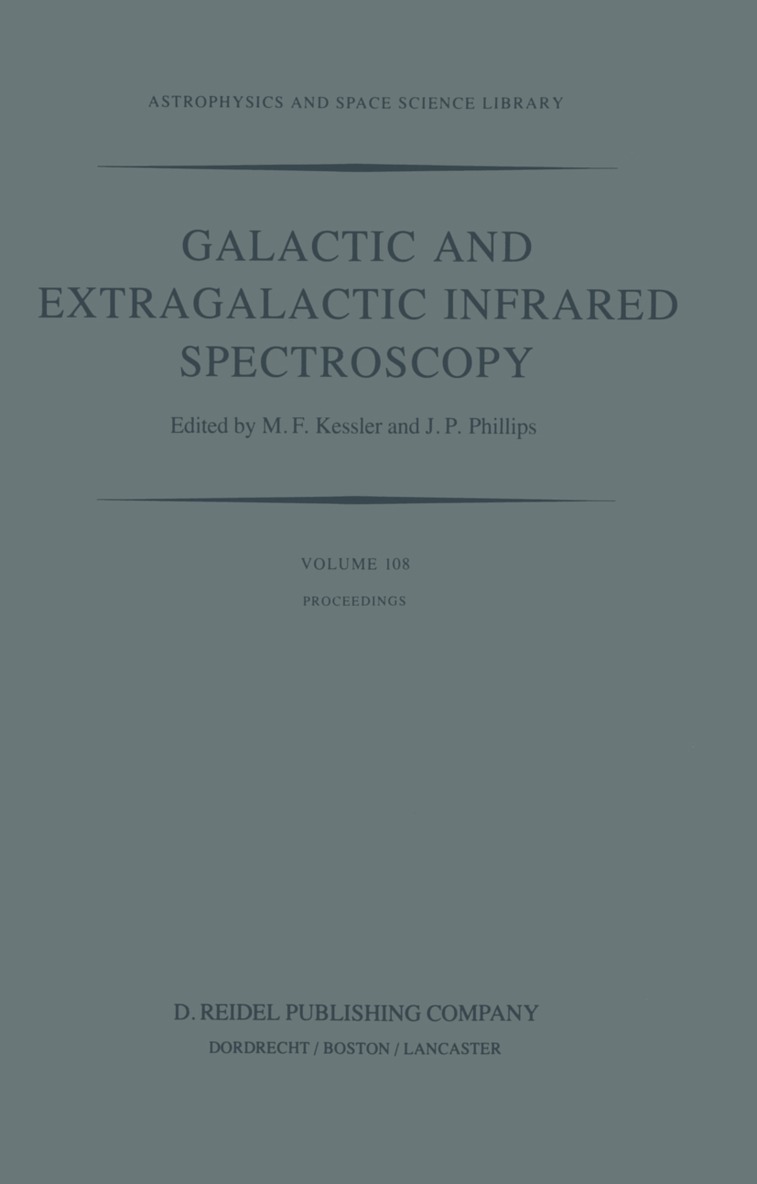
Del 108 - Astrophysics and Space Science Library
Galactic and Extragalactic Infrared Spectroscopy
Proceedings of the XVIth ESLAB Symposium, held in Toledo, Spain, December 6–8, 1982
Inbunden, Engelska, 1983
1 627 kr
Skickas inom 10-15 vardagar
The last major conference on infrared astronomy was the IAU Symposium No. 96 in June 1980. Since then, the discipline has continued to mature and to contribute to all branches of astrophysics. One particular area of growth has been in spectroscopic capabilities at all infrared wavelengths. The purpose of the Symposium in Toledo was to review the scientific questions to be addressed via infrared spectroscopy and to provide, in the proceedings, a useful summary of the field. The sensitivity of infrared spectroscopic observations is still generally limited by detector characteristics or by thermal background radiation. However in recent years improvements in detector technology together with developments in spectroscopic instrumentation have made possible both quite detailed spectroscopy of the brighter members of many classes of galactic sources and also begun to open up some infrared spectroscopy of extragalactic sources. The potential of the field in the next decade or two is clear. The lRAS mission has completed one of the pre-requisites, namely an all-sky photometric survey. Major space missions utilising cryogenic infrared telescopes have been approved in Europe (ISO) and seem likely in the USA (SIRTF); plans for space submillimeter telescopes are firming up. On the ground large telescopes optimized for infrared observations are now in operation at high altitude sites and specialized submillimeter facilities are under construction. The particular advantages of planned, very large telescopes for infrared observations are widely accepted.
E-bok
PDF, Engelska, 20122 049 kr
Läs direkt efter köp
The last major conference on infrared astronomy was the IAU Symposium No. 96 in June 1980. Since then, the discipline has continued to mature and to contribute to all branches of astrophysics. One particular area of growth has been in spectroscopic capabilities at all infrared wavelengths. The purpose of the Symposium in Toledo was to review the scientific questions to be addressed via infrared spectroscopy and to provide, in the proceedings, a useful summary of the field. The sensitivity of infrared spectroscopic observations is still generally limited by detector characteristics or by thermal background radiation. However in recent years improvements in detector technology together with developments in spectroscopic instrumentation have made possible both quite detailed spectroscopy of the brighter members of many classes of galactic sources and also begun to open up some infrared spectroscopy of extragalactic sources. The potential of the field in the next decade or two is clear. The lRAS mission has completed one of the pre-requisites, namely an all-sky photometric survey. Major space missions utilising cryogenic infrared telescopes have been approved in Europe (ISO) and seem likely in the USA (SIRTF); plans for space submillimeter telescopes are firming up. On the ground large telescopes optimized for infrared observations are now in operation at high altitude sites and specialized submillimeter facilities are under construction. The particular advantages of planned, very large telescopes for infrared observations are widely accepted.
Del 108 - Astrophysics and Space Science Library
Galactic and Extragalactic Infrared Spectroscopy
Proceedings of the XVIth ESLAB Symposium, held in Toledo, Spain, December 6–8, 1982
Häftad, Engelska, 2012
1 627 kr
Skickas inom 10-15 vardagar
The last major conference on infrared astronomy was the IAU Symposium No. 96 in June 1980. Since then, the discipline has continued to mature and to contribute to all branches of astrophysics. One particular area of growth has been in spectroscopic capabilities at all infrared wavelengths. The purpose of the Symposium in Toledo was to review the scientific questions to be addressed via infrared spectroscopy and to provide, in the proceedings, a useful summary of the field. The sensitivity of infrared spectroscopic observations is still generally limited by detector characteristics or by thermal background radiation. However in recent years improvements in detector technology together with developments in spectroscopic instrumentation have made possible both quite detailed spectroscopy of the brighter members of many classes of galactic sources and also begun to open up some infrared spectroscopy of extragalactic sources. The potential of the field in the next decade or two is clear. The lRAS mission has completed one of the pre-requisites, namely an all-sky photometric survey. Major space missions utilising cryogenic infrared telescopes have been approved in Europe (ISO) and seem likely in the USA (SIRTF); plans for space submillimeter telescopes are firming up. On the ground large telescopes optimized for infrared observations are now in operation at high altitude sites and specialized submillimeter facilities are under construction. The particular advantages of planned, very large telescopes for infrared observations are widely accepted.