Juan Pablo Scarfi - Böcker
Visar alla böcker från författaren Juan Pablo Scarfi. Handla med fri frakt och snabb leverans.
3 produkter
3 produkter
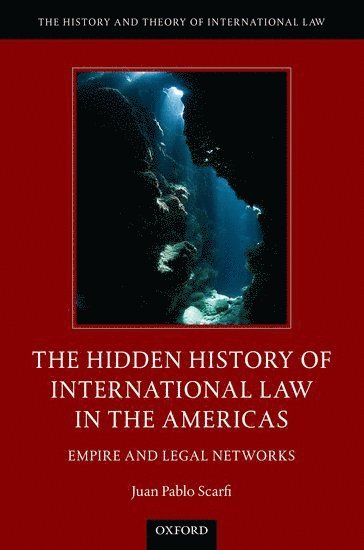
The Hidden History of International Law in the Americas
Empire and Legal Networks
Inbunden, Engelska, 2017
1 280 kr
Skickas inom 5-8 vardagar
International law has played a crucial role in the construction of imperial projects. Yet within the growing field of studies about the history of international law and empire, scholars have seldom considered this complicit relationship in the Americas. The Hidden History of International Law in the Americas offers the first exploration of the deployment of international law for the legitimization of U.S. ascendancy as an informal empire in Latin America. This book explores the intellectual history of a distinctive idea of American international law in the Americas, focusing principally on the evolution of the American Institute of International Law (AIIL). This organization was created by U.S. and Chilean jurists James Brown Scott and Alejandro Alvarez in Washington D.C. for the construction, development, and codification of international law across the Americas. Juan Pablo Scarfi examines the debates sparked by the AIIL over American international law, intervention and non-intervention, Pan-Americanism, the codification of public and private international law and the nature and scope of the Monroe Doctrine, as well as the international legal thought of Scott, Alvarez, and a number of jurists, diplomats, politicians, and intellectuals from the Americas. Professor Scarfi argues that American international law, as advanced primarily by the AIIL, was driven by a U.S.-led imperial aspiration of civilizing Latin America through the promotion of the international rule of law. By providing a convincing critical account of the legal and historical foundations of the Inter-American System, this book will stimulate debate among international lawyers, IR scholars, political scientists, and intellectual historians.
2 150 kr
Skickas inom 10-15 vardagar
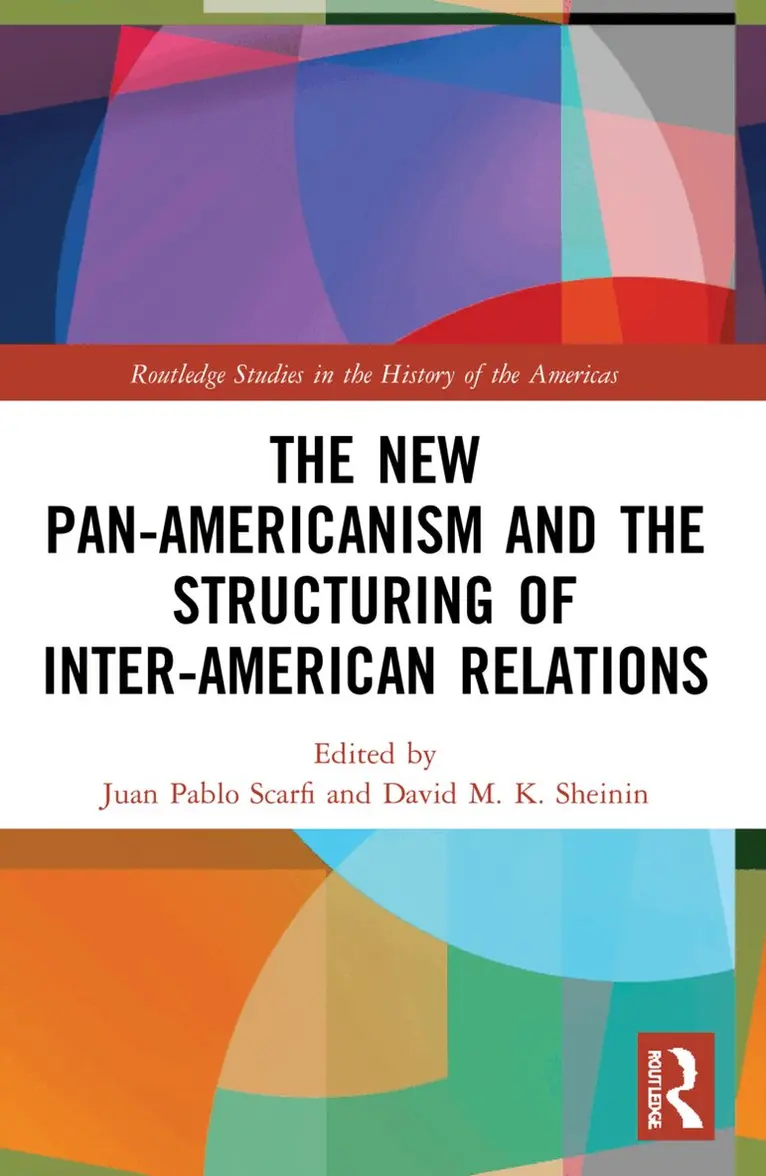
What is Pan-Americanism? People have been struggling with that problem for over a century. Pan-Americanism is (and has been) an amalgam of diplomatic, political, economic, and cultural projects under the umbrella of hemispheric cooperation and housed institutionally in the Pan-American Union, and later the Organization of American States. But what made Pan-Americanism exceptional? The chapters in this volume suggest that Pan-Americanism played a central and lasting role in structuring inter-American relations, because of the ways in which the movement was reinvented over time, and because the actors who shaped it often redefined and redeployed the term. Through the twentieth century, new appropriations of Pan-Americanism structured, restructured, and redefined inter-American relations. Taken together, these chapters underscore two exciting new shifts in how scholars and others have come to understand Pan-Americanism and inter-American relations. First, Pan-Americanism is increasingly understood not simply as a diplomatic, commercial, and economic forum, but a movement that has included cultural exchange. Second, researchers, political leaders, and the media in several countries have traditionally conceived of Pan-Americanism as a mechanism of US expansionism. This volume reimagines Pan-Americanism as a movement built by actors from all corners of the Americas.
593 kr
Skickas inom 10-15 vardagar
What is Pan-Americanism? People have been struggling with that problem for over a century. Pan-Americanism is (and has been) an amalgam of diplomatic, political, economic, and cultural projects under the umbrella of hemispheric cooperation and housed institutionally in the Pan-American Union, and later the Organization of American States. But what made Pan-Americanism exceptional? The chapters in this volume suggest that Pan-Americanism played a central and lasting role in structuring inter-American relations, because of the ways in which the movement was reinvented over time, and because the actors who shaped it often redefined and redeployed the term. Through the twentieth century, new appropriations of Pan-Americanism structured, restructured, and redefined inter-American relations. Taken together, these chapters underscore two exciting new shifts in how scholars and others have come to understand Pan-Americanism and inter-American relations. First, Pan-Americanism is increasingly understood not simply as a diplomatic, commercial, and economic forum, but a movement that has included cultural exchange. Second, researchers, political leaders, and the media in several countries have traditionally conceived of Pan-Americanism as a mechanism of US expansionism. This volume reimagines Pan-Americanism as a movement built by actors from all corners of the Americas.