David M. K. Sheinin - Böcker
Visar alla böcker från författaren David M. K. Sheinin. Handla med fri frakt och snabb leverans.
6 produkter
6 produkter
587 kr
Skickas inom 7-10 vardagar
In the first English-language survey of Argentine-U.S. relations to appear in more than a decade, David M. K. Sheinin challenges the accepted view that confrontation has been the characteristic state of affairs between the two countries. Sheinin draws on both Spanish- and English-language sources in the United States, Argentina, Canada, and Great Britain to provide a broad perspective on the two centuries of shared U.S.-Argentine history with fresh focus in particular on cultural ties, nuclear politics in the cold war era, the politics of human rights, and Argentina's exit in 1991 from the nonaligned movement.From the perspectives of both countries, Sheinin discusses such topics as Pan-Americanism, petroleum, communism and fascism, and foreign debt. Although the general trajectory of the two countries' relationship has been one of cooperative interaction based on generally strong and improving commercial and financial ties, shared strategic interests, and vital cultural contacts, Sheinin also emphasizes episodes of strained ties. These include the Cuban Revolution, the Dirty War of the late 1970s and early 1980s, and the Falklands/Malvinas War. In his epilogue, Sheinin examines Argentina's monetary crash of December 2001, when the United States-in a major policy shift-refused to come to Argentina's rescue.
663 kr
Skickas inom 7-10 vardagar
Perhaps no other activity is more synonymous with passion, identity, bodily ideals, and the power of place than sport. As the essays in this volume show, the function of sport as a historical and cultural marker is particularly relevant in Latin America. From the late nineteenth century to the present, the contributors reveal how sport opens a wide window into local, regional, and national histories. The essays examine the role of sport as a political vehicle, in claims to citizenship, as a source of community and ethnic pride, as a symbol of masculinity or feminism, as allegorical performance, and in many other purposes.Sports Culture in Latin American History juxtaposes analyses of better-known activities such as boxing and soccer with first peoples' athletics in Argentina, Cholita wrestling in Bolivia, the African-influenced martial art of capoeira, Japanese Brazilian gateball, the "Art Deco" body ideal for postrevolutionary Mexican women, Jewish soccer fans in Argentina and transgressive behavior at matches, and other topics. The contributors view the local origins and adaptations of these athletic activities and their significance as insightful narrators of history and culture.
663 kr
Skickas inom 7-10 vardagar
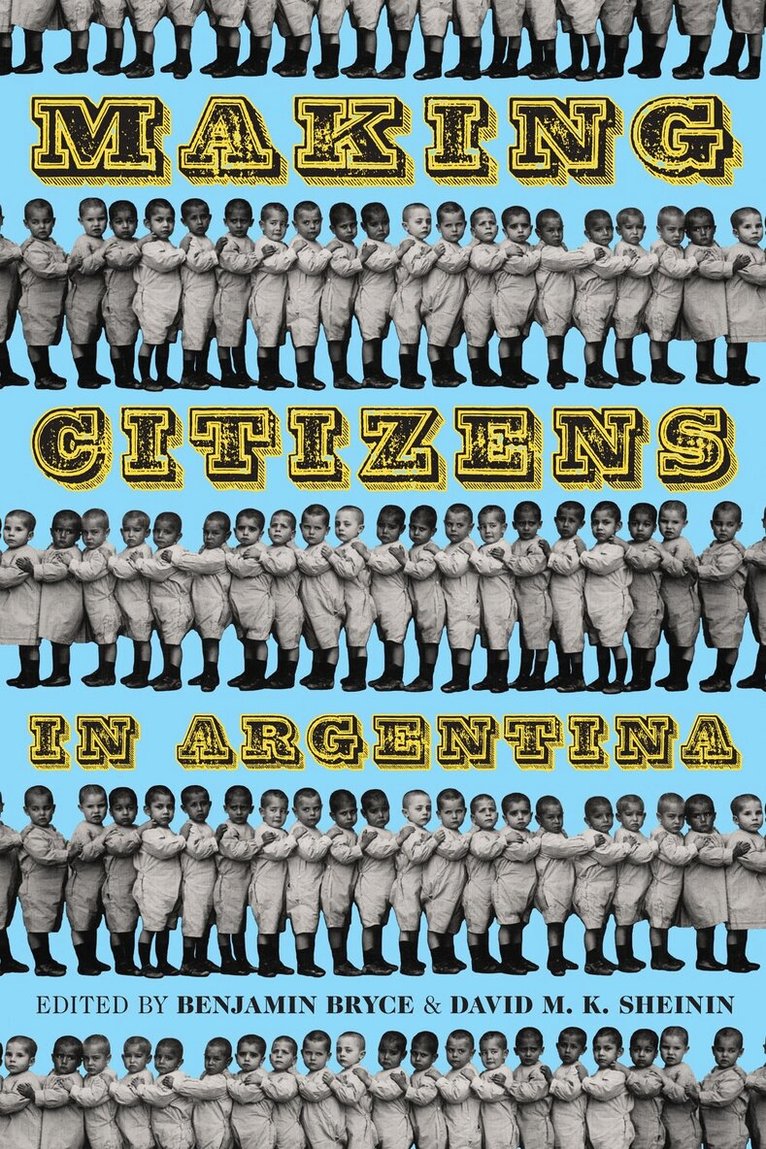
Making Citizens in Argentina charts the evolving meanings of citizenship in Argentina from the 1880s to the 1980s. Against the backdrop of immigration, science, race, sport, populist rule, and dictatorship, the contributors analyze the power of the Argentine state and other social actors to set the boundaries of citizenship. They also address how Argentines contested the meanings of citizenship over time, and demonstrate how citizenship came to represent a great deal more than nationality or voting rights. In Argentina, it defined a person's relationships with, and expectations of, the state. Citizenship conditioned the rights and duties of Argentines and foreign nationals living in the country. Through the language of citizenship, Argentines explained to one another who belonged and who did not. In the cultural, moral, and social requirements of citizenship, groups with power often marginalized populations whose societal status was more tenuous. Making Citizens in Argentina also demonstrates how workers, politicians, elites, indigenous peoples, and others staked their own claims to citizenship.
2 150 kr
Skickas inom 10-15 vardagar
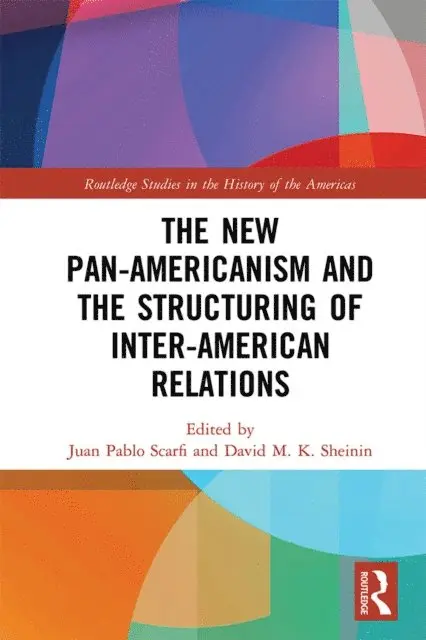
What is Pan-Americanism? People have been struggling with that problem for over a century. Pan-Americanism is (and has been) an amalgam of diplomatic, political, economic, and cultural projects under the umbrella of hemispheric cooperation and housed institutionally in the Pan-American Union, and later the Organization of American States. But what made Pan-Americanism exceptional? The chapters in this volume suggest that Pan-Americanism played a central and lasting role in structuring inter-American relations, because of the ways in which the movement was reinvented over time, and because the actors who shaped it often redefined and redeployed the term. Through the twentieth century, new appropriations of Pan-Americanism structured, restructured, and redefined inter-American relations. Taken together, these chapters underscore two exciting new shifts in how scholars and others have come to understand Pan-Americanism and inter-American relations. First, Pan-Americanism is increasingly understood not simply as a diplomatic, commercial, and economic forum, but a movement that has included cultural exchange. Second, researchers, political leaders, and the media in several countries have traditionally conceived of Pan-Americanism as a mechanism of US expansionism. This volume reimagines Pan-Americanism as a movement built by actors from all corners of the Americas.
593 kr
Skickas inom 10-15 vardagar
What is Pan-Americanism? People have been struggling with that problem for over a century. Pan-Americanism is (and has been) an amalgam of diplomatic, political, economic, and cultural projects under the umbrella of hemispheric cooperation and housed institutionally in the Pan-American Union, and later the Organization of American States. But what made Pan-Americanism exceptional? The chapters in this volume suggest that Pan-Americanism played a central and lasting role in structuring inter-American relations, because of the ways in which the movement was reinvented over time, and because the actors who shaped it often redefined and redeployed the term. Through the twentieth century, new appropriations of Pan-Americanism structured, restructured, and redefined inter-American relations. Taken together, these chapters underscore two exciting new shifts in how scholars and others have come to understand Pan-Americanism and inter-American relations. First, Pan-Americanism is increasingly understood not simply as a diplomatic, commercial, and economic forum, but a movement that has included cultural exchange. Second, researchers, political leaders, and the media in several countries have traditionally conceived of Pan-Americanism as a mechanism of US expansionism. This volume reimagines Pan-Americanism as a movement built by actors from all corners of the Americas.
1 177 kr
Skickas inom 10-15 vardagar
The violence of combat sports left a mark on how fans and communities remembered athletes. As individual endeavors, combat sports have often produced more detailed, emotionally poignant, and deeply personal stories of triumph than those associated with team sports. Commemorative statues to combat athletes are therefore unique as historical markers and sites of memory. These statues tell remarkable stories of the athletes themselves, but also the people and communities that planned and built them, the cities and towns that memorialized them, the fans who followed them, and the evolution of memory and place in the decades that followed their inauguration. Edited by C. Nathan Hatton and David M. K. Sheinin, The Statues and Legacies of Combat Athletes in the Americas brings together an interdisciplinary team of scholars from across North America to interrogate the intimate and layered meanings attached to these monuments to the lives and legacies of combat athletes.