Judith Hangartner – författare
Visar alla böcker från författaren Judith Hangartner. Handla med fri frakt och snabb leverans.
6 produkter
6 produkter
Inbunden, Engelska, 2023
2 117 kr
Skickas inom 10-15 vardagar
This book provides a thorough and detailed analysis of how the figure of the ‘autonomous learner’ shapes educational practices. It unpacks the impact of current educational reform discourse that focuses on the individual pupil as a learner, while neglecting the social dimensions of classroom practices. In view of the yet unknown requirements of the knowledge economy, students are demanded to take more responsibility for their learning and to become self-reliant, independent, lifelong learners. In turn, teachers are asked to tailor education to the individual needs of their students and to foster their individual learning trajectories. Based on in-depth fieldwork and long-term observation of interactions in classrooms and other scholastic settings, scholars from three European countries – France, Germany and Switzerland – show how the translation of the figure of the ‘autonomous learner’ into classrooms is shaped by distinct cultural traditions. Chapters analyse teaching routines and conceptions of self-reliance involved in autonomy-oriented settings and discuss how these change the sociality of the classroom. They scrutinize how autonomy is used to differentiate between students and how it contributes to the reproduction of social inequality. The book brings into dialogue two neighbouring research traditions that research autonomous learning from a sociological perspective and which have largely ignored each other until now. In so doing, the contributions engage a critical perspective for a careful empirical analysis in order to better understand what is being done in the name of autonomy. Providing insight into the many facets of developing and nurturing self-standing pupils across various educational contexts, this is ideal reading for scholars in the field of education, as well as teachers and decision-makers across the educational sector.
Häftad, Engelska, 2023
551 kr
Skickas inom 10-15 vardagar
This book provides a thorough and detailed analysis of how the figure of the ‘autonomous learner’ shapes educational practices. It unpacks the impact of current educational reform discourse that focuses on the individual pupil as a learner, while neglecting the social dimensions of classroom practices. In view of the yet unknown requirements of the knowledge economy, students are demanded to take more responsibility for their learning and to become self-reliant, independent, lifelong learners. In turn, teachers are asked to tailor education to the individual needs of their students and to foster their individual learning trajectories. Based on in-depth fieldwork and long-term observation of interactions in classrooms and other scholastic settings, scholars from three European countries – France, Germany and Switzerland – show how the translation of the figure of the ‘autonomous learner’ into classrooms is shaped by distinct cultural traditions. Chapters analyse teaching routines and conceptions of self-reliance involved in autonomy-oriented settings and discuss how these change the sociality of the classroom. They scrutinize how autonomy is used to differentiate between students and how it contributes to the reproduction of social inequality. The book brings into dialogue two neighbouring research traditions that research autonomous learning from a sociological perspective and which have largely ignored each other until now. In so doing, the contributions engage a critical perspective for a careful empirical analysis in order to better understand what is being done in the name of autonomy. Providing insight into the many facets of developing and nurturing self-standing pupils across various educational contexts, this is ideal reading for scholars in the field of education, as well as teachers and decision-makers across the educational sector.
Del 31 - Educational Governance
Gemeinden in der Schul-Governance der Schweiz
Steuerungskultur im Umbruch
Häftad, Tyska, 2016
597 kr
Skickas inom 10-15 vardagar
Der Band nimmt am Beispiel der Schweiz die Auswirkungen neuer Steuerungsparadigmen auf die kommunale Gestaltung der Schule in den Fokus. Die Beiträge stellen die Gemeinde ins Zentrum komplexer Verflechtungen zwischen zentraler kantonaler Steuerung und lokaler Schulpraxis. Aktuelle Forschungsergebnisse werden vorgestellt und die Implikationen und Auswirkungen des Wandels schulischer Steuerung diskutiert.
E-bok
PDF, Tyska, 2016594 kr
Läs direkt efter köp
Der Band nimmt am Beispiel der Schweiz die Auswirkungen neuer Steuerungsparadigmen auf die kommunale Gestaltung der Schule in den Fokus. Die Beiträge stellen die Gemeinde ins Zentrum komplexer Verflechtungen zwischen zentraler kantonaler Steuerung und lokaler Schulpraxis. Aktuelle Forschungsergebnisse werden vorgestellt und die Implikationen und Auswirkungen des Wandels schulischer Steuerung diskutiert.
Häftad, Tyska, 2019
499 kr
Skickas inom 10-15 vardagar
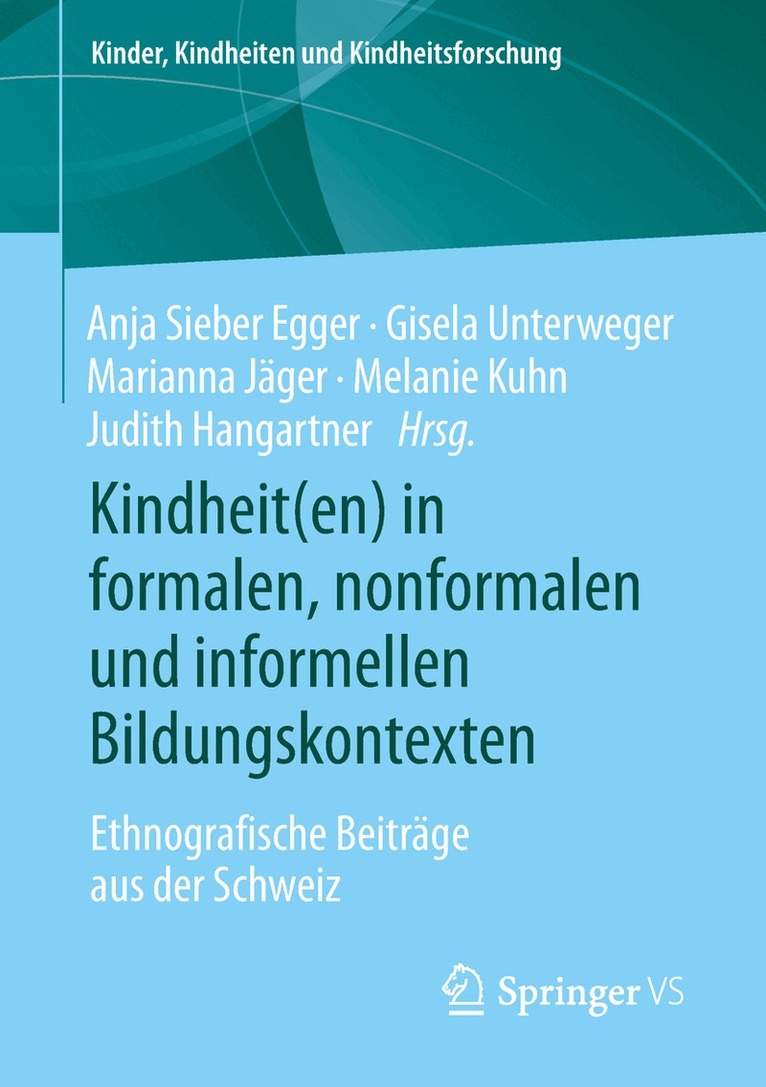
Der Band versammelt aktuelle ethnografische Studien zu Kindheiten in formalen, nonformalen und informellen Bildungskontexten in der Schweiz. Bei unterschiedlichen disziplinären Zugängen, die spezifisch für die heterogene ethnografische Forschungslandschaft in der Schweiz sind, teilen alle Beiträge dieses Bandes zwei kindheitstheoretische Prämissen: Sie begreifen ‚Kindheit‘ erstens als ein interaktiv, praktisch oder diskursiv hervorgebrachtes Phänomen, das wesentlich durch institutionelle Arrangements geprägt und bedingt ist und verstehen dabei zweitens Bildung als integralen Teil der gesellschaftlichen Institutionalisierung von Kindheit.
E-bok
Tyska, 2019479 kr
Läs direkt efter köp
Der Band versammelt aktuelle ethnografische Studien zu Kindheiten in formalen, nonformalen und informellen Bildungskontexten in der Schweiz. Bei unterschiedlichen disziplinären Zugängen, die spezifisch für die heterogene ethnografische Forschungslandschaft in der Schweiz sind, teilen alle Beiträge dieses Bandes zwei kindheitstheoretische Prämissen: Sie begreifen ‚Kindheit‘ erstens als ein interaktiv, praktisch oder diskursiv hervorgebrachtes Phänomen, das wesentlich durch institutionelle Arrangements geprägt und bedingt ist und verstehen dabei zweitens Bildung als integralen Teil der gesellschaftlichen Institutionalisierung von Kindheit.