Juli K. Dixon – författare
225 kr
Skickas inom 3-6 vardagar
418 kr
Läs direkt efter köp
406 kr
Skickas inom 3-6 vardagar
400 kr
Läs direkt efter köp
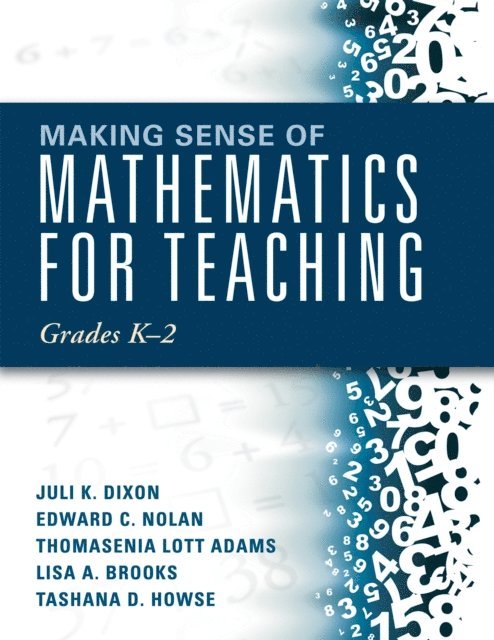
Develop a deep understanding of mathematics. This user-friendly resource presents grades K–2 teachers with a logical progression of pedagogical actions, classroom norms, and collaborative teacher team efforts to increase their knowledge and improve mathematics instruction. Explore strategies and techniques to effectively learn and teach significant mathematics concepts and provide all students with the precise, accurate information they need to achieve academic success. Clarify math essentials with figures and tables that facilitate understanding through visualization.
Benefits
Dig deep into mathematical modeling and reasoning to improve as both a learner and teacher of mathematics.Explore how to develop, select, and modify mathematics tasks in order to balance cognitive demand and engage students.Discover the three important norms to uphold in all mathematics classrooms.Learn to apply the tasks, questioning, and evidence (TQE) process to ensure mathematics instruction is focused, coherent, and rigorous.Use charts and diagrams for classifying shapes, which can engage students in important mathematical practices.Access short videos that show what classrooms that are developing mathematical understanding should look like.
Contents
Introduction
1 Number Concepts and Place Value
2 Word Problem Structures
3 Addition and Subtraction Using Counting Strategies
4 Addition and Subtraction Using Grouping Strategies
5 Geometry
6 Measurement
Epilogue Next Steps
Appendix A Completed Classification of Triangles Chart
Appendix B Completed Diagram for Classifying Quadrilaterals
446 kr
Skickas inom 3-6 vardagar
403 kr
Läs direkt efter köp
Develop a deep understanding of mathematics. This user-friendly resource presents grades 3–5 teachers with a logical progression of pedagogical actions, classroom norms, and collaborative teacher team efforts to increase their knowledge and improve mathematics instruction. Focus on an understanding of and procedural fluency with multiplication and division. Address how to learn and teach fraction concepts and operations with depth. Thoroughly teach plane and solid geometry. Explore strategies and techniques to effectively learn and teach significant mathematics concepts and provide all students with the precise, accurate information they need to achieve academic success.
Benefits
Dig deep into mathematical modeling and reasoning to improve as both a learner and teacher of mathematics.Explore how to develop, select, and modify mathematics tasks in order to balance cognitive demand and engage students.Discover the three important norms to uphold in all mathematics classrooms.Learn to apply the tasks, questioning, and evidence (TQE) process to ensure mathematics instruction is focused, coherent, and rigorous.Use charts and diagrams for classifying shapes, which can engage students in important mathematical practices.Access short videos that show what classrooms that are developing mathematical understanding should look like.
Contents
Introduction
1 Place Value, Addition, and Subtraction
2 Multiplication and Division
3 Fraction Concepts
4 Fraction Operations
5 Geometry
6 Measurement
Epilogue Next Steps
Appendix A Completed Classification of Triangles Chart
Appendix B Completed Diagram for Classifying Quadrilaterals
365 kr
Läs direkt efter köp
Develop a deep understanding of mathematics. This user-friendly resource presents grades 6–8 teachers with a logical progression of pedagogical actions, classroom norms, and collaborative teacher team efforts to increase their knowledge and improve mathematics instruction. Make connections between elementary fraction-based content to fraction operations taught in the middle grades. Explore strategies and techniques to effectively learn and teach significant mathematics concepts and provide all students with the precise, accurate information they need to achieve academic success.
Benefits
Dig deep into mathematical modeling and reasoning to improve as both a learner and teacher of mathematics.Explore how to develop, select, and modify mathematics tasks in order to balance cognitive demand and engage students.Discover the three important norms to uphold in all mathematics classrooms.Learn to apply the tasks, questioning, and evidence (TQE) process to grow as both learners and teachers of mathematics.Gain clarity about the most productive progression of mathematical teaching and learning for grades 6–8.Access short videos that show what classrooms that are developing mathematical understanding should look like.
Contents
Introduction
1 Fraction Operations and Integer Concepts and Operations
2 Ratios and Proportional Relationships
3 Equations, Expressions, and Inequalities
4 Functions
5 Measurement and Geometry
6 Statistics and Probability
Epilogue: Next Steps
References and Resources
Index
320 kr
Läs direkt efter köp
Develop a deep understanding of mathematics by grasping the context and purpose behind various strategies. This user-friendly resource presents high school teachers with a logical progression of pedagogical actions, classroom norms, and collaborative teacher team efforts to increase their knowledge and improve mathematics instruction. Explore strategies and techniques to effectively learn and teach significant mathematics concepts and provide all students with the precise, accurate information they need to achieve academic success. Combine student understanding of functions and algebraic concepts so that they can better decipher the world.
Benefits
Dig deep into mathematical modeling and reasoning to improve as both a learner and teacher of mathematics.Explore how to develop, select, or modify mathematics tasks in order to balance cognitive demand and engage students.Discover the three important norms to uphold in all mathematics classrooms.Learn to apply the tasks, questioning, and evidence (TQE) process to ensure mathematics instruction is focused, coherent, and rigorous.Gain clarity about the most productive progression of mathematical teaching and learning for high school.Watch short videos that show what classrooms that are developing mathematical understanding should look like.
Contents
Introduction
Equations and FunctionsStructure of EquationsGeometryTypes of FunctionsFunction ModelingStatistics and ProbabilityEpilogue: Next Steps
Appendix: Weight Loss Study Data
References
Index
367 kr
Skickas inom 3-6 vardagar
320 kr
Läs direkt efter köp
When done right, small-group instruction is a powerful tool for facilitating student understanding in K-5 mathematics. Throughout the book, best practices for small-group math instruction are addressed in detail, from planning tasks that encourage deep understanding to asking effective questions to engaging learners in meaningful conversations. Readers will learn how teaching mathematics in small groups allows you to differentiate instruction for both remediation and enrichment. The included small-group instruction videos demonstrate the suggested strategies in a real-classroom setting, giving readers the opportunity to see best practice in action.
Develop math-specific instruction strategies for teaching small groups in elementary school:
Explore the benefits of small-group math activities and how these activities are unique compared to large-group instruction.Discover the teacher''s and students'' roles in small-group instruction and how teachers can help students develop the skills to fulfill their role.Learn how to apply the general tasks, questions, and evidence (TQE) process to small-group instruction in order to enhance student learning and improve your knowledge of teaching mathematics.View examples of small-group instruction, which provide both math intervention and math enrichment activities for different students.Contents:AcknowledgmentsTable of ContentsAbout the AuthorsIntroductionChapter 1: Best Practices in Small-Group InstructionChapter 2: The TQE Process in Small-Group InstructionChapter 3: Discourse in Small-Group InstructionEpilogue: How to Tie It All TogetherReferencesIndex
369 kr
Läs direkt efter köp
Discover a clear path for improving your instructional strategies for teaching mathematics at any grade level. Designed for individuals or collaborative teams, this practical resource introduces a set of rubrics -- the Instructional Quality Assessment (IQA) Toolkit -- that readers can rely on to help guide reflections, conversations, feedback, and planning. Also included is a series of short videos that showcase how to use the book''s math strategies and tools in classrooms.
Ensure the instructional quality of your teaching strategies in mathematics:
Utilize tasks, questions, and evidence (the TQE process) and the associated IQA rubrics as a road map for increasing instructional quality.Become familiar with the connection between efficient use of tasks and teacher questioning with increased student success.Learn how to gauge student response to tasks and lessons in order to understand student mastery of the material.Enhance your understanding of math strategies through hands-on activities.Access free online reproducibles for use in teaching mathematics in the classroom.Contents:About the AuthorsIntroduction
Part 1: Connecting to the T in TQE -- Tasks and Task ImplementationChapter 1: Potential of the TaskChapter 2: Implementation of the Task
Part 2: Connecting to the Q in TQE -- Questions and Their Role as Discourse ActionsChapter 3: Teacher''s QuestionsChapter 4: Teacher''s Linking and Teacher''s Press
Part 3: Connecting to the E in TQE -- Evidence of Students'' Mathematical Work and ThinkingChapter 5: Students'' Linking and Students'' ProvidingChapter 6: The IQA Toolkit as a Tool to Assess and Improve Instructional Practice
Epilogue: Next StepsAppendix A: The IQA ToolkitAppendix B: Suggested Answers for Activity 1.4Appendix C: Suggested Answers for Activity 3.2Appendix D: Additional Support for Rating TasksAppendix E: List of Figures and VideosReferences and ResourcesIndex
More Making Sense of Mathematics Books:
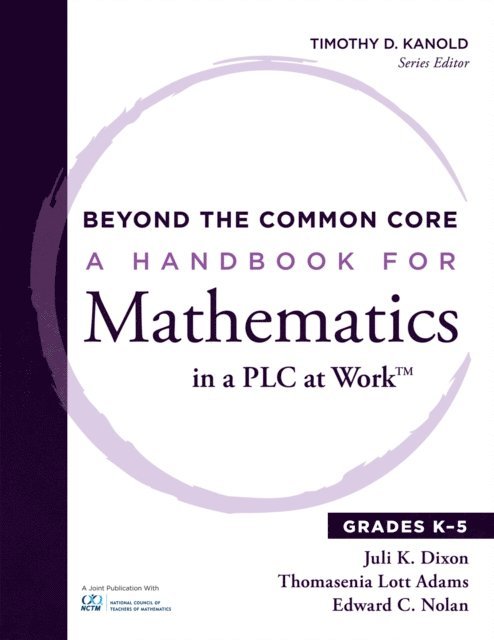
Making Sense of Mathematics for Teaching Grades K-2Making Sense of Mathematics for Teaching Grades 3-5Making Sense of Mathematics for Teaching Grades 6-8Making Sense of Mathematics for Teaching High SchoolMaking Sense of Mathematics for Teaching to Inform Instructional QualityMaking Sense of Mathematics for Teaching Girls in Grades K-5Making Sense of Mathematics for Teaching the Small Group365 kr
Läs direkt efter köp
How can students achieve an understanding of multiplication that allows them to go beyond recall to explain their thinking? Author and mathematics education professor Juli Dixon introduces a program that teachers can seamlessly integrate into existing mathematics instruction. Learn six tactics to help you shift from an anxiety-producing, rote-memorization approach to one that helps students actually make sense of multiplication.
This book will help classroom teachers, resource teachers, interventionists, coaches, administrators, tutors, and parents of students in grades 3–6:Understand the six tactics for completing the Fact Tactics Fluency ProgramDiscover how to seamlessly integrate the 20-week program into mathematics instructionGive students the tools they need to transcend recall of basic facts and gain procedural fluency so they can explain and justify their thinking Gain the process, resources, and assessments to implement the programLearn how to support a deep understanding of mathematics beyond the 20-week program Contents:IntroductionChapter 1: Making Sense of Fact Strategies for MultiplicationChapter 2: Creating a Culture That Promotes Grounded FluencyChapter 3: Fact Tactics Fluency Program ActivitiesEpilogue: A Fact Tactics FutureAppendix A: Fact Tactics Multiplication Fact CardsAppendix B: Fact Tactics Mini AssessmentsReferences and ResourcesIndex