Julian Abel - Böcker
Visar alla böcker från författaren Julian Abel. Handla med fri frakt och snabb leverans.
4 produkter
4 produkter
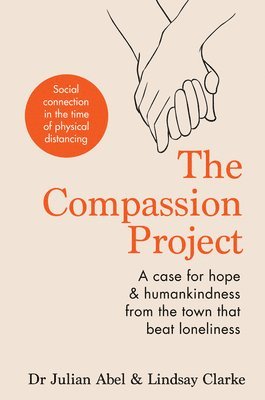
Compassion Project
A case for hope and humankindness from the town that beat loneliness
Inbunden, Engelska, 2020
189 kr
Skickas inom 7-10 vardagar
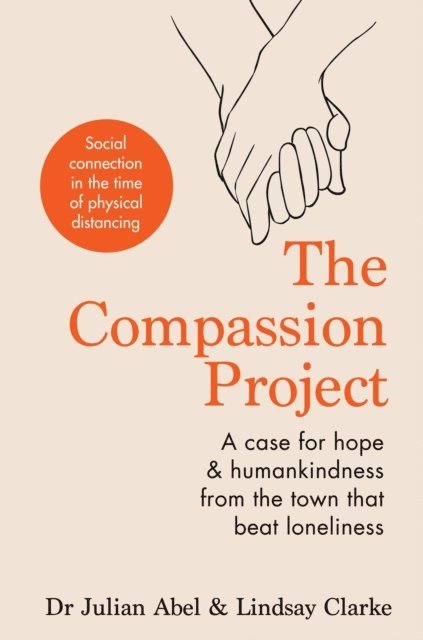
'A wonderful book' - Dr. Rangan Chatterjee'Highly convincing' - Daily Express'Pioneering' - The Telegraph'The strength of the book lies in its description of how community life can have a transformative effect on individuals' - British Journal of General PracticeAcross the country, general hospital admissions are on the rise. But in a small town in rural England, thanks to the simple introduction of kindness and compassion, that trend has been reversed. And what this town achieved, we can all adopt in our own lives to powerful effect. Through daily mindful acts of care we are capable of changing things for the better, both inside ourselves and for the world around us. Frome in Somerset isn't special. It could be any town; it could be your town. And yet the people who live there have a story to tell about the simple, ground-shaking power of compassion. If it came in tablet form, it would be hailed as a wonder of modern medicine. By contrast, it's entirely free but offers heartening evidence that when human beings make time for each other, the beneficial effects go far beyond the reach of naïve optimism.'A culture in which compassion is a prevailing value allows individuals to flourish and bring their talents and gifts to the communities in which they live. Unanticipated possibilities emerge, presenting fresh ways of addressing what previously appeared to be insoluble problems. Hearts are lifted. The case for hope is more strongly made. And as the people who work in this way begin to change the world immediately around them, so too, the wider world beyond begins to change.' Dr Julian Abel & Lindsay Clarke
1 523 kr
Skickas inom 7-10 vardagar
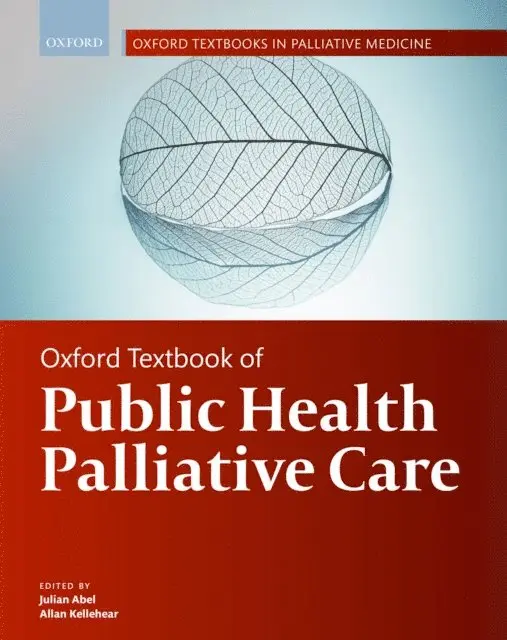
Death, dying, loss, and care giving are not just medical issues, but societal ones. Palliative care has become increasingly professionalised, focused around symptom science. With this emphasis on minimizing the harms of physical, psychological, and spiritual stress, there has been a loss of how cultures and communities look after their dying, with the wider social experience of death often sidelined in the professionalisation and medicalisation of care. However, the people we know and love in the places we know and love make up what matters most for those undergoing the experiences of death, loss, and care giving.Over the last 25 years the theory, practice, research evidence base, and clinical applications have developed, generating widespread adoption of the principles of public health approaches to palliative care. The essential principles of prevention, harm reduction, early intervention, and health and wellbeing promotion can be applied to the universal experience of end of life, irrespective of disease or diagnosis. Compassionate communities have become a routine part of the strategy and service development in palliative care, both within the UK and internationally. The Oxford Textbook of Public Health Palliative Care provides a reframing of palliative care, bringing together the full scope of theory, practice, and evidence into one volume. Written by international leaders in the field, it provides the first truly comprehensive and authoritative textbook on the subject that will help to further inform developments in this growing specialty.
2 040 kr
Skickas inom 3-6 vardagar
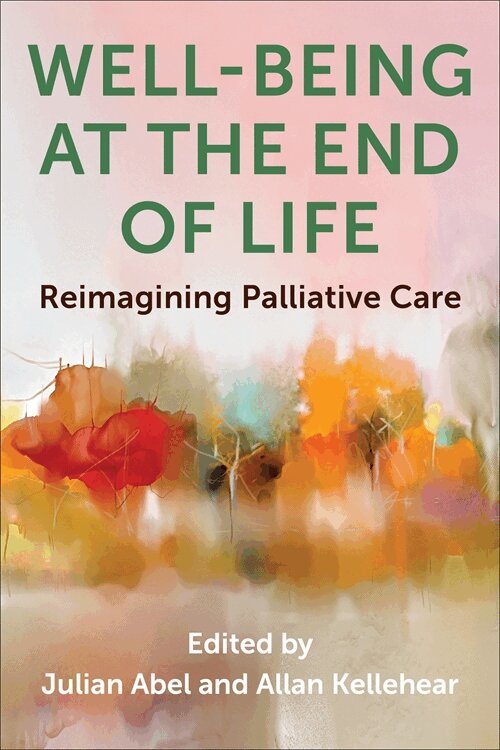
The field of palliative care promises support for a dying person’s physical, psychological, social, and spiritual needs, as well as the needs of family and community. Has this powerful vision been achieved? This state-of-the-field book argues that palliative care has drifted away from its transformative goals—and shows what to do about it.Bringing together leading international scholars and practitioners, Well-Being at the End of Life demonstrates how contemporary palliative care has slowly but surely strayed from its original values and practices. The provision of palliative care now reflects institutional, medicalized, and health-service priorities. Increasingly, it has become solely clinical, confined and constrained by clinical service considerations and limitations. Those at the end of life are all too often viewed as patients to be treated instead of people with whom care providers must create collaboration, participation, and partnerships.Contributors call for a paradigm shift in the values and priorities of palliative care to emphasize the importance of community to personal well-being. Drawing on the concept of health promotion, they advance a shared vision that merges the principles of public health with those of palliative care. Reimagining the field to foreground compassion and interdependence, Well-Being at the End of Life offers a new approach that puts community and professional partnerships at the heart of its practice.
321 kr
Skickas
The field of palliative care promises support for a dying person’s physical, psychological, social, and spiritual needs, as well as the needs of family and community. Has this powerful vision been achieved? This state-of-the-field book argues that palliative care has drifted away from its transformative goals—and shows what to do about it.Bringing together leading international scholars and practitioners, Well-Being at the End of Life demonstrates how contemporary palliative care has slowly but surely strayed from its original values and practices. The provision of palliative care now reflects institutional, medicalized, and health-service priorities. Increasingly, it has become solely clinical, confined and constrained by clinical service considerations and limitations. Those at the end of life are all too often viewed as patients to be treated instead of people with whom care providers must create collaboration, participation, and partnerships.Contributors call for a paradigm shift in the values and priorities of palliative care to emphasize the importance of community to personal well-being. Drawing on the concept of health promotion, they advance a shared vision that merges the principles of public health with those of palliative care. Reimagining the field to foreground compassion and interdependence, Well-Being at the End of Life offers a new approach that puts community and professional partnerships at the heart of its practice.