Julian Hughes - Böcker
Visar alla böcker från författaren Julian Hughes. Handla med fri frakt och snabb leverans.
6 produkter
6 produkter
2 541 kr
Skickas inom 5-8 vardagar
Dementia is an illness that raises important questions about our own attitudes to illness and aging. It also raises very important issues beyond the bounds of dementia to do with how we think of ourselves as people - fundamental questions about personal identity. Is the person with dementia the same person he or she was before? Is the individual with dementia a person at all? In a striking way, dementia seems to threaten the very existence of the self.This book brings together philosophers and practitioners to explore the conceptual issues that arise in connection with this increasingly common illness. Drawing on a variety of philosophers such as Descartes, Locke, Hume, Wittgenstein, the authors explore the nature of personal identity in dementia. They also show how the lives and selfhood of people with dementia can be enhanced by attention to their psychosocial and spiritual environment. Throughout, the book conveys a strong ethical message, arguing in favour of treating people with dementia with all the dignity they deserve as human beings. The book covers a range of topics, stretching from talk of basic biology to talk of a spiritual understanding of people with dementia. Accessibly written by leading figures in psychiatry and philosophy, the book presents a unique and long overdue examination of an illness that features in so many of our lives.
1 060 kr
Skickas inom 5-8 vardagar
Dementia is an illness that raises important questions about our own attitudes to illness and aging. It also raises very important issues beyond the bounds of dementia to do with how we think of ourselves as people - fundamental questions about personal identity. Is the person with dementia the same person he or she was before? Is the individual with dementia a person at all? In a striking way, dementia seems to threaten the very existence of the self.This book brings together philosophers and practitioners to explore the conceptual issues that arise in connection with this increasingly common illness. Drawing on a variety of philosophers such as Descartes, Locke, Hume, Wittgenstein, the authors explore the nature of personal identity in dementia. They also show how the lives and selfhood of people with dementia can be enhanced by attention to their psychosocial and spiritual environment. Throughout, the book conveys a strong ethical message, arguing in favour of treating people with dementia with all the dignity they deserve as human beings. The book covers a range of topics, stretching from talk of basic biology to talk of a spiritual understanding of people with dementia. Accessibly written by leading figures in psychiatry and philosophy, the book presents a unique and long overdue examination of an illness that features in so many of our lives.
1 720 kr
Skickas inom 5-8 vardagar
Supportive care can be thought of as an extension of palliative care so that the person with dementia receives good quality, holistic care that makes no distinctions between the dichotomies of care and cure from the time of diagnosis until, and beyond, death. It recognizes the need for an inter-disciplinary approach and for continuity of care. Supportive care in dementia must, therefore, be broad in its scope and application. Supportive Care for the person with dementia provides just such a broad and full perspective, drawing upon the experience and expertise of a wide range of internationally-based professionals to outline a model of supportive care that will provide good quality and holistic care for people with dementia. Making use of real-life reports from both patients and carers to help readers fully understand the reality of dementia, the book examines the key principles that guide the practice of supportive care. It looks at how supportive care can be used, and specific benefits a care model of this type can bring to the complex problems that are frequently encountered when treating this condition. It is an ideal resource for all clinicians who are part of an interdisciplinary team caring for sufferers with this debilitating illness.
344 kr
Skickas inom 3-6 vardagar
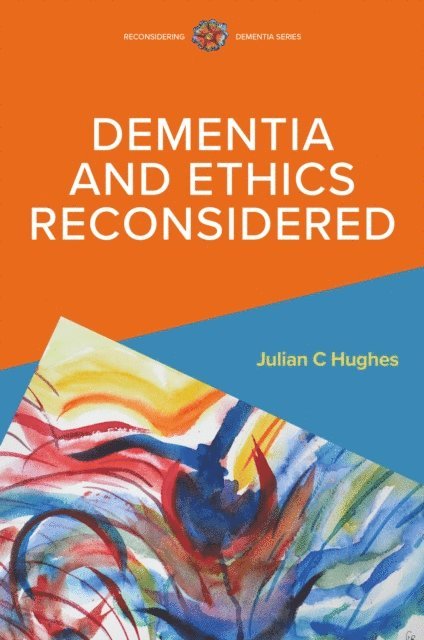
“In this masterful book, Julian Hughes makes a convincing case that many acts in clinical and care practice are ethical matters. Hughes takes us gently through a jungle of philosophical ideas and explores a series of ethical issues in dementia care, such as diagnosis, covert medication and end of life care. His humanity shines through as he favours a values-based approach to care, and concludes by declaring (in the spirit of Tom Kitwood) that the person must be placed first in order to do what is right and good for people living with dementia. A must-have volume for practitioners, social scientists and enlightened general readers.”Tom Dening, Professor of Dementia Research, School of Medicine, University of Nottingham, UK“This book is totally brilliant. The outstanding author Dr. Julian Hughes must now be considered the foremost ethicist of his generation when it comes to caring for individuals with dementia … This is now the book that everyone who cares about dementia and ethics must read, discuss, and implement. It is a huge contribution.”Stephen G. Post PhD, Director, Center for Medical Humanities, Compassionate Care & BioethicsStony Brook University School of Medicine, USA“This book should be an essential read for all of us who support and navigate the ethical issues relating to people with dementia and their families.”Paul Edwards, Director of Clinical Services, Dementia UKEthical issues are involved in every decision that is made in connection with someone living with dementia – from decisions about care and treatment to decisions about research and funding.This book encourages the reader to reconsider ethics in dementia care with the use of ‘patterns of practice’, an innovative idea developed by the author. The book highlights the importance of understanding the person’s narrative, of good communication, high quality care, and expert interpretation of the meaning of situations for people living with dementia. This book:• Reviews ethical theories and approaches in connection with dementia care• Considers issues such as such as stigma, quality of life, personhood, and citizenship in relation to dementia• Looks at issues relevant to research ethics• Presents case vignettes to highlight a complete spectrum of ethical issues that arise in dementia care• Is accessibly written for multiple audiences – from people living with dementia to practitionersDementia and Ethics Reconsidered is a comprehensive account of thought and practice in relation to ethical issues that arise in the context of dementia care, which seeks to show how ethical thinking can be put into practice and prove relevant to day-to-day experience.The Reconsidering Dementia Series is an interdisciplinary series published by Open University Press that covers contemporary issues to challenge and engage readers in thinking deeply about the topic. The dementia fi eld has developed rapidly in its scope and practice over the past ten years and books in this series will unpack not only what this means for the student, academic and practitioner, but also for all those affected by dementia.Series Editors: Dr Keith Oliver and Professor Dawn Brooker MBE.Julian C. Hughes was a consultant in old age psychiatry. Having trained in both philosophy and medicine, he was appointed honorary professor of philosophy of ageing at Newcastle University, UK and subsequently professor of old age psychiatry at the University of Bristol, UK. He was deputy chair of the Nuffield Council on Bioethics, UK.
384 kr
Skickas inom 3-6 vardagar
“This is a book to be read by all involved in either side of this heated debate.”Dr C Fourcade, President of the French Association for Palliative Care, France"This powerful collection of essays brilliantly unpacks the legal, ethical and practical issues around the assisted dying debate.”Jonathan Herring, Professor of Law, University of Oxford, UK“This is an essential exploration of the complexities behind the sound bites.”Baroness Campbell of Surbiton DBE, UK“A much needed, timely compendium covering the main issues underlying and surrounding Assisted Dying.”Robert Twycross, Past Head, WHO Collaborative Centre for Palliative Care, Oxford, UK"Wherever your views lie on … assisted dying, you should read this book.”Dr Matt Morgan, Professor of Intensive Care, Cardiff University, UK, and Curtin University, AustraliaAt a critical moment in the UK debate, this book provides up-to-date reflections from a broad variety of international experts on the profoundly important issues that surround changes in the law in any jurisdiction in connection with assisted dying and considers the realities that surround such changes.The Reality of Assisted Dying covers all the important issues in the debates about assisted suicide and euthanasia. This includes thoughts on the role of the law, discussion of important philosophical and ethical concepts, investigating the various issues that arise in the practice of medicine and palliative care, and scrutinizing concerns about definitions, coercion, consequences and safety.This book:Provides up-to-date data, evidence and reflections from professionals from countries where assisted dying has been legalized;Takes a fresh look at the arguments around legalization of assisted dying;Shows how a change in the law must take account of all those who will be affected, including families and those who will feel compelled to participate by assisting suicides or performing euthanasia;Shows the problems and dangers of embedding assisted dying within healthcare, and explores how alternative socio-legal procedures would improve legitimacy and monitoring for patients and their families.The book is relevant to a variety of intellectual disciplines and to political and social debates both in the UK and internationally, as well as being of interest to general readers and students studying the many relevant subjects, from medicine, to law, sociology, politics, philosophy and ethics.Julian C. Hughes has studied and been a professor of both philosophy and of old age psychiatry. He was an NHS consultant in old age psychiatry and served as deputy chair of the Nuffield Council on Bioethics, UK. His most recent book was Dementia and Ethics Reconsidered, published by Open University Press.Ilora G. Finlay is a Crossbench Peer in the House of Lords, an honorary professor of palliative medicine at Cardiff University, UK, past President of the BMA and the Royal Society of Medicine. A founder director of Living and Dying Well, she co-authored Death by Appointment and led on legislation to encourage the availability of palliative care for all.Reading Our Times, Assisted Dying: What's really at stake? In conversation with Ilora Finlay and Julian Hughes: http://bit.ly/3CnkBdF
1 124 kr
Skickas inom 7-10 vardagar
From its long coastline, with cliffs and islands that bustle with breeding seabirds in the summer, to its open moorland that hold some of the most southerly Curlews and Black Grouse, Wales packs a lot of birds into a small area. It is significant for its populations of Chough, Hawfinch and Pied Flycatcher, and its Manx Shearwaters are of global importance. And it has played an important role in the study of migration, as Skokholm was the first bird observatory in Britain.It is almost 30 years since the first avifauna was published for all of Wales and much has changed. Knowledge of the status of many species has increased thanks to improved monitoring and a greater number of birdwatchers, and we have a better understanding of how humans have affected Wales’ birds, particularly the twin challenges of land-use and climate change. The Birds of Wales synthesises the new information and sets it in context of each species’ history in Wales. It tells the stories of all the birds that have been recorded here, whether common or rare, and looks forward, anticipating what may occur in the coming decades.It will have an essential place on the bookshelf of everyone with an interest in birds in Wales and should be on the desk or in the rucksack of everyone who influences what happens to the nation’s land and seas. It is a once-in-a-generation state of Wales’ birds.