Julian Paul Keenan - Böcker
Visar alla böcker från författaren Julian Paul Keenan. Handla med fri frakt och snabb leverans.
5 produkter
5 produkter
930 kr
Skickas inom 5-8 vardagar
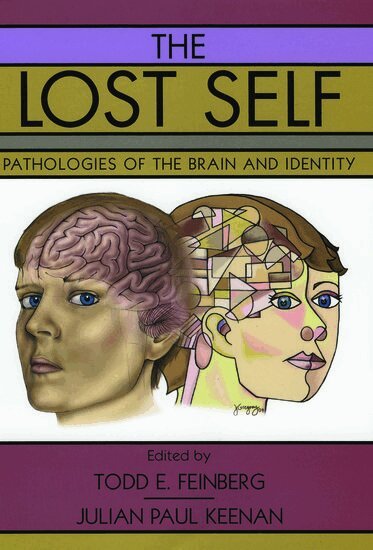
The Lost Self: Pathologies of the Brain and Identity is an in-depth exploration of one of the most mysterious and controversial topics in neuroscience, neurology, psychiatry and psychology - namely, the search for the biological basis of the self. The book is a guide to understanding how the brain creates who we are, and what happens when things go wrong. For the first time in a single volume, some of the foremost experts in the fields of philosophy, cognitive neuroscience, neurology, and psychology join together to explore the neurobiology of the self. They first lay the foundation for an understanding of the topic. Then they provide fascinating and detailed accounts of how the self is transformed in patients with brain lesions, autism, and dementia, as well as drug induced states, during meditation and while dreaming. Their analysis of these disorders and states is used as a springboard toward a deeper understanding of how a brain creates a self. This fascinating volume will be invaluable to neuroscientists, psychologists, psychiatrists, neurologists, and philosophers of mind, and to their students and trainees.
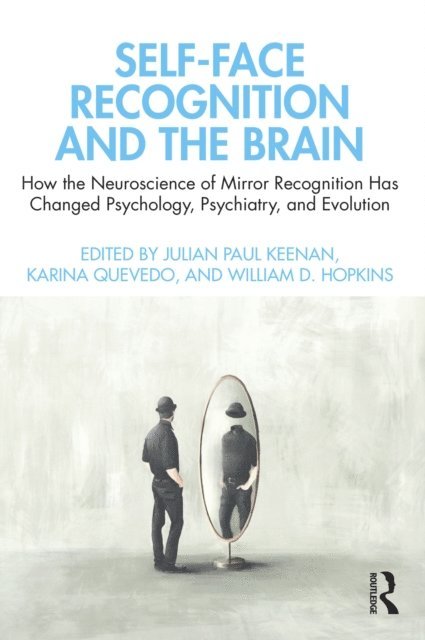
Self-Face Recognition and the Brain
How the Neuroscience of Mirror Recognition Has Changed Psychology, Psychiatry, and Evolution
Häftad, Engelska, 2023
668 kr
Skickas inom 10-15 vardagar
Self-Face Recognition and the Brain explores a fundamental cornerstone of human consciousness; how recognizing ourselves leads to a better understanding of the brain and higher-order thinking.Featuring contributions from an interdisciplinary range of researchers, each chapter provides a unique insight into one aspect of self-face recognition. The book begins by introducing readers to the concept of self-face recognition, covering issues like the mirror-test and whether animals can recognize themselves, before addressing the role of neural correlates and attempts at localizing consciousness. It then discusses various disorders and the impact they can have on self-face recognition before considering how neuroscience can heighten our understanding of the field.It will be an essential read for all researchers of self-face recognition, from psychology, philosophy, and neuroscience backgrounds.
Self-Face Recognition and the Brain
How the Neuroscience of Mirror Recognition Has Changed Psychology, Psychiatry, and Evolution
Inbunden, Engelska, 2023
2 100 kr
Skickas inom 10-15 vardagar
Self-Face Recognition and the Brain explores a fundamental cornerstone of human consciousness; how recognizing ourselves leads to a better understanding of the brain and higher-order thinking.Featuring contributions from an interdisciplinary range of researchers, each chapter provides a unique insight into one aspect of self-face recognition. The book begins by introducing readers to the concept of self-face recognition, covering issues like the mirror-test and whether animals can recognize themselves, before addressing the role of neural correlates and attempts at localizing consciousness. It then discusses various disorders and the impact they can have on self-face recognition before considering how neuroscience can heighten our understanding of the field.It will be an essential read for all researchers of self-face recognition, from psychology, philosophy, and neuroscience backgrounds.
1 057 kr
Skickas inom 10-15 vardagar
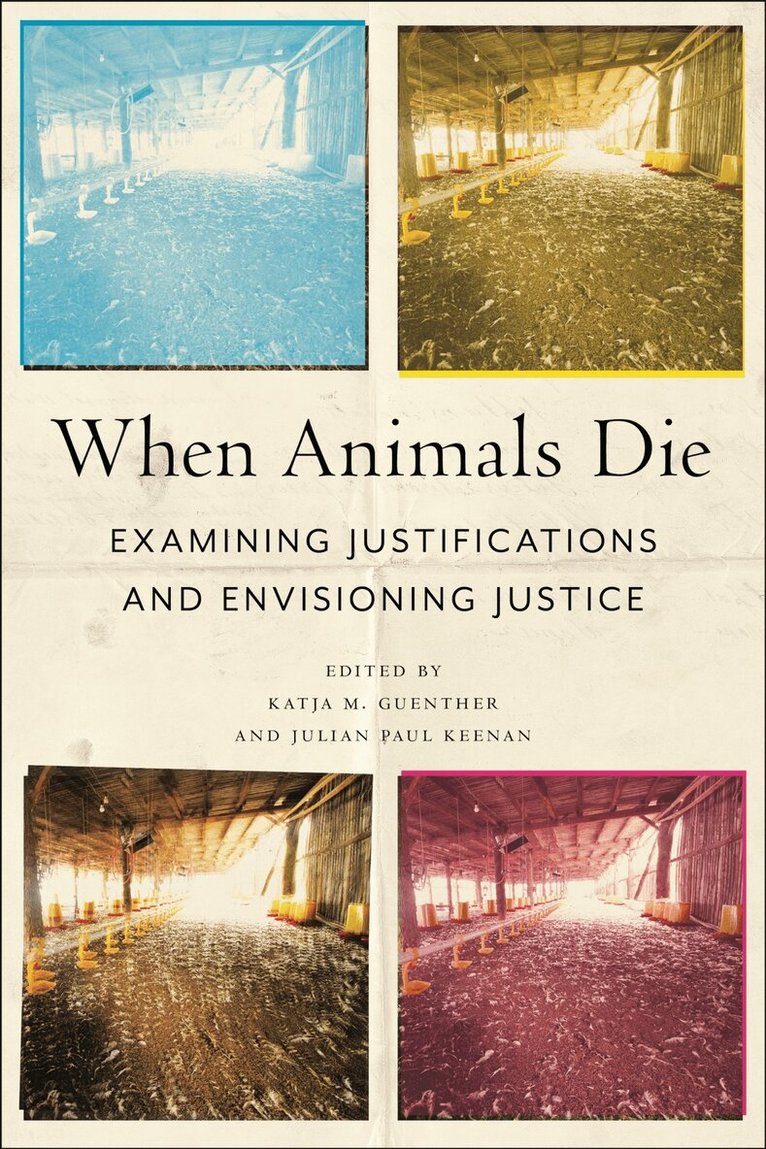
A groundbreaking collection that explores human–animal relations and deaths with depth and hopeWhen Animals Die is an innovative collection of essays that delves into the intricate and uneasy dynamics between humans and other-than-human animals, particularly concerning animal deaths, which are predominantly caused by humans. This groundbreaking book brings together prominent scholars from various disciplines to address the challenging field of animal death studies, incorporating perspectives from social sciences, humanities, biological sciences, and perspectives from beyond academia.The collection explores profound questions about the experience of animal death for both animals and humans. It examines how humans rationalize animal deaths and utilize deceased animals, and sheds light on the interconnectedness of animal death with issues like race, colonialism, gender, capitalism, and other systems of inequality that humans have established and perpetuated.By confronting these pertinent issues, When Animals Die seeks to deepen our awareness of the relationship between animal death and humanity's involvement in it. While grappling with the reality of humans' impact on the earth, the collection offers hope for an alternative future that does not entail the mutual destruction of human and other-than-human animals.
366 kr
Skickas inom 10-15 vardagar
A groundbreaking collection that explores human–animal relations and deaths with depth and hopeWhen Animals Die is an innovative collection of essays that delves into the intricate and uneasy dynamics between humans and other-than-human animals, particularly concerning animal deaths, which are predominantly caused by humans. This groundbreaking book brings together prominent scholars from various disciplines to address the challenging field of animal death studies, incorporating perspectives from social sciences, humanities, biological sciences, and perspectives from beyond academia.The collection explores profound questions about the experience of animal death for both animals and humans. It examines how humans rationalize animal deaths and utilize deceased animals, and sheds light on the interconnectedness of animal death with issues like race, colonialism, gender, capitalism, and other systems of inequality that humans have established and perpetuated.By confronting these pertinent issues, When Animals Die seeks to deepen our awareness of the relationship between animal death and humanity's involvement in it. While grappling with the reality of humans' impact on the earth, the collection offers hope for an alternative future that does not entail the mutual destruction of human and other-than-human animals.