• Fri frakt över 249 kr
  • •
  • Snabba leveranser
  • •
  • Billiga böcker
Kundservice

Du är på sajten för privatpersoner.

Företag, bibliotek eller offentlig verksamhet?

Du handlar på classic.bokus.com, där alla dina funktioner finns intakta.
Till classic.bokus.com
Bokus logotyp. Gå till startsidan.
  • Erbjudanden
  • Nyheter
  • Student
  • Topplistor
  • Barn & ungdom
  • Bokus Play
  • E-böcker
  • Pocketböcker
  • Spel & pussel

10% rabatt på allt med kod NYSTART10 →

Sidfot

Mina sidor

    Hjälp

    • Kundservice
    • Vanliga frågor och svar
    • Frakt och leverans
    • Retur vid ångerrätt
    • Reklamera vara
    • Betalning
    • Köpvillkor
    • Allmänna villkor
    • Information om webbplatsens tillgänglighet

    Om Bokus

    • Om oss
    • Pressrum
    • För studenter
    • För företag
    • För bibliotek och offentlig verksamhet
    • För leverantörer
    • Hållbarhet

    Populärt

    • Aktuella erbjudanden
    • Presentkort
    • Studentlitteratur
    • Nya böcker
    • Topplistor
    • Signerade böcker
    • Engelska böcker

    Inspiration

    • Boktips
    • BookTok
    • Populära bokserier
    • Barnbokskaraktärer
    • Populära författare
    Logotyp för Bokus
    Följ oss på Facebook (extern länk)Följ oss på Instagram (extern länk)Följ oss på YouTube (extern länk)Följ oss på TikTok (extern länk)
    bokus @ CookiesAnpassa cookiesIntegritetspolicyKöpvillkor
    Till Citymail hemsida (extern länk)Till Budbee hemsida (extern länk)Till Postnord hemsida (extern länk)Till Schenker hemsida (extern länk)Till Early Bird hemsida (extern länk)Till Walleys hemsida (extern länk)
    1. Psykologi och pedagogik
    2. Psykologi
    3. Kognitiv psykologi

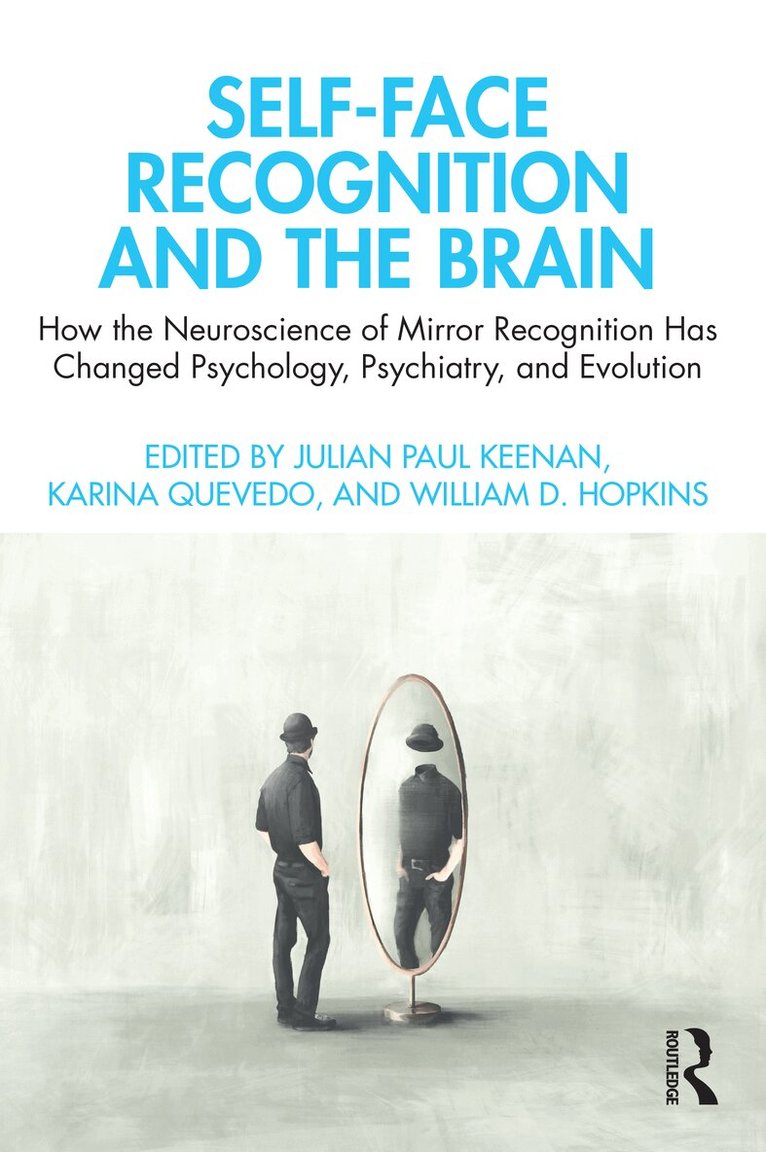
    Self-Face Recognition and the Brain

    How the Neuroscience of Mirror Recognition Has Changed Psychology, Psychiatry, and Evolution

    AvJulian Paul Keenan,Karina Quevedo

    Häftad, Engelska, 2023

    745 kr

    Beställningsvara. Skickas inom 10-15 vardagar. Fri frakt över 249 kr.

    Beskrivning

    Self-Face Recognition and the Brain explores a fundamental cornerstone of human consciousness; how recognizing ourselves leads to a better understanding of the brain and higher-order thinking.Featuring contributions from an interdisciplinary range of researchers, each chapter provides a unique insight into one aspect of self-face recognition. The book begins by introducing readers to the concept of self-face recognition, covering issues like the mirror-test and whether animals can recognize themselves, before addressing the role of neural correlates and attempts at localizing consciousness. It then discusses various disorders and the impact they can have on self-face recognition before considering how neuroscience can heighten our understanding of the field.It will be an essential read for all researchers of self-face recognition, from psychology, philosophy, and neuroscience backgrounds.

    Produktinformation

    • Utgivningsdatum:2023-08-31
    • Mått:156 x 234 x 17 mm
    • Vikt:359 g
    • Format:Häftad
    • Språk:Engelska
    • Antal sidor:214
    • Förlag:Taylor & Francis Ltd
    • ISBN:9781032019505

    Utforska kategorier

    • Kognitiv psykologi inom Psykologi och pedagogik
    • Psykiatri inom Medicin
    • Biovetenskap inom Naturvetenskap och teknik

    Mer om författaren

    Julian Paul Keenan, PhD is a Professor in both the Biology and Psychology Departments at Montclair State University and the Director of the Cognitive Neuroimaging Laboratory. He has been publishing on the neural correlates of self-face recognition for three decades in journals such as Nature, and is a leader in the field of Transcranial Magnetic Stimulation. He is the founder of the journal Social Neuroscience and is the leader of the Brains, Equity, and Medicine Program. He lives with family in New Jersey where he raises various animals.Karina Quevedo was born in Havana, Cuba where she studied Biochemistry and Psychology. She is an Associate Professor at the Department of Psychiatry in the University of Minnesota Medical Center. She published the first biomarkers of suicide attempts using neuroimaging in adolescents and has published extensively on the topic of self-referential processing using non-invasive neuroimaging methods. She is currently developing neurofeedback and using self-face processing as a potential treatment for suicide risks. She directs the Health and Emotions in Adolescent Trajectories laboratory and is both a licensed psychologist and supervisor. She lives in Minneapolis, Minnesota, and grows native Prairie plants to support the migration of Monarch butterflies.William D. Hopkins is Professor of Comparative Medicine at the University of Texas MD Anderson Cancer Center. He has published extensively on the topic of primate cognition and comparative neuroscience, particularly in chimpanzees using non-invasive neuroimaging methods. He co-directs the National Chimpanzee Brain Resource (www.chimpanzeebrain.org) and is currently the Director of the Michale E Keeling Center for Comparative Medicine and Research. He lives with his wife in Bastrop, Texas, and enjoys spending time traveling abroad.

    Innehållsförteckning

    • Introduction. 1. Self-Recognition, Self-Awareness, and Social Intelligence. 2. Self-Face Recognition: From the Ancients to the Scanner. 3. Cognitive and Neuroanatomical Foundations of Individual Differences in Mirror Self-Recognition in Chimpanzees. 4. Why the Neural Correlates Matter: Evidence for Self-Recognition in Individuals with Autism Spectrum Disorder Tested in a Naturalistic Environment. 5. The Role of Von Economo Neurons in Mediating Human Social Awareness: Implications for Comparative Evolutionary Studies. 6. Self-Conscious Emotions Associated with Self-Face Perception. 7. Adolescent Depression and Suicide Attempts and the Neurobiology of Self-Processing. 8. Self-Face and Self-Voice Representation: Insights for and From Autism . 9. Self-Face and Brain in Schizophrenia and Social Anxiety Disorder. 10. How the Enfacement Illusion Blurs the Thin Line Between Self and Other. 11. The Self-Face: Clinical Implications