Jung-Sun Han – författare
Visar alla böcker från författaren Jung-Sun Han. Handla med fri frakt och snabb leverans.
7 produkter
7 produkter
Inbunden, Engelska, 2024
2 490 kr
Skickas inom 5-8 vardagar
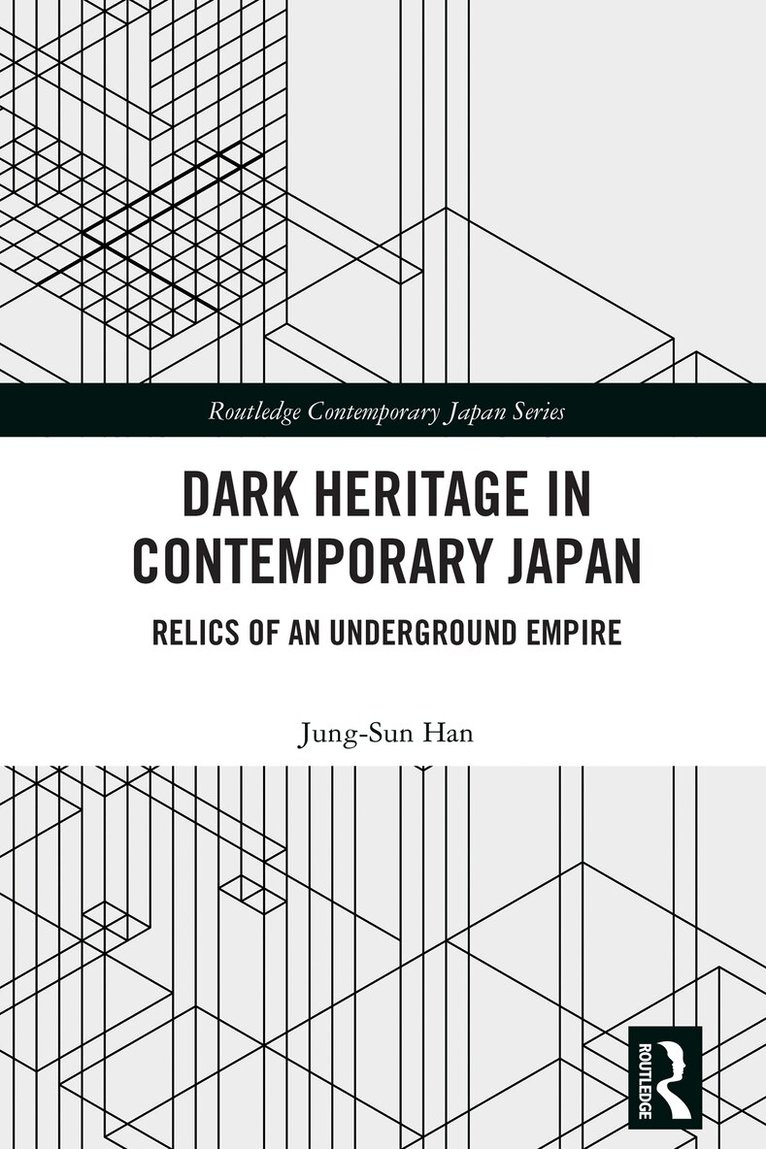
This book examines civic activism to conserve dark heritage built by the colonial and wartime labor regime in contemporary Japan.Introducing and analyzing local organizations and their activities in multiple locations throughout Japan, this book looks at the ways in which the Japanese have remembered, negotiated, and re-experienced their wartime past. Drawing insights from disciplines including critical heritage studies, social movements, the history of colonialism, imperialism, and decolonization, the book brings into focus the Japanese civic activism which confronts the legacies of the wartime labor regime operated throughout the colonial empire. By tracing the formation of grassroots movements to conserve war-related sites throughout Japan, it argues that reclaiming places for plural war memories bequeathed by colonial empire has been pivotal in creating public spaces for civic activism attentive to identities and differences in contemporary Japan.Delving into the multilayered connections between the memories of imperial wars, colonial empire, and place-based politics in postwar Japan, this book will be a valuable resource to students and scholars of colonialism, heritage studies and Japanese history.
Häftad, Engelska, 2025
706 kr
Skickas inom 10-15 vardagar
This book examines civic activism to conserve dark heritage built by the colonial and wartime labor regime in contemporary Japan.Introducing and analyzing local organizations and their activities in multiple locations throughout Japan, this book looks at the ways in which the Japanese have remembered, negotiated, and re-experienced their wartime past. Drawing insights from disciplines including critical heritage studies, social movements, the history of colonialism, imperialism, and decolonization, the book brings into focus the Japanese civic activism which confronts the legacies of the wartime labor regime operated throughout the colonial empire. By tracing the formation of grassroots movements to conserve war-related sites throughout Japan, it argues that reclaiming places for plural war memories bequeathed by colonial empire has been pivotal in creating public spaces for civic activism attentive to identities and differences in contemporary Japan.Delving into the multilayered connections between the memories of imperial wars, colonial empire, and place-based politics in postwar Japan, this book will be a valuable resource to students and scholars of colonialism, heritage studies and Japanese history.
E-bok
PDF, Engelska, 2024774 kr
Läs direkt efter köp
This book examines civic activism to conserve dark heritage built by the colonial and wartime labor regime in contemporary Japan.Introducing and analyzing local organizations and their activities in multiple locations throughout Japan, this book looks at the ways in which the Japanese have remembered, negotiated, and re-experienced their wartime past. Drawing insights from disciplines including critical heritage studies, social movements, the history of colonialism, imperialism, and decolonization, the book brings into focus the Japanese civic activism which confronts the legacies of the wartime labor regime operated throughout the colonial empire. By tracing the formation of grassroots movements to conserve war-related sites throughout Japan, it argues that reclaiming places for plural war memories bequeathed by colonial empire has been pivotal in creating public spaces for civic activism attentive to identities and differences in contemporary Japan.Delving into the multilayered connections between the memories of imperial wars, colonial empire, and place-based politics in postwar Japan, this book will be a valuable resource to students and scholars of colonialism, heritage studies and Japanese history.
E-bok
Engelska, 2024774 kr
Läs direkt efter köp
This book examines civic activism to conserve dark heritage built by the colonial and wartime labor regime in contemporary Japan.Introducing and analyzing local organizations and their activities in multiple locations throughout Japan, this book looks at the ways in which the Japanese have remembered, negotiated, and re-experienced their wartime past. Drawing insights from disciplines including critical heritage studies, social movements, the history of colonialism, imperialism, and decolonization, the book brings into focus the Japanese civic activism which confronts the legacies of the wartime labor regime operated throughout the colonial empire. By tracing the formation of grassroots movements to conserve war-related sites throughout Japan, it argues that reclaiming places for plural war memories bequeathed by colonial empire has been pivotal in creating public spaces for civic activism attentive to identities and differences in contemporary Japan.Delving into the multilayered connections between the memories of imperial wars, colonial empire, and place-based politics in postwar Japan, this book will be a valuable resource to students and scholars of colonialism, heritage studies and Japanese history.
Inbunden, Engelska, 2021
1 515 kr
Skickas inom 10-15 vardagar
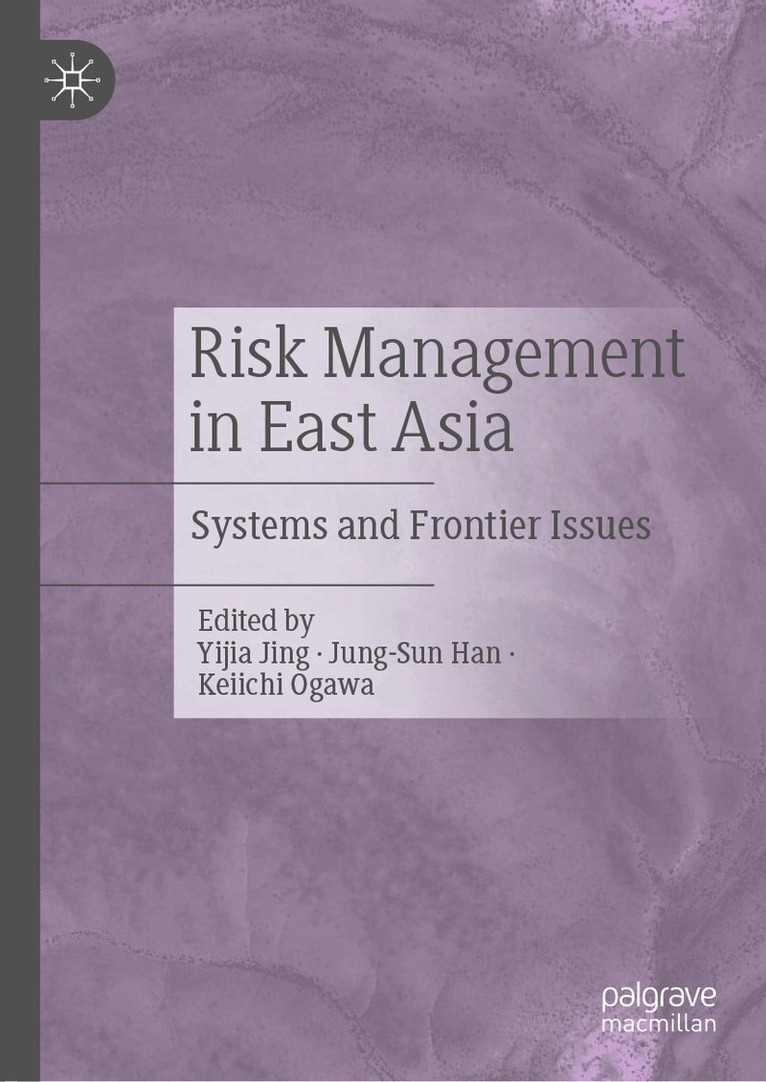
This book is a joint endeavour of the three partner universities to develop a book with in-depth and state-of-art analysis for the academic community of East Asia and the world. Past disasters, like the 2008 Great Sichuan Earthquake in China and the 2011 Great East Japan Earthquake, saw good efforts of East Asian countries in helping each other. Such a trend has been further strengthened in these countries’ recent cooperation and mutual support in their fight against Covid-19 pandemic. While China, Japan, and South Korea are geographically and culturally contiguous and hence may share some characteristics in their risk management principles and practices, there may also be many significant differences due to their different socioeconomic and political systems. The commonalities and variances in East Asia risk management systems are also reflected by their recent responses to the Covid-19 challenges. While all three countries demonstrated overall success in controlling the epidemic, the measures taken by them were different. This research will be of interest to policymakers, scholars and economists.
E-bok
Engelska, 20211 851 kr
Läs direkt efter köp
This book is a joint endeavour of the three partner universities to develop a book with in-depth and state-of-art analysis for the academic community of East Asia and the world. Past disasters, like the 2008 Great Sichuan Earthquake in China and the 2011 Great East Japan Earthquake, saw good efforts of East Asian countries in helping each other. Such a trend has been further strengthened in these countries’ recent cooperation and mutual support in their fight against Covid-19 pandemic. While China, Japan, and South Korea are geographically and culturally contiguous and hence may share some characteristics in their risk management principles and practices, there may also be many significant differences due to their different socioeconomic and political systems. The commonalities and variances in East Asia risk management systems are also reflected by their recent responses to the Covid-19 challenges. While all three countries demonstrated overall success in controlling the epidemic, the measures taken by them were different. This research will be of interest to policymakers, scholars and economists.
Häftad, Engelska, 2022
1 515 kr
Skickas inom 10-15 vardagar
This book is a joint endeavour of the three partner universities to develop a book with in-depth and state-of-art analysis for the academic community of East Asia and the world. Past disasters, like the 2008 Great Sichuan Earthquake in China and the 2011 Great East Japan Earthquake, saw good efforts of East Asian countries in helping each other. Such a trend has been further strengthened in these countries’ recent cooperation and mutual support in their fight against Covid-19 pandemic. While China, Japan, and South Korea are geographically and culturally contiguous and hence may share some characteristics in their risk management principles and practices, there may also be many significant differences due to their different socioeconomic and political systems. The commonalities and variances in East Asia risk management systems are also reflected by their recent responses to the Covid-19 challenges. While all three countries demonstrated overall success in controlling the epidemic, the measures taken by them were different. This research will be of interest to policymakers, scholars and economists.