Jürgen Maier - Böcker
Visar alla böcker från författaren Jürgen Maier. Handla med fri frakt och snabb leverans.
9 produkter
9 produkter
896 kr
Skickas inom 5-8 vardagar
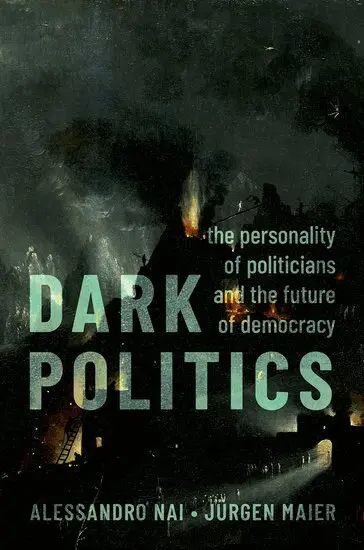
Recent years have seen the rise of political figures with particularly abrasive, controversial, and aggressive personalities, who seem to take pleasure in introducing an uncivil tone into the political debate. From Trump in the USA to Bolsonaro in Brazil, the media increasingly spotlights political figures who adopt a transgressive political style that incorporates spectacular acts, exaggeration, calculated provocations, and political and socio-cultural taboos. Who are these aggressive political figures? Why are they successful? And what does it mean for democracy?Dark Politics is a novel exploration of the rise of aversive and antagonistic political figures worldwide. Drawing on new data from 100 recent elections, post-election surveys, and original experimental evidence, Alessandro Nai and Jürgen Maier provide the first large-scale comparative investigation into the "darker" sides of human personality in politicians--the "Dark Triad" of narcissism, psychopathy, and Machiavellianism. Nai and Maier show that dark traits are acutely present in populists, go hand in hand with more aggressive forms of campaign rhetoric, such as incivility and negativity, and are particularly appreciated by voters who themselves score high on such dark personality traits. Their analyses reveal that dark candidates are more likely to be electorally successful when running as an incumbent and tend to be associated with a better economic performance if elected. However, dark leaders can lead to increased cynicism in the public, democratic deconsolidation, and even a poorer response to the COVID-19 pandemic. Dark Politics provides a new way to understand contemporary politics by looking at the crucial role of dark personality traits in leaders and voters.
327 kr
Skickas inom 5-8 vardagar
Recent years have seen the rise of political figures with particularly abrasive, controversial, and aggressive personalities, who seem to take pleasure in introducing an uncivil tone into the political debate. From Trump in the USA to Bolsonaro in Brazil, the media increasingly spotlights political figures who adopt a transgressive political style that incorporates spectacular acts, exaggeration, calculated provocations, and political and socio-cultural taboos. Who are these aggressive political figures? Why are they successful? And what does it mean for democracy?Dark Politics is a novel exploration of the rise of aversive and antagonistic political figures worldwide. Drawing on new data from 100 recent elections, post-election surveys, and original experimental evidence, Alessandro Nai and Jürgen Maier provide the first large-scale comparative investigation into the "darker" sides of human personality in politicians--the "Dark Triad" of narcissism, psychopathy, and Machiavellianism. Nai and Maier show that dark traits are acutely present in populists, go hand in hand with more aggressive forms of campaign rhetoric, such as incivility and negativity, and are particularly appreciated by voters who themselves score high on such dark personality traits. Their analyses reveal that dark candidates are more likely to be electorally successful when running as an incumbent and tend to be associated with a better economic performance if elected. However, dark leaders can lead to increased cynicism in the public, democratic deconsolidation, and even a poorer response to the COVID-19 pandemic. Dark Politics provides a new way to understand contemporary politics by looking at the crucial role of dark personality traits in leaders and voters.
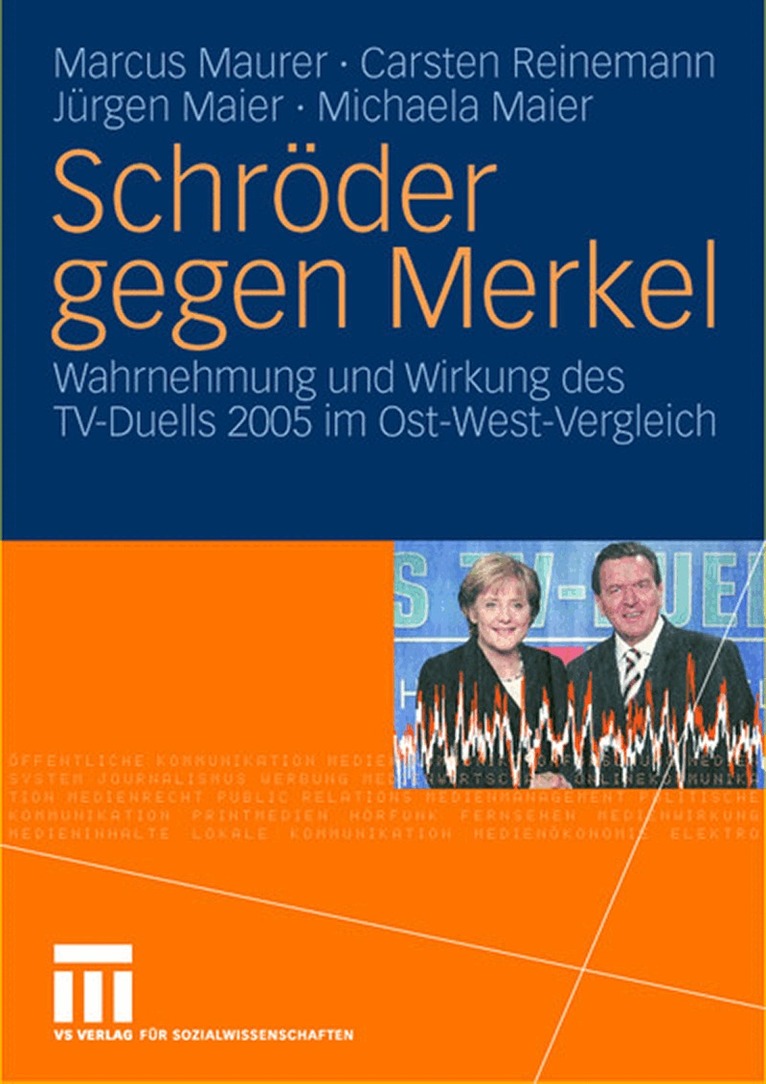
Schröder gegen Merkel
Wahrnehmung und Wirkung des TV-Duells 2005 im Ost-West-Vergleich
Häftad, Tyska, 2007
471 kr
Skickas inom 10-15 vardagar
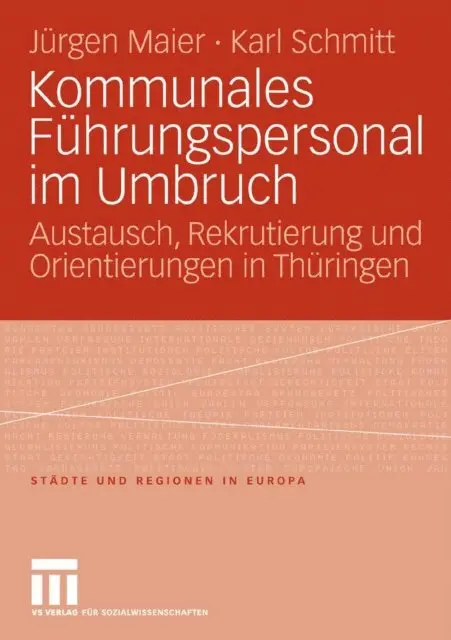
Kommunales Führungspersonal im Umbruch
Austausch, Rekrutierung und Orientierungen in Thüringen
Häftad, Tyska, 2008
748 kr
Skickas inom 10-15 vardagar
Del 26 - Empirische und methodologische Beitraege zur Sozialwissenschaft
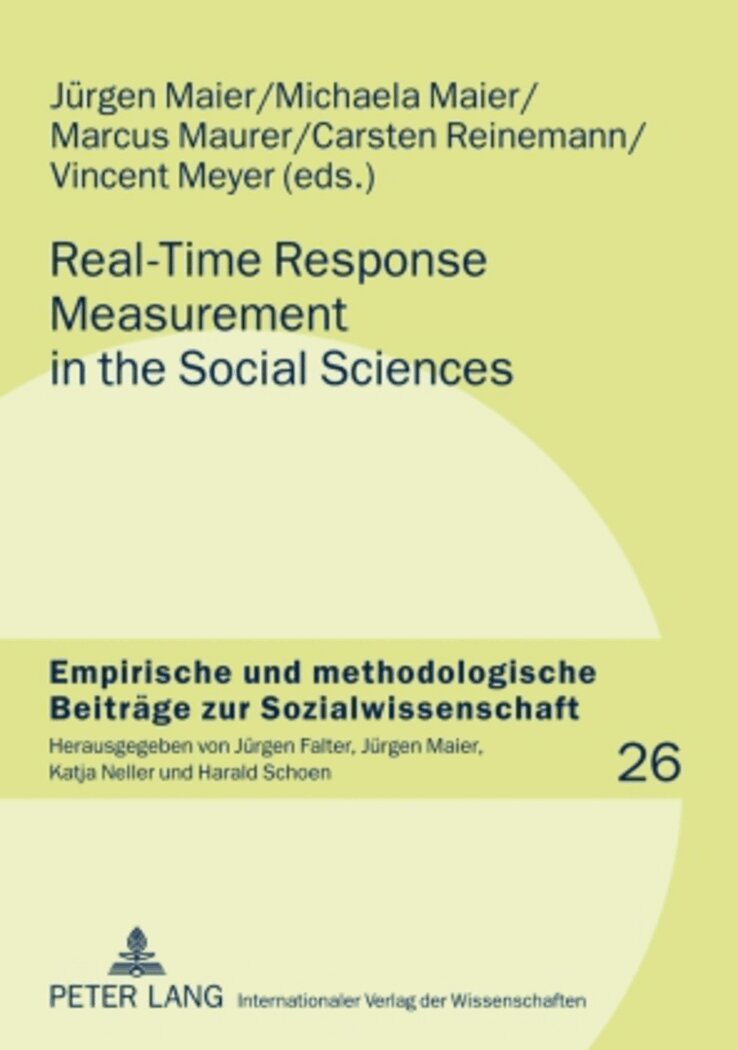
Real-Time Response Measurement in the Social Sciences
Methodological Perspectives and Applications
Häftad, Engelska, 2009
507 kr
Tillfälligt slut
Do people like a movie? Are consumers attracted by a broadcast commercial? How do voters evaluate the performance of political candidates in a televised debate? Traditional study designs measure the effects of those media stimuli after a recipient has been exposed to the entire movie, commercial, or debate. This approach has its limitations. Although we can learn if people like a particular stimulus as a whole we cannot tell which elements of the stimulus are responsible for the overall judgment. Real-time response (RTR) measurement provides this information. By recording individual spontaneous reactions to media messages on a second-by-second basis this technique offers unique insights into human information processing.
501 kr
Skickas inom 10-15 vardagar
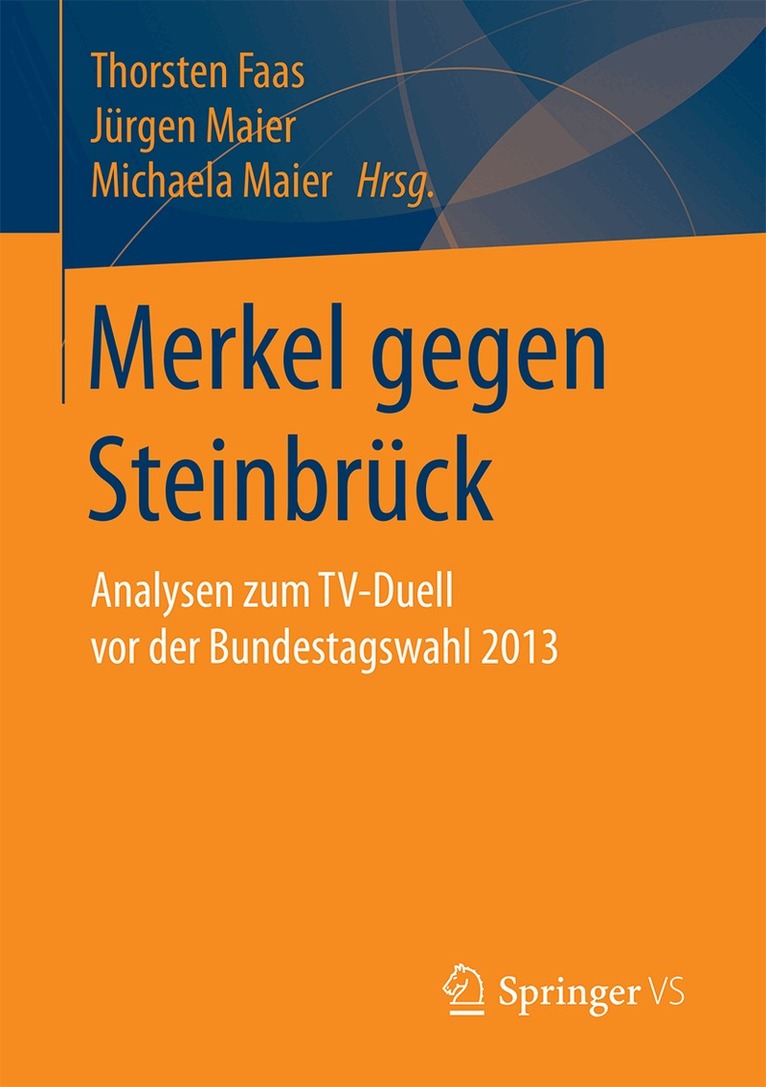
Die Beiträge des Buches basieren auf einer experimentell angelegten, mehrwelligen Studie im Kontext des TV-Duells zwischen Angela Merkel und Peer Steinbrück sowie des Dreikampfes zwischen Rainer Brüderle, Gregor Gysi und Jürgen Trittin im Vorfeld der Bundestagswahl 2013.
254 kr
Skickas inom 10-15 vardagar
TV-Duelle sind ein fester Bestandteil und zugleich das wichtigste Einzelereignis in modernen Wahlkämpfen. Sie werden von Millionen von Zuschauerinnen und Zuschauern gesehen und umfassend in Massenmedien, aber zunehmend auch in den neuen Medien begleitet. Das vorliegende Buch gibt einen Überblick über Geschichte, Nutzung, Inhalte und Wirkungen von TV-Duellen. Im Fokus stehen dabei vor allem TV-Duelle in Deutschland. Der InhaltTV-Duelle in modernen Wahlkämpfen • Debattenforschung, aber wie? • Geschichte, Verbreitung und Varianten von TV-Duellen • Debatteninhalte und Debattenstrategien • Nutzung von TV-Duellen: Umfang, Rezipientenmerkmale und -motive • Wahrnehmung von TV-Duellen und Wahrnehmung des Debattensiegers • Wirkung von TV-Duellen • Kommunikation über TV-Duelle • Was gibt es nach 60 Jahren Debattenforschung noch zu untersuchen?Die AutorenProf. Dr. Jürgen Maier ist Professorfür Politische Kommunikation an der Universität Koblenz-Landau. Seine aktuellen Arbeitsschwerpunkte liegen in den Bereichen Politische Kommunikation, Wahlen und politische Einstellungen sowie Einsatz experimenteller Designs bei der Untersuchung sozialwissenschaftlicher Fragestellungen.Prof. Dr. Thorsten Faas leitet die Arbeitsstelle "Politische Soziologie der Bundesrepublik Deutschland" am Otto-Suhr-Institut für Politikwissenschaft an der Freien Universität Berlin. Seine Arbeitsschwerpunkte liegen im Bereich von Wahlen, Wahlkämpfen und Wahlstudien.
Political Leaders, the Display of Emotions, and the Public: An Empirical Study on the Coverage and Effects of Emotions in German Politics
Häftad, Engelska
843 kr
Skickas inom 3-6 vardagar
Politikverdrossenheit in der Bundesrepublik Deutschland
Dimensionen — Determinanten — Konsequenzen
Häftad, Tyska, 2000
550 kr
Skickas inom 10-15 vardagar
3. Konsequenzen der Politikverdrossenheit Nichtwahl und die Wahl nichtetablierter Parteien - Ergebnisse multivariater Analysen . . . . . . . . . . . . . . . . . . . . . . . . . . . . . . . . . . . . . . . . . . . . . . . . . . . . . . . . . . . . . . . . 207 3. 1 Nichtwahl . . . . . . . . . . . . . . . . . . . . . . . . . . . . . . . . . . . . . . . . . . . . . . . . . . . . . . . . . . . . . . . . . . . . . . . . . . . . . . . . . . . . 207 3 . 2 Wahl nichtetablierter Parteien . . . . . . . . . . . . . . . . . . . . . . . . . . . . . . . . . . . . . . . . . . . . . . . . . . . . . 208 3. 3 Zusammenfassung . . . . . . . . . . . . . . . . . . . . . . . . . . . . . . . . . . . . . . . . . . . . . . . . . . . . . . . . . . . . . . . . . . . . . . 209 4. Determinanten der Politikverdrossenheit-Ergebnisse multivariater Analysen . . . . . . . . . . . . . . . . . . . . . . . . . . . . . . . . . . . . . . . . . . . . . . . . . . . . . . . . . . . . . . . . 210 4. 1 Parteienverdrossenheit . . . . . . . . . . . . . . . . . . . . . . . . . . . . . . . . . . . . . . . . . . . . . . . . . . . . . . . . . . . . . . . . 210 4. 2 Politikerverdrossenheit . . . . . . . . . . . . . . . . . . . . . . . . . . . . . . . . . . . . . . . . . . . . . . . . . . . . . . . . . . . . . . . 212 4. 3 Demokratieverdrossenheit . . . . . . . . . . . . . . . . . . . . . . . . . . . . . . . . . . . . . . . . . . . . . . . . . . . . . . . . . . 213 4. 4 Zusammenfassung . . . . . . . . . . . . . . . . . . . . . . . . . . . . . . . . . . . . . . . . . . . . . . . . . . . . . . . . . . . . . . . . . . . . . . 214 Kapitel XI: Der Einfluß von Politikverdrossenheit auf das Wahlverhalten: Befunde auf der lndividualebene . . . . . . . . . . . . . . . . . . . . . . . . . . . . . . . . . . . . . . . . . . . . . . .. . . . . . . . . . . . . . 217 1. Methodische Vorbemerkung . . . . . . . . . . . . . . . . . . . . . . . . . . . . . . . . . . . . . . . . . . . . . . . . . . . . . . . 217 2. Bivariate Zusammenhänge zwischen Dimensionen und Konsequenzen der Politikverdrossenheit . . . . . . . . . . . . . . . . . . . . . . . . . . . . . . . . . . . . 218 2 . 1. Konsequenzen der PolitikverdrossenheiL . . . . . . . . . . . . . . . . . . . . . . . . . . . . . . . . . . 218 2. 1. 1 Nichtwahl. . . . . . . . . . . . . . . . . . . . . . . . . . . . . . . . . . . . . . . . . . . . . . . . . . . . . . . . . . . . . . . . . . . . . . . . . . . . . . . . . . . . 218 2. 1. 2 Wahl nichtetablierter Parteien . . . . . . . . . . . . . . . . . . . . . . . . . . . . . . . . . . . . . . . . . . . . . . . . . . . . . 221 2. 2 Dimensionen der Politikverdrossenheit . . . . . . . . . . . . . . . . . . . . . . . . . . . . . . . . . . . . . . 224 2. 2. 1 Parteienverdrossenheit . . . . . . . . . . . . . . . . . . . . . . . . . . . . . . . . . . . . . . . . . . . . . . . . . . . . . . . . . . . . . . . . 224 2. 2. 2 Politikerverdrossenheit . . . . . . . . . . . . . . . . . . . . . . . . . . . . . . . . . . . . . . . . . . . . . . . . . . . . . . . . . . . . . . . 226 2. 2. 3 Demokratieverdrossenheit . . . . . . . . . . . . . . . . . . . . . . . . . . . . . . . . . . . . . . . . . . . . . . . . . . . . . . . . . . 228 2. 3 Zusammenfassung . . . . . . . . . . . . . . . . . . . . . . . . . . . . . . . . . . . . . . . . . . . . . . . . . . . . . . . . . . . . . . . . . . . . . . 230 3. Konsequenzen der Politikverdrossenheit Nichtwahl und die Wahl nichtetablierter Parteien - Ergebnisse multivariater Analysen . . . . . . . . . . . . . . . . . . . . . . . . . . . . . . . . . . . . . . . . . . . . . . . . . . . . . .. . . . . . . . . . 232 3. 1 Vorbemerkung . . . . . . . . . . . . . . . . . . . . . . . . . . . . . . . . . . . . . . . . . . . . . . . . . . . . . . . . . . . . . . . . . . . . . . . . . . . . 232 3. 2 Nichtwahl. . . . . . . . . . . . . . . . . . . . . . . . . . . . . . . . . . . . . . . . . . . . . . . . . . . . . . . . . . . . . . . . . . . . . . . . . . . . . . . . . . . . 233 3. 3 Wahl nichtetablierter Parteien . . . . . . . . . . . . . . . . . . . . . . . . . . . . . . . . . . . . . . . . . . . . . . . . . . . . . 235 3. 4 Zusammenfassung . . . . . . . . . . . . . . . . . . . . . . . . . . . . . . . . . . . . . . . . . . . . . . . . . . . . . . . . . . . . . . . . . . . . . . 237 4. Determinanten der Politikverdrossenheit-Ergebnisse multivariater Analysen . . . . . . . . . . . . . . . . . . . . . . . . . . . . . . . . . . . . . . . . . . . . . . . . . . . . . . . . . . . . . . . . 238 4. 1 Parteienverdrossenheit . . . . . . . . . . . . . . . . . . . . . . . . . . . . . . . . . . . . . . . . . . . . . . . . . . . . . . . . . . . . . . . . 23 8 4. 2 Politikerverdrossenheit . . . . . . . . . . . . . . . . . . . . . . . . . . . . . . . . . . . . . . . . . . . . . . . . . . . . . . . . . . . . . . . 241 4. 3 Demokratieverdrossenheit . . . . . . . . . . . . . . . . . . . . . . . . . . . . . . . . . . . . . . . . . . . . . . . . . . . . . . . . . . 242 4. 4 Zusammenfassung . . . . . . . . . . . . . . . . . . . . . . . . . . . . . . . . . . . . . . . . . . . . . . . . . . . . . . . . . . . . . . . . . . . . . . 244 9 KapitelXll: Der Einfluß der Veränderung von Politikverdrossenheit auf das Wahlverhalten: Befunde auf der Individualebene . . . . . . . . . . . . . . . . . . . . . . . . . . . . . . . . . 247 1. Vorbemerkung . . . . . . . . . . . . . . . . . . . . . . . . .. . . . . . . . . . . . . . . . . . . . . . . . . . . . . . . . . . . . . . . . . . . . . . . . . . . 24 7 2. Bivariate Zusammenhänge zwischen Dimensionen und Konsequenzen der Politikverdrossenheit . . . . . . . . . . . . . . . . . . . . . . . . . . . . . . . . . . . . 248 2. 1 Konsequenzen der Politikverdrossenheit . . . . . . . . . . . . . . . . . . . . . . . . . . . . . . . . . . . . 248 2. 1. 1 Nichtwahl. . . . . . . . . . . . . . . . . . . . . . . . . . . . . . . . . . . . . . . . . . . . . . . . . . . . . . . . . . . . . . . . . . . . . . . . . . . . . . . . . . . . 248 2. 1. 2 Wahl nichtetablierter Parteien . . . . . . . . . . . . . . . . . . . . . . . . . . . . . . . . . . . . . . . . . . . . . . . . . . . . . 250 2. 1. 3 Exkurs: Nichtwahl- ein Zwischenstation auf dem Weg zur Stimmabgabe für nichtetablierte Parteien? . . . . . . . . . . . . . . . . . . . . . . . . . . . 252 2. 1. 4 Zusammenfassung . . . . . . . . . . . . . . . . . . . . . . . . . . . . . . . . . . . . . . . . . . . . . . . . . . . . . . . . . . . . . . . . . . . . . .